5 Tourist Attractions in the Agapia-Văratec Area
The Agapia-Văratec area is particularly beautiful for its scenery and its two monastic complexes, which are important centres of Romanian culture.
Here are the 5 tourist attractions you can visit in this area
1. The monastic complex at Agapia lies in the valley of the Agapia – Topolița stream, at the foot of Măgura ridge, and is the only monastic settlement in the country whose name means “Christian love”. The monastic complex at Agapia established the first monastery museum to include secular artworks alongside religious objects and art. The church within the monastery grounds was built of stone and brick to a trefoil plan and painted by Nicolae Grigorescu. He successfully combined Byzantine tradition with the Neoclassical style and Romanian art. Visitors to Agapia Monastery can taste the preserves and pies made by the nuns at the monastery bakery.
2. Grigorescu’s paintings at Agapia Monastery are the main attraction of this place of worship. They were painted in 1858, when the artist was 18 years old. Here he created a remarkable series of murals and icons full of movement, realism and light. Grigorescu’s saints at Agapia are unique and extraordinary. So extraordinary that they have been the subject of many works by famous writers. To appreciate this, you must come to Agapia and see the divine beauty of the paintings, the simplicity of their lines and the perfection of their proportions and forms.
3. Agapia Veche Hermitage stands on a hill in a glade sheltered by tall, dense forests, approximately 2 km from Agapia cea Nouă Monastery, and marks the beginning of monastic life in this area. The hermitage dates from the second half of the 14th century, when a wooden hermitage was built under the guidance of the venerable hermit Agapie on the site now known as “Livada Parinților”. This place has always been a centre of Orthodox faith and Romanian culture, where numerous hermits have lived lives of profound spirituality over the years. The rules here are very strict, and visitors are strictly forbidden to stay overnight within the monastery grounds.
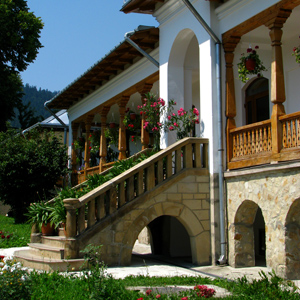
4. Alexandru Vlahuță Memorial House is in the monastic village of Agapia and is where the writer Alexandru Vlahuță was born and spent his childhood. Set up in 1958 and opened as a museum, the house has several rooms that seek to recreate the atmosphere of the period in which the writer lived. The house has a spacious porch where literary gatherings organised by Alexandru Vlahuță took place.
5. The monastic complex at Văratec comprises the Church of the Dormition of the Mother of God, the Church of Saint John the Baptist – dating from the 19th century, beside which lies the tomb of the poet Veronica Micle, the Church of the Transfiguration – dating from the 19th century, and the monastic village of Văratec. The monastery’s main church is surrounded by stone walls like a fortress. The buildings within the monastery grounds also house the Museum of Old Art, which has an impressive collection of ecclesiastical objects.
More on the same topic

Neamț receives five nominations across four categories in Destinația Anului
We have good news for everyone who loves Neamț County and all its beauty: it is among the finalists in the Destinația Anului 2024 competition, with five nominations across four categories: Piatra Neamț in the Inspiring Cities category.

Military firefighters bring competition and lots of adrenaline to Târgu Neamț
Târgu Neamț is hosting the 3rd zonal stage of the professional emergency situation competitions, in which representative teams from several counties of the country will participate: Bacău, Botoșani, Iași, Neamț, and Suceava.
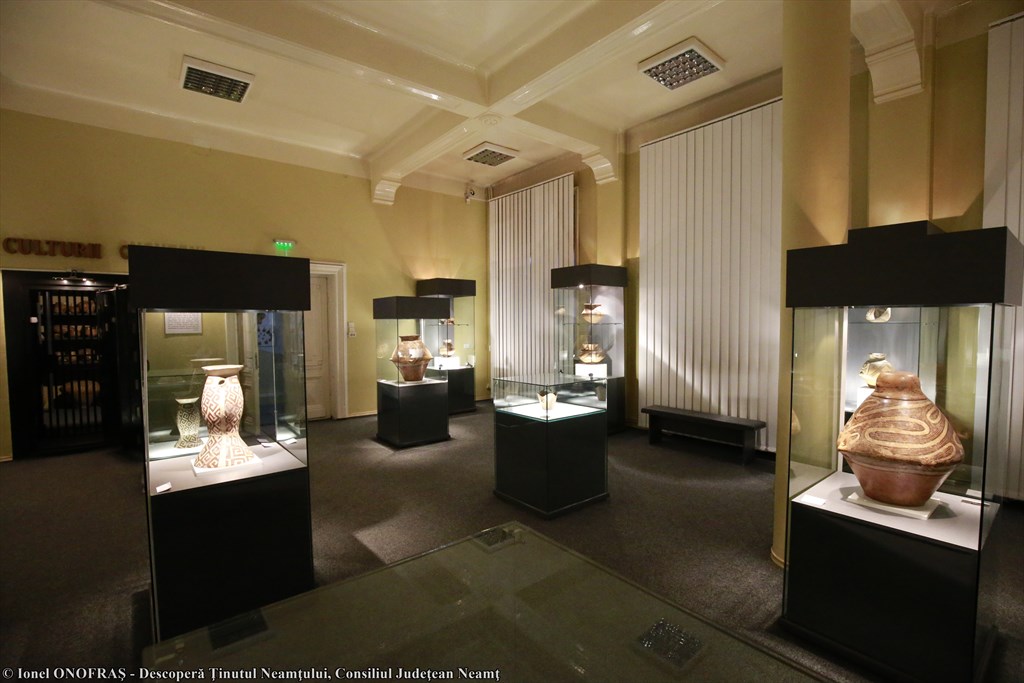
Discover, in Piatra Neamț, the most important Eneolitic art collection from the South-East of Europe
Photo Gallery: Nationally one of the kind, both history and art museum, it currently hosts the most spectacular artefacts, famous objects that belong to the Cucuteni–Trypillia Culture, which is in…