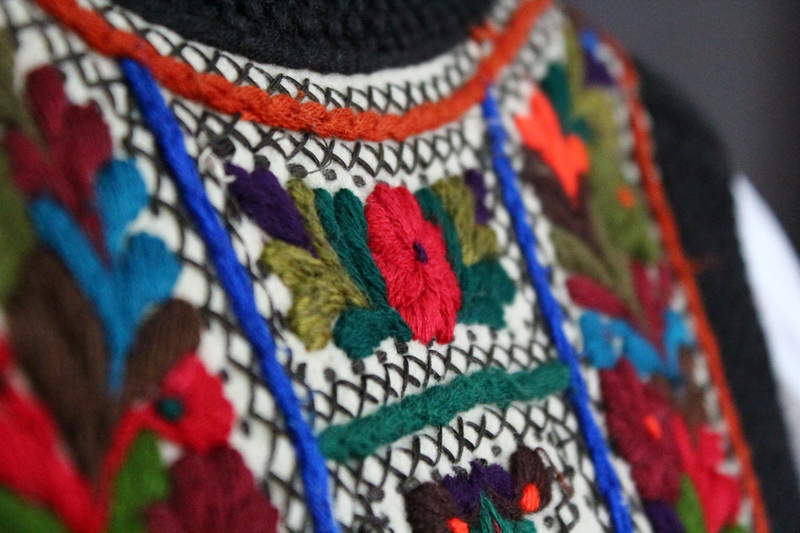
Traditional folk costume in Neamț – ornament and colour
IMG_3926_resize
Over time, the form, colours and ornamentation of traditional folk costume in Neamț have made it one of the most important expressions of local folk culture.
Traditional clothing shares the general characteristics of Moldavian folk dress, while adding varied and original elements specific to the Neamț region. Folk costume differed according to its purpose – work or festive wear – or the area it came from: mountain dwellers wore clothing in subdued colours with less ornamentation, while the dress of those living on the plains featured a profusion of colours. Making an outfit was exclusively women's work, using materials produced at home, and allowed each woman to express her creativity.
Traditional women's dress includes a headscarf, a long shirt with a skirt section, a wraparound skirt, a broad sash and a narrow belt, a sheepskin waistcoat, a woollen coat and leather peasant shoes. Married women wore a cotton headscarf woven with stripes or decorative patterns. Girls went bareheaded, with their hair braided and adorned with flowers. In some villages, women wear a floral headscarf made from fine cloth. A scarf made from linen, cotton or hemp cloth, hemmed around the edges and decorated with varied motifs, is worn on feast days or for other occasions in village life. The shirt is gathered at the neck, with decoration on the chest and sleeves in one, two or more colours, featuring geometric, floral, animal and even human motifs. The skirt section, decorated only at the bottom, has the same pattern as the shirt. A wraparound skirt is worn over it. Woven from woollen yarn, or from silk or gold and silver thread for festive wear, this skirt was not worn throughout Neamț County: in some villages in Trifești commune, it was replaced by a cotton wraparound skirt, or by a gathered skirt in Târpești and Ion Creangă. Around their waists, women wore a narrow belt made from cotton canvas, in colours matching those of the wraparound skirt.
Traditional men's dress, simpler and easier to make, comprised a hat or fur cap, a shirt belted with a sash or leather belt, close-fitting trousers woven from cotton or sheep's wool, a sheepskin waistcoat, a woollen coat and leather peasant shoes. The shirt's embroidery, featuring geometric motifs usually in black, appeared on the collar, shoulders, chest and sleeves. The same pattern appears along the lower edge of the shirt. A shirt with a gathered or pleated skirt section was typical of festive wear. Only young men wore shirts embroidered in blue, green or several colours. Over the shirt, they wore a broad woollen sash or a leather belt fitted with pockets and decorated with stitching and metal studs. The long, close-fitting trousers, gathered at the calves, were made from cotton or wool and were always white.
The bondiță, a sleeveless sheepskin waistcoat richly decorated with geometric and floral motifs in a wide range of colours and edged with astrakhan fur, is worn by both men and women. Its shape varies by area: the short version was worn in the mountain valley and in Pipirig commune, while the long version, also known as a cheptar, was found in villages in the communes of Tazlău and Ghindăoani. In winter, peasants wore sumane, thick woollen coats. Those worn on festive occasions, called sumane cu sărad, with a cut featuring gores or folds, had braided woollen cord dyed black and a distinctive shape. Another garment typical of this part of Moldavia, worn by both men and women, is the spențer, a short sheepskin jacket with sleeves, cut from leather like the bonda and decorated with floral motifs. The shoulder bag is an accessory to traditional dress, but one of great importance and practical use, woven with patterns specific to its village of origin. In the Neamț region, both checked and striped bags in black and white are found, alongside checked bags in shades of yellow, red, burgundy and green, with straps woven from 4 strands of wool or hemp, like the sash. Everyday footwear consisted of opinci, leather peasant shoes worn with footcloths, but industrialisation made it possible to buy shoes or boots for women and boots with high shafts for men at the fair.
Today, some people living in the mountains still wear traditional folk costumes to church, but these are generally worn by members of performing groups and folk music singers. However, traditional folk costumes can still be found in many homes in Neamț, kept out of respect for the work that went into making them and as a reminder of life in the past.
More on the same topic
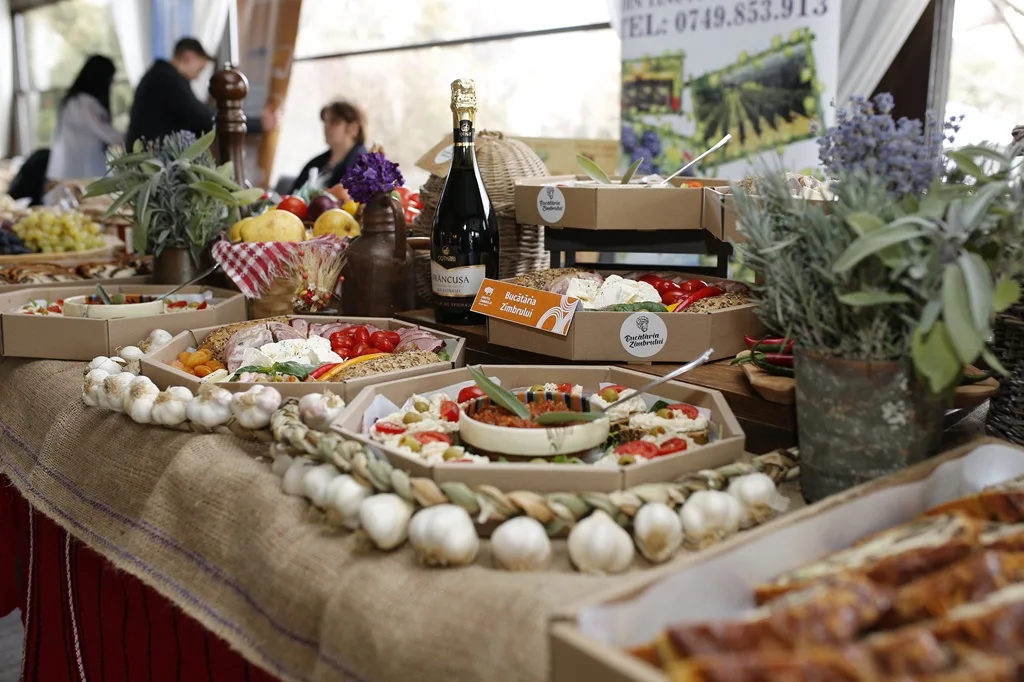
Attractive Romania presents “Neamțul în Bucate”
The culinary story of Neamț County invites travelers on a fantastic journey, a tour of its four picturesque regions, filled with tales and flavors that combine tradition, ecotourism and fresh, delicious dishes.
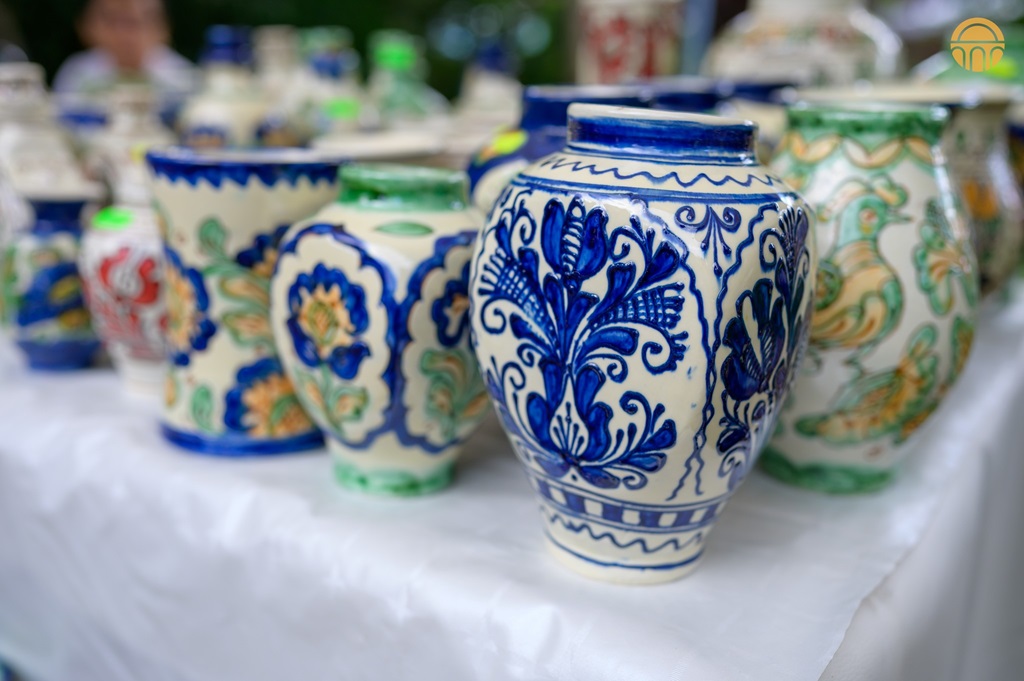
Craft Fair for the Feast of the Assumption in Piatra-Neamț
This weekend, local residents and tourists will be able to enjoy folk art and objects crafted with great talent and flair by traditional craftspeople from ten counties, who will come to keep local…
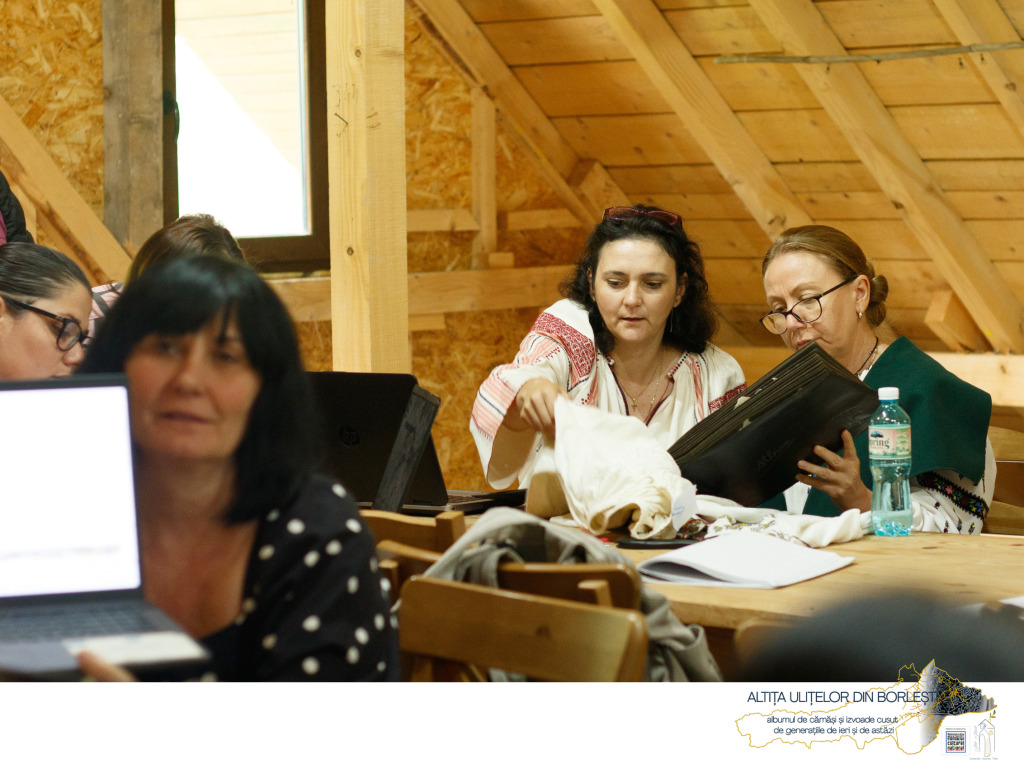
” Altița ulițelor din Borlești” at the AFCN Awards
At the ninth edition, the AFCN (National Cultural Fund Administration – NCFA) Awards has nominated “Altița ulițelor din Borlești” in the Activation of Intangible Cultural Heritage Category.