“Nasterea Sf. Ioan Botezatorul” Church at Văratec Monastery
“Nasterea Sf. Ioan Botezatorul” Church at the Monastery of Văratec dates from 1817 and served as a cemetery church, where funerals and memorial services were held. Later, as the monastic village and the number of nuns grew, another burial site was found, and this place of worship was used for the daily prayers of the nuns living nearby. The church stands on a ridge approximately 150 m from the monastery courtyard and was originally built of wood, before being rebuilt in stone in 1844.
The present building has a basilica plan, with a circular apse and three wooden towers showing clear Baroque influences. A massive arch divides the church interior into two spaces.
The narthex and nave have domed vaults, while the apses recessed into the thickness of the walls have quarter-sphere vaults. To meet practical needs, the first porch, with a wooden bell tower, and a stone sacristy were built on the south-west side of the church, and a second porch on the south-east side.
The paintings in “Nasterea Sf. Ioan Botezatorul” Church were executed in oils by two bishops, Silvestru (Balanescu) Pitesteanul and Ghenadie (Enaceanu) Craioveanul. A distinctive feature of this place of worship is that, alongside other saints, its interior walls depict the female martyrs whose names were recorded in the founders' memorial prayer list: Tecla, Epistimia, Varvara, Glicheria, Pulheria, Evghenia and Fevronia.
Alongside the holy litanies and church chants that encourage the nuns to lead devout and blameless lives, the female martyrs painted inside the church, towards whom the nuns turn their gaze, offer examples to guide their steps. The walls of the sanctuary depict holy bishops, while the vault depicts the Holy Trinity. Through the lines and colours used to portray the figures' clothing and movements, the figurative paintings in this place of worship seek to reproduce the paintings created by Nicolae Grigorescu at Agapia.
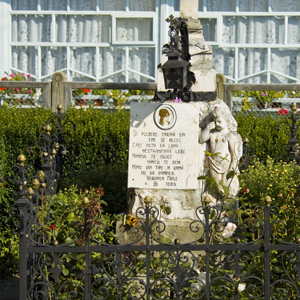
Tourists visit this church because, in the shadow of its walls, the tomb of the poet Veronica Micle remains as a reminder of the former cemetery. Visitors to Văratec make their way to the poet's tomb with their thoughts focused more on Mihai Eminescu, the ill-fated Morning Star of Romanian poetry.
More on the same topic

Ethnographic museums, treasures of local history and traditions
Ethnographic museums are true treasures and expressions of love for traditions, folklore, and spirituality of the places, and so is the Ethnographic Museum Casa Bunicilor in the village of Mitocul Bălan, Crăcăoani commune.

Neamț receives five nominations across four categories in Destinația Anului
We have good news for everyone who loves Neamț County and all its beauty: it is among the finalists in the Destinația Anului 2024 competition, with five nominations across four categories: Piatra Neamț in the Inspiring Cities category.

The Story of the Seven Miraculous Icons of the Holy Virgin and Saint Anne from Neamț Land
Renowned not only for its beauty and historical significance but also called the “Jerusalem of Romanian Orthodoxy,” Neamț Monastery houses the miraculous icon of Virgin Mary with three hands…