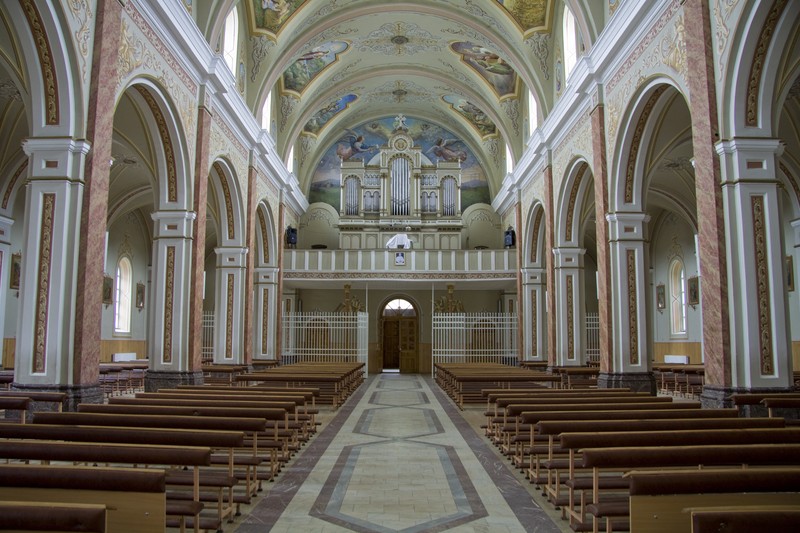
“Saint Mihail” Roman Catholic Church, Săbăoani – Neamț
Catholic Cathedral in Săbăoani
Address: Săbăoani commune, Neamț county
Built: between 1898 and 1902 by Father Cajetan Liverotti
Description:
“Saint Mihail” Church is not the first Roman Catholic church in Săbăoani. A document from 1741 first records the existence of a wooden church on the new site of the village of Săbăoani.
Following damage caused by severe weather and the revolt of 1831, and as the congregation grew, Father Augustin Melis built a beautiful, spacious new church around the middle of the 19th century.
The present church owes its existence to Father Cajetan Liverotti, who, on returning as parish priest to the church in Săbăoani, recognised that the village needed a larger church. The church founded by Father Liverotti closely follows the design of the great Roman basilicas, which were intended for public gatherings. The church at Săbăoani features elements of the Romanesque style: the number and shape of the nave and aisles, the semicircular apse, the barrel vault above the main nave and the groin vaults above the side aisles, each formed by two intersecting barrel vaults.
Catholic Cathedral in Săbăoani: photos
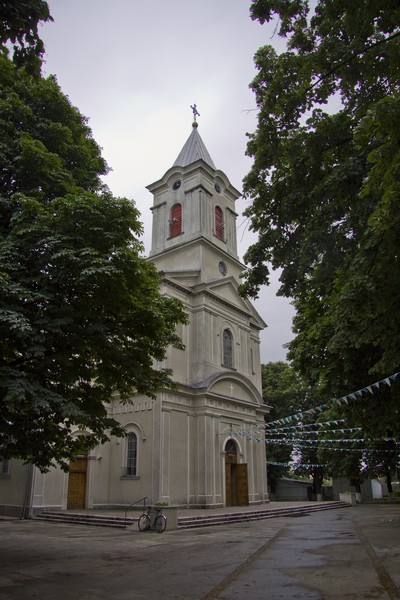
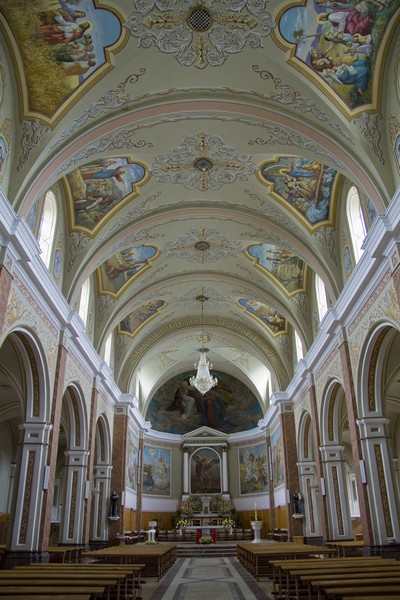
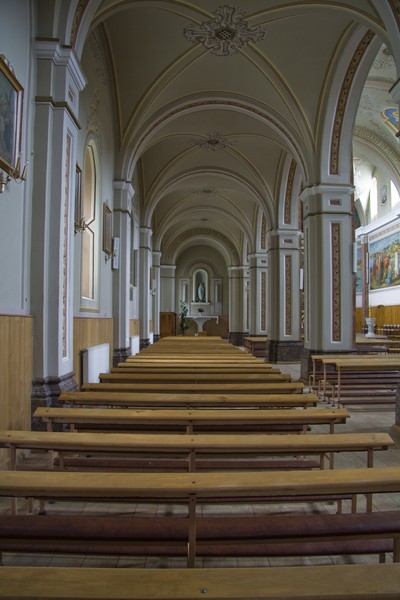
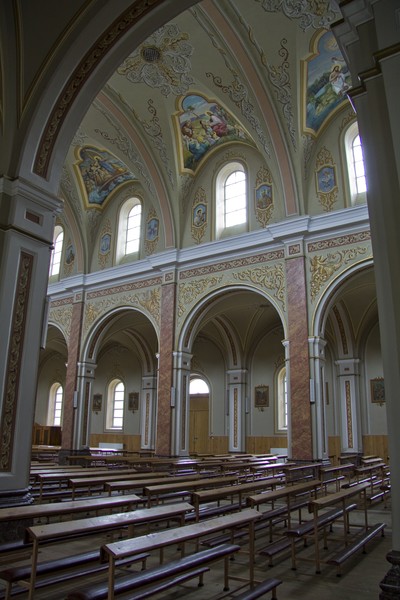
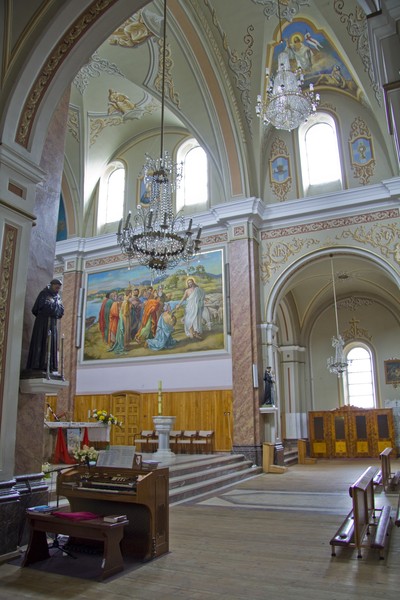
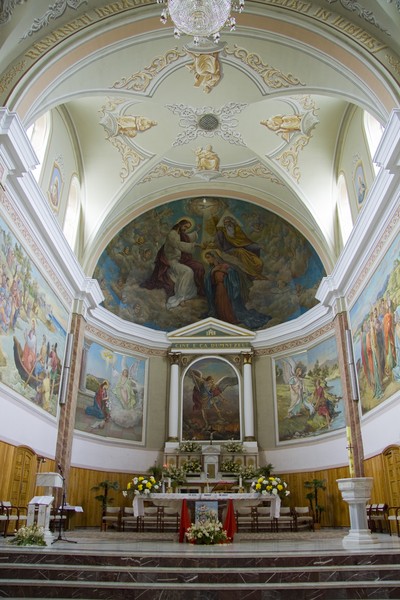
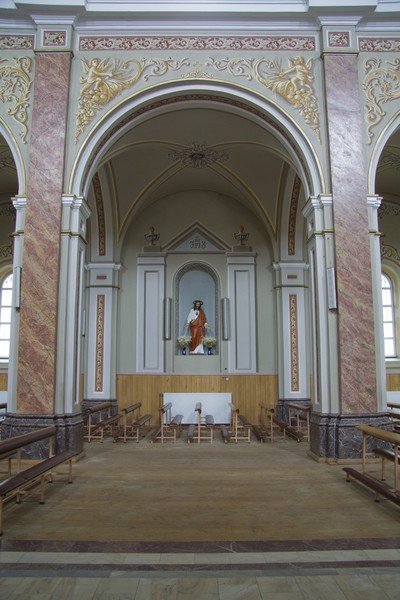
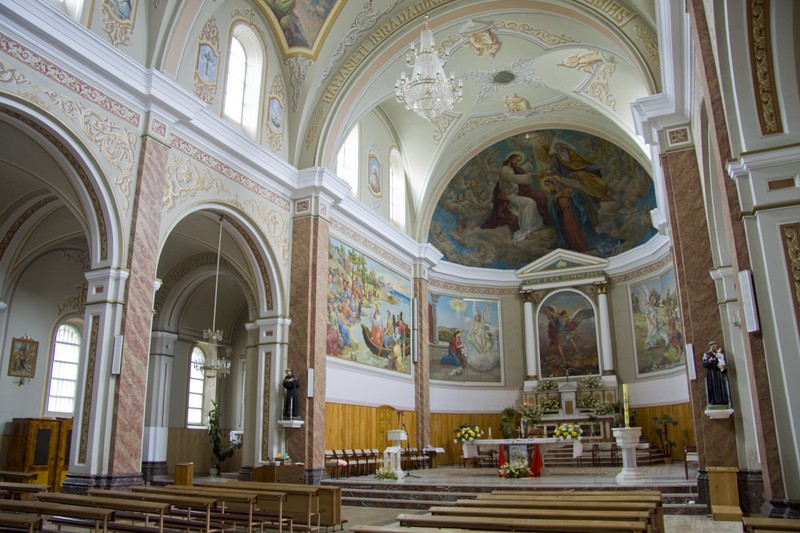
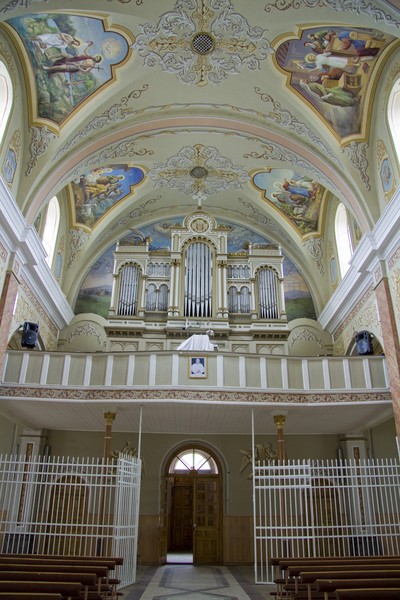
Built between 1898 and 1902, “Saint Mihail” Church in Săbăoani was consecrated in 1902 and subsequently restored and renovated several times, most recently in 2000 by the current parish priest, Fr Toma Encuta. The imposing church is 53.70 m long, with an interior width of 22.70 m and an interior height of 15 m. The church tower is 45 m high. Until 1979, it had four altars: the main altar made of white and coloured marble, two altars in the side aisles made of white mosaic, and a portable altar made of carved wood.
Following new church regulations, the side altars were removed in 1979 and the pulpit was moved to the front. The church was also furnished with several works of art, including five life-size wooden statues carved by the Italian sculptor Ferdinand Stufflesser, one depicting “Inima lui Isus” and the other four “Ingeri in adoratie”, as well as statues of Saint Francisc de Assisi and Saint Anton de Padova.
The Roman Catholic church in Săbăoani has a large Gebrüder Rieger organ with 26 stops, two manuals and pedals which, according to oral tradition, was donated by King Carol I. In 1973, four large bells were brought from Italy, also through the intervention of King Carol I, who facilitated their entry into the country by agreeing to waive customs duties at the border. Petre Sescu states in Cronica de la Săbăoani that King Carol I attended the consecration of the church in Săbăoani, built by Father Liverotti.
Between 1959 and 1963, the paintings in the chancel were created by A. Bucataru, I. Martinas and I. Iacobescu. The three archangels Mihail, Gabriel and Rafael were painted in the foreground, while the vault depicts the coronation of the Blessed Virgin Maria. Father Carmil Gherghel began repainting the church in 1978, and in 1979 its paintings were created by the brothers Ludovic and Alexandru Miltaller.
More on the same topic

Ethnographic museums, treasures of local history and traditions
Ethnographic museums are true treasures and expressions of love for traditions, folklore, and spirituality of the places, and so is the Ethnographic Museum Casa Bunicilor in the village of Mitocul Bălan, Crăcăoani commune.

Neamț receives five nominations across four categories in Destinația Anului
We have good news for everyone who loves Neamț County and all its beauty: it is among the finalists in the Destinația Anului 2024 competition, with five nominations across four categories: Piatra Neamț in the Inspiring Cities category.

The Story of the Seven Miraculous Icons of the Holy Virgin and Saint Anne from Neamț Land
Renowned not only for its beauty and historical significance but also called the “Jerusalem of Romanian Orthodoxy,” Neamț Monastery houses the miraculous icon of Virgin Mary with three hands…