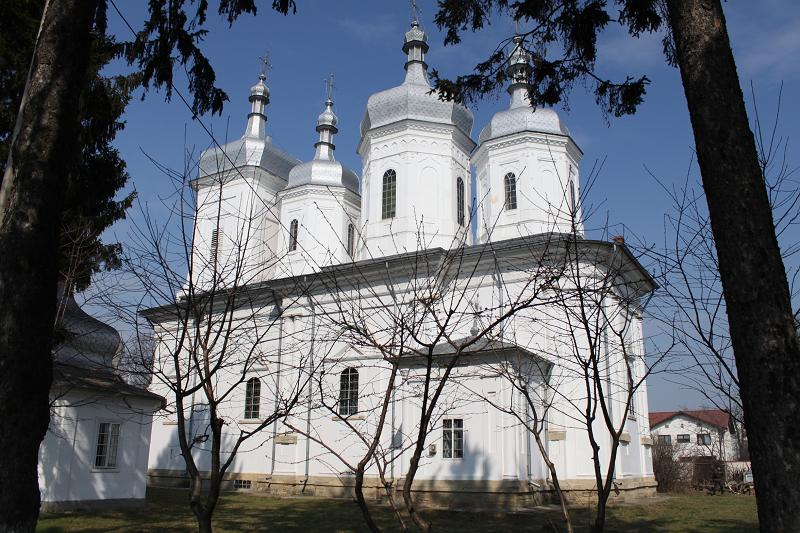
St. George Church in Roman
The “St. George” Church in Roman, a place of worship whose history is longer and less straightforward than previously thought (as revealed by numerous, sometimes contradictory historical sources), is linked to the fortified town of Roman, which for a certain period (from the 15th to the 19th century) was the most important military, ecclesiastical and economic centre of the Lower Country of Moldavia.
It is located in the lower part of the town, south of Ulița lui Borș, an area first known as Sat al Poslușnicilor (servants of the diocese exempt from taxes payable to the local administration) and later as Mahalaua Popăuți (from the common noun “popa”, meaning “priest”, or the proper name Popa?), today Soldat Porojan Street_._
Although not particularly large, “St. George” Church in Roman creates an impression of monumentality through its slender, harmonious forms. It has a ship-shaped plan with four slender towers. The architectural plans were brought from Odessa by its founder, Grigore Done, originally from the Hotin region.
The four monumental towers are arranged on the sides as in the models of Greek-Catholic churches. They are unique in that they ingeniously solve the problem of monotony in massing: although they are not identical (two are taller and two are shorter) and although they are slender and imposing, they still create the impression of a unified building, not standing out particularly in composition as a whole.
The side façades are soberly decorated, with solid wall surfaces predominating over openings, and have nine symmetrically arranged, tall, narrow windows that accentuate the church’s silhouette. Above the windows on both the north and south longitudinal side walls is a row of false windows resembling bricked-up windows, further contributing to an impression of monumentality and slenderness that is hard to match.
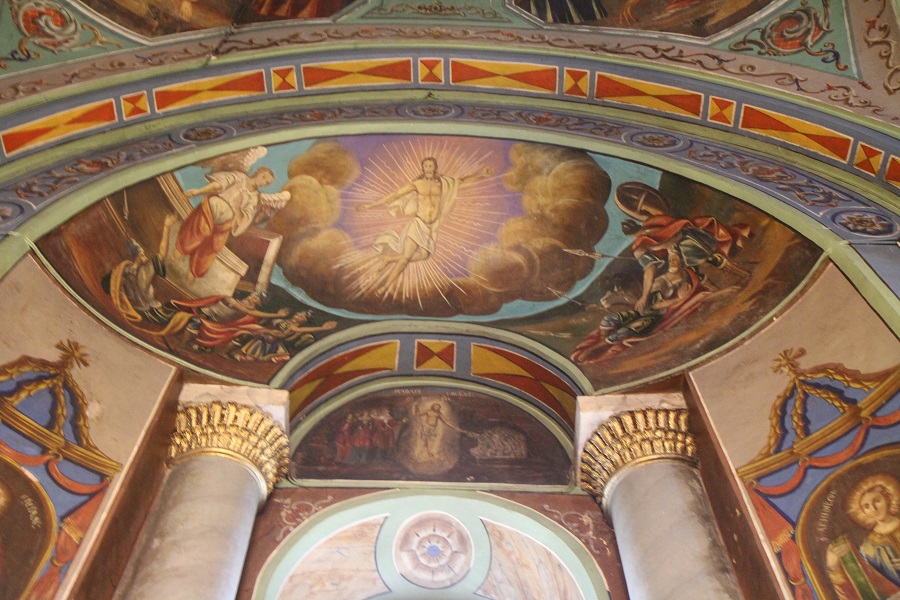
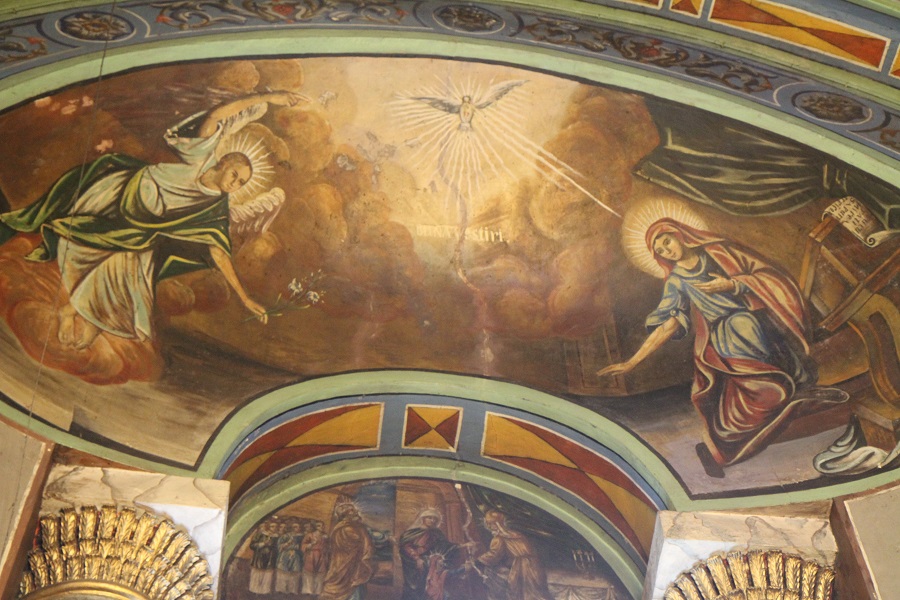
The church's painting is executed in oil, in the Renaissance style, and conveys a sense of calm thanks to its compositional qualities, the fact that it is loosely composed, in scenes that unfold over large surfaces with clear outlines. It is noteworthy that no painted figure has bare feet; the garments cover the whole body, and the saints' faces are open, large and serene.
The church also possesses numerous valuable liturgical objects, gold items, unique vestments woven with gold thread, and it has a cellar where an ossuary will be installed.
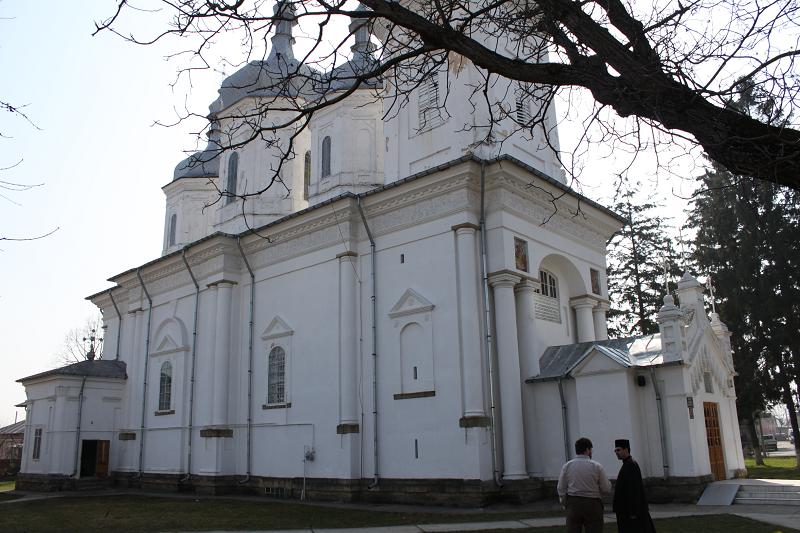
Its main body has an imposing volume and a symmetrical composition in the Russian neoclassical style.
More on the same topic

Ethnographic museums, treasures of local history and traditions
Ethnographic museums are true treasures and expressions of love for traditions, folklore, and spirituality of the places, and so is the Ethnographic Museum Casa Bunicilor in the village of Mitocul Bălan, Crăcăoani commune.

Neamț receives five nominations across four categories in Destinația Anului
We have good news for everyone who loves Neamț County and all its beauty: it is among the finalists in the Destinația Anului 2024 competition, with five nominations across four categories: Piatra Neamț in the Inspiring Cities category.

The Story of the Seven Miraculous Icons of the Holy Virgin and Saint Anne from Neamț Land
Renowned not only for its beauty and historical significance but also called the “Jerusalem of Romanian Orthodoxy,” Neamț Monastery houses the miraculous icon of Virgin Mary with three hands…