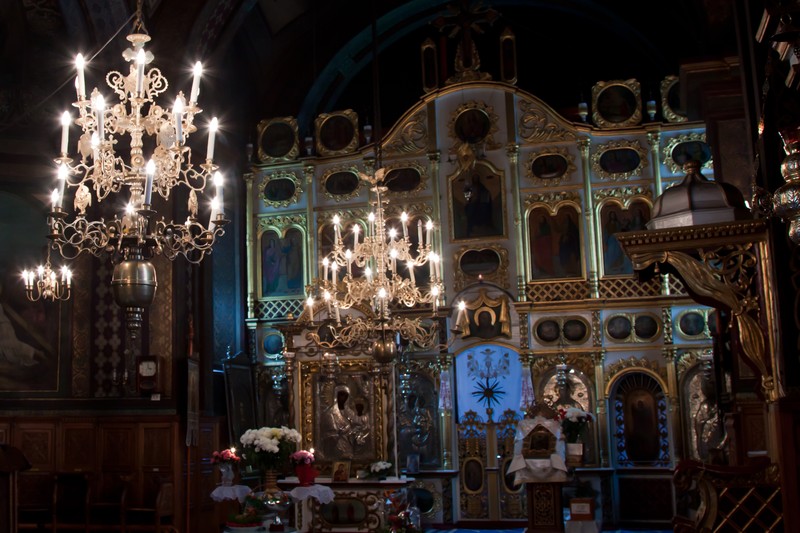
“Saint John the Baptist” Church of Mărăței in Piatra Neamț
Church of Saint John the Baptist
Construction of the “Sfântul Ioan Botezătorul” church in Mărăței in Piatra Neamț began in 1866 when priest Iancu Lăzărescu launched the effort to build a new church in the Mărăței neighbourhood.
Thanks to contributions from many people who made substantial donations, the church was erected in stone, in a Byzantine style mixed with Renaissance, with an ossuary (burial vault) in the basement.
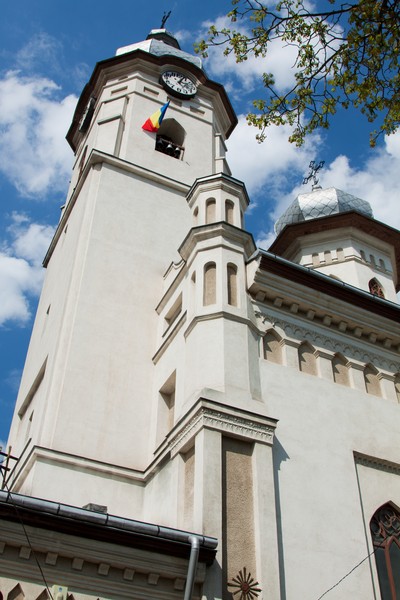
From an architectural point of view the church was built on a trefoil plan and divided, according to tradition, into porch, narthex, nave and sanctuary. The church has 9 windows set into the walls and 12 windows in the towers, as well as 4 onion-shaped domes, characteristic of the Russian style. The unique feature of the church is the presence of an ossuary in the semi-basement, a space included for this purpose in the church's original plans.
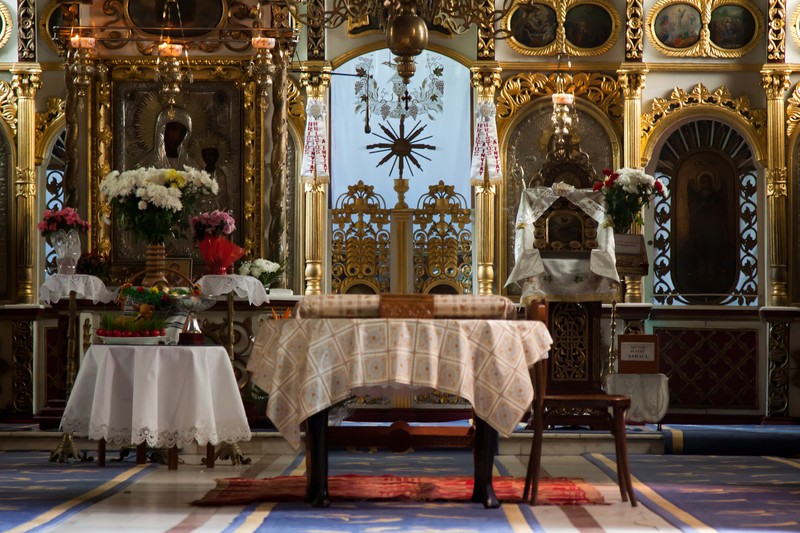
It was made of oak wood with lime-wood carvings, arranged around the icons so as to better highlight their colours.
Church “St. John the Baptist” in Piatra Neamț, Neamț County
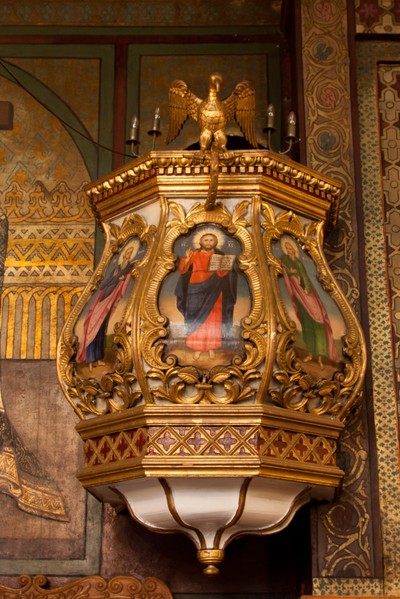
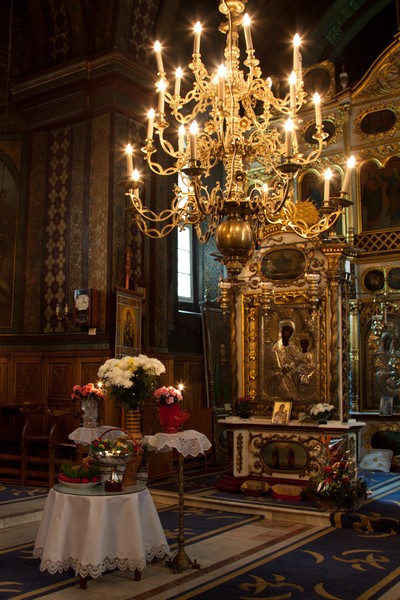
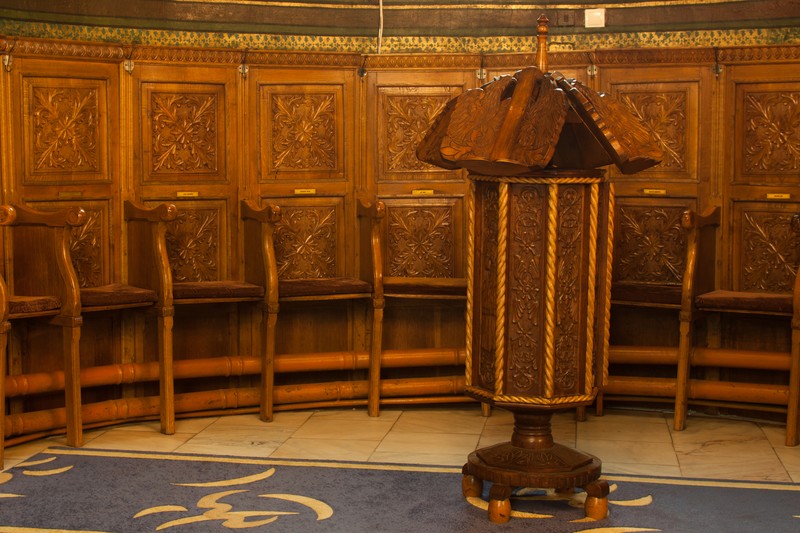
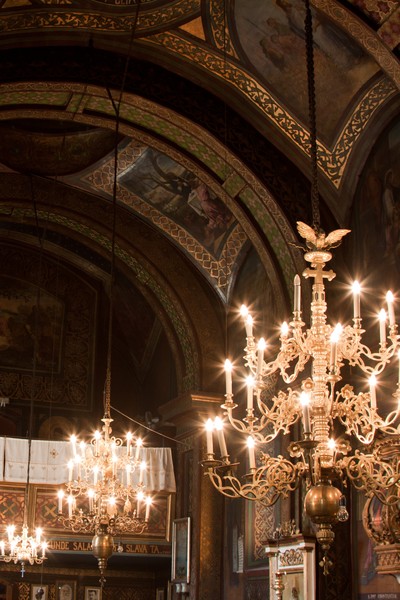
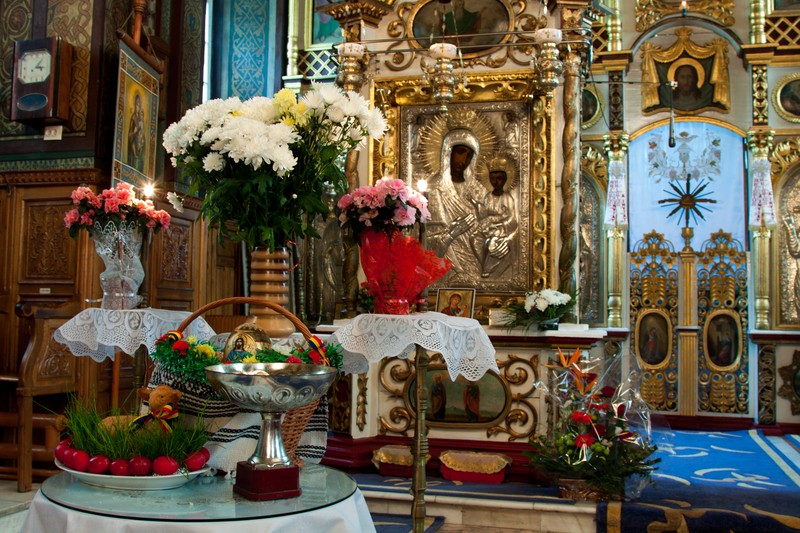
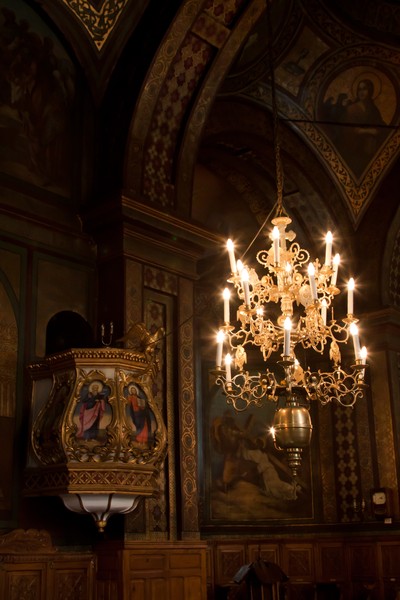
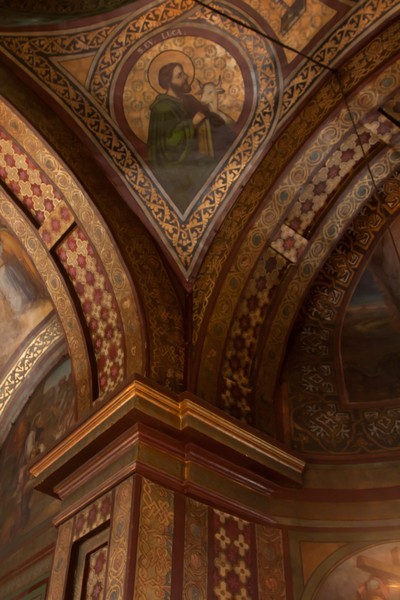
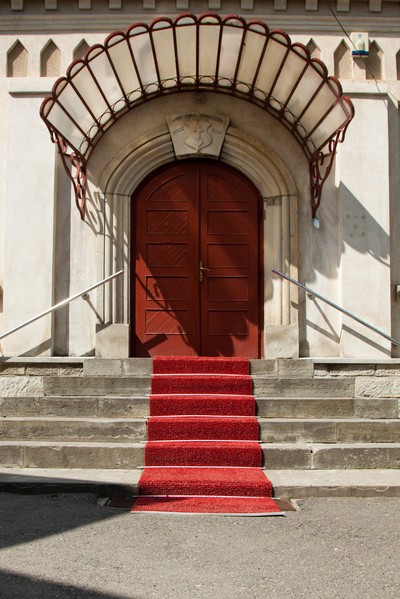
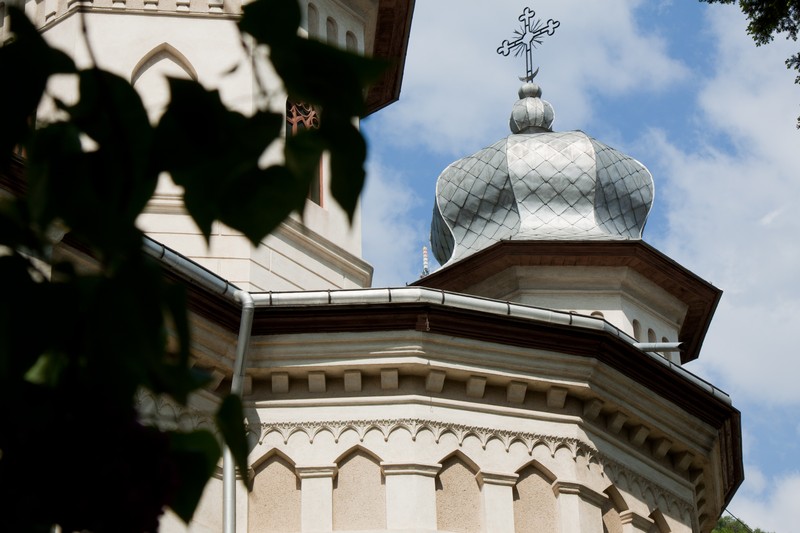
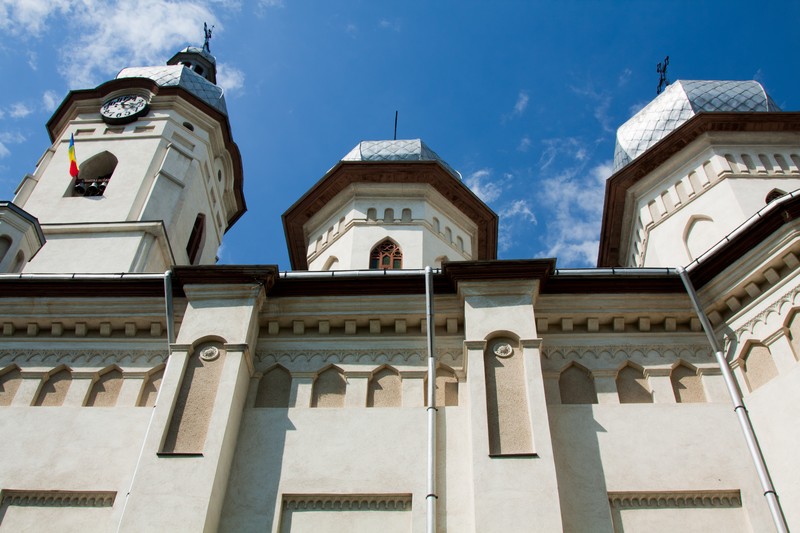
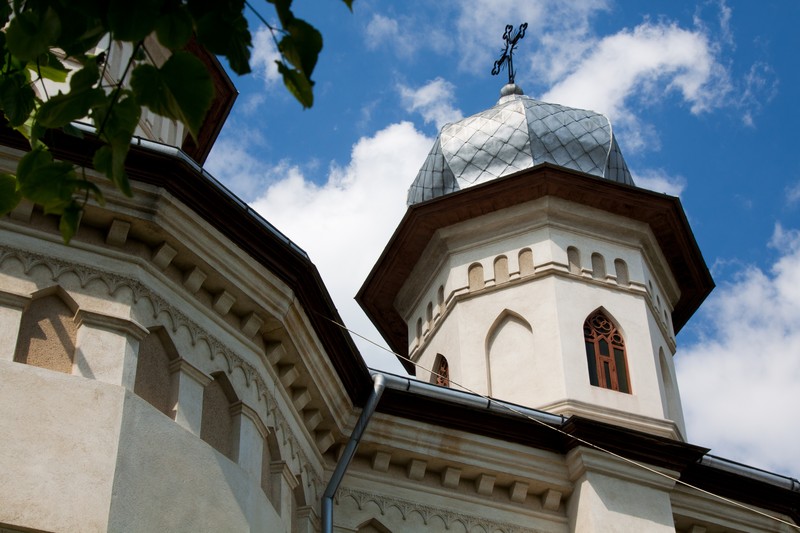
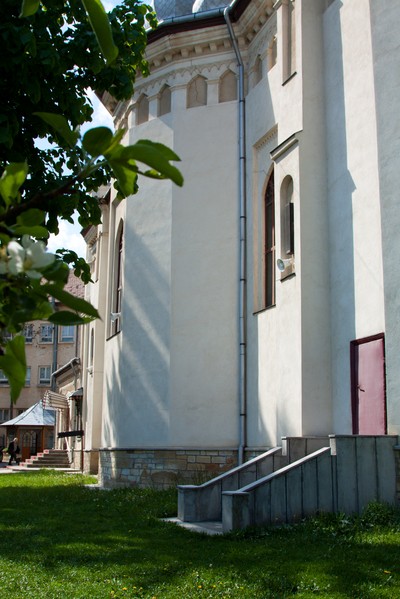
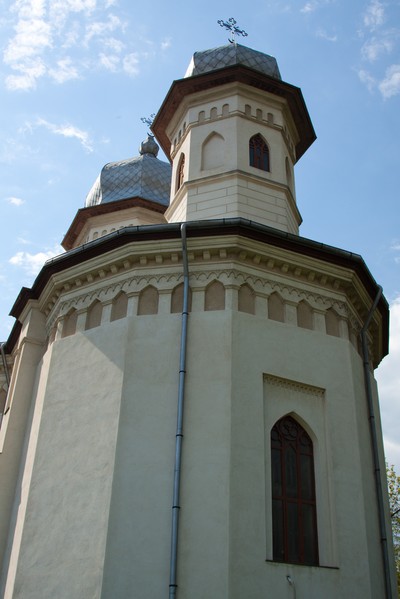
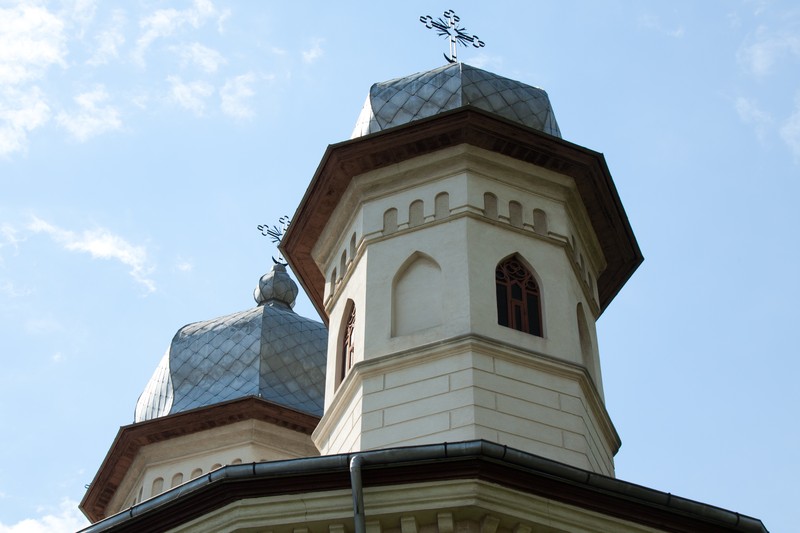
This great and monumental church was equipped with an appropriately sized iconostasis which fits perfectly within the high interior of the building. The icons were painted by the artist Lefteriu, a pupil of Nicolae Grigorescu, so the techniques used are the same as those employed on the iconostasis at Agapia.
Situated on a high terrace of the Bistrița and larger than the other churches in the town, the Church “Saint John the Baptist” in Piatra Neamț stood out for its imposing cathedral-like appearance. The first consecration of this church took place on 15 September 1886, the second consecration in 1924, and the third consecration in 1990. Among the heritage items belonging to the church that remind us of its history are: old icons painted on wood or canvas, vestments and other liturgical objects, painted liturgical shrouds, censers, small crosses, spoons and books.
Over time this church has undergone several changes: a new brick porch covered with sheet metal was built, as well as the essential ancillary buildings: a parish house, a hall for commemorative meals, a chapel, storerooms, a bell tower, etc. Numerous conservation and maintenance works have been carried out up to the present, so this place of worship still delights visitors today with its unique beauty and size.
The Church “Sfântul Ioan Botezătorul” is the largest and most monumental of the churches built in Piatra Neamț before 1990.
More on the same topic

Ethnographic museums, treasures of local history and traditions
Ethnographic museums are true treasures and expressions of love for traditions, folklore, and spirituality of the places, and so is the Ethnographic Museum Casa Bunicilor in the village of Mitocul Bălan, Crăcăoani commune.

Neamț receives five nominations across four categories in Destinația Anului
We have good news for everyone who loves Neamț County and all its beauty: it is among the finalists in the Destinația Anului 2024 competition, with five nominations across four categories: Piatra Neamț in the Inspiring Cities category.

The Story of the Seven Miraculous Icons of the Holy Virgin and Saint Anne from Neamț Land
Renowned not only for its beauty and historical significance but also called the “Jerusalem of Romanian Orthodoxy,” Neamț Monastery houses the miraculous icon of Virgin Mary with three hands…