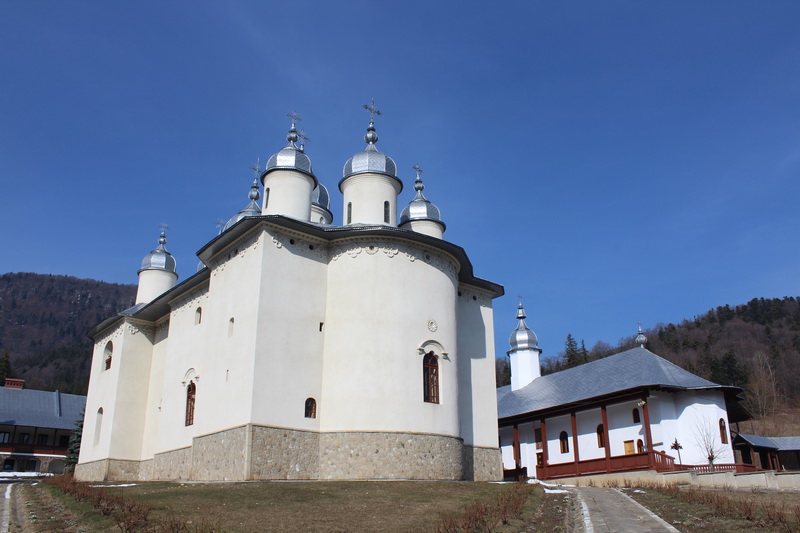
The Annunciation at Horaița Monastery
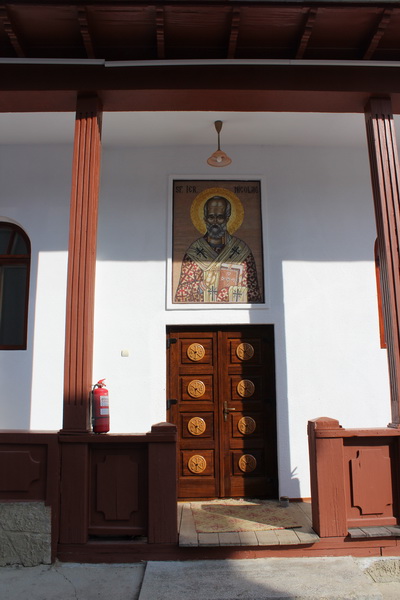
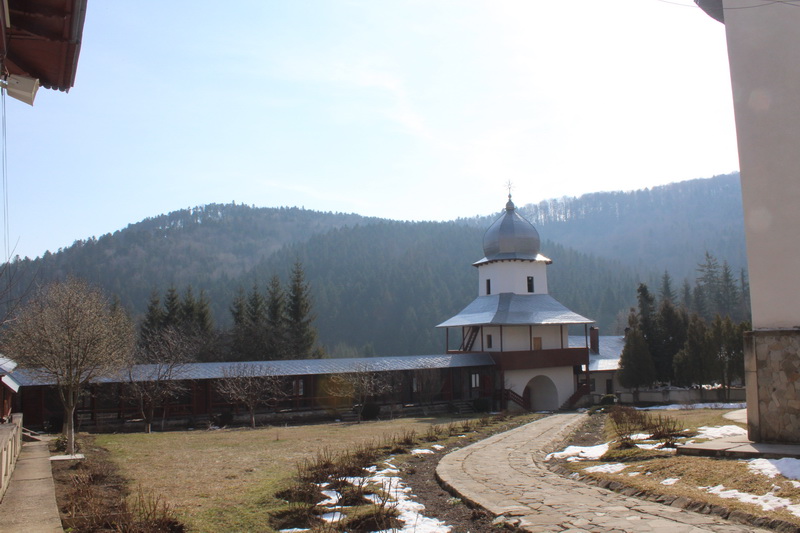
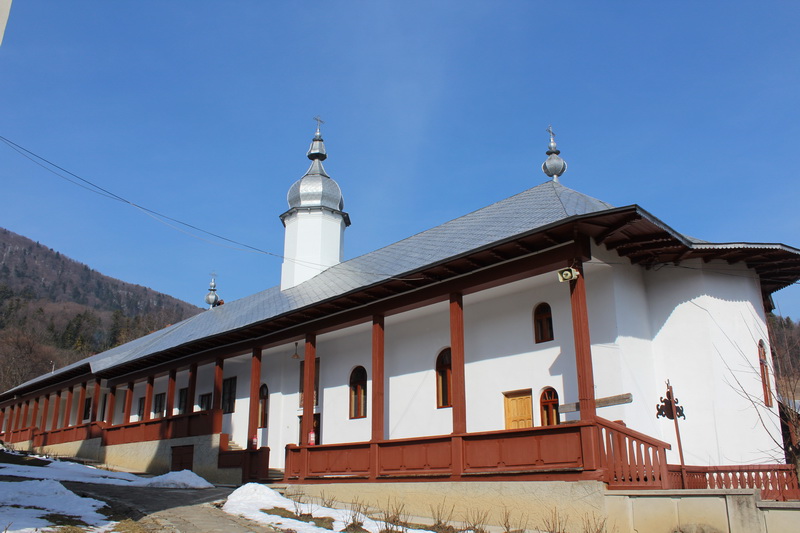
A few hundred metres uphill from Horaița Monastery stands Horăicioara Hermitage, also known as Horaița Veche, which has existed here since 1466, according to the inscription in the church's vestibule.
As the hermitage had no church, its first church, built of wood and dedicated to the Annunciation, was erected in 1480 on the orders of Voivode Ștefan cel Mare și Sfânt. More than 400 years later, a stone church was built at the hermitage (1868), housing the miracle-working icon of the Mother of God. One of the miracles attributed to it is the appearance of the spring near the church, whose water is believed to have healing properties. The spring led to the choice of a second patronal feast alongside the Annunciation: the Life-Giving Spring, celebrated immediately after Easter. The Annunciation, or Blagoveștenia, commemorates the day when Archangel Gavriil told the Virgin Maria that she would give birth to Iisus, and has been celebrated by the faithful since ancient times (for around 1,500 years); it is observed every year on 25 March, nine months before Christmas. The day of the Annunciation is also a blessing for the family, for all parents who bring children into the world. On the feast of the Annunciation, a solemn service is held at Horaița and Horăicioara, and, as fish is permitted on this day of fasting, the faithful are served fish dishes prepared in the monastic tradition.
More on the same topic

Ethnographic museums, treasures of local history and traditions
Ethnographic museums are true treasures and expressions of love for traditions, folklore, and spirituality of the places, and so is the Ethnographic Museum Casa Bunicilor in the village of Mitocul Bălan, Crăcăoani commune.

The Story of the Seven Miraculous Icons of the Holy Virgin and Saint Anne from Neamț Land
Renowned not only for its beauty and historical significance but also called the “Jerusalem of Romanian Orthodoxy,” Neamț Monastery houses the miraculous icon of Virgin Mary with three hands…
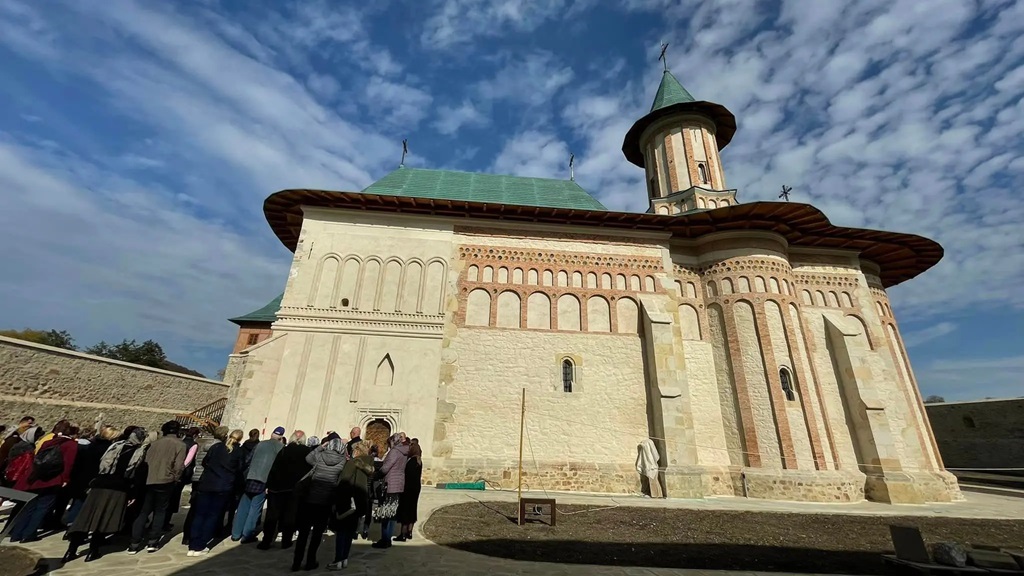
Tazlău Monastery Ensemble has been restored using European Regional Development Fund (ERDF)
After six years of hard work, the project of “reviving” one of the most prestigious establishments of Voivode Stephen the Great, in Tazlău commune, finally came to completion.