The memorial house Vasile Conta from Ghindaoani – Neamt County
Address: village Ghindaoani, village. Baltatesti, Neamt County
Founded: 1993
Category: Memorial House
The visiting program:
daily: 9-17 (October – March);
10-18 (April – September)
Monday: closed
Short description:
Vasile Conta was born in 1845 in the village Ghindaoani. He attends the Faculty of Law in Iasi and in 1872 he obtained a PhD in Law from the University of Brussels. Through its work, Vasile Conta was the first philosopher that succeeded to establish an original philosophical system of his own.
The creation of Vasile Conta represents an important moment in the Romanian philosophy which he manages to bring it back on the European scientific arena, after the works of Dimitrie Cantemir and Nicolae Balcescu. Leading figure of the Romanian culture, Vasile Conta was also professor at the University of Iasi, deputy and minister of public instruction but also a promoter of evolutionary ideas.
The house from Ghindaoani, where Vasile Conta was born, was opened as a memorial museum and contains elements of local history, elements from the life of Vasile Conta and folk materials from that area.

More on the same topic

Neamț receives five nominations across four categories in Destinația Anului
We have good news for everyone who loves Neamț County and all its beauty: it is among the finalists in the Destinația Anului 2024 competition, with five nominations across four categories: Piatra Neamț in the Inspiring Cities category.

Military firefighters bring competition and lots of adrenaline to Târgu Neamț
Târgu Neamț is hosting the 3rd zonal stage of the professional emergency situation competitions, in which representative teams from several counties of the country will participate: Bacău, Botoșani, Iași, Neamț, and Suceava.
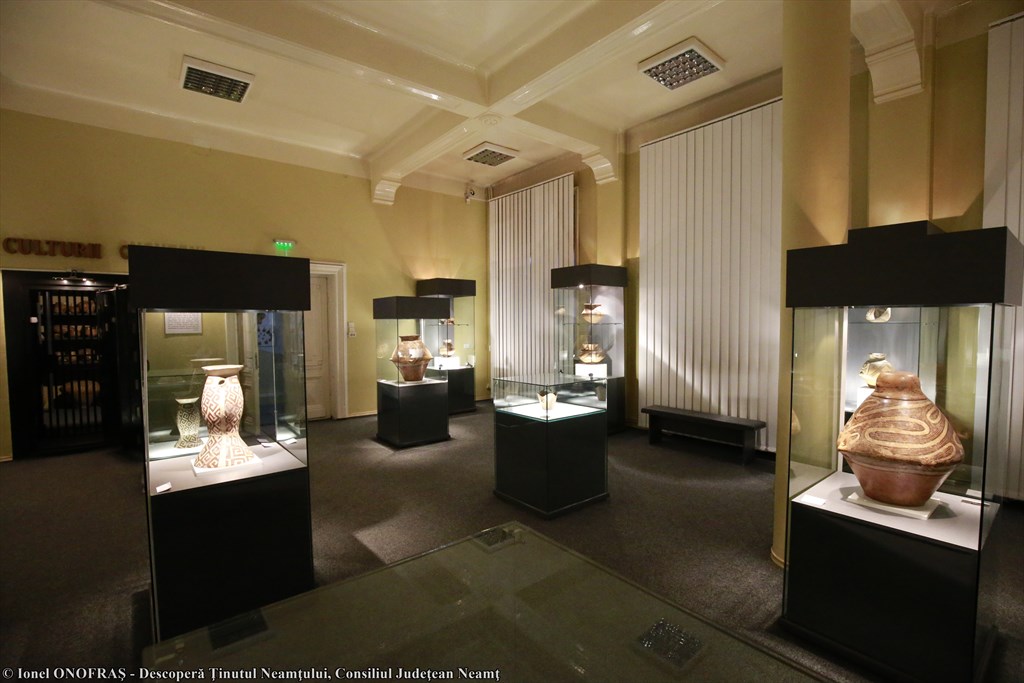
Discover, in Piatra Neamț, the most important Eneolitic art collection from the South-East of Europe
Photo Gallery: Nationally one of the kind, both history and art museum, it currently hosts the most spectacular artefacts, famous objects that belong to the Cucuteni–Trypillia Culture, which is in…