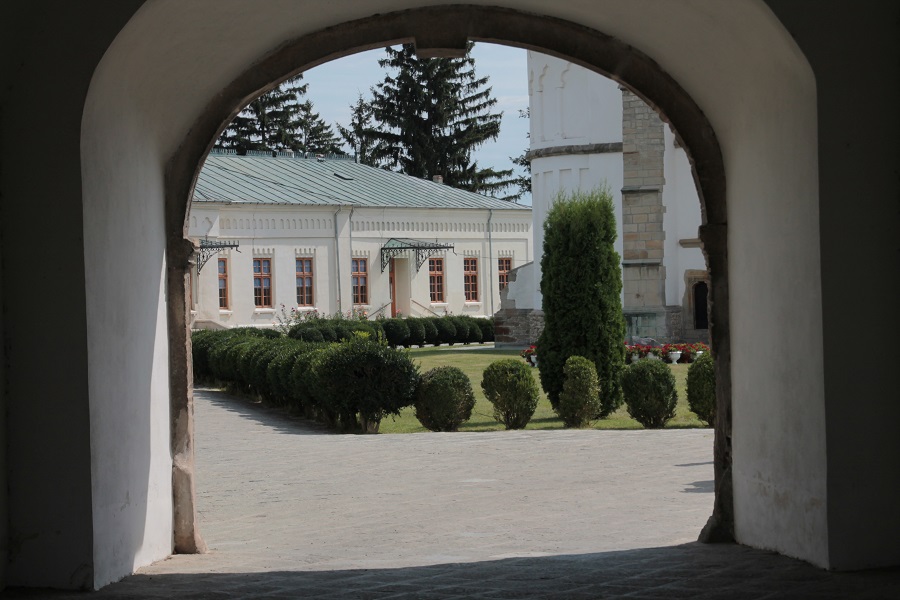
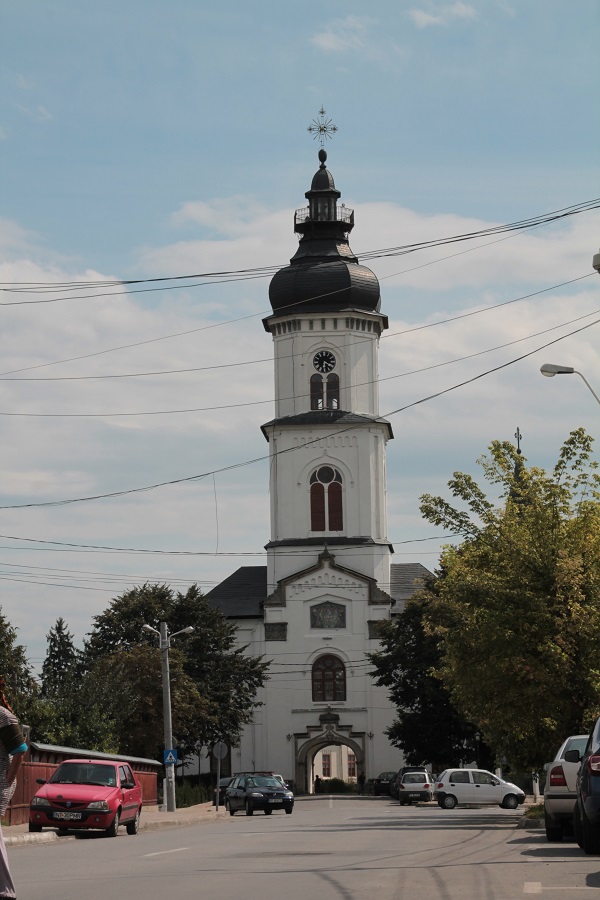
Orthodox Episcopal Cathedral in Roman
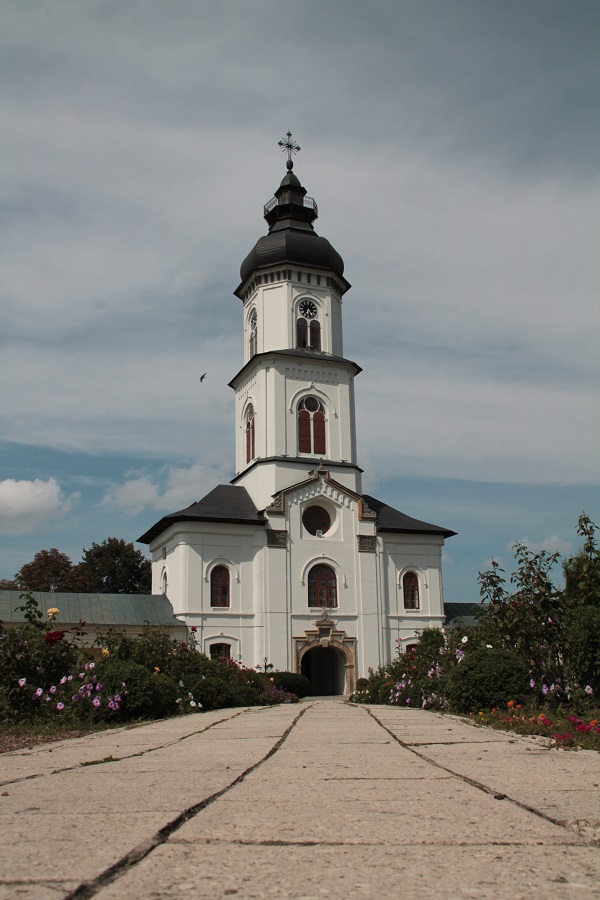
The building, erected in the 16th century, did not undergo major repairs until the time of Bishops Ioanichie (1747–1769) and Leon Gheucă (1769–1786), when work was carried out especially on the tower, the altar and the nave of the church, without significantly altering the original forms. However, the works initiated by Bishop Gherasim in 1805 damaged the monument’s original structure and were described by the scholar and Bishop Melchisedec Ștefănescu as a true “act of vandalism”. At that time, to gain interior space, the separating walls between the porch and the narthex and between the narthex and the nave were removed, and new, discordant painted decoration was added to the tower and the narthex.
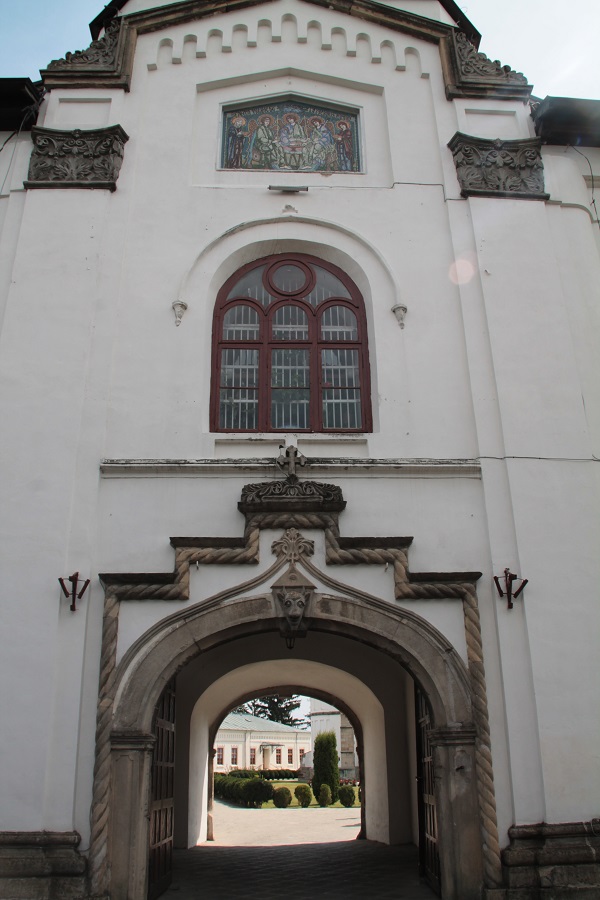
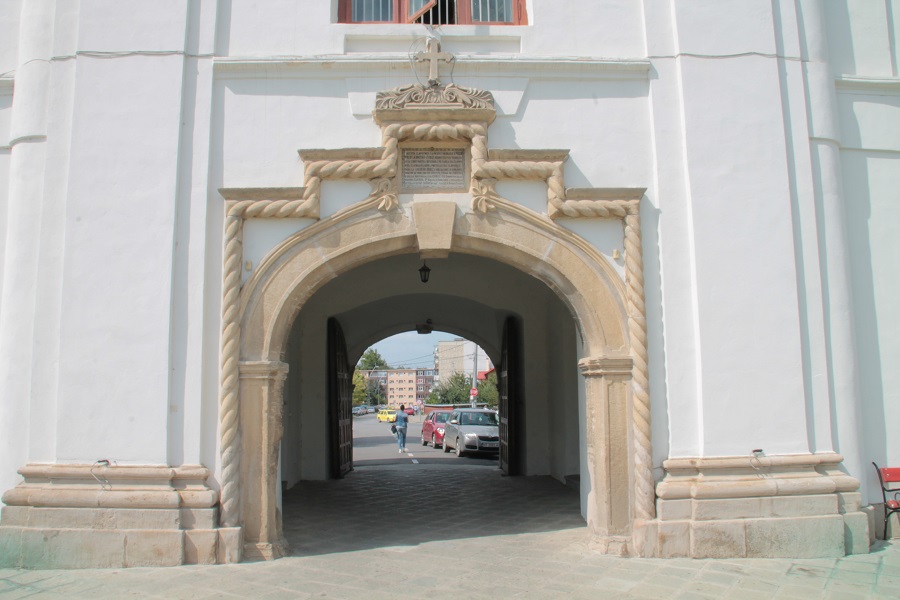
A little later, in the second half of the same century, two annexes were added for practical reasons and still survive today: the vestry and the porch at the entrance to the church, much more spacious than similar structures.
The founders of the cathedral are regarded as the voivodes Petru Rareș and Alexandru Lăpușneanu, who contributed decisively to its construction and embellishment.
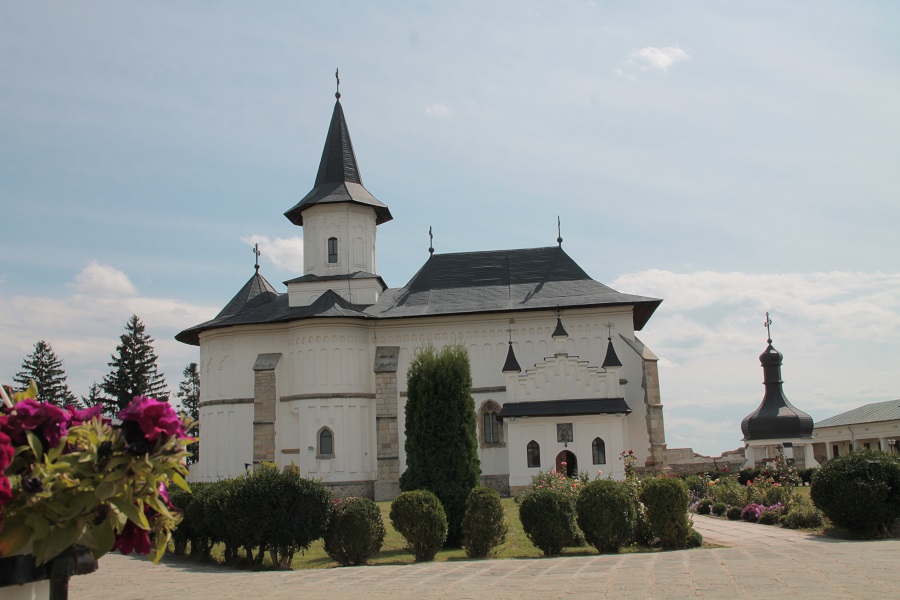
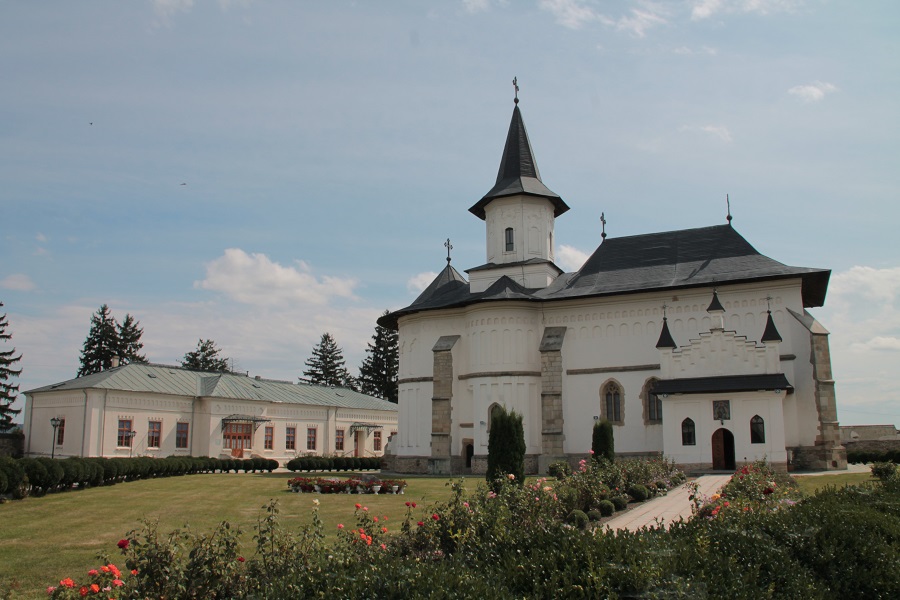
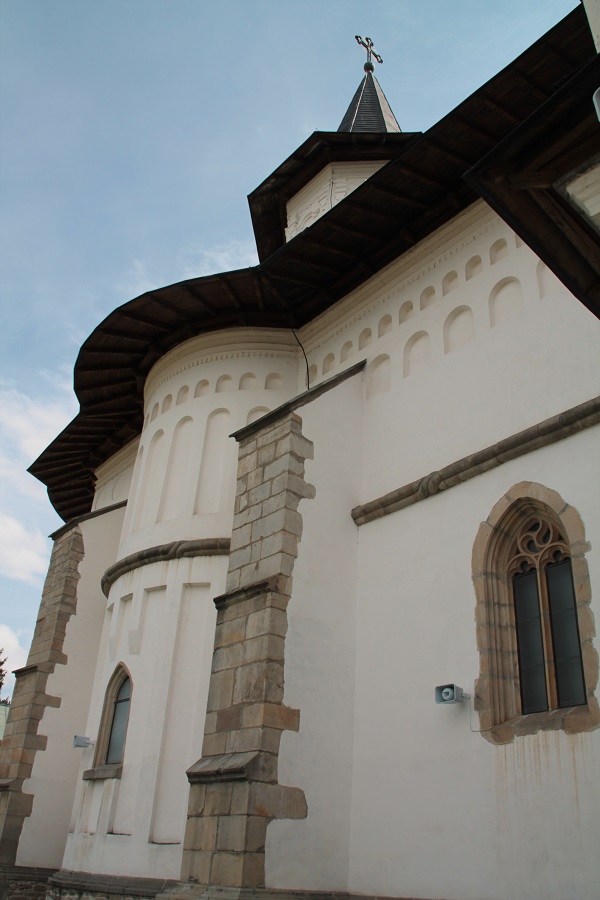
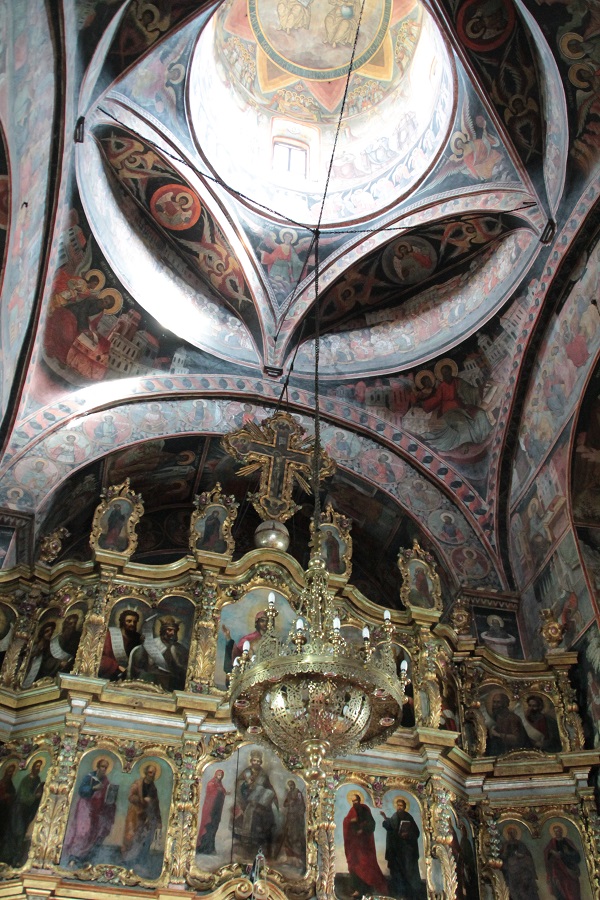
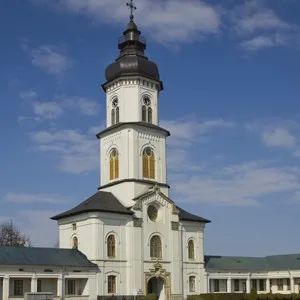
The Episcopal cathedral, dedicated to the Holy Archangels, has a trefoil plan, with an altar apse that is polygonal on the outside and semicircular inside, and circular lateral apses. On the exterior, the whole structure is adorned with a twisted stringcourse and two tiers of blind niches, and it is supported by buttresses that enhance the façades’ sense of balance and elegance. The vaulting system no longer presents a unified structure due to modifications made at the beginning of the 19th century that affected the tower and the altar vault. Today, the tower still retains the traditional Moldavian vault supported by diagonal arches, while the upper part of the altar displays the rather unusual shape of two intersecting cylinders.
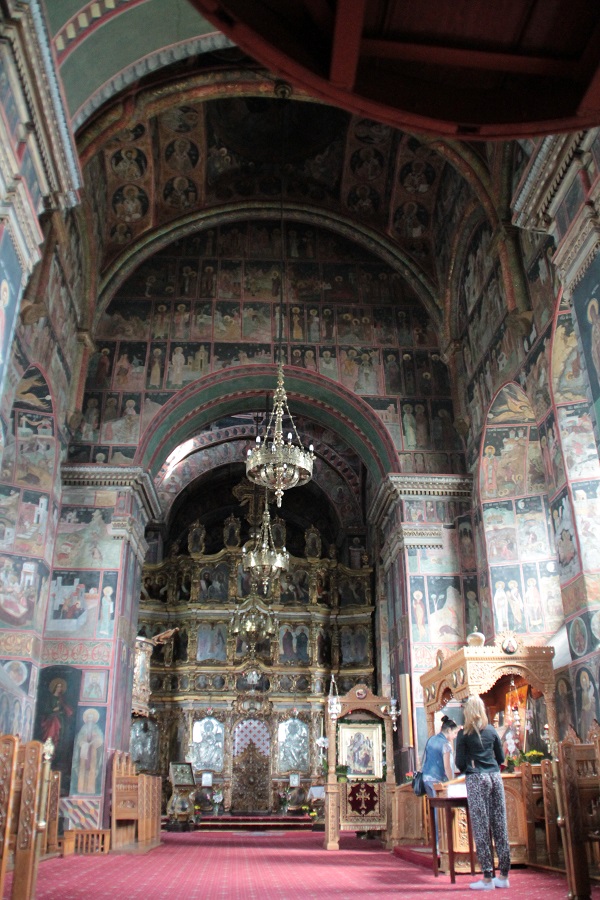
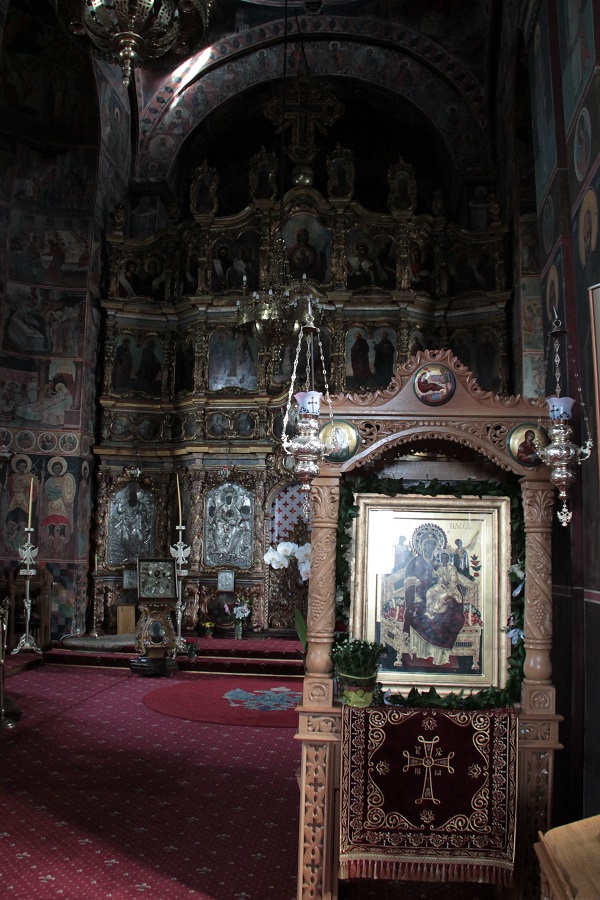
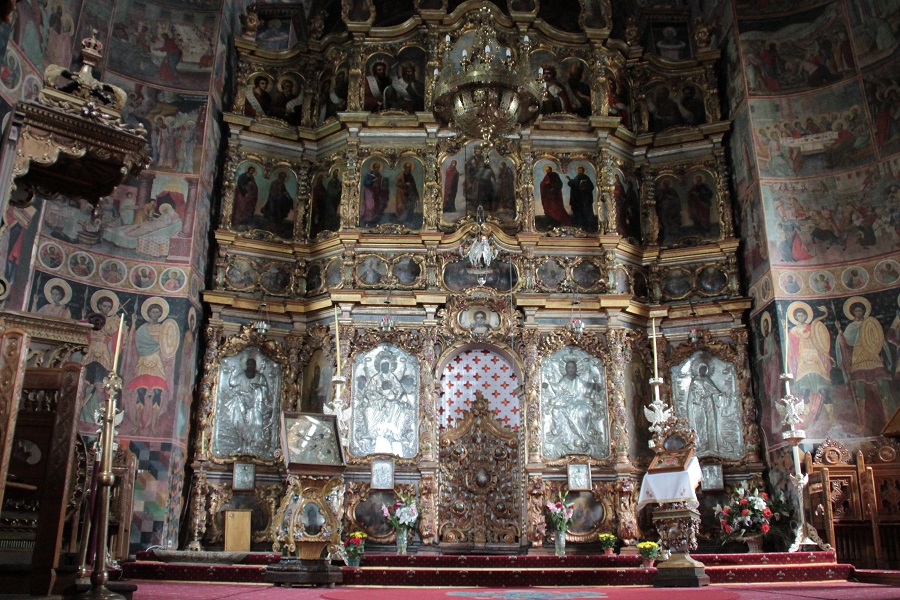
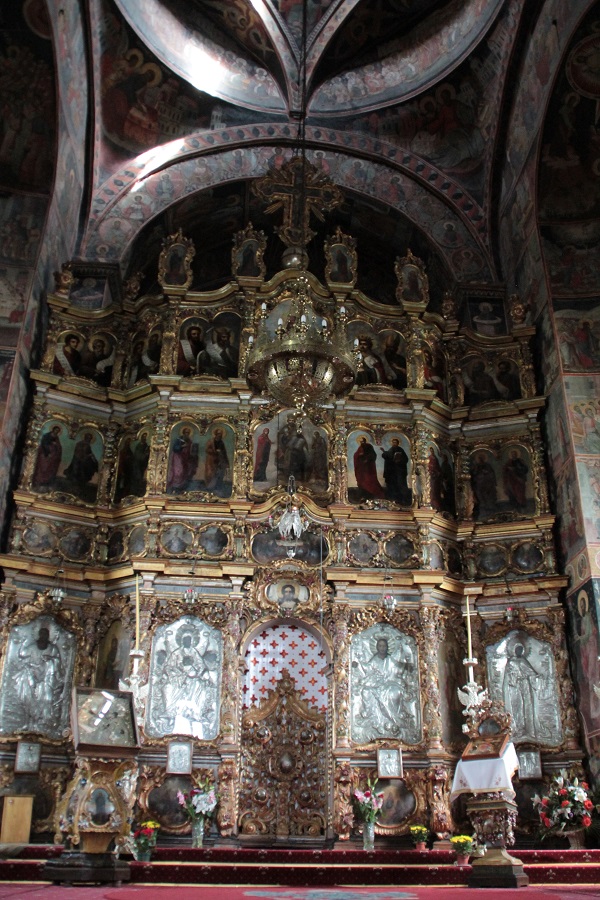
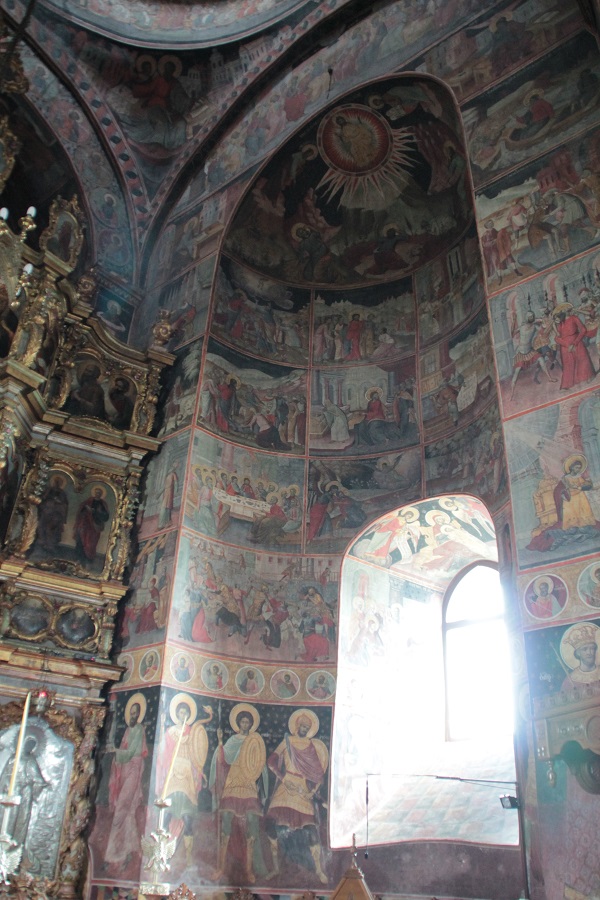
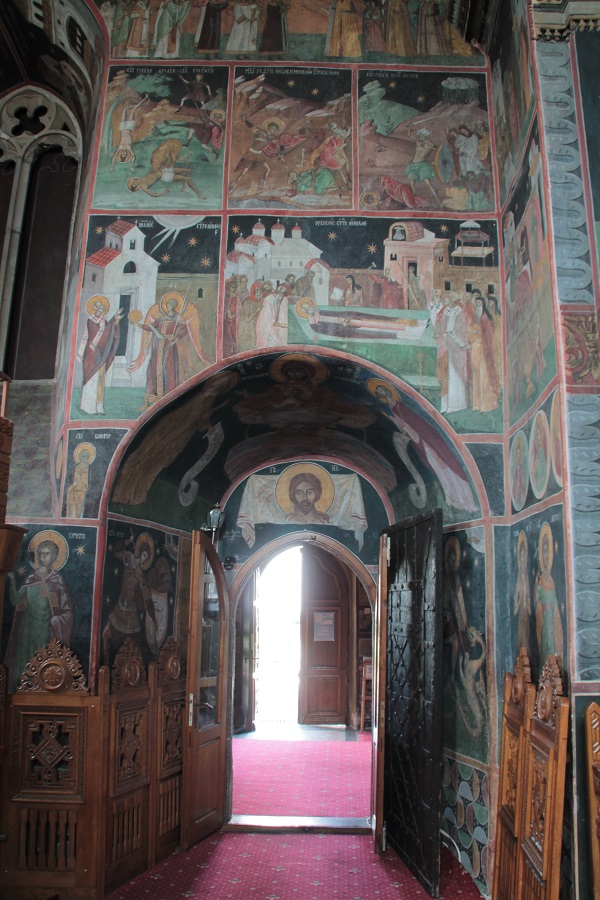
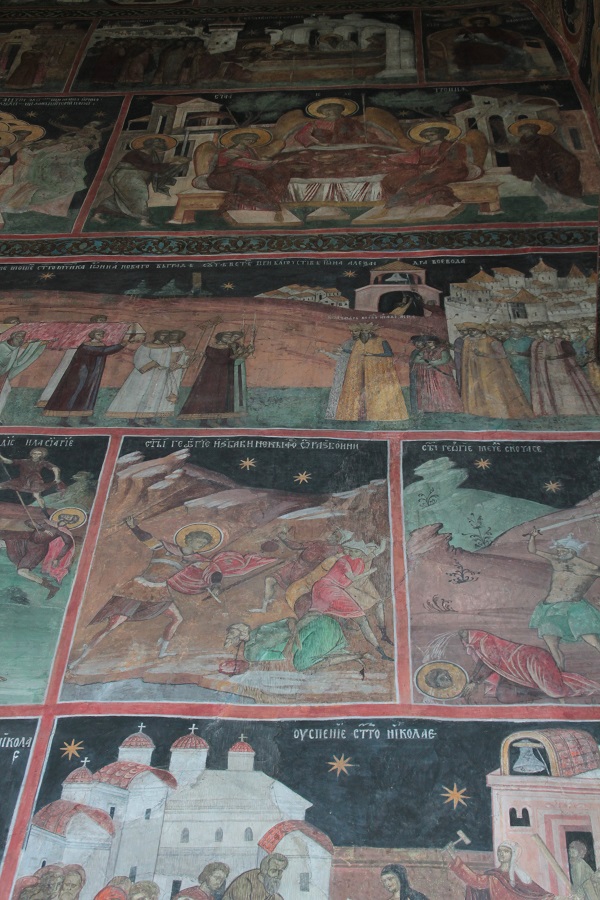
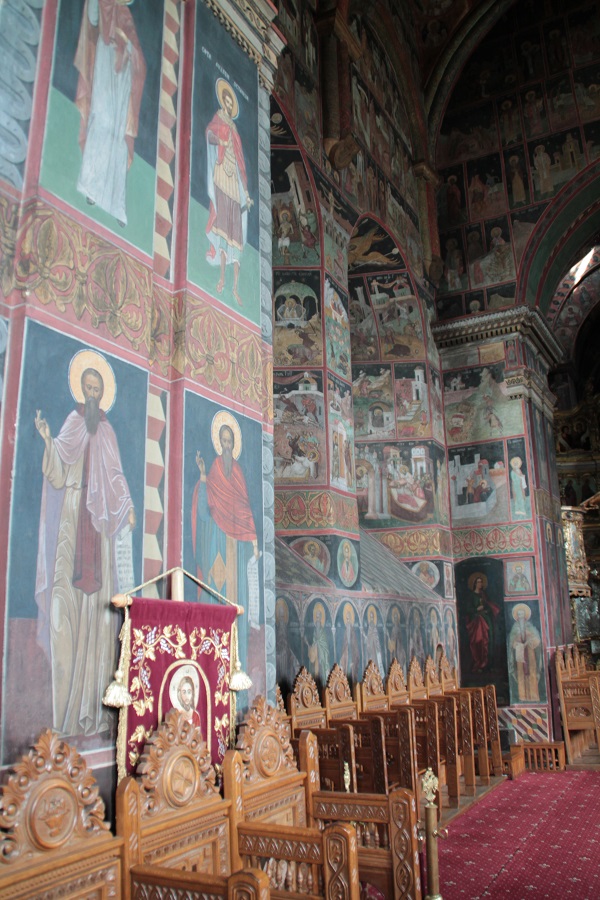
The 16th-century frescoes possess remarkable artistic value, impressing with their bold lines, the accuracy of the forms and the vividness of the colours. The narthex is dominated by the Menologion, which unfolds over eight registers subdivided into scenes for each day of the ecclesiastical calendar, while in the porch, where the walls offer equally spacious areas, the delineation of the scenes is even more striking; each panel constitutes a distinct composition that integrates perfectly into the overall narrative.
The paintings in the narthex and porch of the “Sfânta Parascheva” church can rightly be regarded as bringing the most emancipated artistic vision of medieval reality to 16th-century Romanian art.
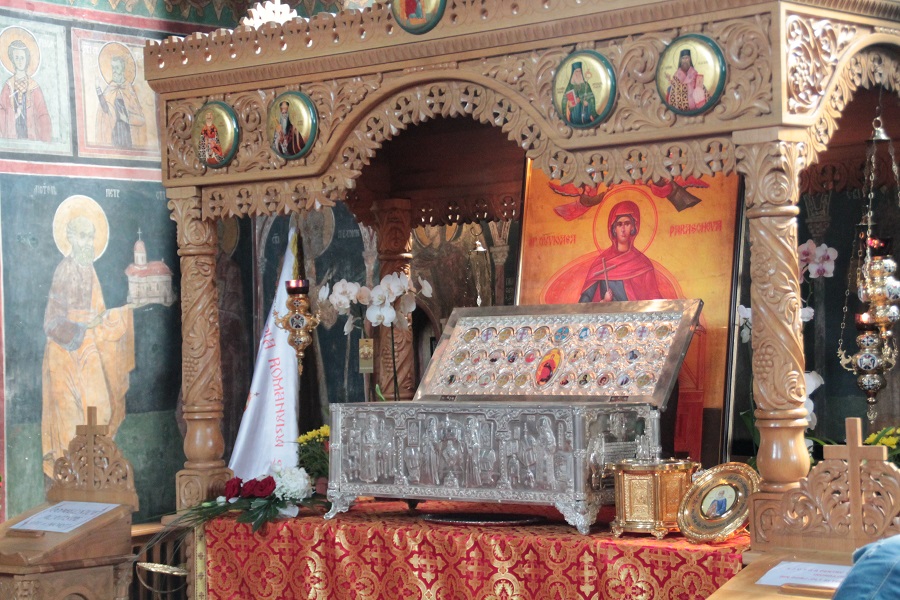
Two icons among those depicting Saint Parascheva’s earthly ascetic struggles and miracles to the faithful deserve mention. Both are painted in much the same manner, unprecedented in Romanian Orthodox iconography. These unique works can be admired above the entrance door, in the porch. One of them, dating from 1550, shows Saint Parascheva holding the Holy Cross in her right hand, seated on a throne like an empress, with two angels placing a crown on her head. Beside it is another painting, created in the nineteenth century.
Between 1660 and 1671 the diocese of Roman was led by Dosoftei, one of the founders of our national literature, rightly regarded as “the first great Romanian lyric poet”. Recent philological research leads us to believe that precisely during the years spent at Roman he prepared most of the monumental work “Psaltirea în versuri” which Dosoftei printed in 1673, after his transfer to the metropolitan throne of Moldavia.
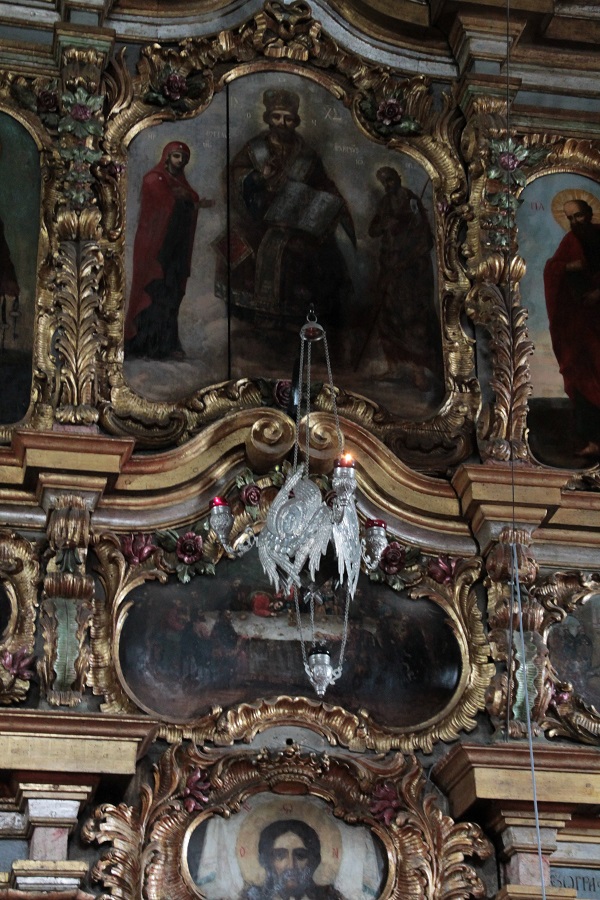
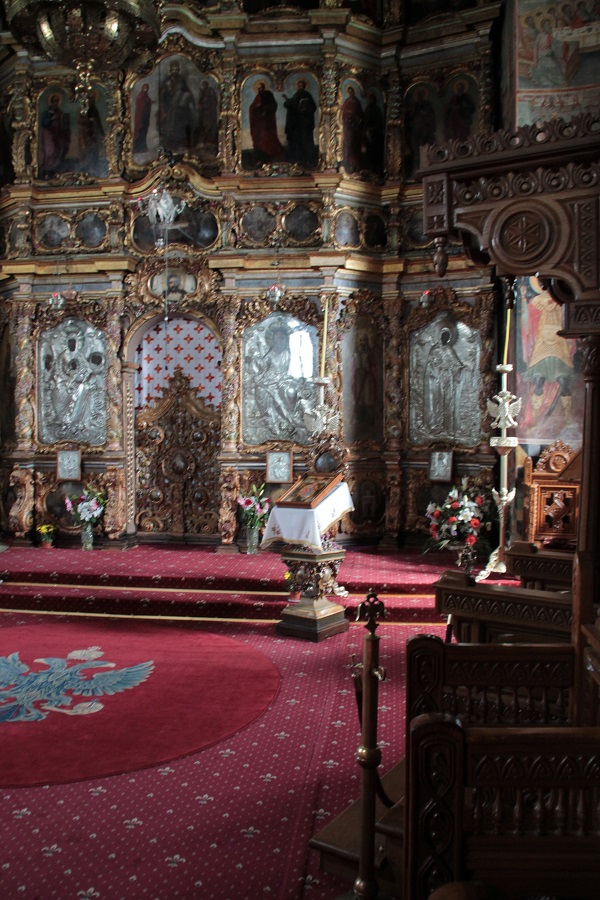
The Diocese of Roman now holds one of the country’s oldest and most valuable libraries. Among the 20,000 volumes kept here are approximately 700 old Romanian, Slavonic and Greek books, to which are added 91 manuscripts from various periods and in various languages. Among the treasures are the Deisis icon from the 16th century, a true masterpiece of the medieval Romanian school of painting on wood, the phelonion of Saint John Chrysostom, stylistically attributed to Moldavian embroidery of the 15th–16th centuries, and the great epitaphios from the 18th century depicting the Lamentation and burial of Jesus.
Photo gallery:
More on the same topic

Ethnographic museums, treasures of local history and traditions
Ethnographic museums are true treasures and expressions of love for traditions, folklore, and spirituality of the places, and so is the Ethnographic Museum Casa Bunicilor in the village of Mitocul Bălan, Crăcăoani commune.

Neamț receives five nominations across four categories in Destinația Anului
We have good news for everyone who loves Neamț County and all its beauty: it is among the finalists in the Destinația Anului 2024 competition, with five nominations across four categories: Piatra Neamț in the Inspiring Cities category.

The Story of the Seven Miraculous Icons of the Holy Virgin and Saint Anne from Neamț Land
Renowned not only for its beauty and historical significance but also called the “Jerusalem of Romanian Orthodoxy,” Neamț Monastery houses the miraculous icon of Virgin Mary with three hands…