What to visit in the Curtea Domneasca Complex in Piatra Neamț
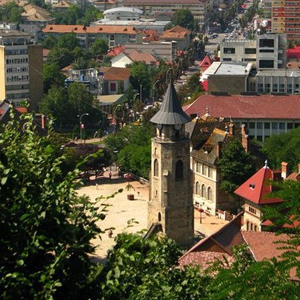
Curtea Domneasca in Piatra Neamț was built between 1468 and 1475 by Stephen the Great. The Curtea Domneasca complex served as an administrative centre for all of Neamț County. “Saint Ioan Botezatorul” Church was built later, followed by Stephen the Great's Tower to meet the church's needs.
The Curtea Domneasca Complex in Piatra Neamț also includes Curtea Domneasca Museum, beside Petru Rareș secondary school. Three outstanding museums in Piatra Neamț are also located here: the Art Museum, the Ethnography Museum and the Cucuteni Eneolithic Art Museum.
Curtea Domneasca Piatra Neamț on Google Maps
“Saint Ioan Botezatorul” Princely Church in Piatra Neamț was built between 15 July 1497 and 11 November 1498 and is the most valuable building in Stephen the Great's Curtea Domneasca Complex. With a length of 25.90, a width of 8.10 and a height of 11.30, this church stands out for its shape, refined style and distinctive interior layout, all characteristic of the Moldavian style.
Between 1871 and 1973, several repairs were carried out inside and outside the church at Curtea Domneasca in Piatra Neamț, and a new iconostasis was installed because the original had not survived. It was carved by “Ghersim the monk and Tanase the carver” and painted in the Neo-Byzantine style by Panaite Mavrodin and C.V. Basarab, following the model at Agapia.
Stephen the Great's Tower (as the building is known in Piatra Neamț) was built in 1499, a year after the church was completed. Still regarded as the emblem of this ancient Romanian town, Stephen the Great's Tower survives today in its original form, without significant alterations.
For many years the tallest building in the town, the bell tower at Curtea Domneasca in Piatra Neamț was raised in the second half of the 19th century, with a room for “fire watchers” added above the highest medieval level.
The Curtea Domneasca Exhibition in Piatra Neamț opened to visitors in 1986 and includes three-dimensional objects and documents relating to Curtea Domneasca, first documented on 20 April 1491. The museum's permanent exhibition includes three-dimensional archaeological objects and documentary material discovered around Curtea Domneasca or elsewhere in the Piatra Neamț area.
The museums around Curtea Domneasca are worth mentioning, even though their buildings have nothing in common with the Curtea Domneasca Architectural Complex.
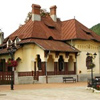
The Cucuteni Eneolithic Art Museum opened in the summer of 2005 and is Romania's first Cucuteni museum. It stands immediately beside the Curtea Domneasca Complex in Piatra Neamț. The Cucuteni Eneolithic Art Museum has two exhibition rooms. The first, on the ground floor, displays decorative art applied to vessels, while the second, on the upper floor, displays figurative artworks in anthropomorphic and zoomorphic forms from every stage of the Precucuteni-Cucuteni cultures.
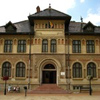
The first art collection in Piatra Neamț was established in 1960 within Neamț Archaeology Museum. It was only in 1980 that this collection became Piatra Neamț Art Museum, operating as a separate institution within the Neamț County Museum Complex.
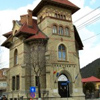
The museum building was constructed in 1930 by the Italians Carol Zani and Vincenzo Puschiasis and stands near the church and tower at Curtea Domneasca in Piatra Neamț.
The Ethnography Museum was established in 1980 and houses an impressive exhibition of ethnographic objects and folk art from Neamț, illustrating the occupations, customs and dress of local people, as well as traditional wooden architecture. The Ethnography Museum in Piatra Neamț stands a few metres from Stephen the Great's Tower at Curtea Domneasca in Piatra Neamț.
More on the same topic

Neamț receives five nominations across four categories in Destinația Anului
We have good news for everyone who loves Neamț County and all its beauty: it is among the finalists in the Destinația Anului 2024 competition, with five nominations across four categories: Piatra Neamț in the Inspiring Cities category.

Military firefighters bring competition and lots of adrenaline to Târgu Neamț
Târgu Neamț is hosting the 3rd zonal stage of the professional emergency situation competitions, in which representative teams from several counties of the country will participate: Bacău, Botoșani, Iași, Neamț, and Suceava.
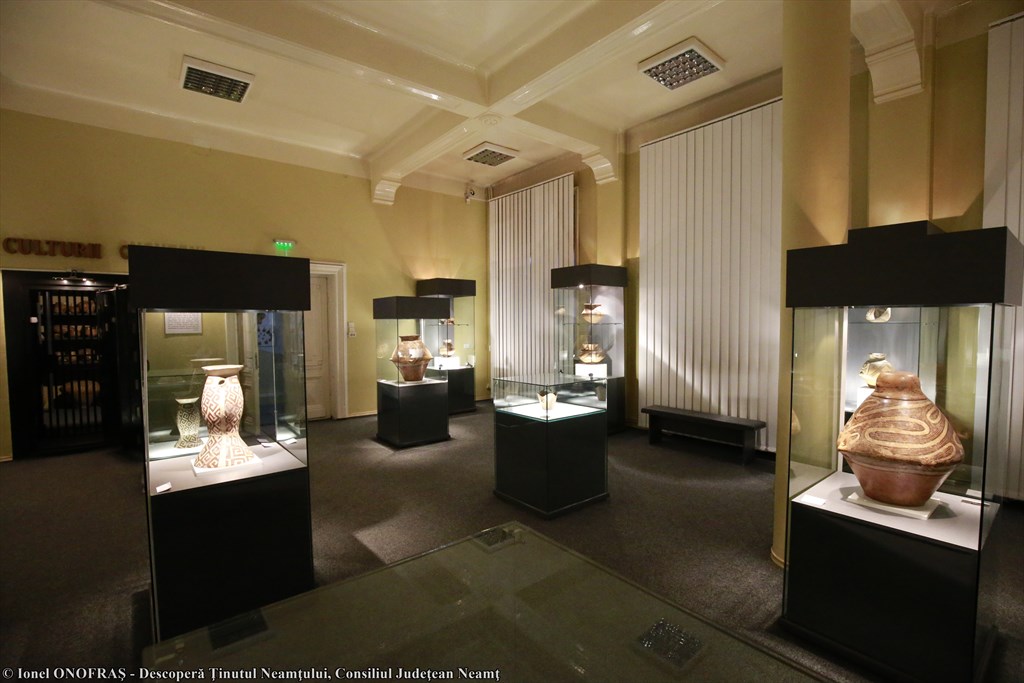
Discover, in Piatra Neamț, the most important Eneolitic art collection from the South-East of Europe
Photo Gallery: Nationally one of the kind, both history and art museum, it currently hosts the most spectacular artefacts, famous objects that belong to the Cucuteni–Trypillia Culture, which is in…