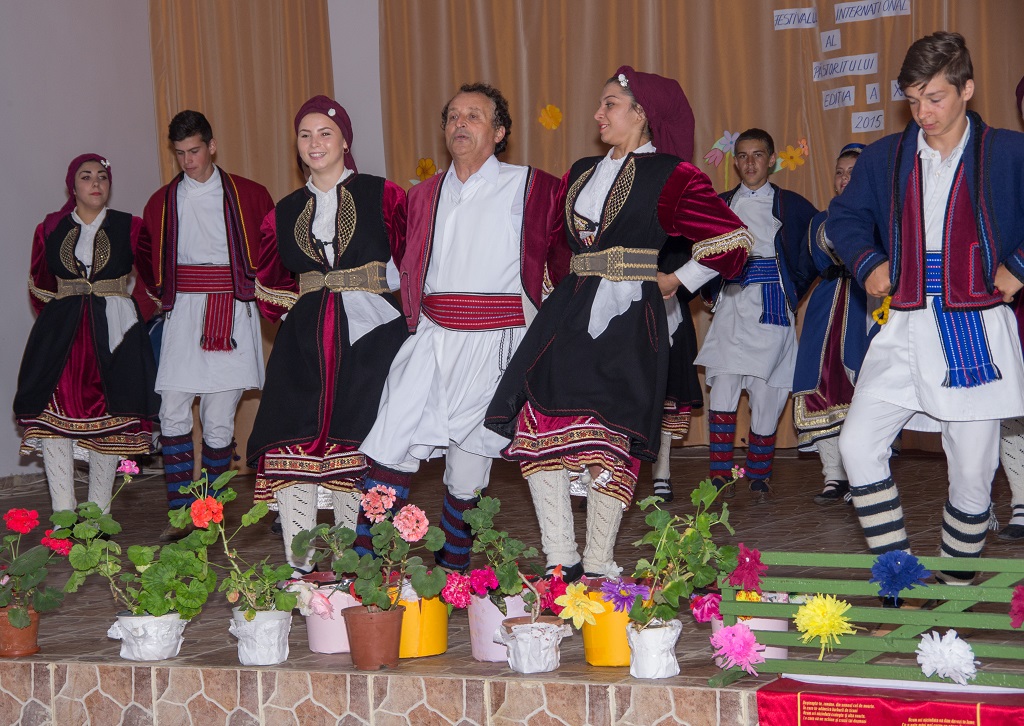
Winter Traditions and Customs Festival “Steaua sus răsare” 2017 (II)
The second day of the Festival of winter traditions and customs “Steaua sus răsare” 2017
As every year, some of the most spectacular groups performing traditional customs gather in Piatra-Neamț, both from the county and from across the country.
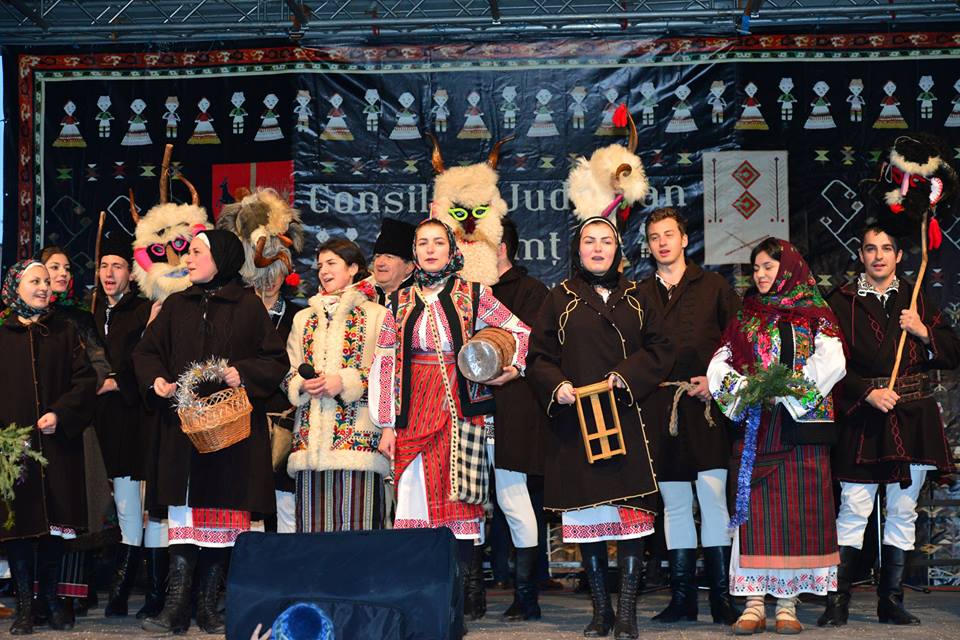
Bands of carollers, performers reciting New Year wishes and masked performers will greet the audience with the beauty of carols, the little plough ritual and the decorated-twig ritual, as well as the ancient goat, bear and stag dances in this symbolic ceremony of life and death, in which the mask transcends boundaries and unites this world with the world beyond, while time dies only to be reborn.
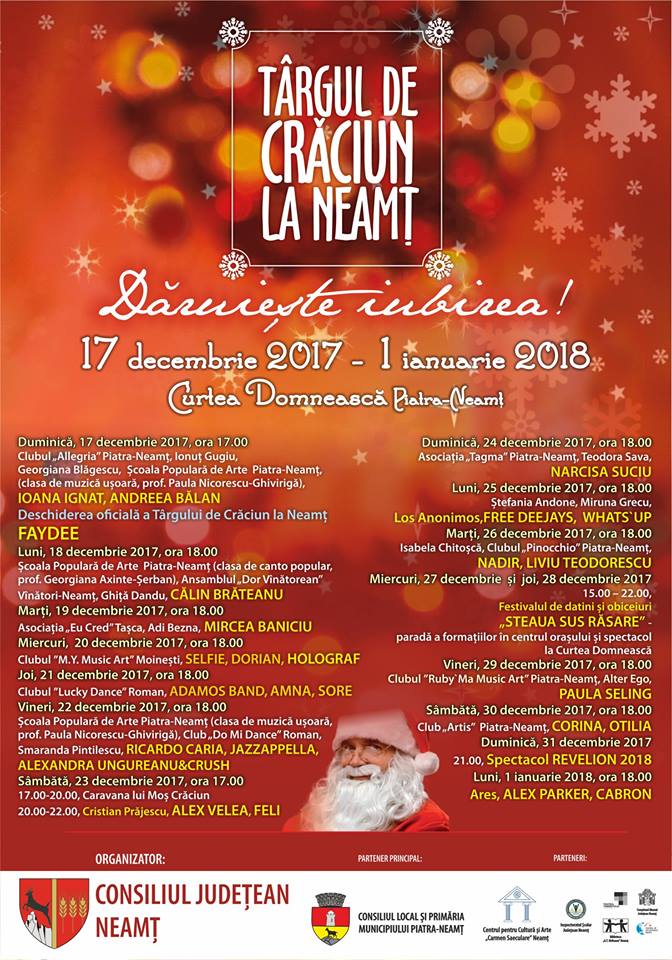
“Carmen Saeculare” Centre for Culture and Arts Neamț organises on Thursday, 28 December, the second day of the Festival of Traditions and Winter Customs “Steaua sus răsare”, an event which, as last year, is part of the Christmas Fair programme at Neamț.
This year, the “spectacle” of the old year's death and the new year's rebirth will be brought to the town's streets and the stage on the Curtea Domnească Plateau by ensembles from abroad, from counties across the country and by groups from Neamț. The list of participants begins with “Căiuții de la Mihoreni” (Cernăuți, Ukraine) and the “Chișcărenii și Moștenitorii” Folk Ensemble (Republic of Moldova). Guests from across the country include the “Cununa Someșană” Ensemble (Maieru, Bistrița Năsăud County), the “Dor” Aromanian Folk Ensemble (Sarighiol, Tulcea), the “Cerbul” Folk Ensemble from Heleșteni (Iași County), Urșii de la Asău (Bacău County), the “Capra de la Mălini” Traditional Customs Ensemble and the “Bogdana” Folk Group from Bogdănești (both from Suceava County), and the Winter Traditions and Customs Ensemble from Tudora (Botoșani County). And from Neamț: the Agapia Traditions and Customs Procession, the “Roznovenii” Traditions and Customs Procession (Roznov), the “Ozana” Folk Ensemble from Târgu Neamț, and the “Floricică de la munte” Ensemble of the “Carmen Saeculare” Centre for Culture and Arts Neamț.
The second day of the Festival will begin with the traditional parade of groups, starting at 16:00 and following the route Teatrul Tineretului – House of Culture – History Museum – Hotel “Ceahlău” – Teatrul Tineretului. This will be followed by an extraordinary performance of masked traditions and winter holiday customs on the stage set up on the Curtea Domnească Plateau.
Presentation of the participants:
Aromanian Folk Ensemble “DOR” (Sarighiol de Deal, Tulcea County)
38 years ago, in Sarighiol de Deal, Tulcea County, the Aromanian Folk Song and Dance Ensemble was formed, consisting of forty enthusiastic young dancers, vocal soloists and instrumentalists.
The leader of the Ensemble, Dumitru Caimacan Popescu, a teacher, doctoral student, engineer and school director, identified with the dreams and aspirations of the new group from the very first moments.
Leading figures in the field (Tita Sever, Elise Stan, Gheorghe Baciu, Emilia Comișel and many others) have praised, over the years, the Ensemble’s artistic performance and authenticity in county, national and international shows or festivals. The group has performed on numerous stages across the country (Bucharest, Baia Mare, Bistrița, Constanța, Rădăuți, Iași, Brașov, Zalău, Slatina, Tulcea, Botoșani, Suceava) and has appeared in several cultural radio and television programmes.
During 2013–2015, the Ensemble presented over 80 performances, winning the Grand Prize – the “Regele Brazilor” Trophy – at the “Regele Brazilor” Festival in Sulina.
The director and instructor of the Aromanian Folklore Ensemble “Dor” from Sarighiol de Deal is Dumitru Caimacan Popescu, a teacher, doctoral student and engineer.
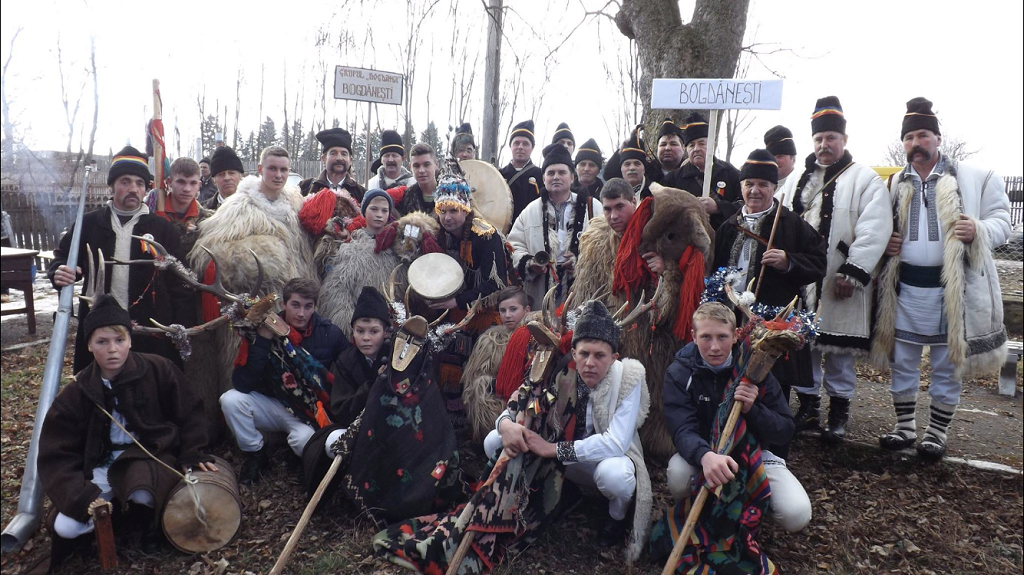
Folk Group “Bogdana”
Folk Group “Bogdana” from the commune of Bogdanești, Suceava County, led by Mihai Airinei, preserves the customs, traditions and folk practices of the winter holiday period through carols, plugușor (a traditional New Year’s ploughing chant), the goat and bear dances, and also the “Hora Bogdaneștilor”.
The group was founded twenty years ago and has produced specialised radio and television programmes, and has taken part in numerous national and international festivals that preserve and promote Romanian folk traditions.
The Deer of Heleșteni, Iași County
The Deer from the commune of Heleșteni, Iași County, represents the folkloric area of the Siret Valley (sub-area Pașcani-Târgu Frumos-Roman). Led by the mayor of the commune, Constantin Hîra, the group has taken part in major customs and traditions festivals in Moldavia – Iași, Pașcani, Târgu Frumos or Vatra Dornei. The repertoire of the “Deer of Heleșteni” includes the two main pieces: the deer dance and its spell.
The stag, in Romanian folk mythology, is a symbol of justice and purity. The “Stag” mask from the Siret Valley resembles that of a goat. The head is made of wood, and the body is made from a decorated carpet or woven rug. The antlers and their ornaments are particularly striking. The stag is surrounded by “old men and women”, musicians and dancers with or without masks, dressed in brightly coloured costumes. In general, the stag dance is performed by a separate troupe, without being combined with other animal representations.
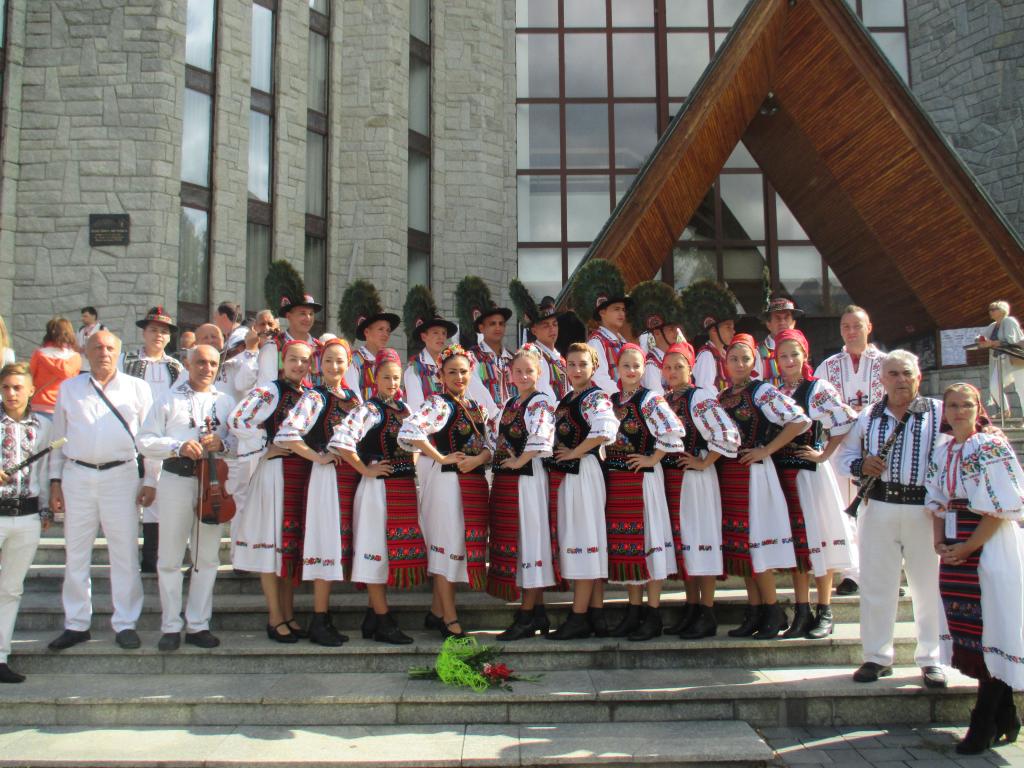
The “Cununa someșană” Ensemble (Maieru commune, Bistrița-Năsăud County)
Founded in 1970, the “Cununa Someșană” Ensemble showcases an authentic repertoire from the Someșul Mare Valley, combined with the authentic folk costumes of the same area. Its repertoire includes dances from across Transylvania, Banat, Maramureș and Bucovina.
Its most recent awards are the “Silver Ciupaga” Trophy (the Silver Hatchet) and the Silver Medal at the 47th International Folklore Festival Competition in Zakopane, 2015 (Poland), as well as the Gold Medal at the World Folklore Festival “Les Cultures du Monde” – Gannat, France, 2016.
Both at the two festivals and at the other venues where it was invited, the ensemble “Cununa Someșană” stood out for the quality of its programme and the talent and skill of the young folk artists from Maieru. They presented a striking stage interpretation of the traditional Someș wedding custom, showcasing the unrivalled beauty of the folk costumes and folklore of the Someș Valley.
The ensemble's choreography is by Aurel Adrian Salvan, and the musical direction by Ionel Oarcăs. For the Festival at Piatra-Neamț, the group prepared a choreographic piece from Bistrița-Năsăud – a wedding custom from the Someșul Mare Valley, a performance by vocal soloists Silviu Avram and Ionela Varvari, and a suite of dances from the Transylvanian Plain.
Like any self-respecting professional ensemble, the performers from Bistrița in “Cununa someșană” have prepared a programme of carols and winter customs representative of their home region.
The Bears of Asău, Bacău County
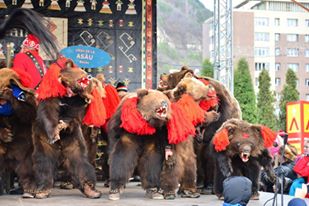
The origins of the bear dance in Asău go far back in time. In the 1960s, Gavrilă Nicodim, a well-known organiser of the bear troupe, first introduced the use of two drumsticks on a larger drum, a custom copied from friends in Dărmănești. The rhythmic drumming characteristic of Asău is his creation and remains unique and representative. Gavrilă Nicodim was the first to gather several bear skins – eight – and came up with the bear-on-a-pole dance, a tradition still carried on today by the people of Asău and now characteristic of the commune. Today, his son, Daniel Nicodim, is trying to carry on the tradition inherited from his father and has gathered an impressive number of people – 60. The bear troupe from Asău now takes part in every major festival of Romanian customs and traditions.
“Capra din Farcașa”
The folk customs group “Capra din Farcașa”, coordinated by Cristinel Gheorghiu, is composed of over sixty members and has taken part in festivals of traditions and customs organised in the county.
Folkloric ensemble “Floricică de la Munte” of the “Carmen Saeculare” Centre for Culture and Arts Neamț
Founded in 1971, the “Floricică de la munte” Folk Ensemble has established itself over time as one of the foremost custodians of traditional Romanian culture. For four decades, the ensemble from Neamț has travelled across Europe, bringing with it the beauty of Romanian folk dances, songs and costumes. The Ensemble has won awards at prestigious events at home and across Europe: the International Folklore Festival in Reims (France), the Folklore Festival in Zakopane (Poland), the festivals in Zavet and Lovec (Bulgaria), the Folklore Festival in Krakowia (Poland), the International Folklore Festival in Kikinda (Serbia), the festival in Champtoce (France), the festival in Quartu Sant’Elena (Sardinia, Italy), the “Olympus” International Festival (Katerini, Greece) and the festival in Adapazari (Turkey).
A component of the “Carmen Saeculare” Centre for Culture and Arts Neamț, the “Floricică de la munte” ensemble is the one that brings to the stage the choreographic, musical and literary folklore of the area.
Programme:
More on the same topic
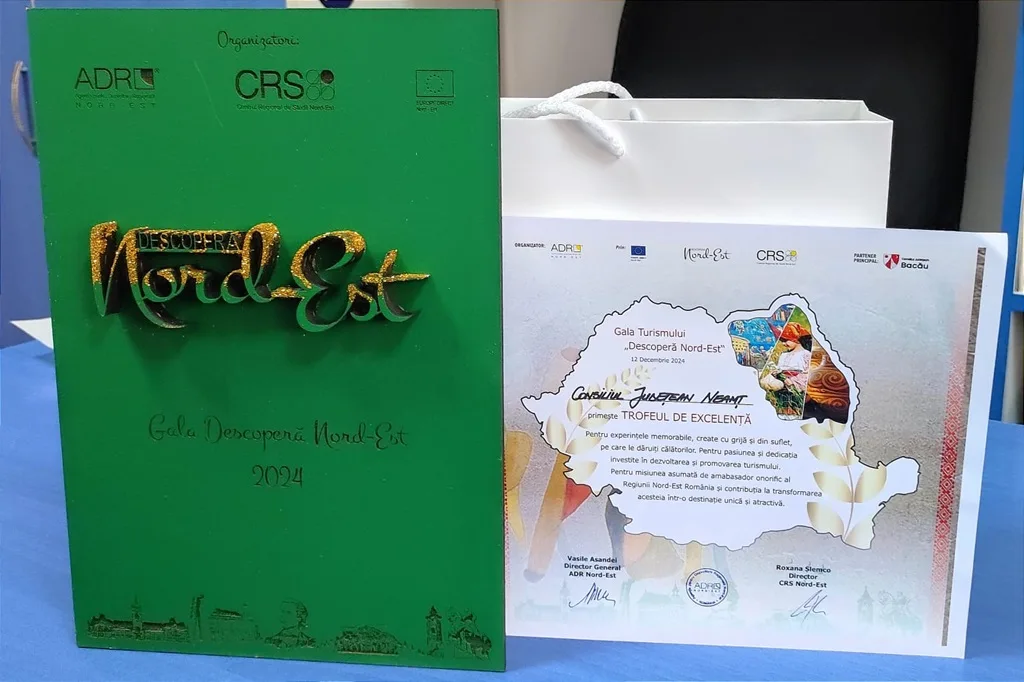
Neamț Awards at the Discover North-East Tourism Gala, 2024
The awards were presented at the 9th edition of the Discover North-East Tourism Gala on December 12, 2024: Newcomer – Award for new locations/attractions/tourist products or emerging tourist destinations: Zenzia Glamping Piatra-Neamț. Poem Rural Piatra-Neamț.
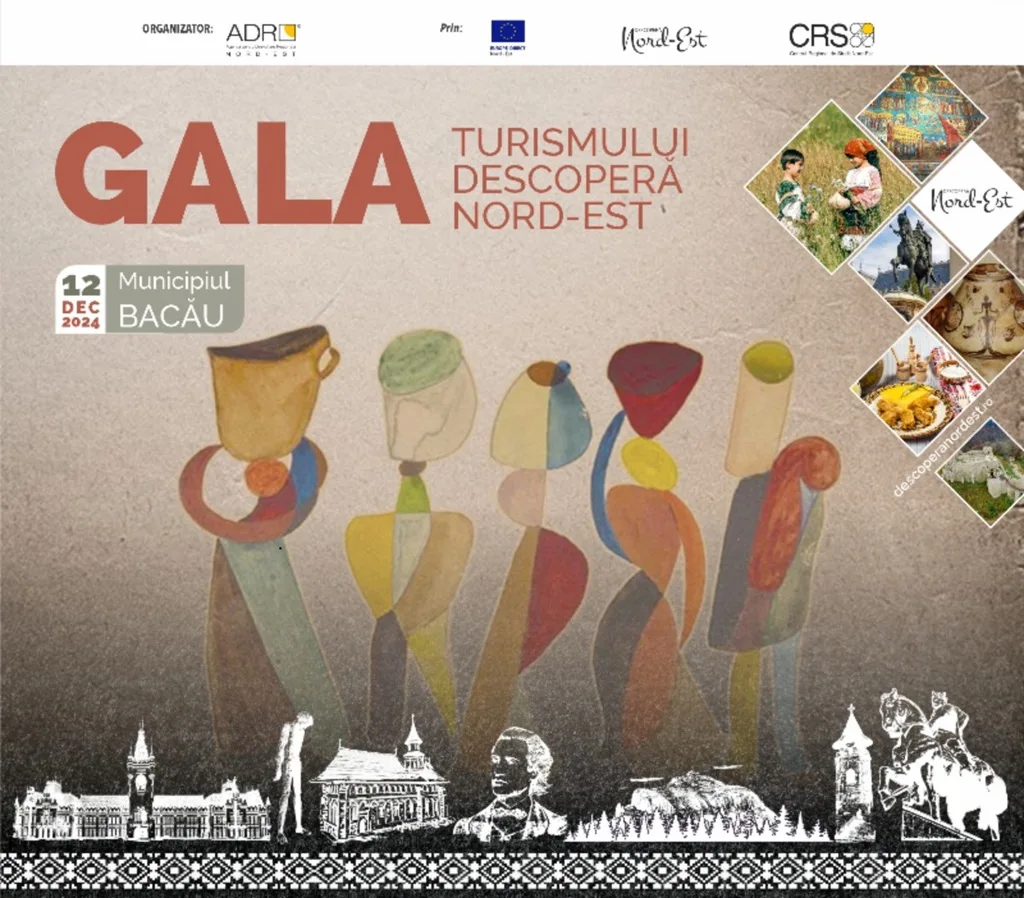
Excellence in Developing Tourism in Neamț at the 9th Edition
On December 12, 2024, we celebrate the tourism initiatives of Neamț County, alongside those from the North-East Region of Romania—a uniquely beautiful and rich area that deserves to be discovered by tourists.
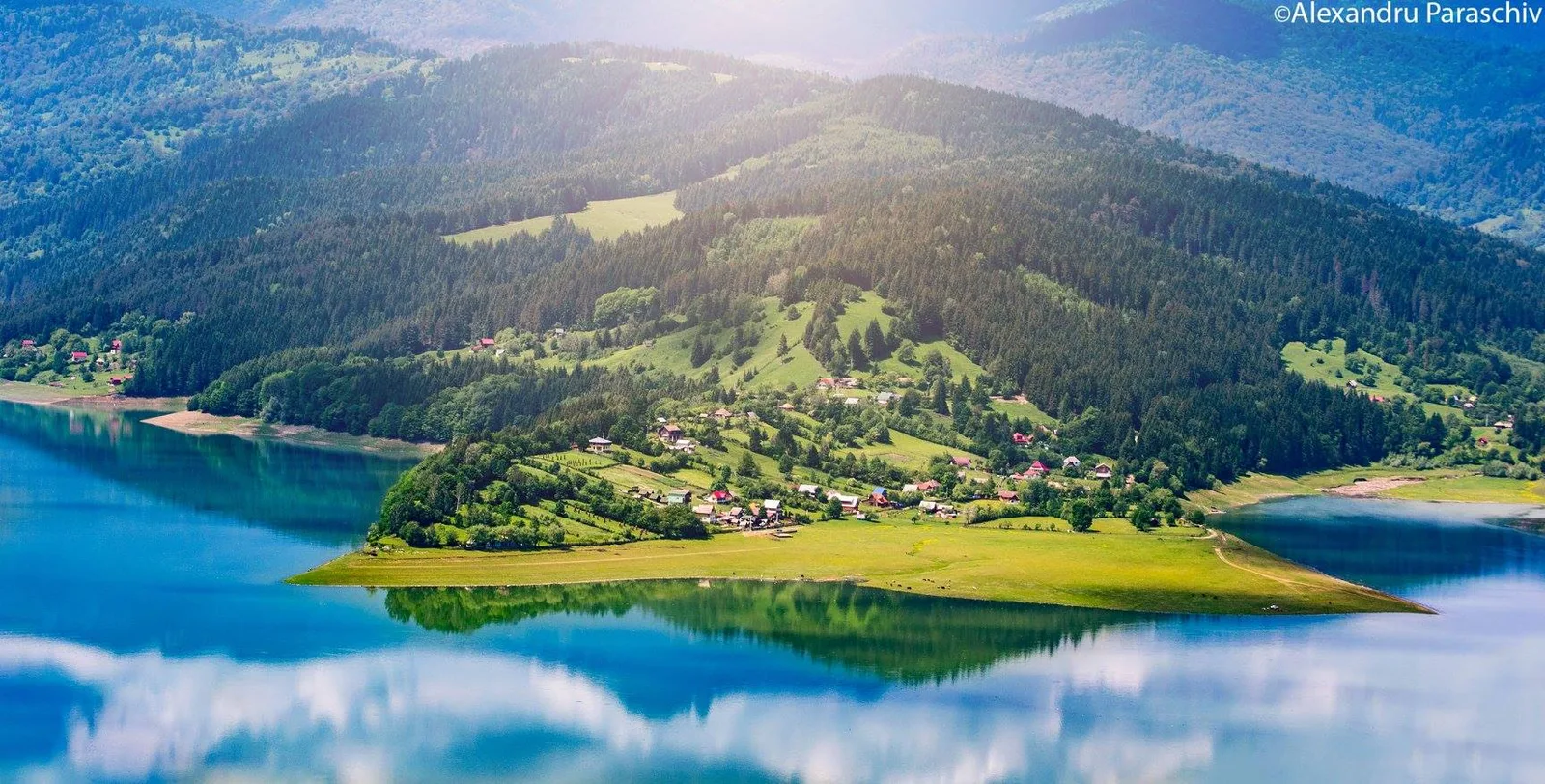
Nominations for Destination of the Year 2025
In the category Enchanted Realms – Geographical areas or localities with a rich treasure of nature, history and tradition our proposal is: The city of Bicaz and its surroundings.