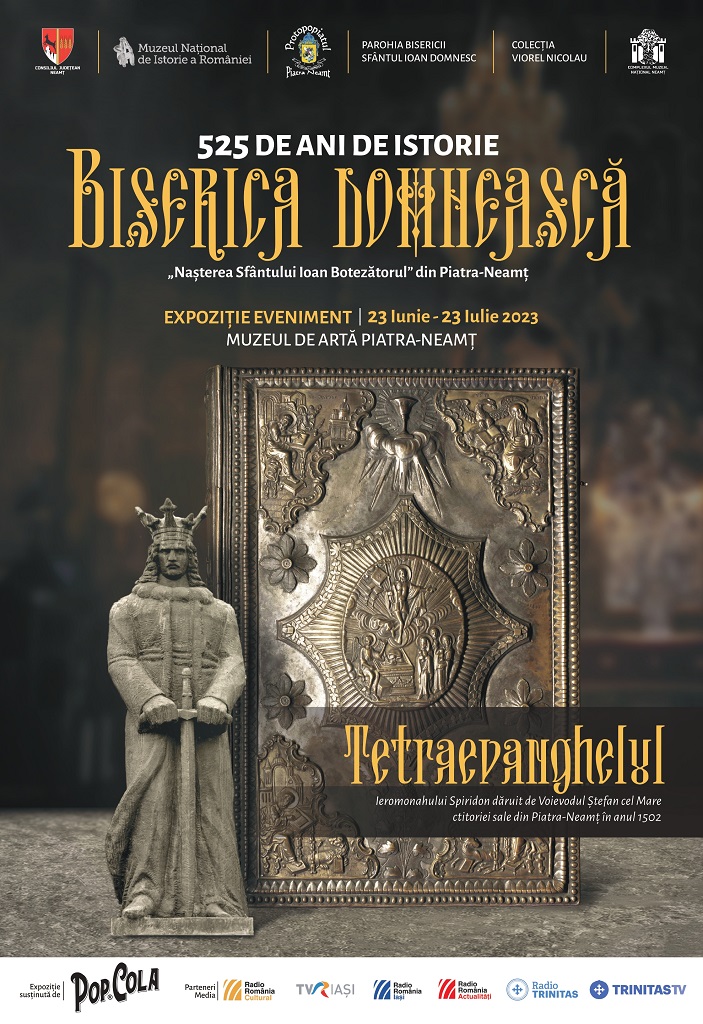
Exhibition “The Princely Church. 525 Years of History” at the Piatra-Neamț Art Museum
Neamț National Museum Complex announces the organisation of the exhibition “The Church of the Nativity of Saint John the Baptist. 525 Years of History”, in collaboration with the National Museum of History of Romania, the Neamț County Service of the National Archives and collector Viorel Nicolau, accompanied by the release of a photo-documentary album of the same title.
The exhibition and publishing project resulted from an invitation extended by the Sfântul Ioan Domnesc parish to our institution to join the events marking the 525th anniversary of the building of the place of worship by Stephen the Great, “the man who proved abundantly exemplary for all times and in all fields of activity”.
The centrepiece of the exhibition is Tetraevanghelul, a manuscript with calligraphy and illuminations on parchment by Hieromonk Spiridon of Putna Monastery, commissioned by Stephen the Great on 23 April 1502 for the church he founded in Piatra-Neamț. Regarded as a true masterpiece of medieval Romanian culture, Tetraevanghelul has had a remarkable odyssey. Copied at Putna Monastery by Hieromonk Spiridon on 23 April 1502, it was donated by Stephen the Great to the princely court church in Piatra Neamț, before being taken by Polish troops to Camenița in Podolia in 1615. Towards the end of the 19th century (1868), the manuscript was probably bought back from Camenița, restored and returned to sacred use at “Sfântul Nicolae Domnesc” Church in Iași. A series of stamped bookplates bearing the name of the National Museum of Antiquities in București show that, at the end of the 19th century, the liturgical book entered the collections of the museum administered by Alexandru Odobescu and later by Grigore G. Tocilescu.
Tetraevanghelul cuviosului Spiridon was part of Romania’s historical treasury sent to Tsarist Russia in 1917. It returned during the communist period (1956), along with some of the historical and archaeological treasures returned by Moscow as a result of the good relations between Romania and the USSR at the time. Hieromonk Spiridon’s manuscript was held for a time in the collection of the National Museum of Art of Romania (MNAR). With the official opening of MNIR in 1971, Tetraevanghelul was permanently transferred to the collection of the country’s largest museum. This exceptional cultural artefact was studied and published by Dr Ginel Lazăr, a researcher at the National Museum of Romanian History. The exhibition will thus give visitors an insight into the manuscript’s contents and the life of the monk Spiridon, a skilled calligrapher trained at the school of Putna Monastery, whose teacher was Abbot Paisie himself, a renowned tachygrapher and miniaturist.
A rich visual collection captures the evolution of the place of worship over the 19th–20th centuries, highlighting the status of the church founded by Stephen the Great as a centre of spiritual and cultural life for the community of the town of Piatra. Some of the treasures now held by the Sfântul Ioan Domnesc Parish will also be on display as part of the exhibition organised at the Piatra-Neamț Art Museum during the period 23 June–23 July 2023.
The exhibition was supported by Pop-Cola, a sponsor that has always stood alongside Neamț National Museum Complex in organising valuable exhibitions for the public of Neamț County.
More on the same topic
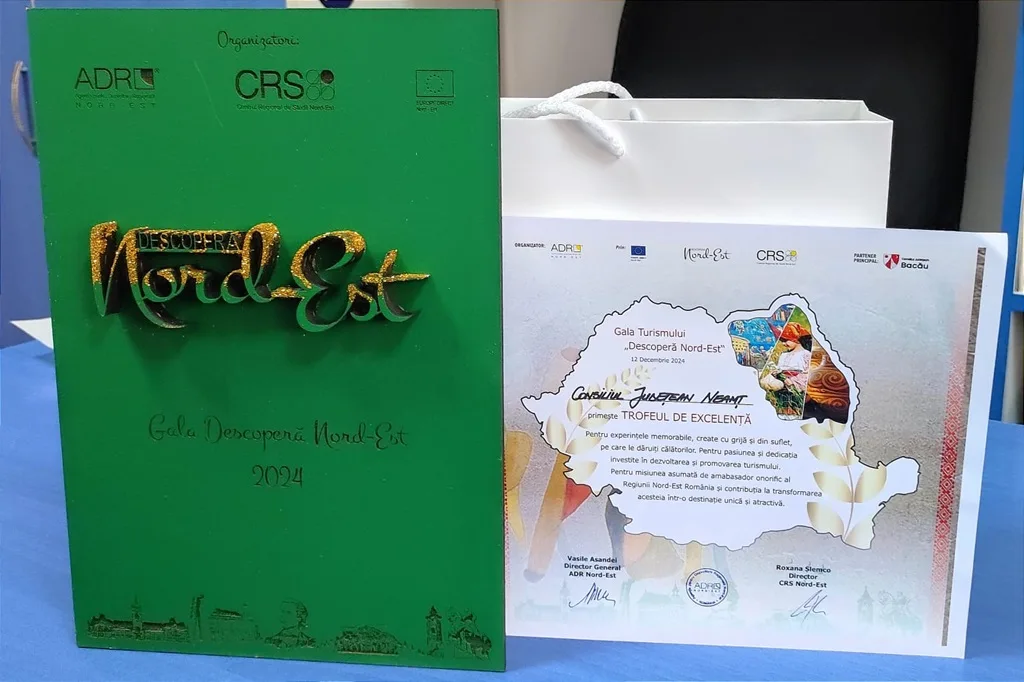
Neamț Awards at the Discover North-East Tourism Gala, 2024
The awards were presented at the 9th edition of the Discover North-East Tourism Gala on December 12, 2024: Newcomer – Award for new locations/attractions/tourist products or emerging tourist destinations: Zenzia Glamping Piatra-Neamț. Poem Rural Piatra-Neamț.
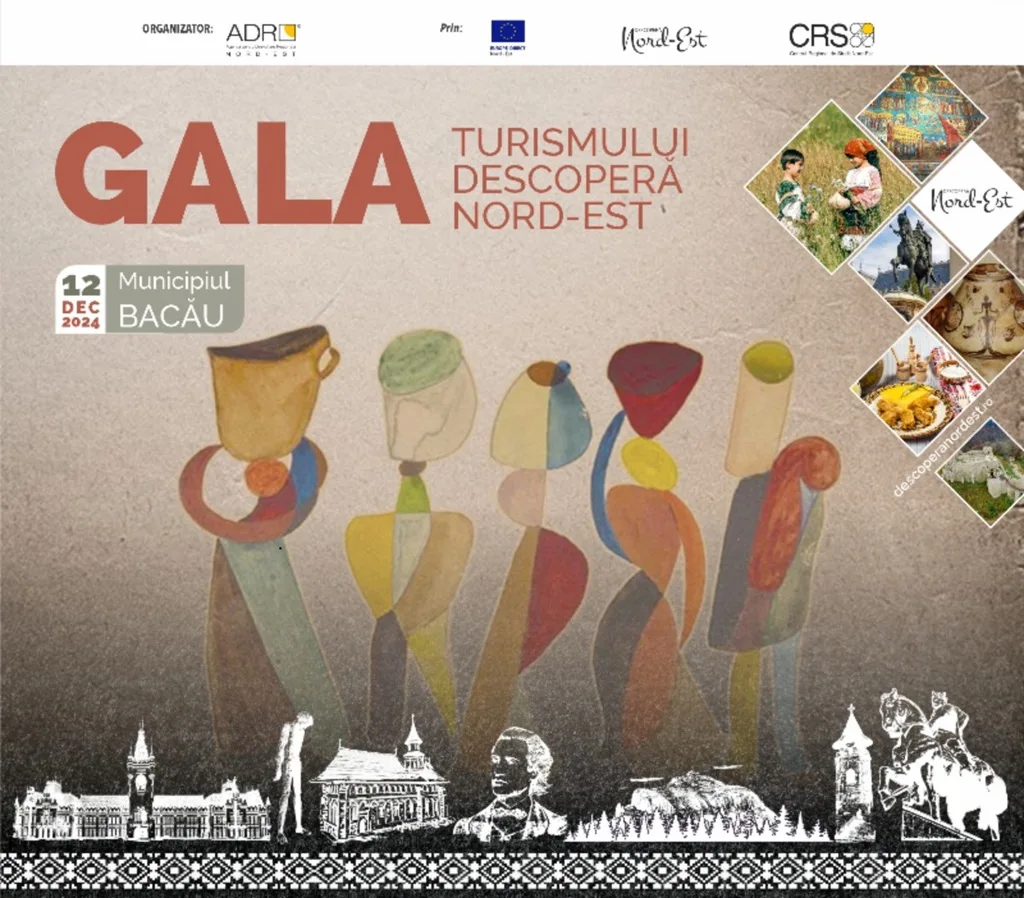
Excellence in Developing Tourism in Neamț at the 9th Edition
On December 12, 2024, we celebrate the tourism initiatives of Neamț County, alongside those from the North-East Region of Romania—a uniquely beautiful and rich area that deserves to be discovered by tourists.

Nominations for Destination of the Year 2025
In the category Enchanted Realms – Geographical areas or localities with a rich treasure of nature, history and tradition our proposal is: The city of Bicaz and its surroundings.