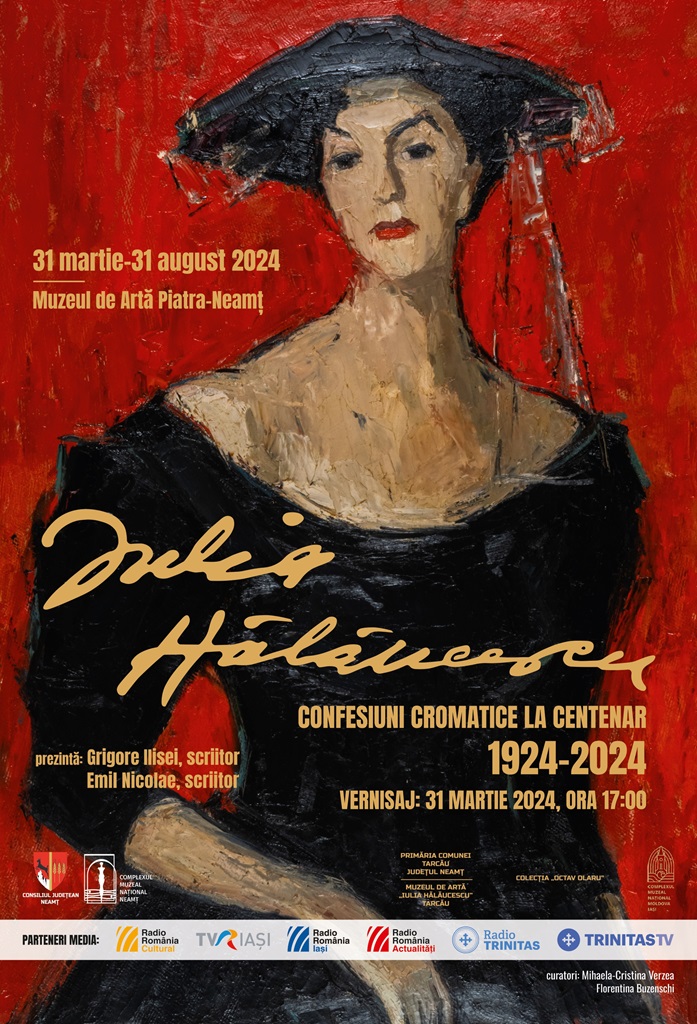
“Iulia Hălăucescu. Chromatic Confessions at the Centennial. 1924-2024”
On the occasion of the 100th anniversary of the birth of Iulia Hălăucescu, a cultural emblem of Piatra-Neamț, the Neamț National Museum Complex presents the exhibition “Iulia Hălăucescu. Confesiuni cromatice la centenar. 1924-2024”. The project is organised in collaboration with the “Iulia Hălăucescu” Art Museum in Tarcău and the Iași Art Museum within the “Moldova” National Museum Complex in Iași, and brings the valuable private collection “Octav Olaru” into public exhibitions for the first time.
Iulia Hălăucescu, founder of the art collection within the Regional Archaeological Museum in Piatra-Neamț and a leading figure of Romanian visual arts, made a distinguished contribution to the creation of the Piatra-Neamț Art Museum by enriching its holdings with valuable donations and acquisitions. This contribution is faithfully documented in the “Colecția de artă” archival collection of the Neamț National Museum Complex.
Neamț National Museum Complex, through its institutions – the Museum of Art, the Bicaz History Museum, the Museum of History and Archaeology and the “Calistrat Hogaș” Memorial Museum – holds in its collection over 400 works by the artist nicknamed by contemporary Romanian art critics “The Lady of Romanian Watercolours”. Among the personalities who have enriched the Museum of Art’s collection through donations, Iulia Hălăucescu holds first place. The nobility of this gesture calls for our enduring gratitude. The commemorative exhibition therefore represents an attempt, successful we hope, to retrace Iulia Hălăucescu’s artistic journey.
From a corpus of over 500 works, about 130 were selected, predominantly watercolours and oils, covering themes relevant to the artist’s output: Tarcău, portraits and self-portraits, the Old and New City (Piatra-Neamț), Bicaz, the artist’s travels (in Romania and abroad), flowers, still lifes and compositions, from various periods of her career (1946-2002). The exhibition is organised thematically rather than chronologically, giving us the chance to revisit her prolific and fascinating oeuvre. An impressive body of work that represents “the victory of artistic creation over time and death”.
Tradition offers the chance to pay homage to artists who are no longer with us and at the same time provides “an essential stimulus for the transformations that lie ahead”.
The exhibition that the museum institution in Neamț dedicates to the memory of an artist whose renown during her lifetime continues after her passing represents a metamorphosis, because Iulia Hălăucescu, art critic Amelia Pavel tells us, “belongs to those artists whom we can encounter again in an exhibition and resume the thread of a familiar emotion, now in fresh, unfamiliar guises”.
We are impressed not only by the Lady of Romanian Watercolour’s ability to reinvent herself, but also by her capacity to inspire the current generation of artists. We therefore recall the International Watercolour Symposium “Iulia Hălucescu” at Tarcău, a noble initiative of the Mircea Titus Romanescu Foundation.
The opening of the exhibition will take place on Sunday, 31 March 2024, at 17.00, at the Piatra Neamț Art Museum, in the presence of writers Grigore Ilisei and Emil Nicolae. The catalogue accompanying the exhibition will also be presented to the public. The exhibition can be visited during the period 31 March–31 August 2024.
Iulia Hălăucescu was born on 31 March 1924 in the commune of Tarcău, Neamț County, into a family with long-standing priestly traditions. Her father, Gheorghe Verșescu, “whose ancestors had embraced the priesthood as early as the 18th century, distinguished himself not only in theology but also as a prominent intellectual”. He wrote Monografia comunei Tarcău județul Neamț, Piatra-Neamț, 1942 and Istoria monografică a orașului Piatra Neamț, Bucharest, 1971. Her mother, Domnica, was the daughter of priest Gavril Danielescu. The family moved to Piatra-Neamț in 1927. Between 1931 and 1943 she attended Girls’ Primary School No. 2 and the Girls’ Academic High School (now “Calistrat Hogaș”) in Piatra-Neamț, alongside the children/grandchildren of the town’s notables: Gheorghe V. Măcărescu, the lawyer Soroceanu and Dimitrie Hogea.
In 1943 she began her studies at the Faculty of Philosophy in Bucharest, where her professors included Dimitrie Gusti, Mircea Vulcănescu, George Călinescu and Mircea Florian. She graduated in 1948, specialising in aesthetics. During her years of study she attended the drawing and painting classes of Rudolf Schweitzer-Cumpăna. “You are Mozart in painting,” the master told Iulia Hălăucescu in 1944. On 10 October 1944 she married officer Lucian Petronius Hălăucescu, later a retired colonel and war veteran, who was extremely devoted to her throughout his life. In 1949, at the urging of Corneliu Baba, she enrolled at the Academy of Fine Arts in Iași, in Călin Alupi’s class.
After the closure of the Iași institution, she continued her studies at the “Nicolae Grigorescu” Institute in Bucharest, with professors Ion Marșic and Samuel Mützner. In 1954 she became a member of the Union of Visual Artists, then president of its Piatra-Neamț branch (U.A.P.) (1975 – 1979; 1985 – 1990). She was part of the research team coordinated by academician Constantin Nicolăescu-Plopșor, a group of architects, archaeologists, ethnographers and visual artists whose aim was to save and preserve the material and spiritual cultural heritage of the Bicaz area. She thus contributed to the realisation of the Leonida project, for which she painted depictions of the churches at Răpciuni and Hangu and of Palatul Cnejilor.
The artist’s husband, expelled from the army by the communist regime, established the art collection of the Piatra-Neamț Regional Archaeological Museum. At Iulia Hălăucescu’s initiative, works forming the core of the collection were transferred from the Fondul Plastic in Bucharest, and acquisitions were made. Over time, this made it possible to establish the Art Museum in Piatra-Neamț (1980). The museum owes Iulia Hălăucescu not only the approximately 300 works by her held in its collection, but also the establishment and enrichment of the art collection. The “Lady of Romanian Watercolour”, together with her husband, founded the Art Museum.
In fact, much of the permanent exhibition, through the works displayed on its walls, reflects the activity of the founders. She was among the initiators of the Art Galleries in Piatra-Neamț. She played a decisive role in the construction of the U.A.P. Branch Headquarters and the Art Gallery. Construction began in 1986, with the inauguration taking place in the summer of 1989. In 1994, the Piatra-Neamț Art Museum honoured the artist on her 70th birthday with an exhibition and celebrated the Hălăucescu couple’s golden wedding anniversary.
Five years later, an album-catalogue devoted to Iulia Hălăucescu (published by Editura A’92 in Iași) was released, compiled by the writer and art critic Grigore Ilisei, to mark the artist’s 75th birthday. On the same occasion a retrospective exhibition was organised at the Piatra-Neamț Art Museum. On 26 October 2001 the permanent exhibition “Epopeea Bicazului” was inaugurated at the Bicaz History Museum, featuring some of the 104 works donated by Iulia Hălăucescu, dubbed by art critics the “Bard of Bicaz” (Ion Frunzetti) or the “Rhapsodist of Bicaz” (Petru Comărnescu).
On 16 November 2003 the “Iulia Hălăucescu” Art Museum opened in the commune of Tarcău, Neamț County. In 2004 she was honoured in Piatra-Neamț on her 80th birthday and her diamond wedding anniversary. In 2005, the album “Iulia Hălăucescu. O încercare de efigie”, written by Grigore Ilisei and published by Princeps Edit, Iași, was launched at the Piatra-Neamț Art Museum. A versatile cultural figure, the author reconstructs the “multifaceted portrait” of Iulia Hălăucescu. The album contains the main critical assessments (Amelia Pavel, Constantin Ciopraga, Dan Grigorescu, C.R. Constantinescu, Mircea Deac and others), family photographs and a selection of reproductions of 135 works by the artist.
On 18 December 2007 she passed away at her residence in Piatra-Neamț.
Between June and September 2008, the Neamț County Museum Complex/Piatra-Neamț Art Museum organised an exhibition in memory of the artist from Neamț, titled “Maeștri ai artei românești. Rudolf Schweitzer-Cumpăna – Iulia Hălăucescu” (curator, museum specialist Violeta Dinu). The museum institution in Neamț partnered with the Botoșani County Museum (Vasile Filip donation), the “Rudolf Schweitzer-Cumpăna” Foundation (president Dr Zoe-Stoicescu Apostolache), the “Vorel” Foundation in Piatra-Neamț (Dr Elena Ionescu), the “Iulia și Petronius Hălăucescu” Foundation and the “Constantin Matasă” Cultural and Scientific Foundation. The Neamț County Museum Complex/Piatra-Neamț Art Museum, in collaboration with the “Iulia și Petronius Hălăucescu” Foundation, organised the watercolour exhibition “Iulia Hălăucescu. Primăvara culorilor” to mark the 90th anniversary of the artist’s birth.
The exhibition ran from 28 March to 15 May 2014 (curator, museum specialist Violeta Dinu).
More on the same topic
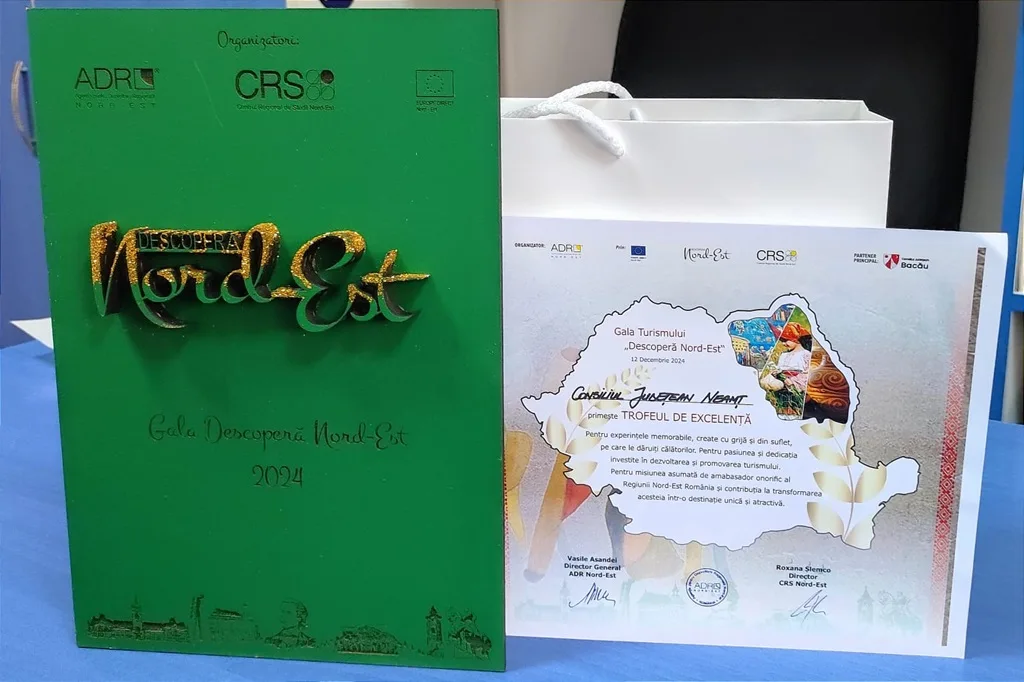
Neamț Awards at the Discover North-East Tourism Gala, 2024
The awards were presented at the 9th edition of the Discover North-East Tourism Gala on December 12, 2024: Newcomer – Award for new locations/attractions/tourist products or emerging tourist destinations: Zenzia Glamping Piatra-Neamț. Poem Rural Piatra-Neamț.
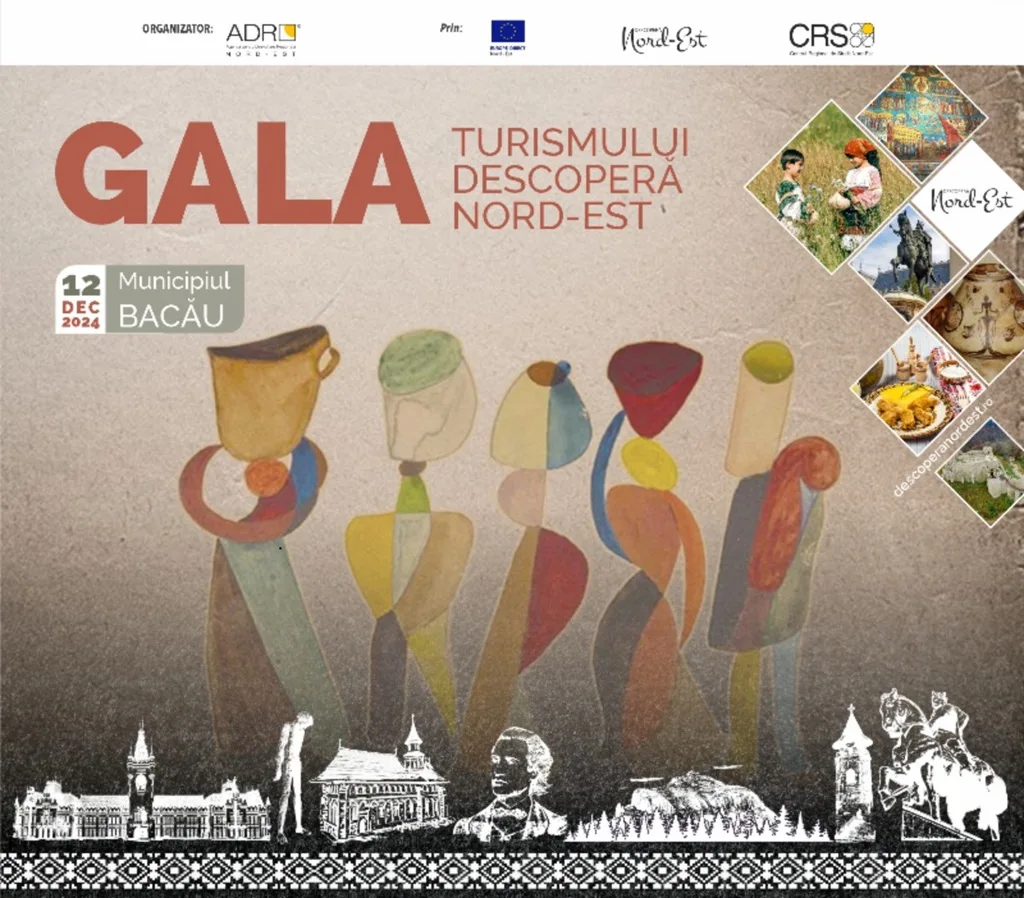
Excellence in Developing Tourism in Neamț at the 9th Edition
On December 12, 2024, we celebrate the tourism initiatives of Neamț County, alongside those from the North-East Region of Romania—a uniquely beautiful and rich area that deserves to be discovered by tourists.
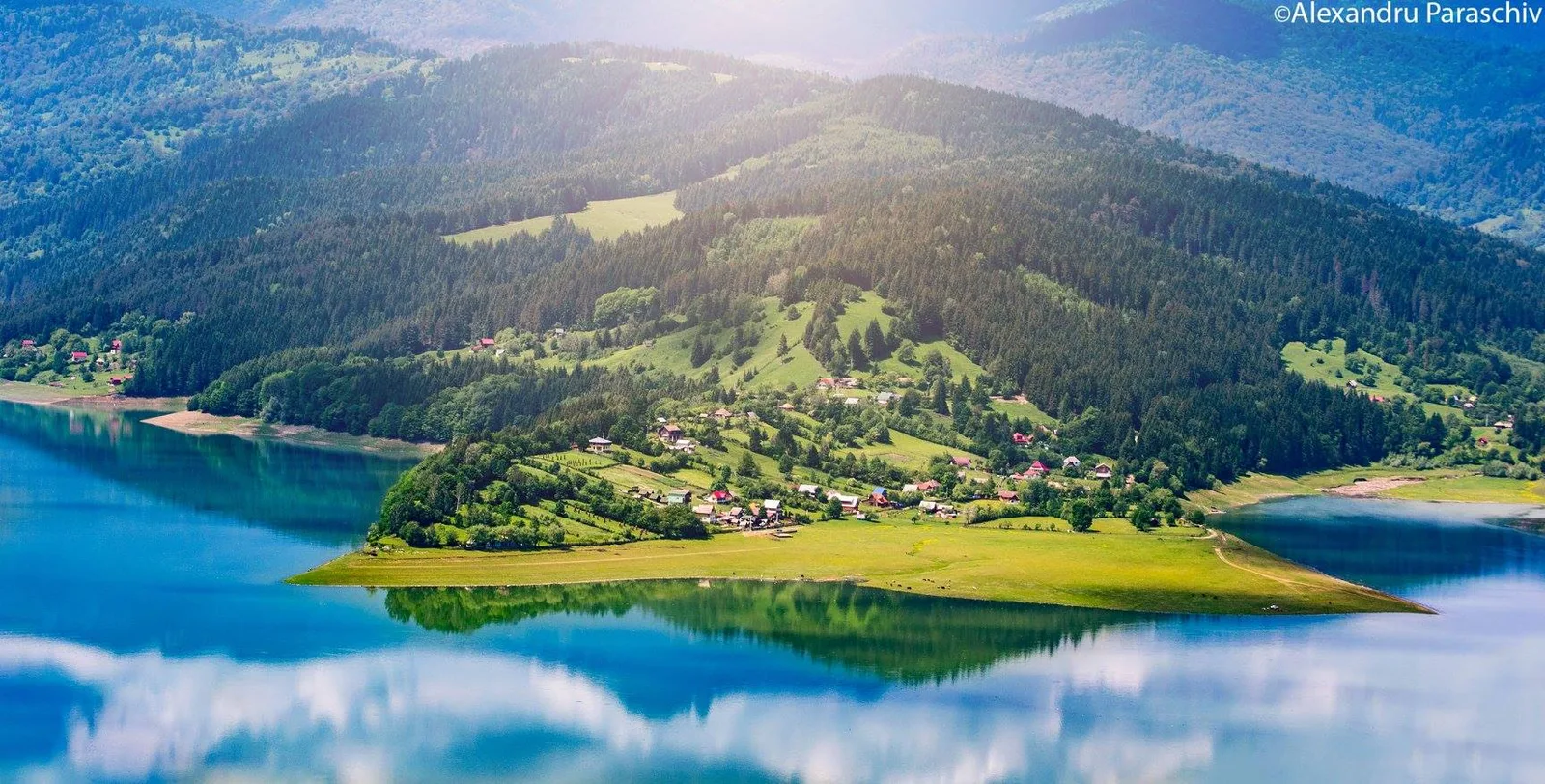
Nominations for Destination of the Year 2025
In the category Enchanted Realms – Geographical areas or localities with a rich treasure of nature, history and tradition our proposal is: The city of Bicaz and its surroundings.