Buhalnita Monastery – Neamt County
Location: At 50 km from Piatra Neamt, in the village Hangu
Address: Buhalnita, village Hangu, Neamt County
The patron of the monastery: “The Entrance in the Church of the St Mary – Mother of Christ” and “St Joan the New from Suceava”
Year of construction: built in 1629 by Miron Barnovshi on the place of a wooden church built by Stefan cel Mare.
Short history
The Monastery from Buhalnita is first mentioned in a document from 1458 which also says that the founder Stefan cel Mare place it under the supervision of the Neamt Monastery. In 1629, the ruler Miron Barnovschi built here a stone church. As a gift, the monastery received the first brewery from the Neamt County.
After 1630, the monastery continued to grow because of the care of the rulers that followed. At some point the monastery became a rival for the Cantacuzino family that own the village Hangu, where the monastery is located. The Cantacuzino family and the monks were never friends and the disagreements between the two sides went to many lawsuits over time.
Starting with the year 1715 begins a hard period of time for the monks here, because the ruler Nicolae Mavrocordat will dedicate the monastery to the Patriarchy of Alexandria. Only in the time on Alexandru Ioan Cuza the monastery will become a parochial church.
Starting with the year 1865, some of the cells will host an elementary school that will be moved to another location in 1900 because of the advanced degradation of the monastery’s buildings. In the year 1958 because of the construction of the dam from Bicaz, the monastery will be moved to its current day location.
From an architectural stand of point the church is built based on a simple rectangular place. The building is a classic representation of the architectural style of that period of time.
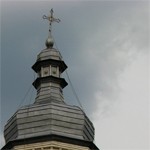
The church has one tower in the middle section. The front entrance door still keeps its original rectangular border made out of stone. The wall that separates the altar from the rest of the church was made in 1859 in Alexandria.
More on the same topic

Ethnographic museums, treasures of local history and traditions
Ethnographic museums are true treasures and expressions of love for traditions, folklore, and spirituality of the places, and so is the Ethnographic Museum Casa Bunicilor in the village of Mitocul Bălan, Crăcăoani commune.

Neamț receives five nominations across four categories in Destinația Anului
We have good news for everyone who loves Neamț County and all its beauty: it is among the finalists in the Destinația Anului 2024 competition, with five nominations across four categories: Piatra Neamț in the Inspiring Cities category.

The Story of the Seven Miraculous Icons of the Holy Virgin and Saint Anne from Neamț Land
Renowned not only for its beauty and historical significance but also called the “Jerusalem of Romanian Orthodoxy,” Neamț Monastery houses the miraculous icon of Virgin Mary with three hands…