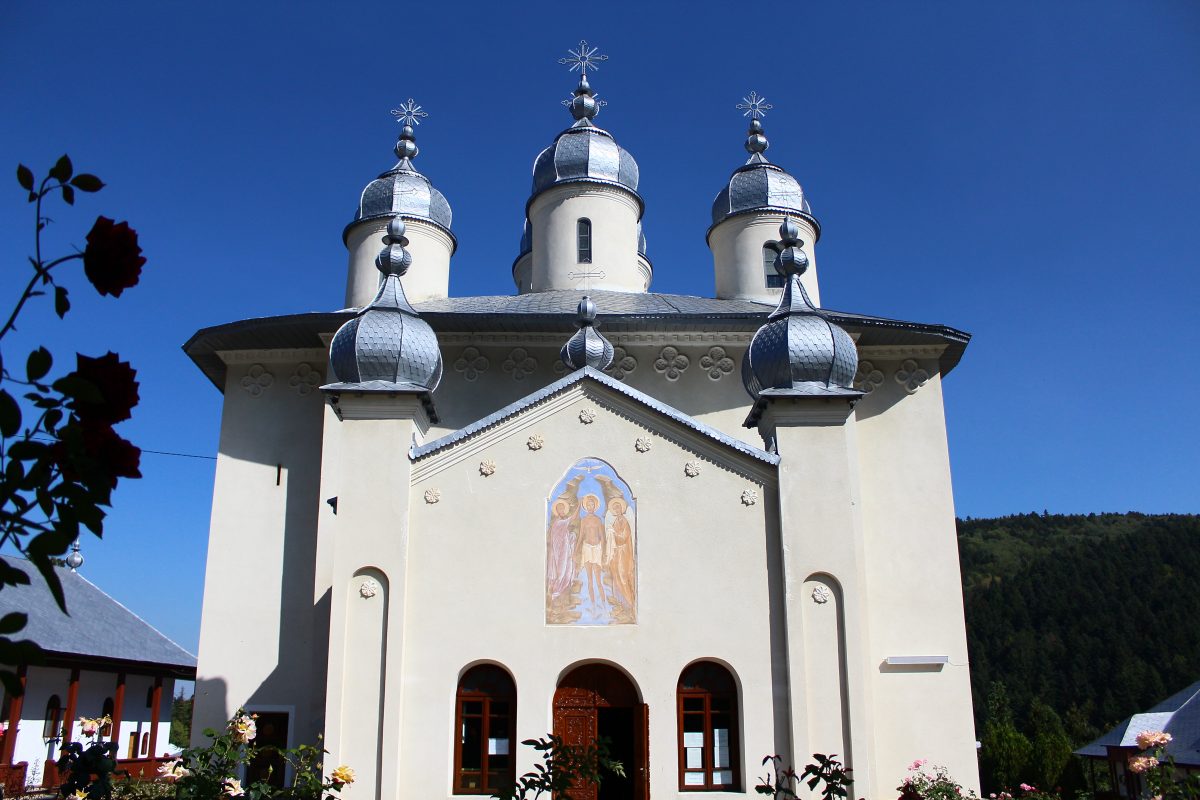
Horaița Monastery
IMG_2784
You can reach Horaița Monastery by car along DN 15 C, from Piatra Neamț to Târgu Neamț. At Dobreni, turn onto a signposted asphalt road and continue for another 15 kilometres along DJ 156A, passing through Negrești and Poiana. From Poiana, the road runs through a beautiful forest of mixed deciduous and coniferous trees.
The monastery can also be reached from Crăcăoani, just 6 kilometres away along an unsurfaced commune road. Whichever route you choose, you will pass through a gateway towards the monastery and continue, by car or on foot, for a few hundred metres along an asphalt road lined with fir trees, with the monastery rising at the end. The setting is absolutely superb, surrounded by forest on all sides.
The place of worship at Horaița is mentioned in a document issued in 1428 by the Chancellery of Alexandru cel Bun and has an interesting history. Carol al II-lea spent 75 days under arrest at Horaița Monastery, on the orders of King Ferdinand. The entrance to the monastery grounds passes beneath the bell tower, built around 1853 and topped with a Slavic-inspired turret. Flowerbeds line the paths, giving the grounds a festive air. The monastery preserves several valuable objects in good condition, including icons, books and silver-bound Gospel books from the 17th–19th centuries. Among them is the miracle-working icon of the Mother of God, painted in the 19th century and also known as “Izbăvitoarea de secetă” or “Maica Domnului de la Horaița”, which is carried in procession every year to Horăicioara Hermitage, near the monastery, on the feast of the Life-Giving Spring.
The church within the monastery grounds, crowned by eight towers reminiscent of Russian churches, is a massive building with thick walls, while its interior, painted by the renowned Mihai Chiuaru, Moldavia's foremost church painter, impresses with its proportions and exceptional architectural design.
Pilgrims wishing to discover this true corner of paradise can stay in monastic cells, with meals kindly provided by the monastery's monks.
More on the same topic

Ethnographic museums, treasures of local history and traditions
Ethnographic museums are true treasures and expressions of love for traditions, folklore, and spirituality of the places, and so is the Ethnographic Museum Casa Bunicilor in the village of Mitocul Bălan, Crăcăoani commune.

The Story of the Seven Miraculous Icons of the Holy Virgin and Saint Anne from Neamț Land
Renowned not only for its beauty and historical significance but also called the “Jerusalem of Romanian Orthodoxy,” Neamț Monastery houses the miraculous icon of Virgin Mary with three hands…
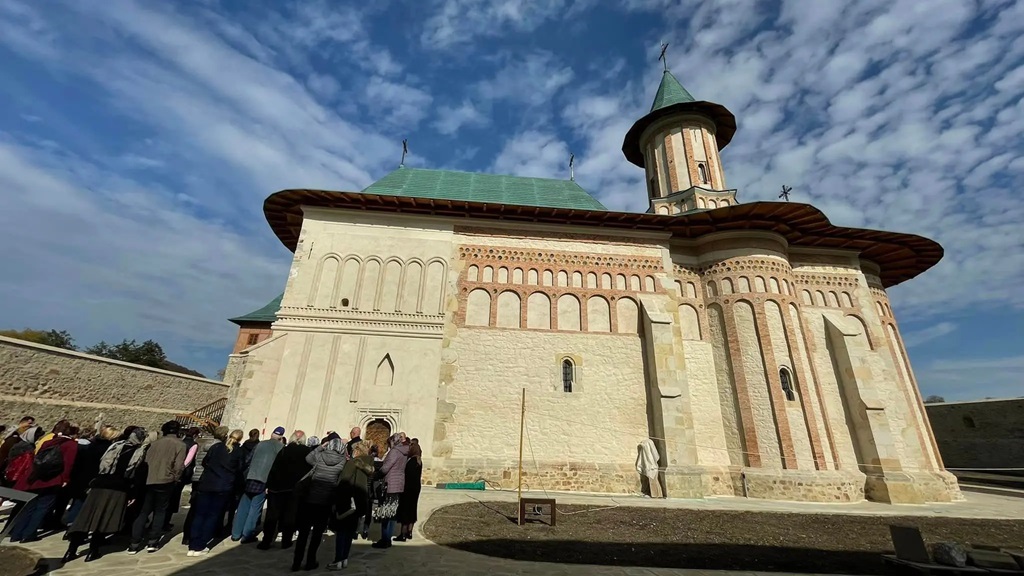
Tazlău Monastery Ensemble has been restored using European Regional Development Fund (ERDF)
After six years of hard work, the project of “reviving” one of the most prestigious establishments of Voivode Stephen the Great, in Tazlău commune, finally came to completion.