Neamț Monastery: History, Images and Hermitages
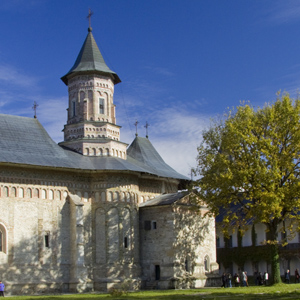
According to the historical sources known to date, Neamț Monastery dates from the XIV century as an Orthodox monastic community. Situated in Vanatori commune in Neamț County (near Târgu Neamț), in a wide, open glade in the valley of the Nemțișor stream and surrounded by wooded ridges, it is the oldest monastery in Moldavia and is also known as the “Jerusalem of Romanian Orthodoxy”.
With its rich treasury, Neamț Monastery offers visitors an extensive collection of liturgical and religious objects, paintings, manuscripts and printing artefacts of great historical and artistic value in its monastery museum. The museum is within the monastery grounds, and admission costs 3 lei for children and 5 lei for adults. Neamț Monastery also houses the oldest monastery library, with 18,000 volumes, which made an outstanding contribution to the development of medieval Romanian culture and art.
Map of Neamț Monastery and the Locations of the Hermitages
The monastery church houses the much-venerated, miracle-working icon of the Mother of God, dating from 665, which serves both as a processional icon and as a protective icon that has sustained the devotion of the faithful and monks over the centuries.
Numerous historical documents reveal the role Neamț Monastery has played over the centuries. Precious metals were worked here at the monastery, liturgical objects were made, and painters, woodcarvers and stone sculptors were trained.
Points of interest at Neamț Monastery
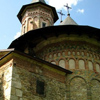
The history of Neamț Monastery (including images and an HD introductory film) – Petru Musat was the first prince to build a stone church on the site of the old hermitage at Neamț Monastery, surrounded by monastic cells, various buildings, towers and defensive walls. In 1471, an earthquake shook Neamț Monastery to its foundations, prompting Stephen the Great to build a new church alongside the old one. Of the old buildings that once stood within the walls of Neamț Monastery, only the church built by Stephen the Great and the lower part of the bell tower built by Alexander the Good survive today.
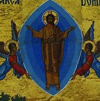
Lidianca – the most treasured icon at Neamț Monastery – One of the monastery’s most important objects, also of exceptional religious significance, is the icon of the Mother of God, or Lidianca, housed in the “Inaltarea Domnului” Church in the courtyard of Neamț Monastery. This icon dates from 665 and was painted in Lida, the homeland of the Holy Great Martyr Gheorghe. In 1429, the Byzantine Emperor Ioan al VIII-lea Paleologul gave the icon to the Moldavian prince Alexander the Good.
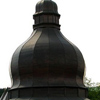
The holy water pavilion – the circular building at Neamț Monastery – In front of the bell tower at the entrance to the monastic complex at Neamț Monastery stands a circular building that draws visitors’ attention with its distinctive architecture, size and beauty. Built between 1836-1847, it is known as the holy water pavilion or baptistery.
The museum at Neamț Monastery – The museum houses a collection of ecclesiastical objects of exceptional importance to both Orthodox religious culture and art and national culture and art. The monastery’s treasury includes liturgical objects made of precious metal, embroidery, textiles and woodcarvings made at the monastery or donated by voivodes and other benefactors. All these objects and documents have provided new historical information that deepens our understanding of the turbulent history of the Romanian people.
Hermitages belonging to Neamț Monastery
Braniste Hermitage – Under the canonical and administrative authority of Neamț Monastery, it has served as an outlying homestead of the monastery since earliest times. The hermitage was founded in 1582, when Prince “Petru Schiopul” authorised the monks of Neamț Monastery “to protect and maintain a woodland reserve on a peak to be chosen on the monastery’s estate”, and in 1602 Ieremia Movila confirmed its rights to an apiary in “Braniste pe Bohotin”.
Carbuna Hermitage – In 2001, His Beatitude Patriarch Daniel founded Carbuna Hermitage, dedicated to “Saint Voivode Stephen the Great”, on the site where Romanian heroes gave their lives. Built in an oak plantation near the cemetery of Romanian heroes who fell in the Second World War, the hermitage is under the administrative authority of Neamț Monastery.
Vovidenia Hermitage – The present stone church was built between 1849-1857, during the reign of Grigore Alexandru Ghica, with D. D. It retains the iconostasis and pulpit from Bishop Ioanichie’s wooden church. Vovidenia Hermitage has also been called “Altarul din Poiana Linistii”, as a place where many monks gathered and shared a spiritual life.
Pocrov Hermitage – Set in a glade amid centuries-old forests, approximately 4 km south-west of Neamț Monastery, at the foot of “Chiriacu” mountain, Pocrov Hermitage was built in 1714 by Pahomie and his disciples: Sofronie, Mardarie, Lazar, Dosoftei and Ioanichie. Pocrov Hermitage, also called “Poiana raiului”, is a place of profound tranquillity where many accomplished monastic fathers lived an austere spiritual life. Many of them went on to establish and lead other hermitages.
Icoana Veche Hermitage – It stands in a dense forest north of Neamț Monastery, on the bank of the Neamtisor River. Between 1821-1822, because of Eteria, the icon of the Mother of God, received as a gift from the Paleologi emperors 600 years earlier, was hidden here along with other objects and documents. After 1822, these objects and the icon were returned to the monastery, and a wooden cross was erected where they had been hidden. The monk Agapie painted both sides of the cross, which bore an inscription recording what had happened.
Icoana Noua Hermitage is under the administrative authority of Neamț Monastery (the oldest monastery in Neamț County) and stands in a place called “Valea Icoanei”, on land used for grazing cattle. The hermitage dates back to 1941. The initiative to build it at the edge of the glade, where the Nemțișor River meets the stream beside Rusu mountain, came from Protosyncellus Vasian Iosub, who was also appointed abbot of the hermitage in 1946.
More on the same topic

Ethnographic museums, treasures of local history and traditions
Ethnographic museums are true treasures and expressions of love for traditions, folklore, and spirituality of the places, and so is the Ethnographic Museum Casa Bunicilor in the village of Mitocul Bălan, Crăcăoani commune.

Neamț receives five nominations across four categories in Destinația Anului
We have good news for everyone who loves Neamț County and all its beauty: it is among the finalists in the Destinația Anului 2024 competition, with five nominations across four categories: Piatra Neamț in the Inspiring Cities category.

The Story of the Seven Miraculous Icons of the Holy Virgin and Saint Anne from Neamț Land
Renowned not only for its beauty and historical significance but also called the “Jerusalem of Romanian Orthodoxy,” Neamț Monastery houses the miraculous icon of Virgin Mary with three hands…