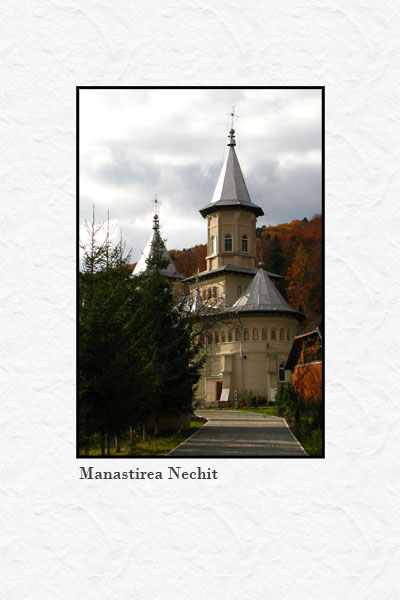
Nechit Monastery – Neamț County
Nechit Monastery is 8 km from Borlești, 37 km SW of Piatra Neamț and 35 km NW of Buhuși (via Rediu-Cândești)
Address: Nechit village, Borlești commune, Neamț County
Tel: 0233297422, 0745852242
Abbot: Protosyncellus Zenovie Grigore
Nechit Monastery’s patronal feast day: “Transfiguration”, celebrated on 6 August
Year of construction: founded in the 14th century by the hermit Nechit
A brief history of Nechit Monastery
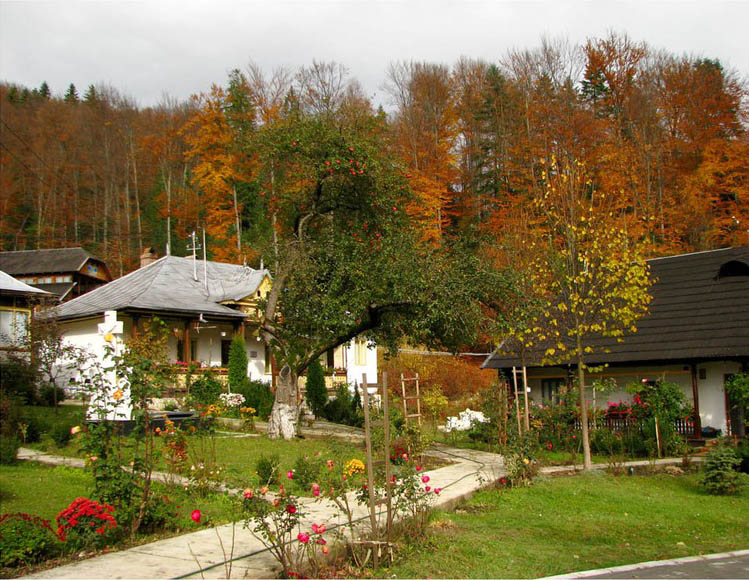
The monastery at Nechit stands in a glade on the western edge of Nechit village, surrounded by wooded hills. The site was chosen by the hermit Nechita, who lived an ascetic life and prayed in this area, and whose name was given to the valley, mountain and stream surrounding his place of worship. The first building on this site was a small wooden church dedicated to “Saint Nicolae”, known as “Sihastria lui Nechita” or “Nechit Hermitage”. Documentary records indicate that the church existed in the Nechit stream valley between 1399 and 1419.
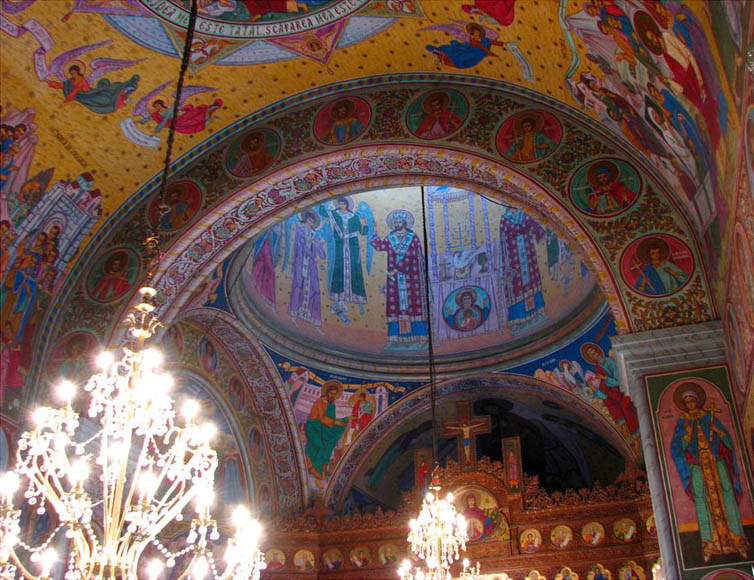
From the beginning of the 19th century until 1875, Nechit Hermitage fell into ruin and neglect, with monastic life sustained by the efforts of the three monks who remained there. The first masonry church was built in 1875, and Nechit Hermitage once again became a thriving monastery. In 1960, the authorities forcibly closed it, but it reopened in 1972 with just 2 monks, through the efforts of Father Zenovie Ghidescu. They helped restore the monastery and repaired the church between 1972 and 1976. Between 1975 and 1977, Nun Viorica Cretu from Prislop Monastery painted the church in the neo-Byzantine style, creating strikingly expressive paintings that deserve to be admired. In 1990, the place of worship was enlarged by building a chapel above it, which Mihai Chiuariu painted between 1991 and 1992. For pilgrims visiting this place of prayer, a new bell tower was built between 1998 and 2001; it overlooks the monastery’s approach road and houses a chapel dedicated to “Holy Emperors Constantin and Elena”.
Images of Nechit Monastery
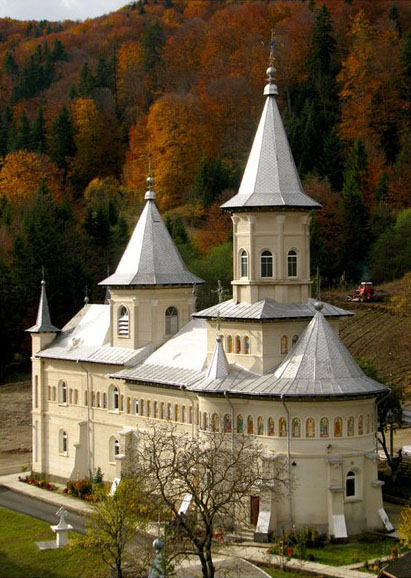
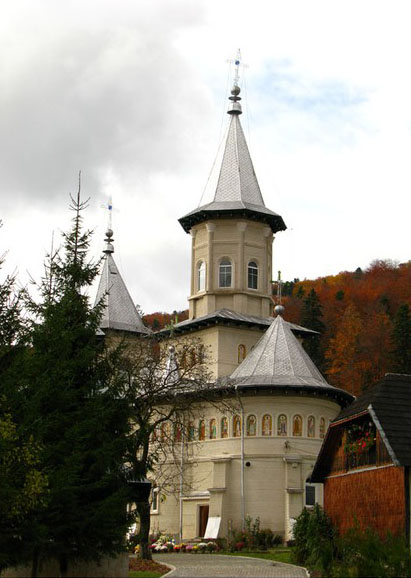
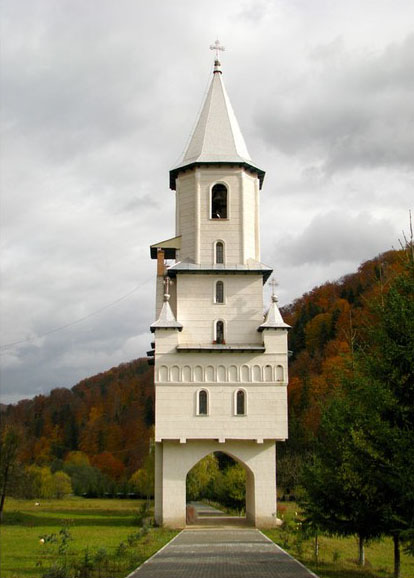
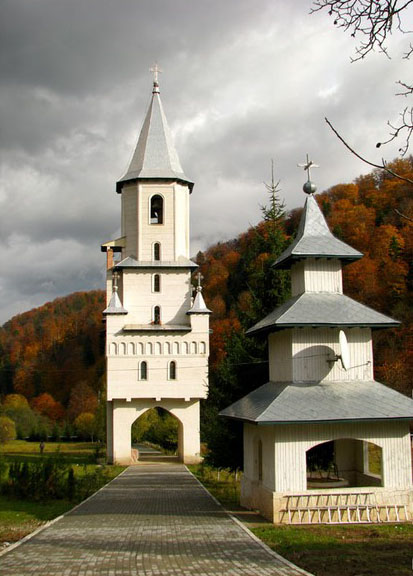
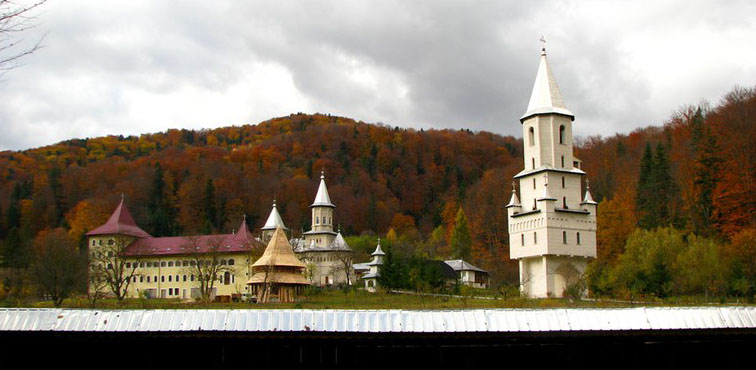
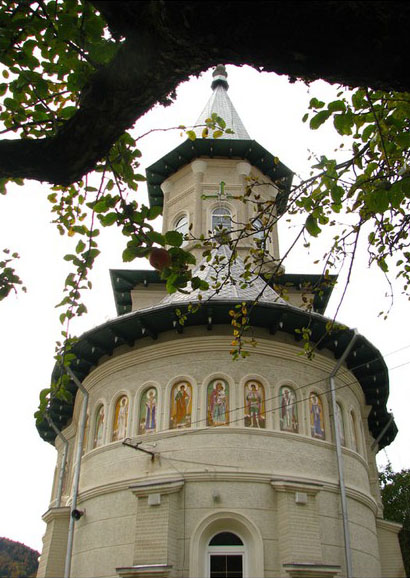
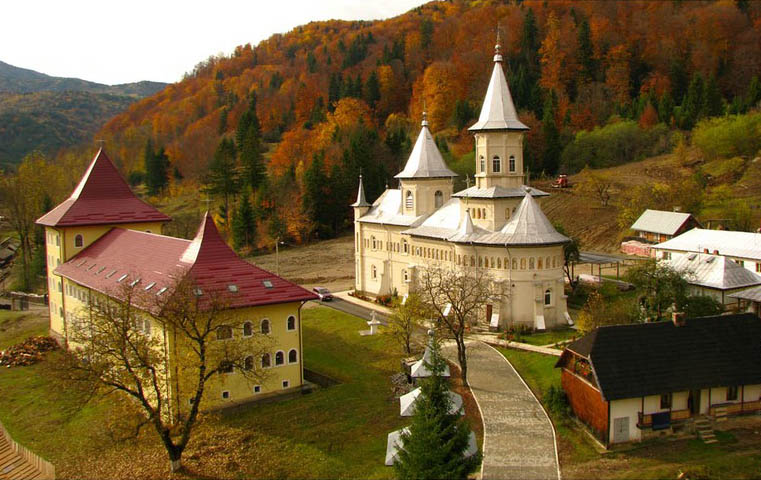
Click to view all photo albums
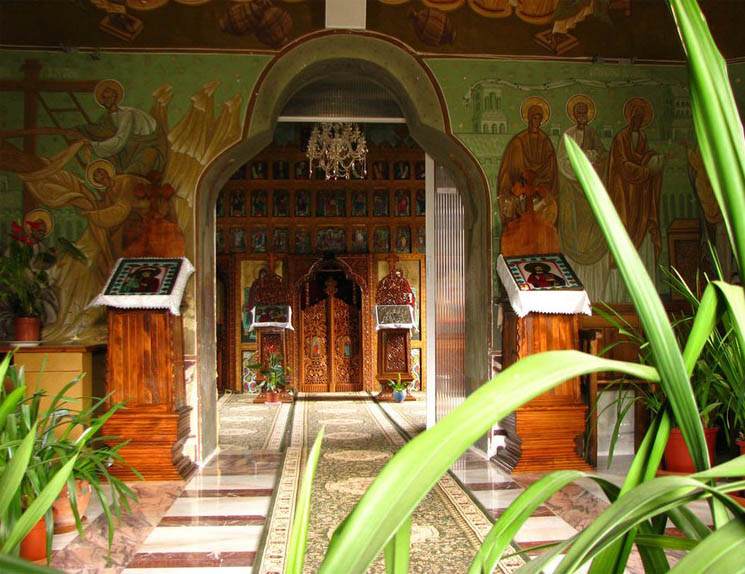
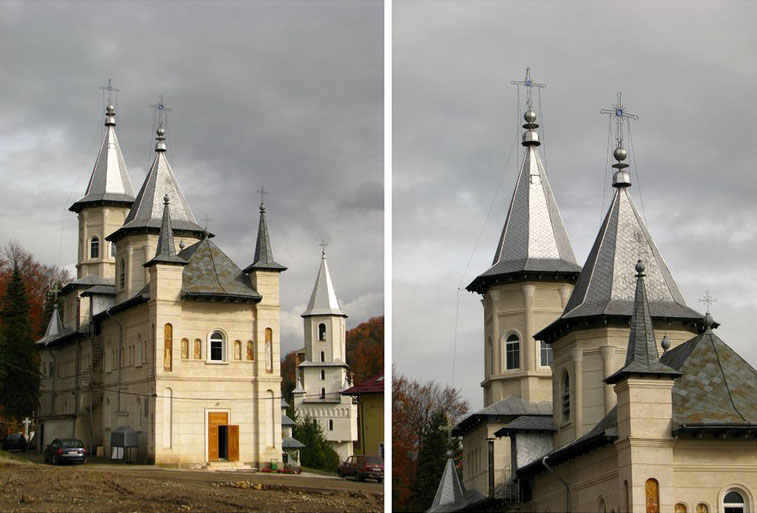
The church is built of stone and brick on a trefoil plan, with slightly rounded side apses above which an impressive tower rises. The church is divided into a nave, narthex and enclosed porch, and has 2 towers: an octagonal tower above the nave and a square tower at the front, which served as a bell tower. The church’s oak iconostasis is carved with a fine sense of proportion and distinctive forms.
The monastery also includes four buildings used as monastic cells and utility outbuildings, and Pelerinul House – a three-storey wooden building on the southern side, with impressive architectural craftsmanship.
Nechit Monastery currently has a veritable zoo, with Belgian rabbits, pheasants, pedigree chickens, pigeons, cows, pigs, chinchillas, roe deer fawns, a swan and peacocks. The monastery’s abbot also intends to build a guesthouse and a bishop’s residence. The nearby Venerable Chiriac well, with its healing water, will also be landscaped, and school camps for children and young people will be organised here.
More on the same topic

Ethnographic museums, treasures of local history and traditions
Ethnographic museums are true treasures and expressions of love for traditions, folklore, and spirituality of the places, and so is the Ethnographic Museum Casa Bunicilor in the village of Mitocul Bălan, Crăcăoani commune.

Neamț receives five nominations across four categories in Destinația Anului
We have good news for everyone who loves Neamț County and all its beauty: it is among the finalists in the Destinația Anului 2024 competition, with five nominations across four categories: Piatra Neamț in the Inspiring Cities category.

The Story of the Seven Miraculous Icons of the Holy Virgin and Saint Anne from Neamț Land
Renowned not only for its beauty and historical significance but also called the “Jerusalem of Romanian Orthodoxy,” Neamț Monastery houses the miraculous icon of Virgin Mary with three hands…