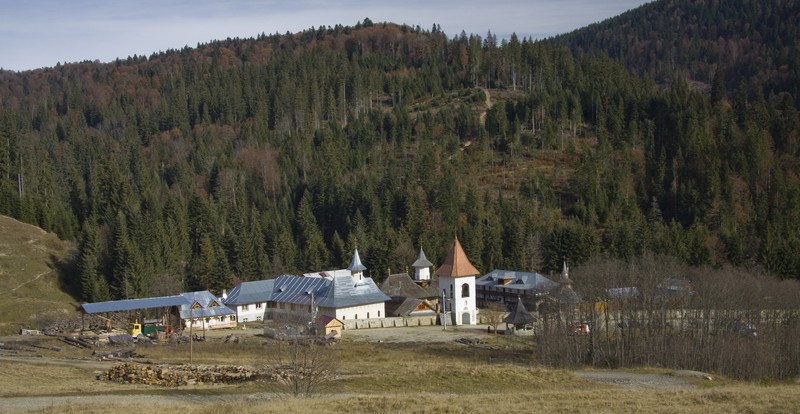
Petru Voda Monastery – Neamț County
Petru Voda Monastery
To reach Petru Voda Monastery, follow national road DN 15 B from Poiana Teiului towards Târgu Neamț; at Valea Largului, a road branches off to the left and runs for 10 km to the village of Petru Voda. Pilgrims arriving by train at Bicaz can also take buses from behind the railway station or from the centre of Bicaz.
Address: Petru-Voda village, Poiana Teiului commune, Neamț County
Tel: 0233257003, 0233258473 Fax: 0233257257 E-mail: manastirea@petruvoda.ro Abbot: Hieromonk Lavrentie Carp Lucian Web: www.petruvoda.ro Patronal feast of Petru Voda Monastery: “The Holy Archangels Mihail and Gavril” (8 November) Year of construction: late 20th century
The History of Petru Voda Monastery
Petru Voda Monastery was built in the late 20th century at the request of the faithful in the village of Petru Voda and with the goodwill of the local authorities, who provided the land needed for its construction in Hasca Glade. Although there had never been a monastic foundation in this area, approval to build Petru Voda Monastery was granted in 1990.
Work to establish Petru Voda Monastery, erect its buildings and organise its monastic community began in 1991 under the guidance of two monks from Secu Monastery, originally from Poiana Teiului. One of these monks is the monastery’s former abbot, Father Iustin Parvu, regarded by the faithful as one of the best-known living spiritual fathers. Despite the many hardships he faced throughout his life, Father Iustin always remained devoted to the Orthodox faith and the Romanian people. Alongside Father Cleopa Ilie of Sihastria Monastery, Father Iustin Parvu is one of the great spiritual fathers of Neamț County.
Photographs of Petru Voda Monastery, Neamț County
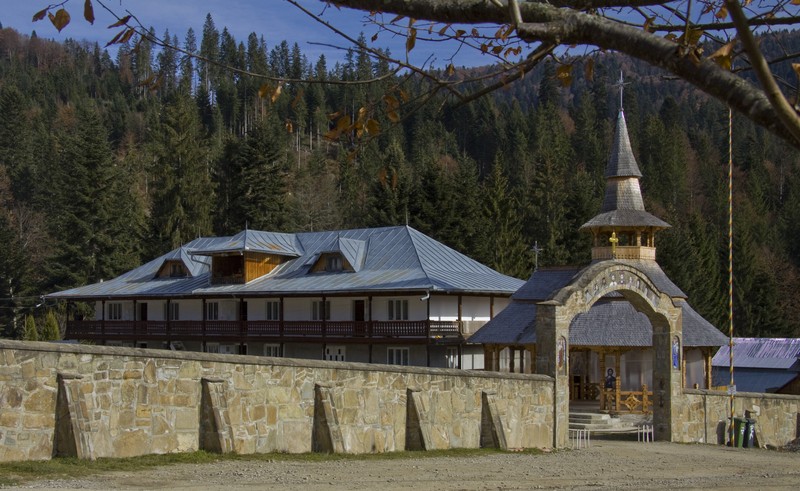
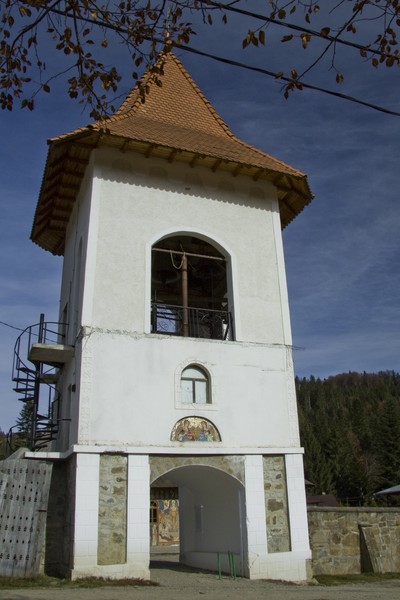
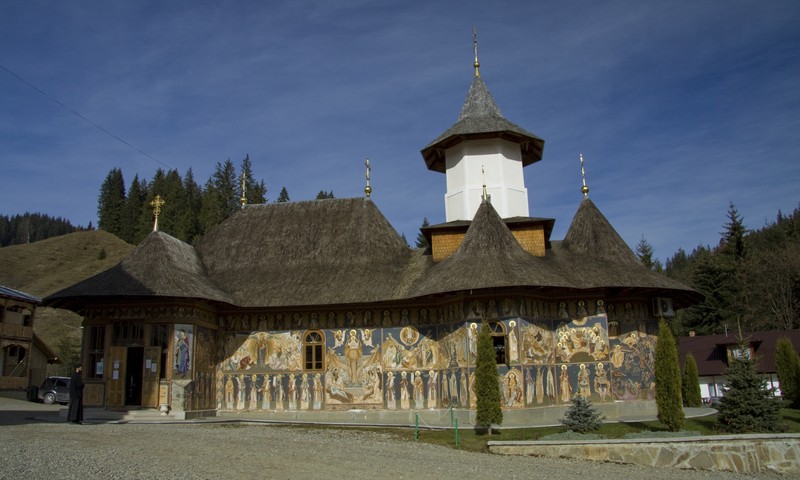
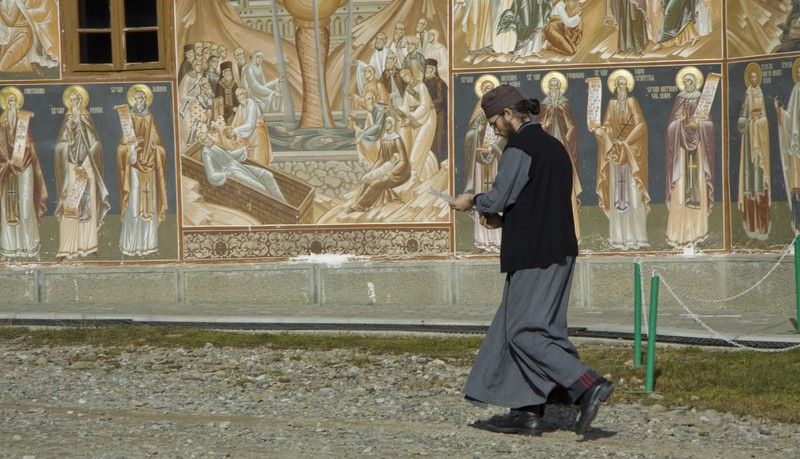
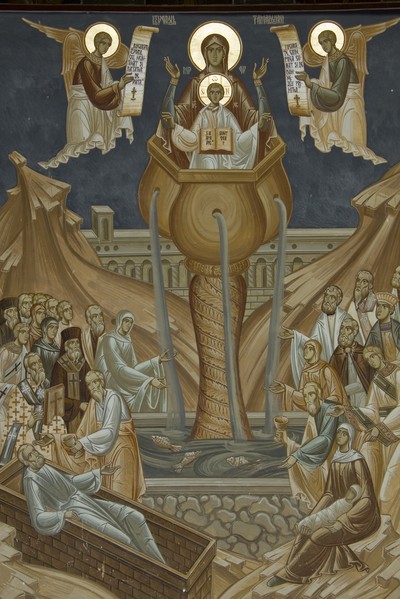
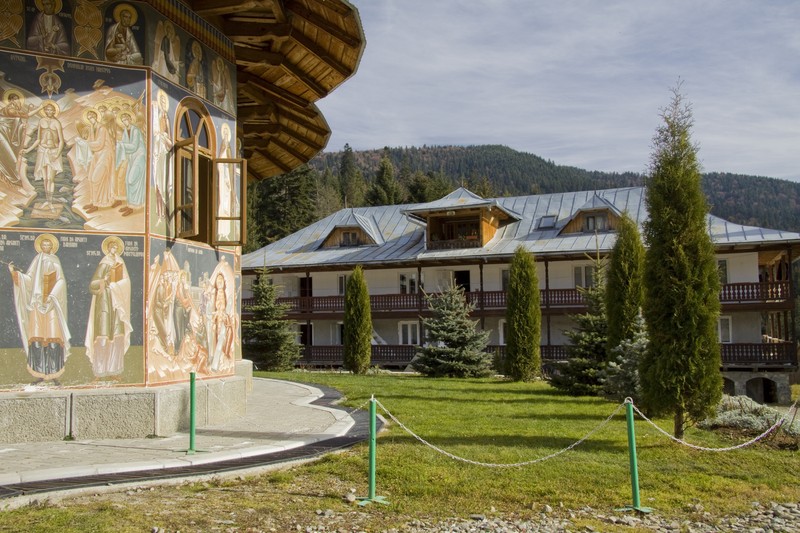
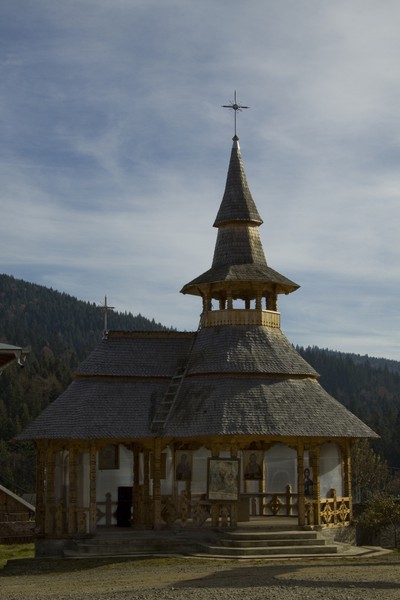
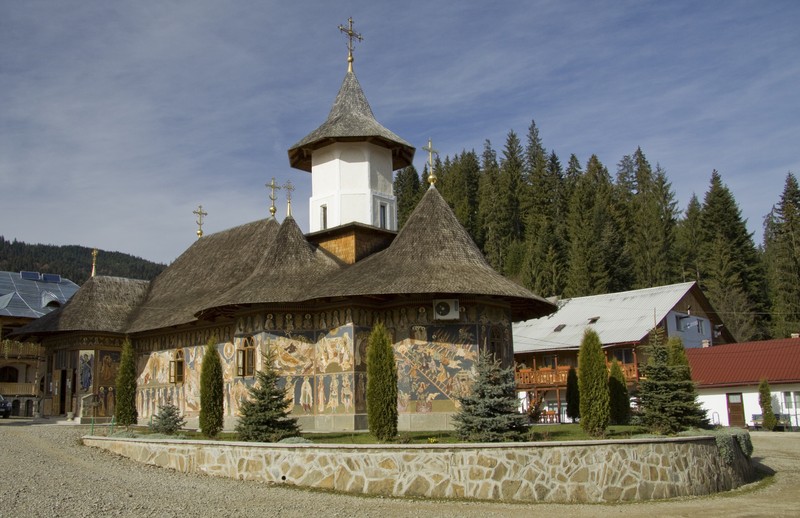
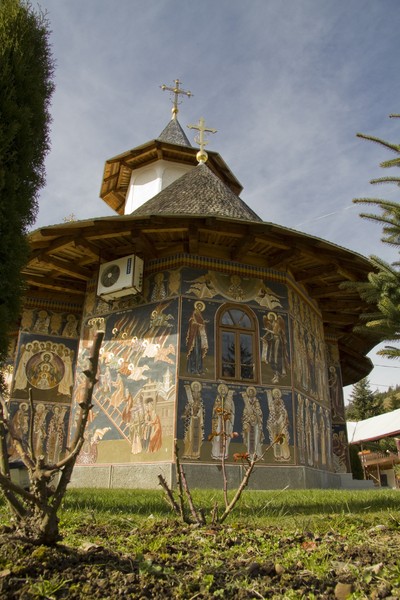
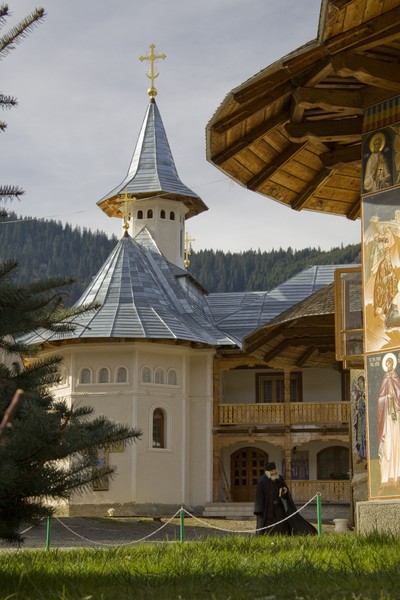
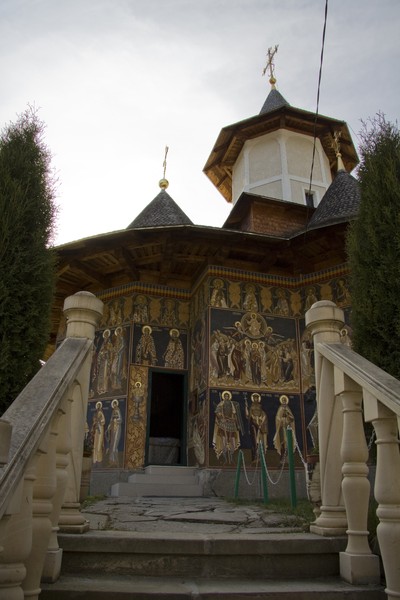
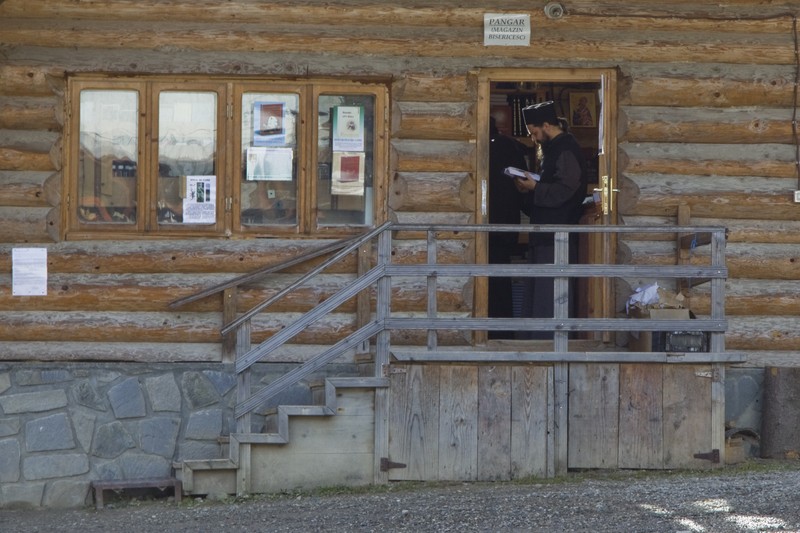
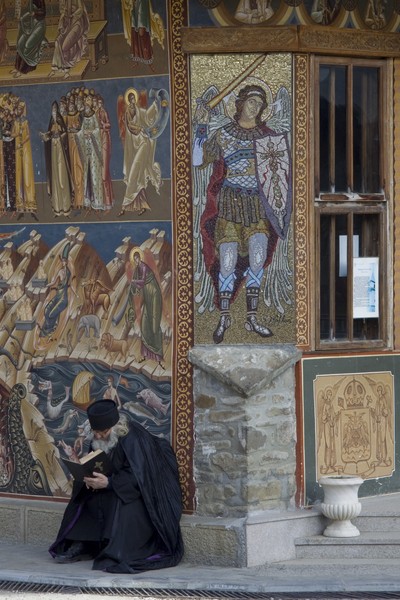
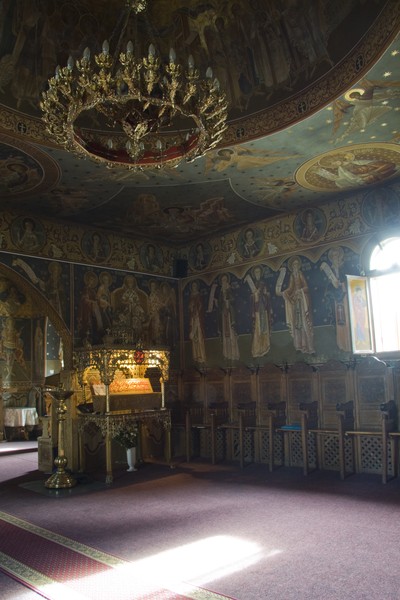
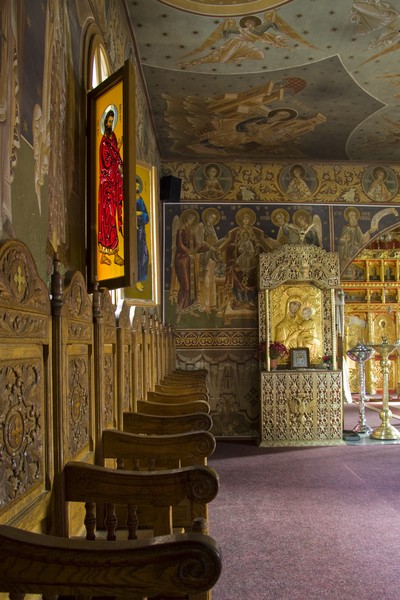
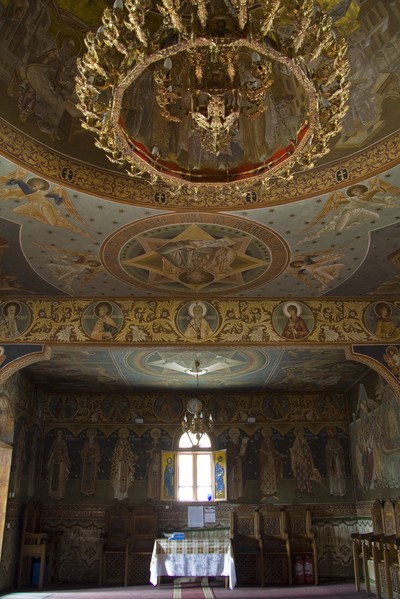
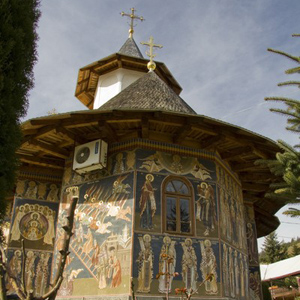
Construction of the “Dormition of the Mother of God” Church began in 2003, with craftsmen from Maramureș building it in the Maramureș style. They also built the wooden part of the health and social care centre begun in 2006. The church’s exterior is decorated with particularly beautiful architectural motifs from Maramureș, and its interior with Byzantine paintings. The fresco at Petru Voda Monastery is harmoniously composed, depicting the faces of saints through which the divine seems to shine.
Since 2005, the abbot of Petru Voda Monastery has been Father Lavrentie Carp Lucian, who arrived at the monastery on 14 October 2003 and demonstrated obedience and dedication to monastic life. Under the care of Petru Voda Monastery, a home for the elderly, a children’s home providing schooling in two grades (first and second), and a medical dispensary providing healthcare were established.
Petru Voda Monastery contains the tomb of Father Gheorghe Calciu Dumitreasa (23 November 1925 – 21 November 2006), who shared Father Iustin’s difficult years in prison and was one of the most determined dissidents of the communist period. He was buried here in accordance with his will.
Father Iustin Parvu of Petru Voda Monastery
Father Iustin Parvu was born on 10 February 1918 in the village of Petru Voda, in Poiana Teiului commune, Neamț County. In 1939, he enrolled at the Theological Seminary at Cernica Monastery, and between 1942 and 1944 he served as a missionary priest on the Eastern Front, as far as Odesa.
In 1948, Father Iustin was arrested on political grounds and sentenced to 12 years in prison. He served his sentence in the prisons of Suceava, Vacaresti, Jilava and Aiud. In 1960, he was sentenced to a further 4 years in prison because he had not renounced his Christian faith. Father Iustin Parvu spent almost 17 years in prison under the communist regime, where he met his friend and brother in faith, Father Gheorghe Calciu Dumitreasa. In 1964, he was released from prison and took a job as a forestry worker.
Between 1966 and 1975, he served as a monk-priest at Secu Monastery, then stayed at Bistrița Monastery until 1990. In 1991, he began construction at Petru Voda Monastery, where he was abbot until 2005, after which he remained its principal spiritual father. In 2000, Father Iustin built a hermitage for nuns near Petru Voda Monastery, a home for the elderly and an educational home for children. In 2003, he founded the monthly publication of Orthodox teaching and views entitled “Glasul Monahilor”.
The achievements of Petru Voda Monastery are entirely due to Father Iustin Parvu. Today, it has become one of the places most sought out and visited by the faithful, a true destination for religious tourism. The road from Piatra Neamț to Petru Voda Monastery passes the monasteries of Bisericani (named after the word “bisericosi”, meaning devout, which described its first monks) and Pângărați (famous for the unique architecture of its old church).
More on the same topic

Ethnographic museums, treasures of local history and traditions
Ethnographic museums are true treasures and expressions of love for traditions, folklore, and spirituality of the places, and so is the Ethnographic Museum Casa Bunicilor in the village of Mitocul Bălan, Crăcăoani commune.

Neamț receives five nominations across four categories in Destinația Anului
We have good news for everyone who loves Neamț County and all its beauty: it is among the finalists in the Destinația Anului 2024 competition, with five nominations across four categories: Piatra Neamț in the Inspiring Cities category.

The Story of the Seven Miraculous Icons of the Holy Virgin and Saint Anne from Neamț Land
Renowned not only for its beauty and historical significance but also called the “Jerusalem of Romanian Orthodoxy,” Neamț Monastery houses the miraculous icon of Virgin Mary with three hands…