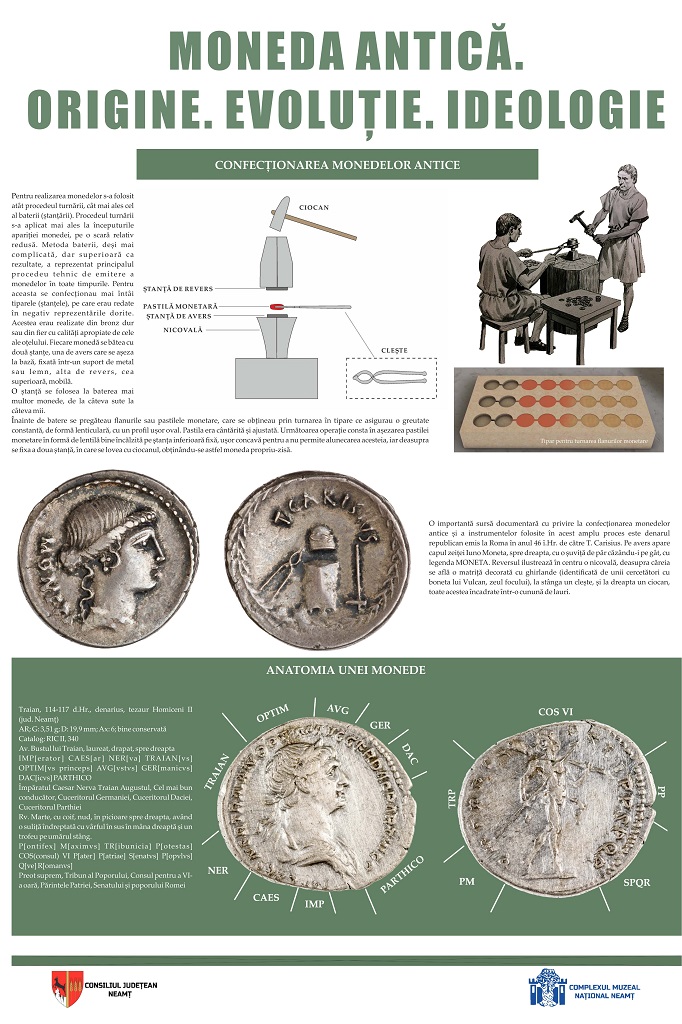
“Moneda antică. Origine. Evoluție. Ideologie”
Neamț National Museum Complex brings to the public’s attention a new outdoor exhibition, titled “Moneda antică. Origine. Evoluție. Ideologie”. The information panels, placed in the vicinity of the “Gheorghe Dumitroaia” Cucuteni Eneolithic Art Museum, will be on view from July to October of this year.
The exhibition takes us on a brief foray into the history of ancient coinage, beginning with the pre-monetary exchange phase (the barter of goods; the primary role of metals in trade relations, etc.), continuing with the appearance of the first coins in Asia Minor towards the middle of the 7th century; the Greek, or in any case Hellenised, context of the earliest coins, which played a defining role in understanding the historical significance of the introduction and spread of coinage; and the stages preceding the emergence of the Roman silver denarius, the best-known and most widely circulated coin of the ancient world, which persisted into the imperial era until the 3rd century AD. Imperial Roman coins entered and circulated in considerable numbers both in the two provinces of Dacia and Moesia Inferior and in the territory of the free Dacians.
Particularly noteworthy are the large hoards of imperial Roman denarii discovered in Carpi contexts in Moldavia (especially in Neamț, Bacău, Iași and Vaslui counties).
A separate section of the exhibition was devoted to the secondary role played by Roman coins, namely as a means of imperial propaganda. For this purpose a series of representative, lesser-known coins were selected, drawn from monetary hoards discovered in Neamț County (Mastacăn, Gherăieștii Noi, Bârgăoani, Homiceni, Dragomirești, Gârcina, Hârtop, Ruginoasa, Turturești etc.), which form part of the numismatic collection of the Museum of History and Archaeology Piatra Neamț. Their economic function made the coin an object accepted by all levels of Roman society.
Such a distinctive feature, especially its widespread circulation, could not escape the notice of the state, the coin thus becoming the most widespread and effective instrument of state ideology. During the Roman Empire, emperors used their own image on the obverse of coins to convey messages to the citizens of Rome and beyond. Since the population did not have direct contact with the emperor, his portrait on the coins represented a means by which he could be known, thereby establishing a relationship with his people.
Whether portraying the emperors as mature and experienced or as young innovators, whether as philosophers or soldiers, the portraits together with the slogans on the coins concerning victory, peace or security were intended to immortalise Rome and its rulers. The types of imperial reverses, although less remarkable from an artistic point of view, are especially important because of the wealth of historical commentary they provide. Their numerous and highly varied representations were meant to convey specific official messages of the imperial administration directed at a wide audience.
The great Roman mints annually provided evidence of imperial interests, such as the birth of an heir or an alternative guarantee of succession; acts of social reform or public aid; public spectacles, religious anniversaries; members of the imperial family; victories in war (the series of monetary issues of Emperor Trajan dedicated to the Dacian wars); imperial journeys, etc. All of these show the efforts made by the emperors, as semi-religious and all-powerful rulers of a vast and heterogeneous empire, to reconcile and inform.
Museum curator Loredana Gafincu
Photographer Florin Ghimiș
More on the same topic
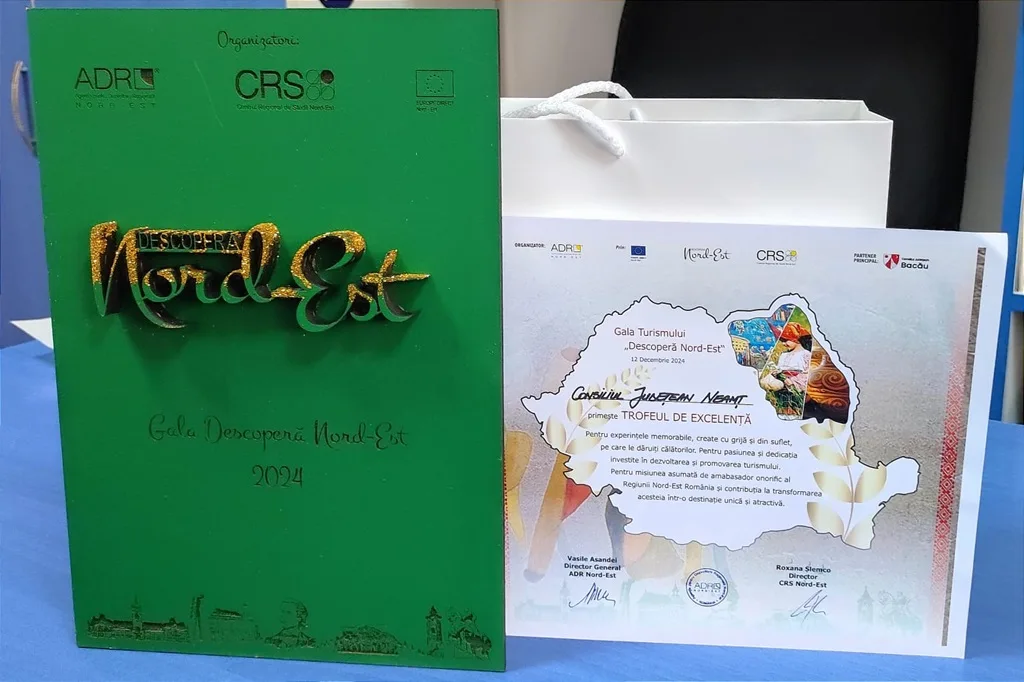
Neamț Awards at the Discover North-East Tourism Gala, 2024
The awards were presented at the 9th edition of the Discover North-East Tourism Gala on December 12, 2024: Newcomer – Award for new locations/attractions/tourist products or emerging tourist destinations: Zenzia Glamping Piatra-Neamț. Poem Rural Piatra-Neamț.
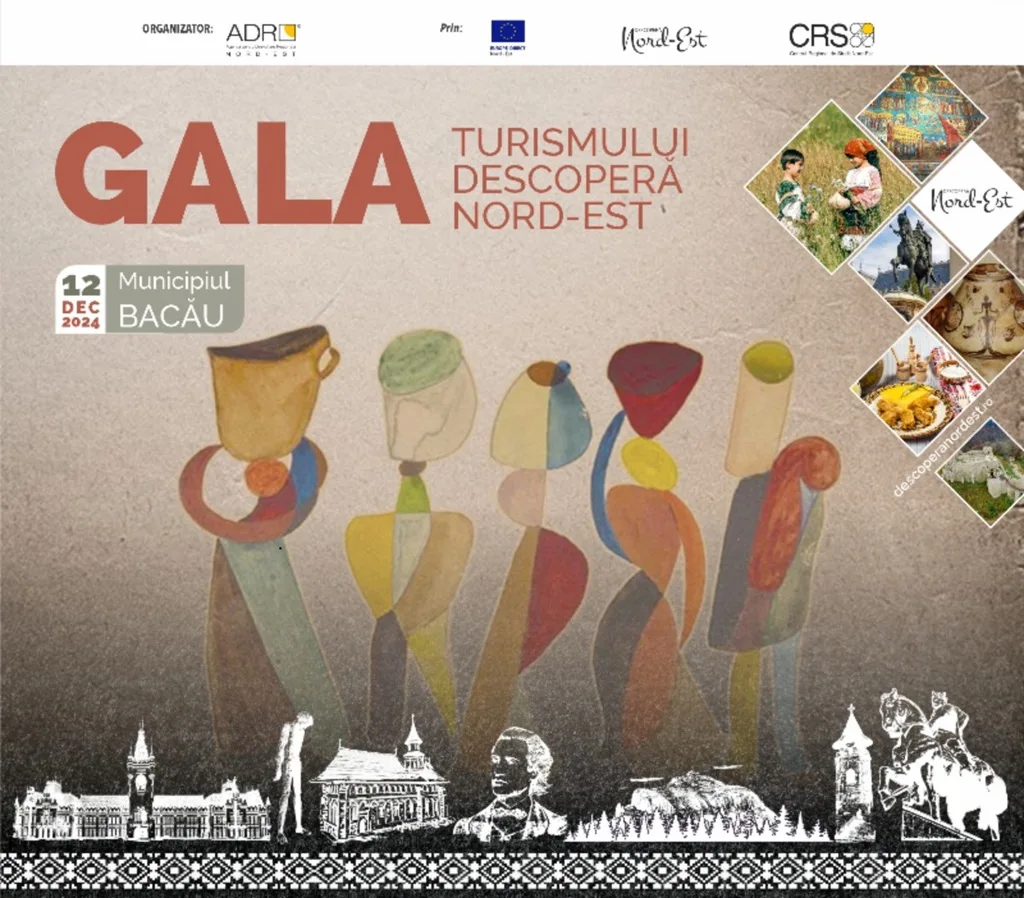
Excellence in Developing Tourism in Neamț at the 9th Edition
On December 12, 2024, we celebrate the tourism initiatives of Neamț County, alongside those from the North-East Region of Romania—a uniquely beautiful and rich area that deserves to be discovered by tourists.

Nominations for Destination of the Year 2025
In the category Enchanted Realms – Geographical areas or localities with a rich treasure of nature, history and tradition our proposal is: The city of Bicaz and its surroundings.