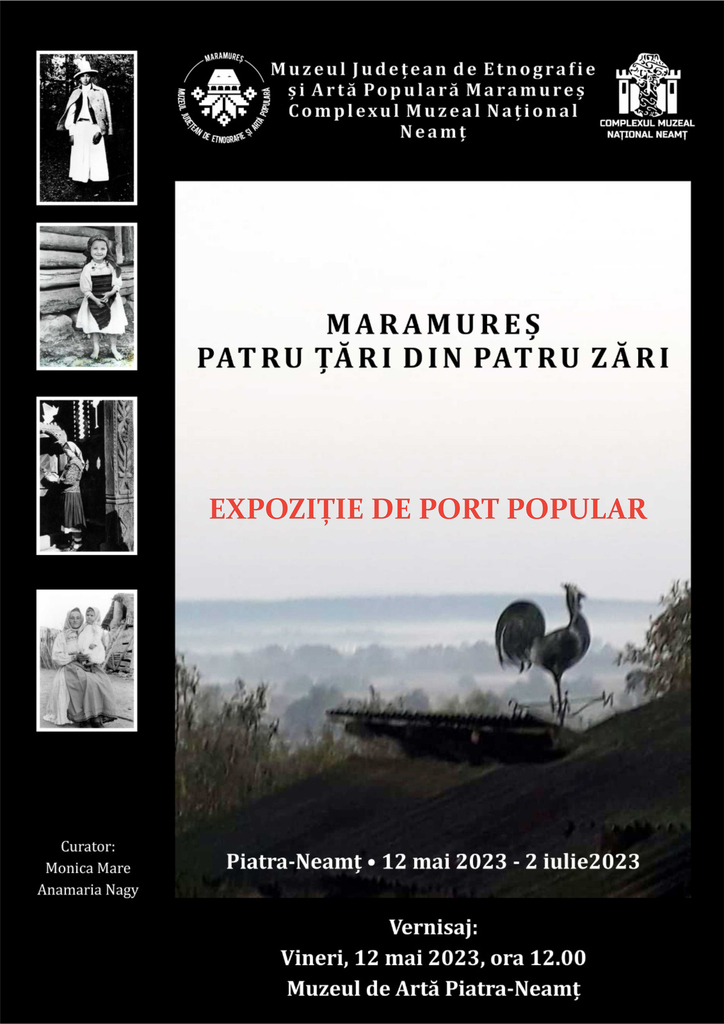
Traditional folk costume from Maramureș comes to Neamț!
“Maramureș, old country…” is the storybook land we invite you to step into for a moment, to discover its secrets that intertwine harmoniously among the four ethnographic zones of Maramureș County: Lăpuș, Chioar, Codru and Maramureș, also called “countries”.
The criteria for recognising each zone are numerous and extremely complex, but at first glance the basic element defining these zones is the folk costume, worn with pride as an invaluable identity mark.
Țara Maramureșului Voievodal is known throughout the world for its unmistakable traditional clothing. Dressed in their traditional costume, the people of Maramureș are easily recognised in many corners of the world. The women stand out for their beautiful blouses with square necklines, framed by exquisite decoration and carefully crafted edging, as well as for their aprons, whose simple yet striking decoration accentuates the contours of the body, turning the wearers into true “ancient goddesses” of the earth. If you visit Maramureș on a quiet day, at a moment of rest, and happen to meet a local man dressed in white from head to toe, you feel as though he has just stepped down from Trajan’s Column or emerged from the mountain rocks surrounding Maramureș. While some elements of the costume have changed with fashion, one item remains just as it was hundreds of years ago: the small shoulder bag. Woven from the same materials and using the same techniques as a rug, it remains a source of pride for young men on feast days.
The Lăpuș region is regarded by ethnographers as a keeper of ancient Romanian traditions. Referring again to the basic garment, the shirt, we note that here, until after the middle of the twentieth century, the most commonly worn shirt was the one with a “chept” (ciupag), a folk costume element still found today in the Lăpuș area, the Apuseni Mountains and the Transylvanian Plain. The men’s shirt, although it may appear simple at first glance, possesses a special elegance thanks to the discreet ornaments on the collar and cuff, which give the wearer a particular distinction.
The costume from Țara Chioarului ranks among the finest in terms of the refinement shown by traditional village women over time. Both the women’s shirts and the men’s shirts received special attention regarding their decoration. Multiple motifs, placed in key areas of the shirt and executed with the most complex embroidery techniques using only white cotton, give the shirts a distinctive quality. It is worth highlighting the contribution of ASTRA during the preparations for the Great Union: it mandated the use of red, yellow and blue in the decoration in both the Chioar and Codru regions, thus opening the way to polychromy.
Today there is a trend of returning to decoration made with white.
Țara Codrului presents us with a distinctive women's shirt. The oldest ones have extremely intricate decoration worked in red and black cotton, using exclusively geometric motifs. Later, the shirt with a yoke was adopted from the Oaș area, introducing decoration on the gathers. The men's shirt, more conservative, remains white, with decoration also sewn in white thread and only small touches of colour on the turn-down collar, which appeared after the middle of the 20th century.
Through this exhibition, we present an ethnographically complex county, Maramureș, țara cu patru țări, showcasing its most valuable features in a fascinating field – folk costume.
More on the same topic
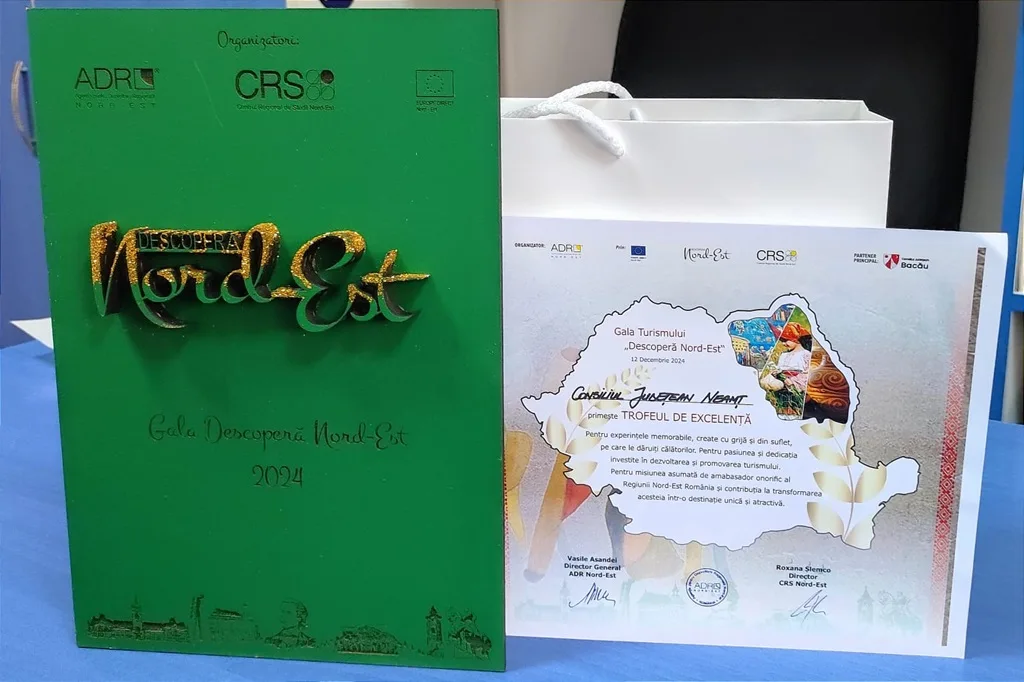
Neamț Awards at the Discover North-East Tourism Gala, 2024
The awards were presented at the 9th edition of the Discover North-East Tourism Gala on December 12, 2024: Newcomer – Award for new locations/attractions/tourist products or emerging tourist destinations: Zenzia Glamping Piatra-Neamț. Poem Rural Piatra-Neamț.
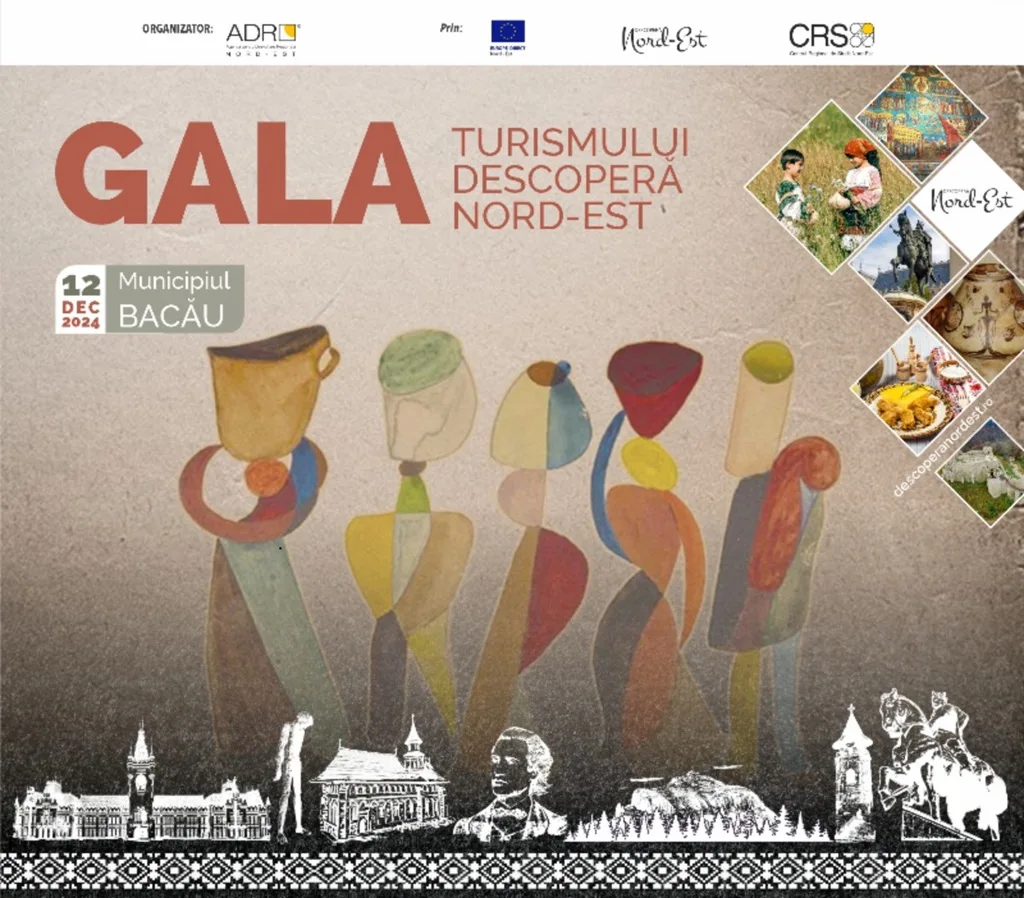
Excellence in Developing Tourism in Neamț at the 9th Edition
On December 12, 2024, we celebrate the tourism initiatives of Neamț County, alongside those from the North-East Region of Romania—a uniquely beautiful and rich area that deserves to be discovered by tourists.
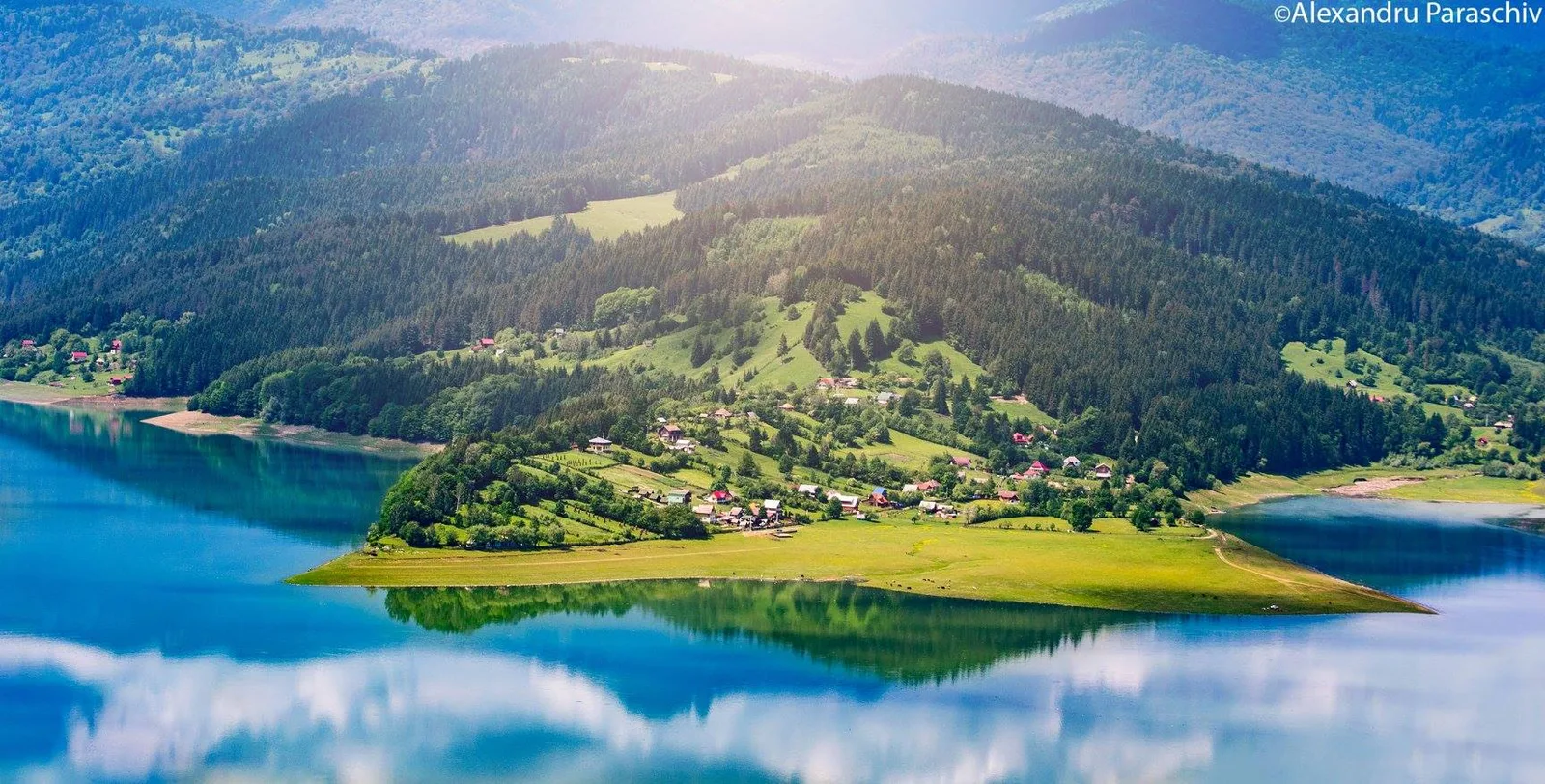
Nominations for Destination of the Year 2025
In the category Enchanted Realms – Geographical areas or localities with a rich treasure of nature, history and tradition our proposal is: The city of Bicaz and its surroundings.