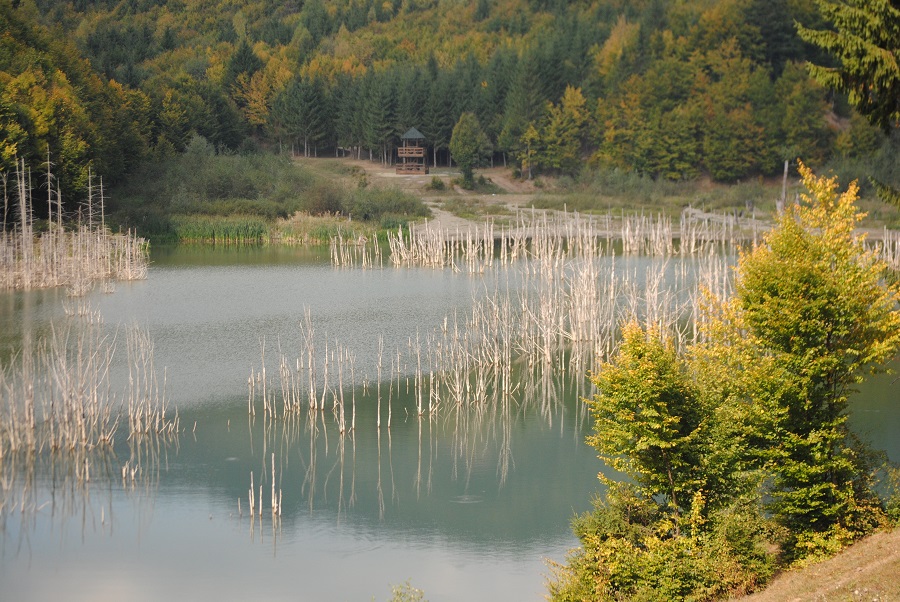
Cuejdel Lake Natural Reserve – Neamț County
In the vicinity of the municipality of Piatra-Neamț, in the forested Carpathian area of the commune of Gârcina, within an exceptional natural setting, which has – not only metaphorically – all the attributes necessary to be called “a corner of heaven”, the largest natural dam lake in the country has formed in recent decades.
Hydrographically, this lake is situated on the Cuejdel River, a tributary of a river – Cuejdiu – which itself is a tributary of the Bistrița. Covering 1,026 ha, the Cuejdel watershed represents about a tenth of the Cuejdiu area and, since approximately 150 ha lie downstream of the lake, we can estimate the lake’s catchment at roughly 85% (876 ha) of this basin’s surface. Of course, in the case of a natural dam lake all these aspects, linked also to rainfall patterns and to possible losses through evaporation and infiltration, concern both the specialist and the tourist, as they directly affect the stability of the water surface and of the entire newly formed biotope or micro-universe. It is therefore important to know a few things about how this little paradise formed; it was declared a nature reserve in 2004…
It is fairly easy to get here, but you must truly love nature, even “at the cost” of getting out of the car to enjoy a relaxing walk with friends or family… This is because Cuejdel can be reached by two routes, both of which involve a stretch on foot.
One option is to start from Piatra Neamț, continue through the commune of Gârcina and leave the car parked about 20 km from the town, then walk a further 3 km through a charming landscape, following the path that leads to the right. Bearing in mind that the final stretch of road is more difficult, you can either park at some point and continue with a refreshing walk, or… use an off-road vehicle and drive right up to the water’s edge…
Photo:
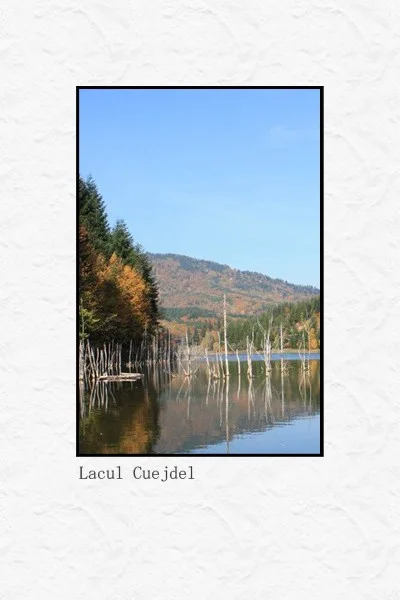
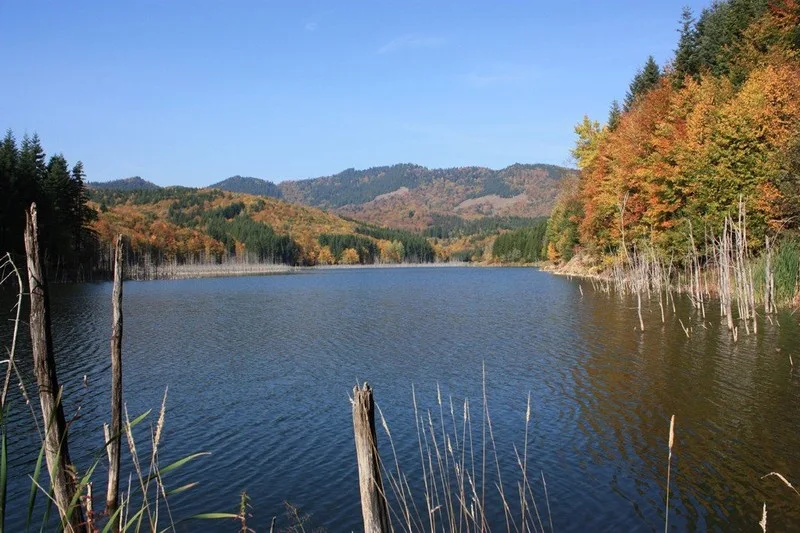
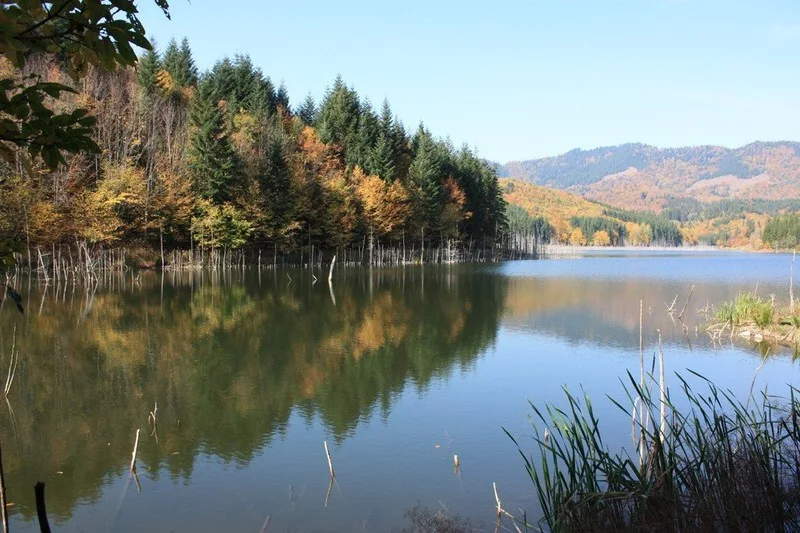
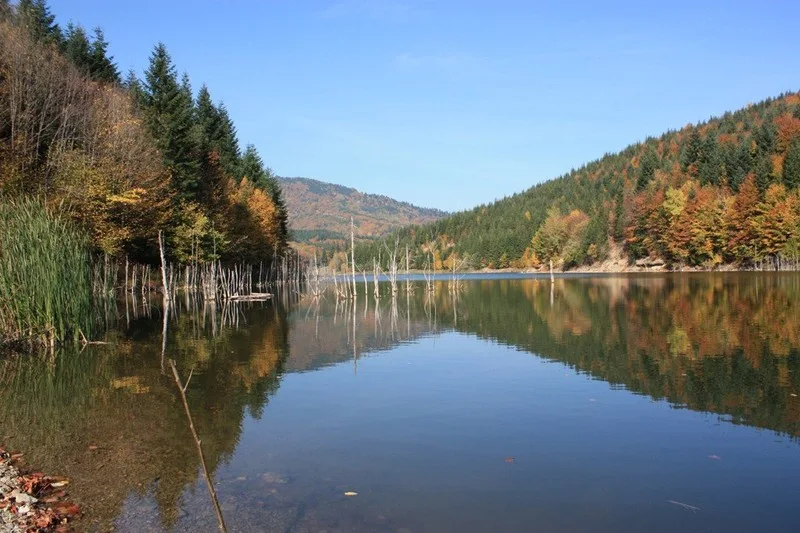
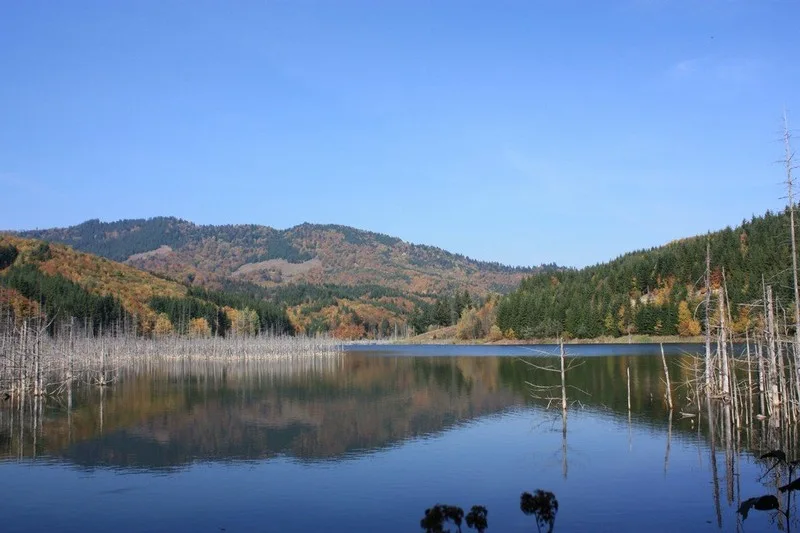
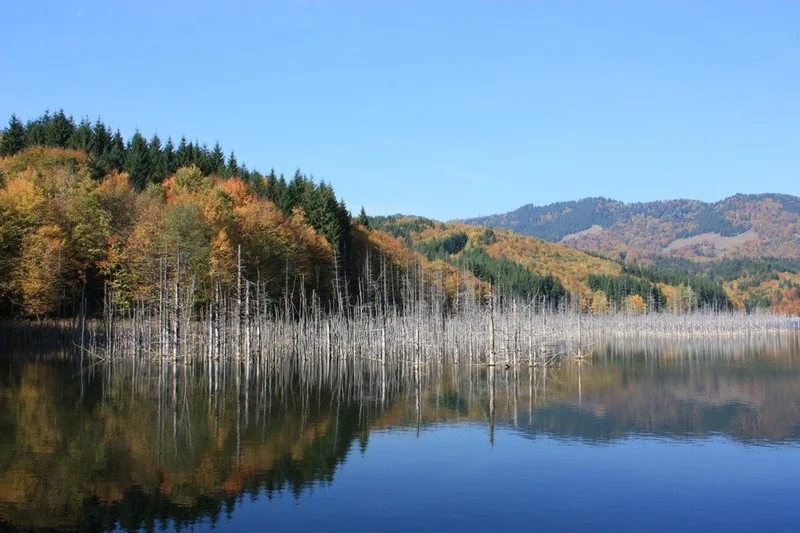
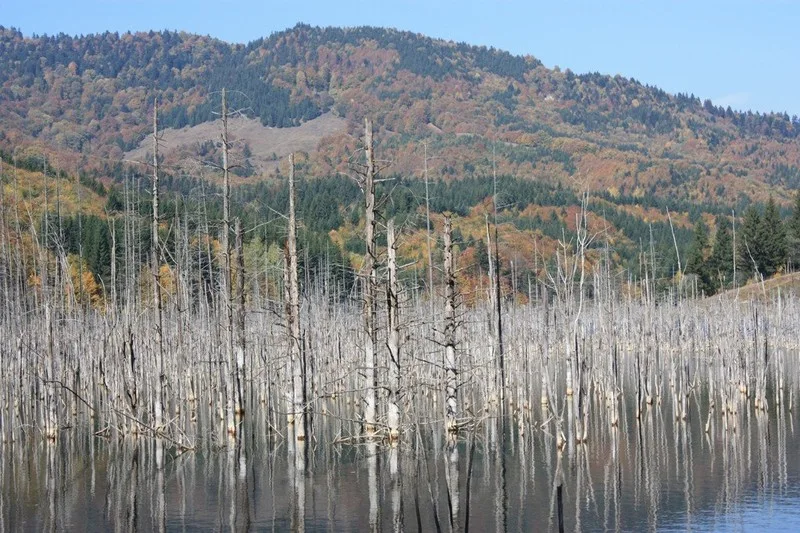
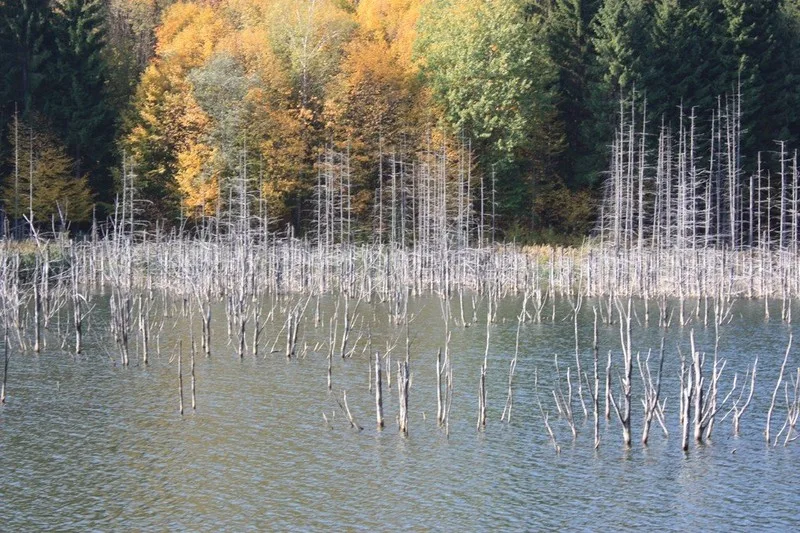
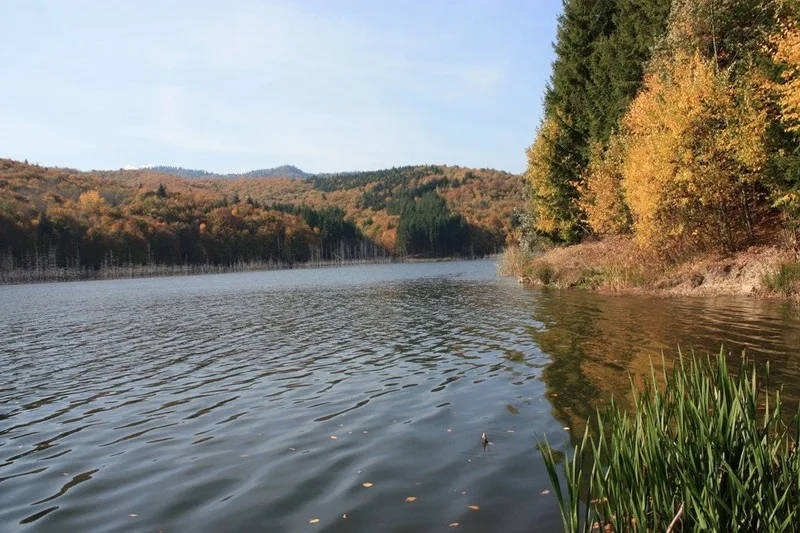
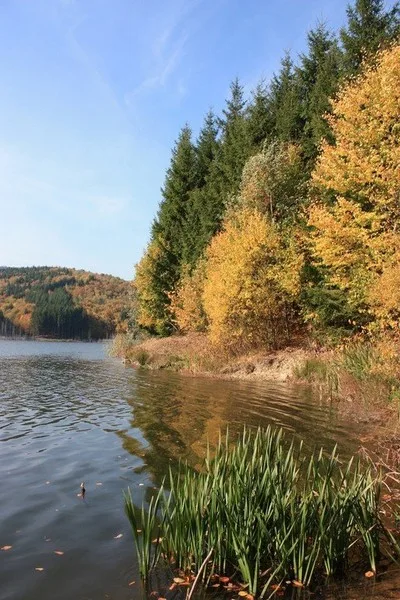
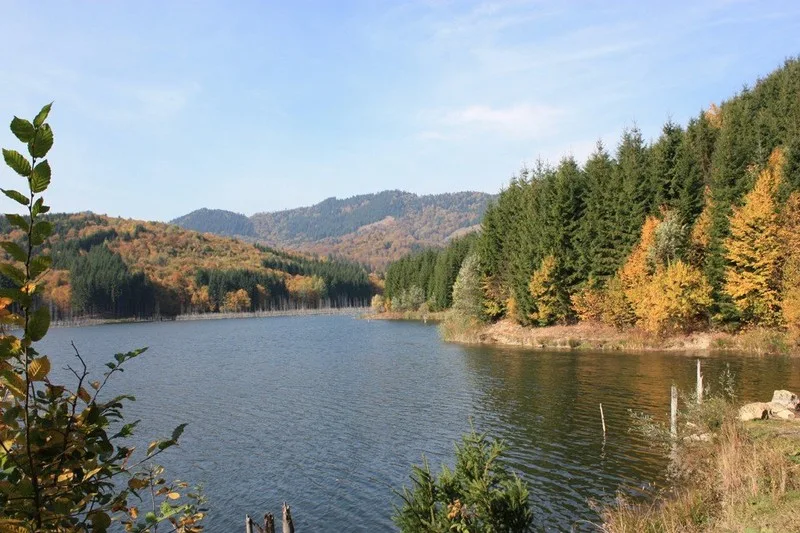
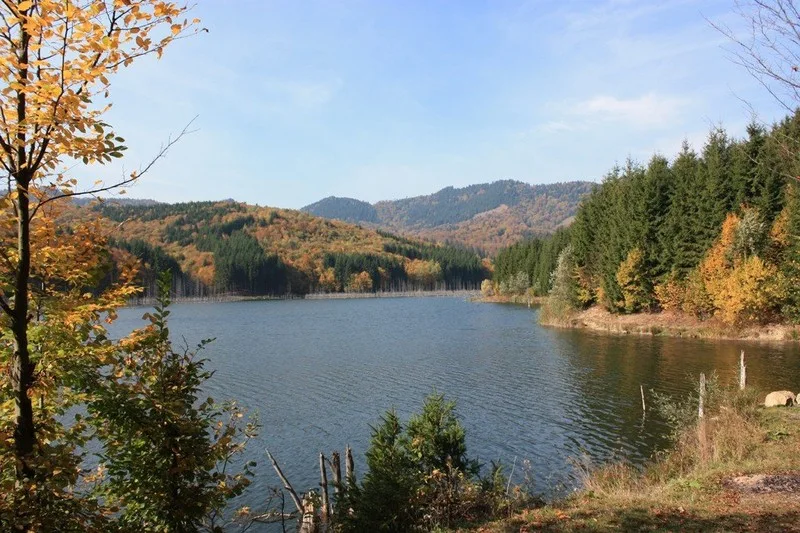
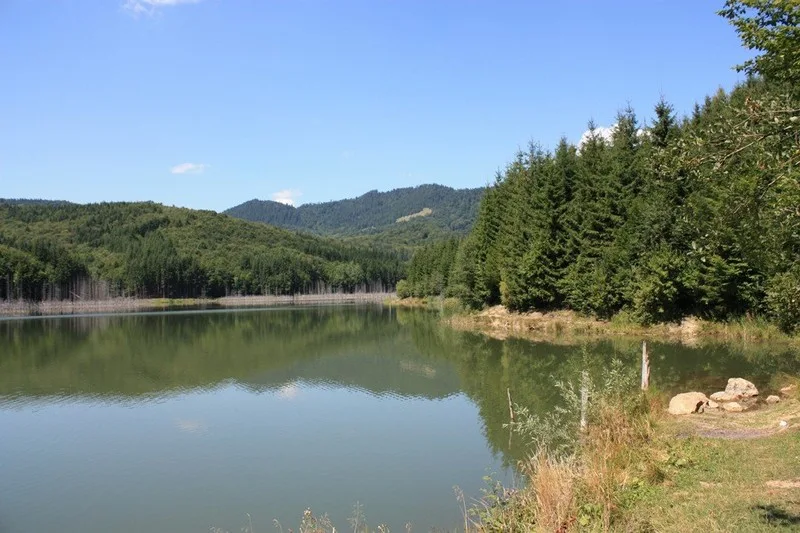
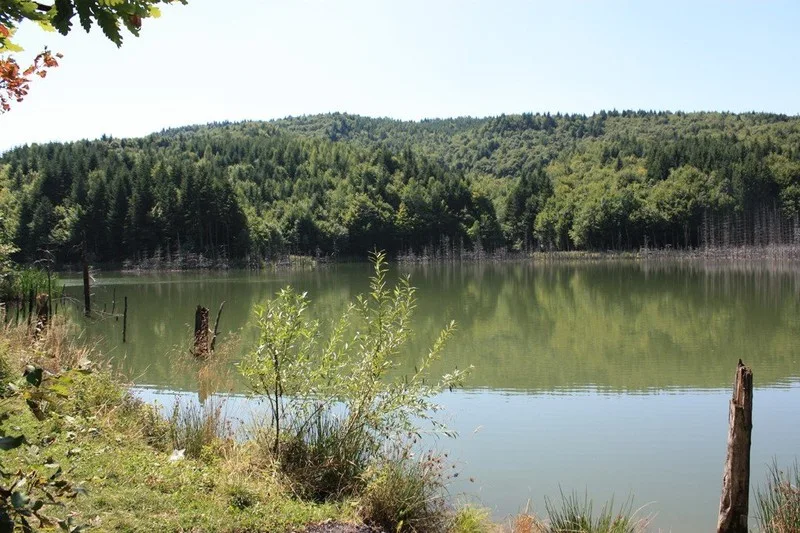
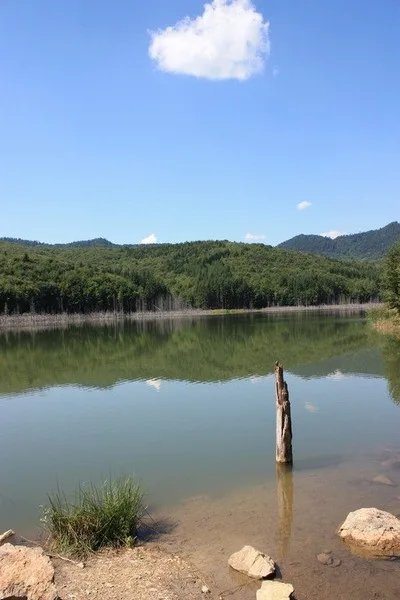
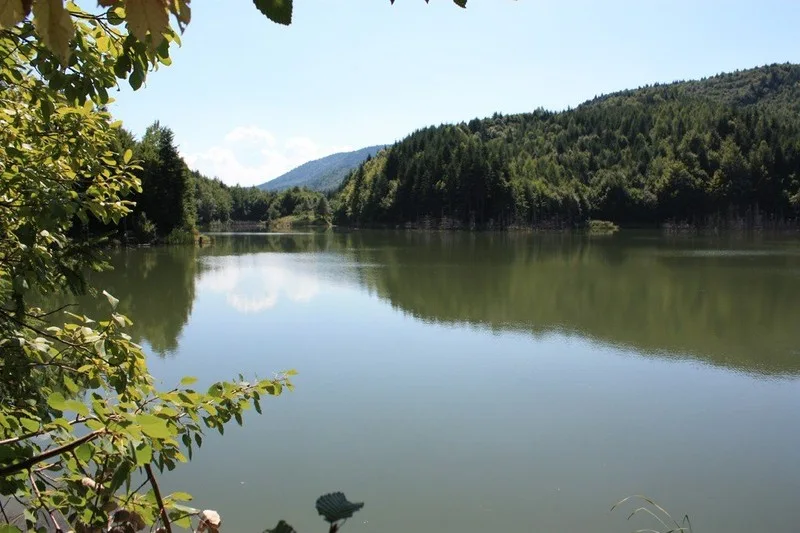
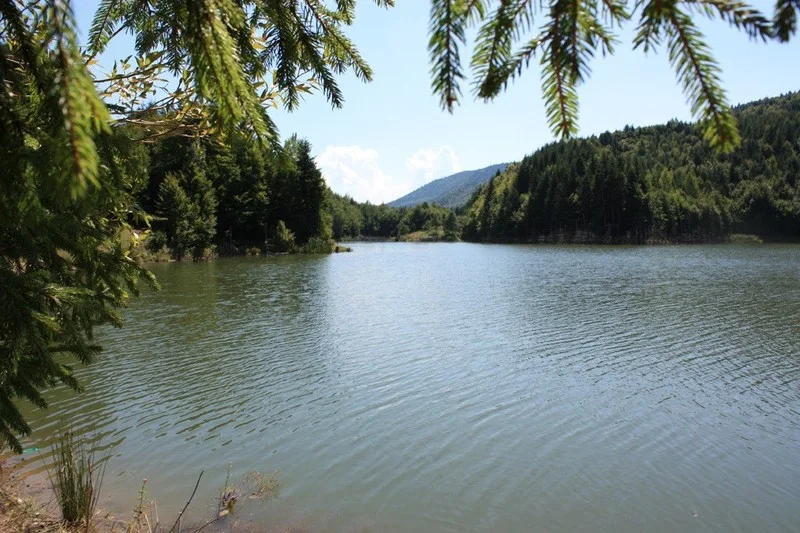
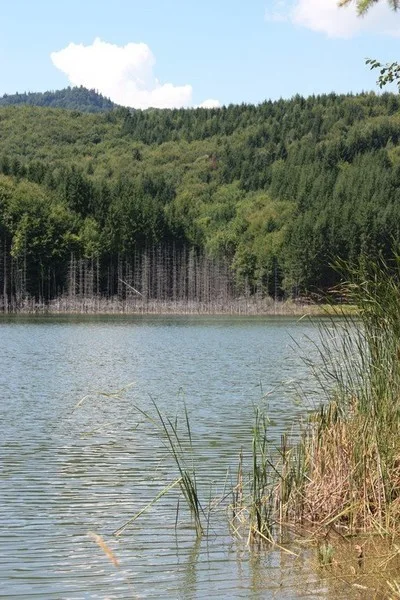
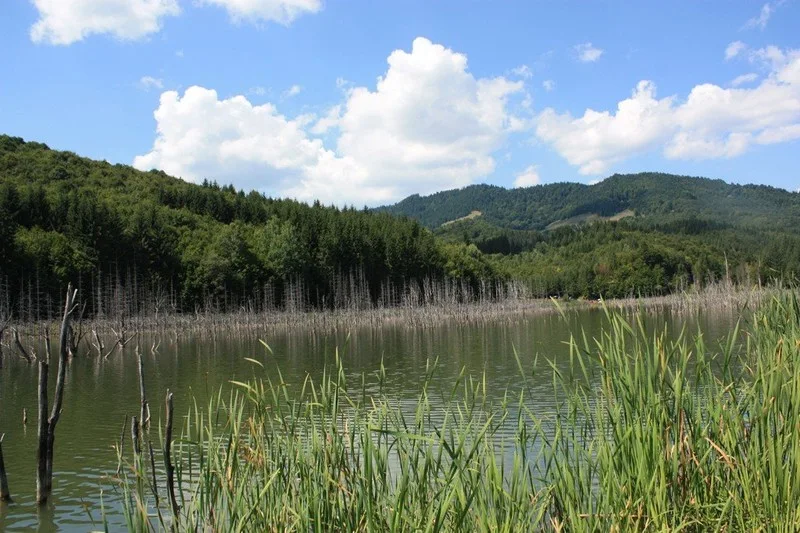
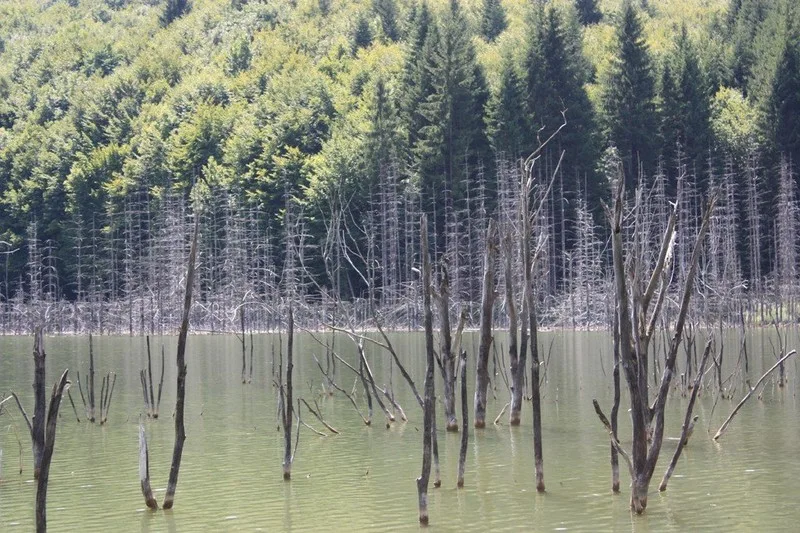
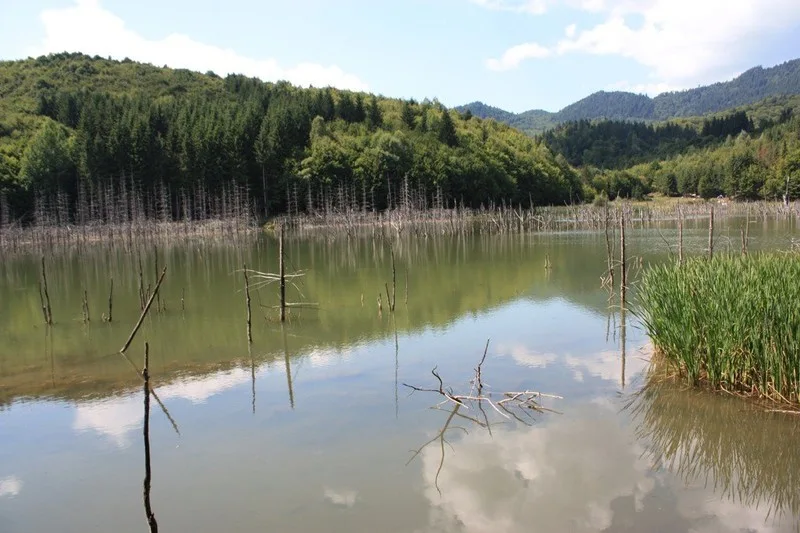
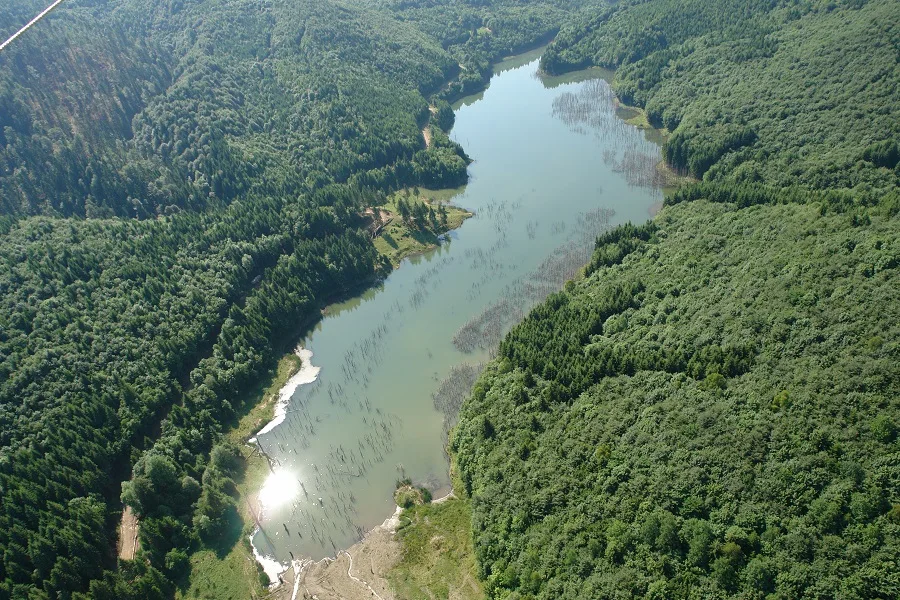
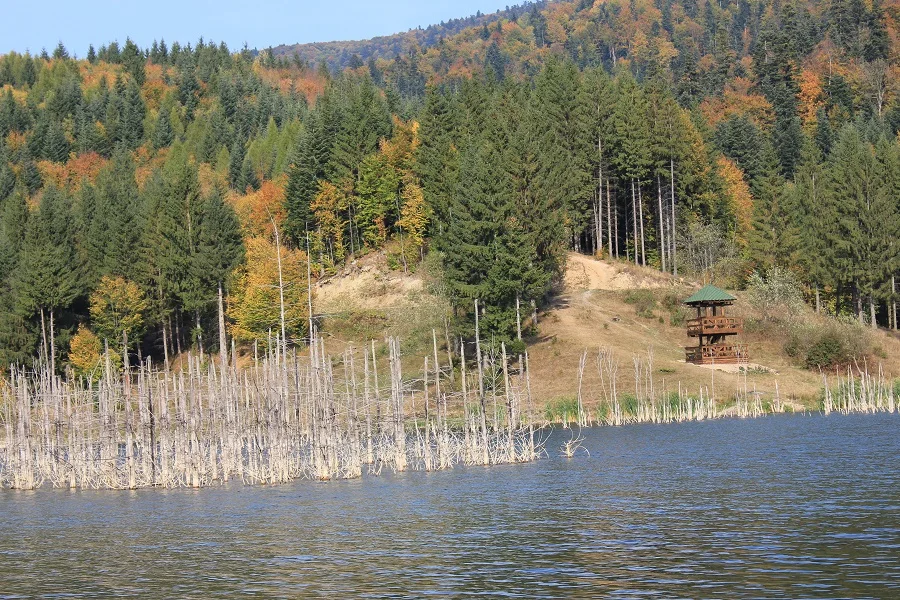
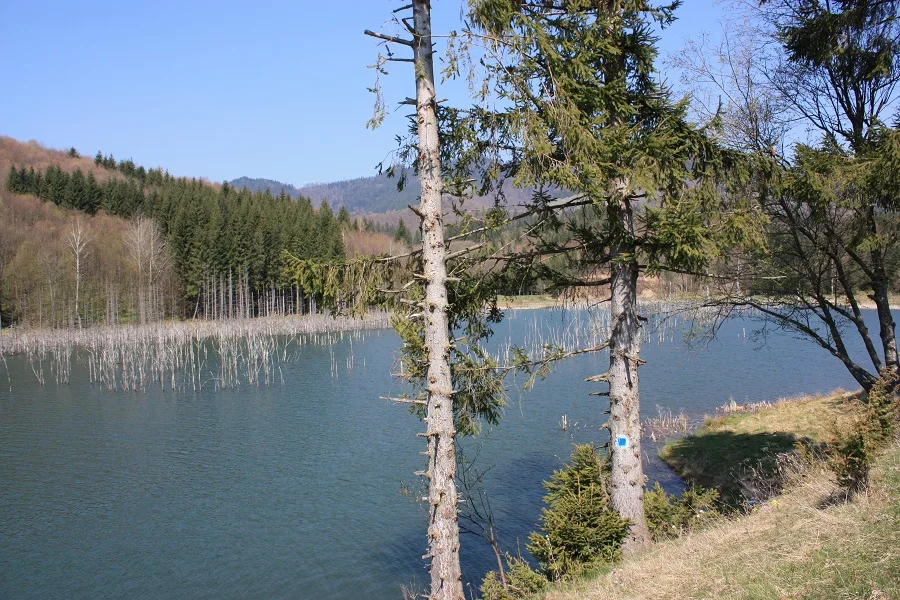
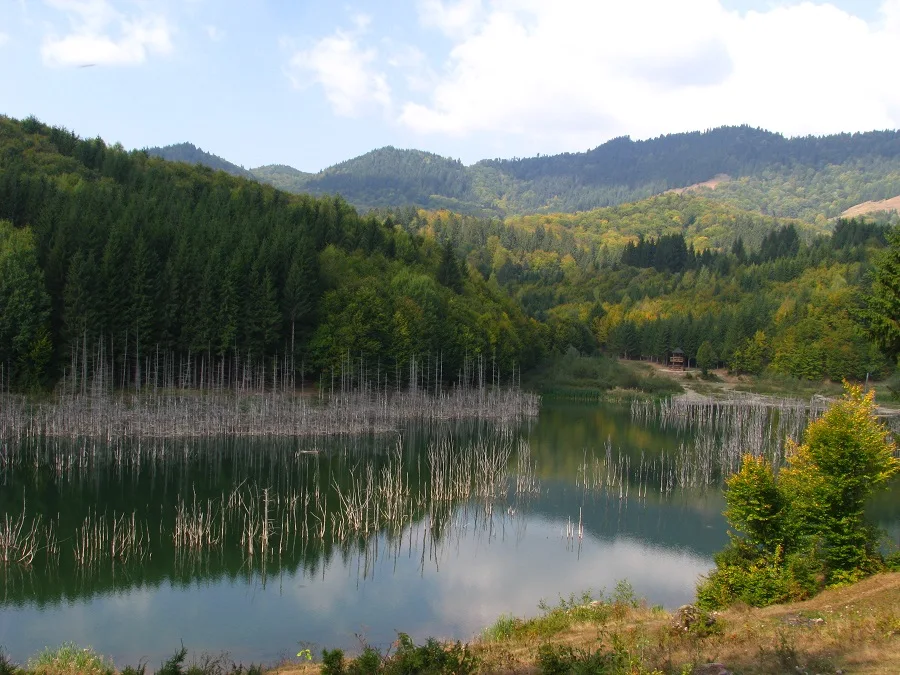
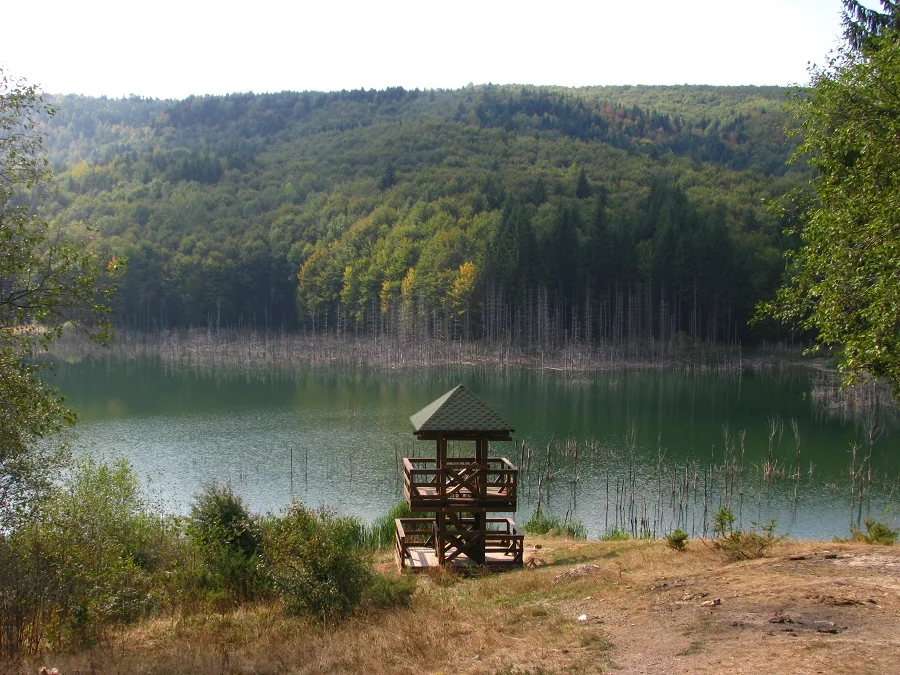
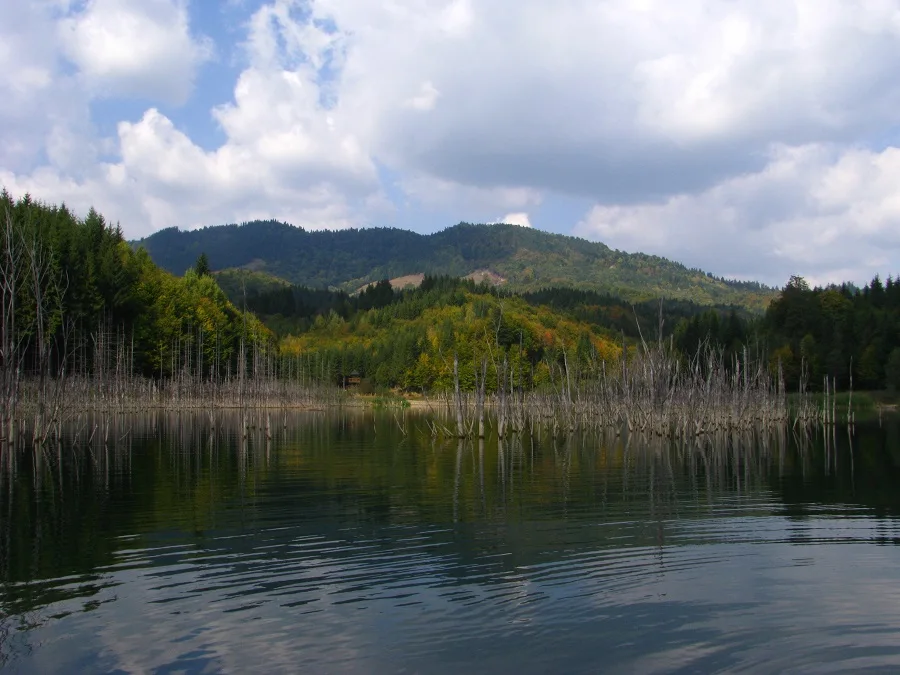
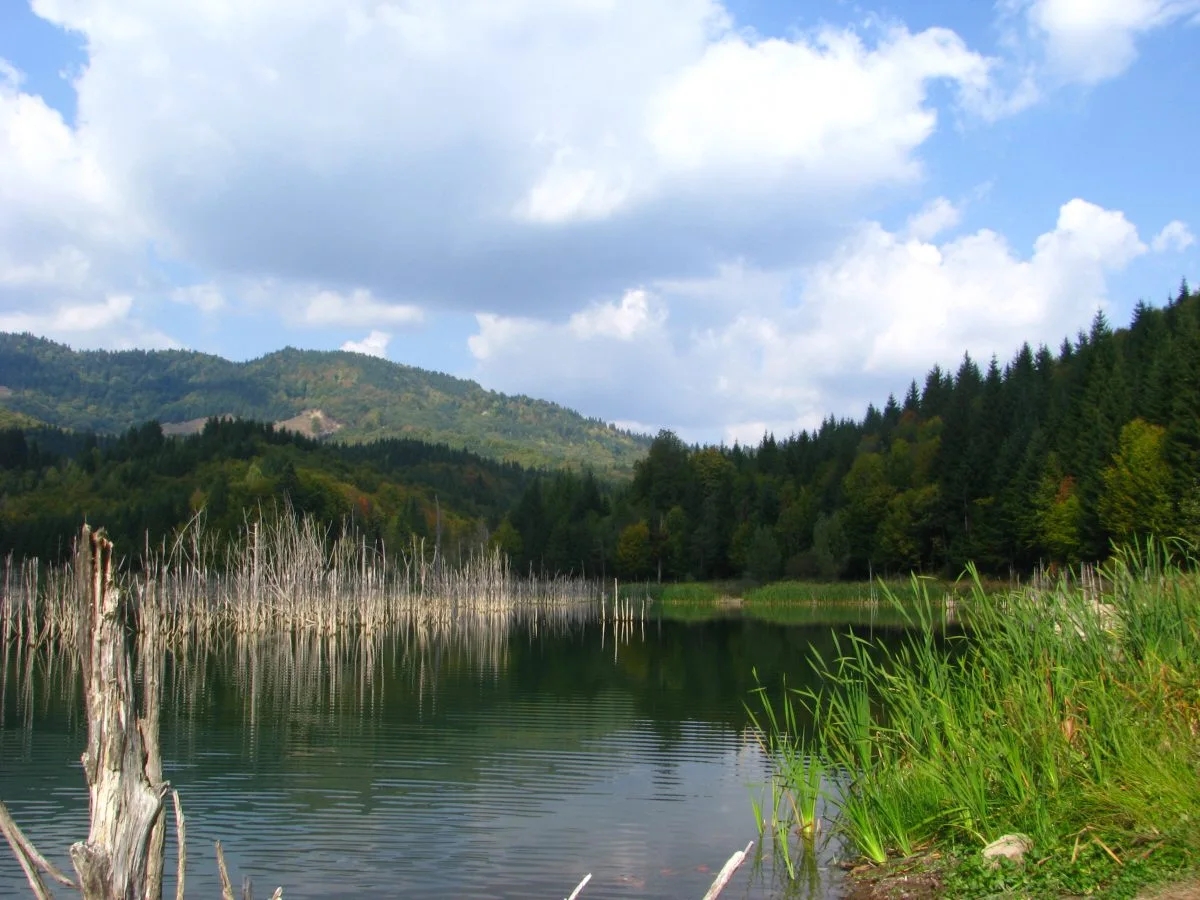
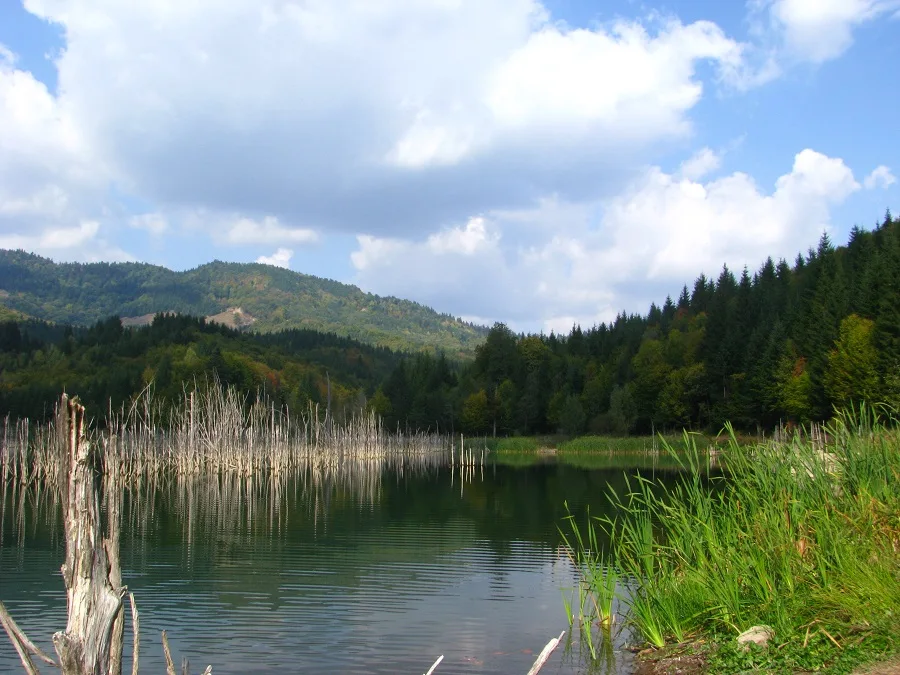
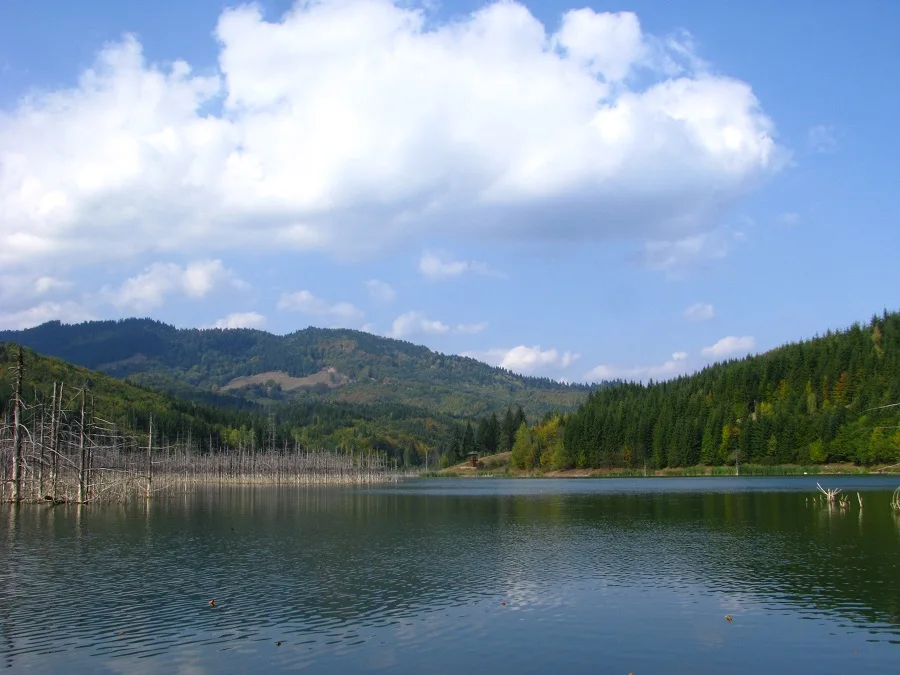
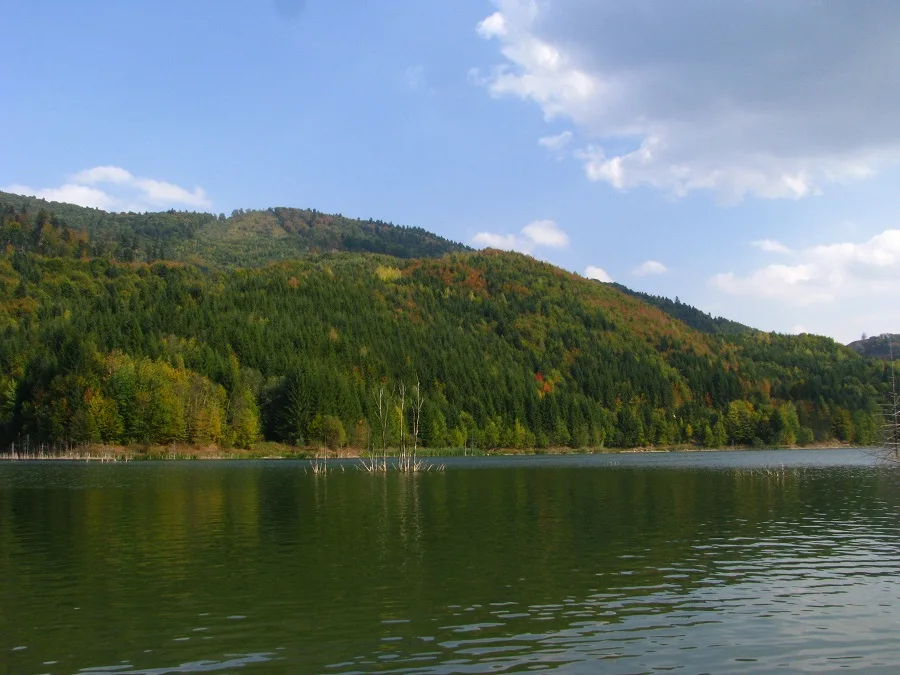
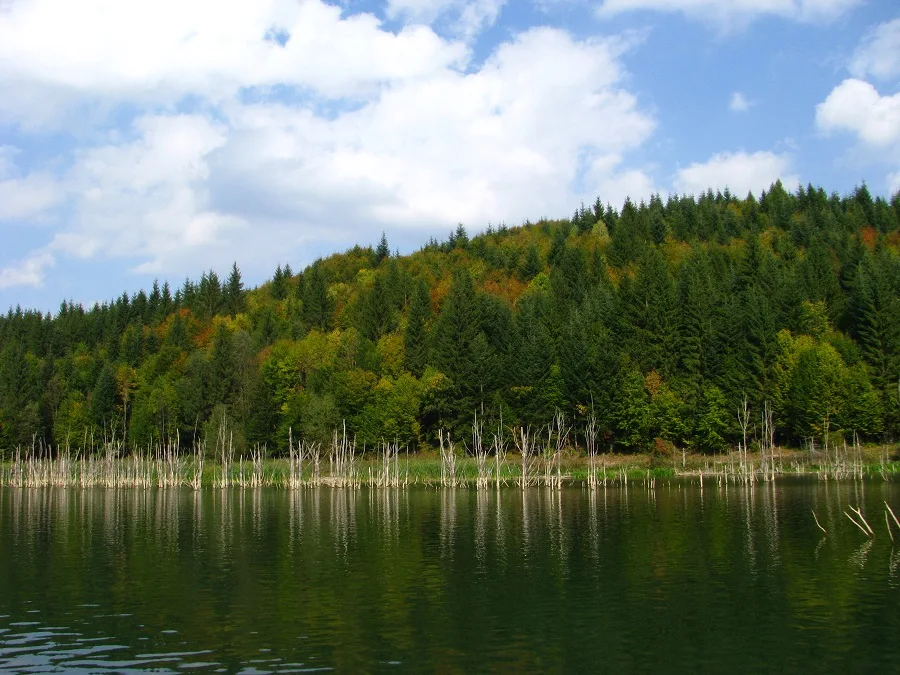
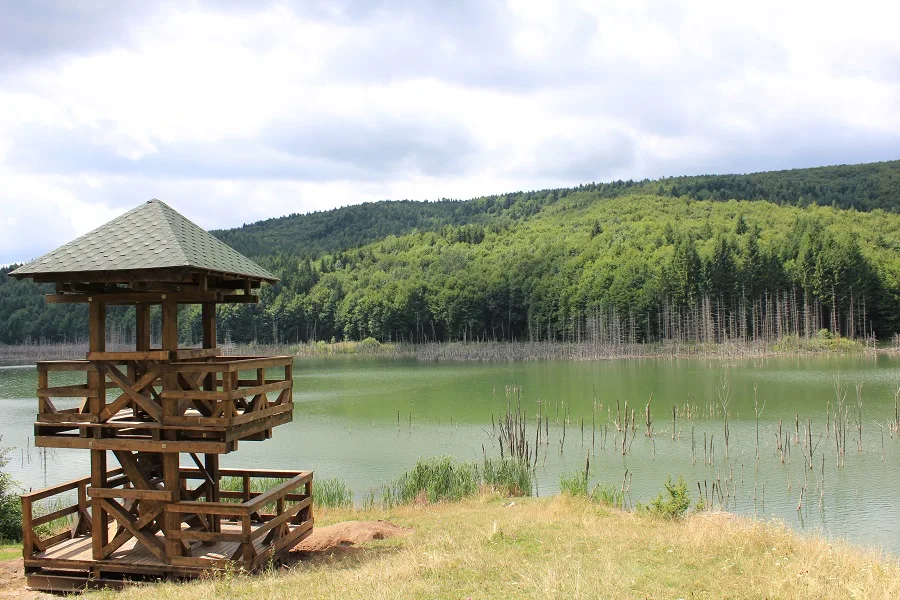
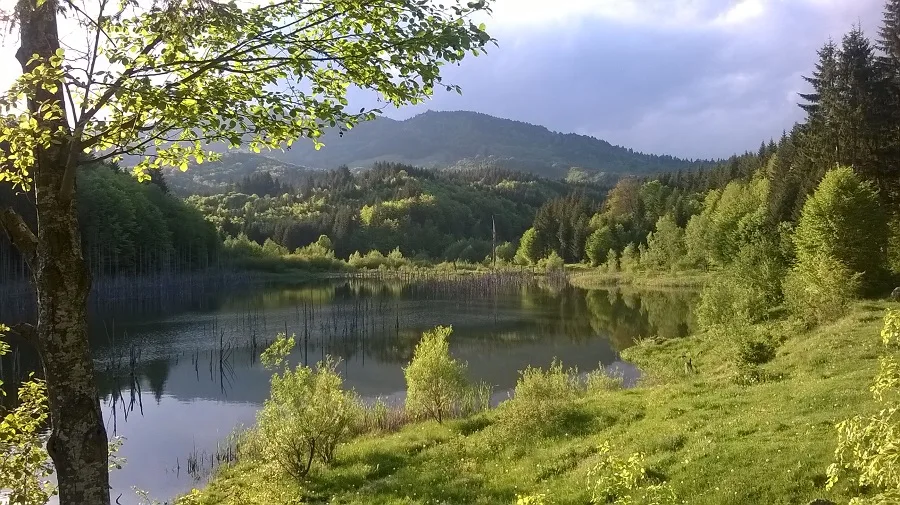
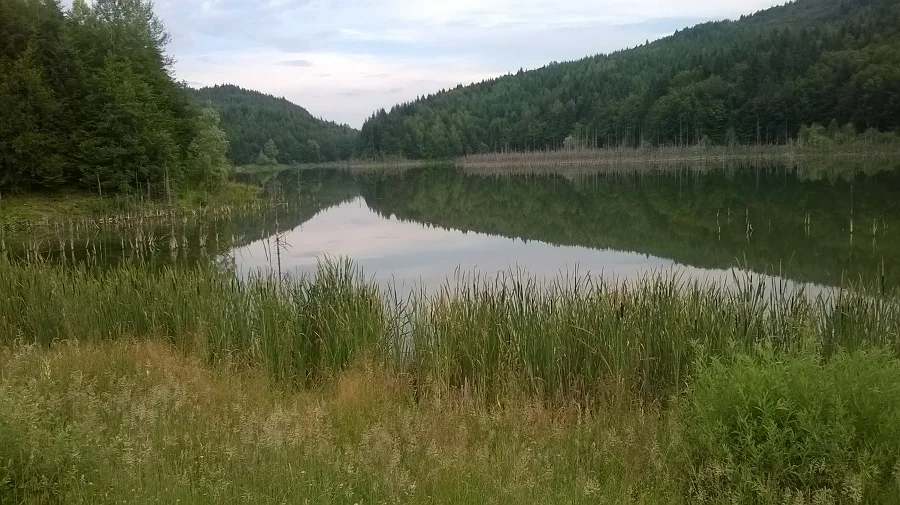
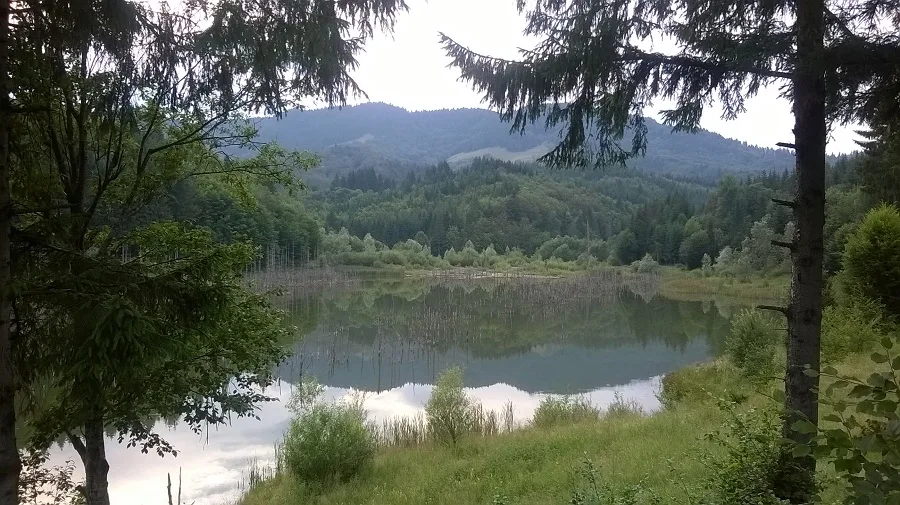
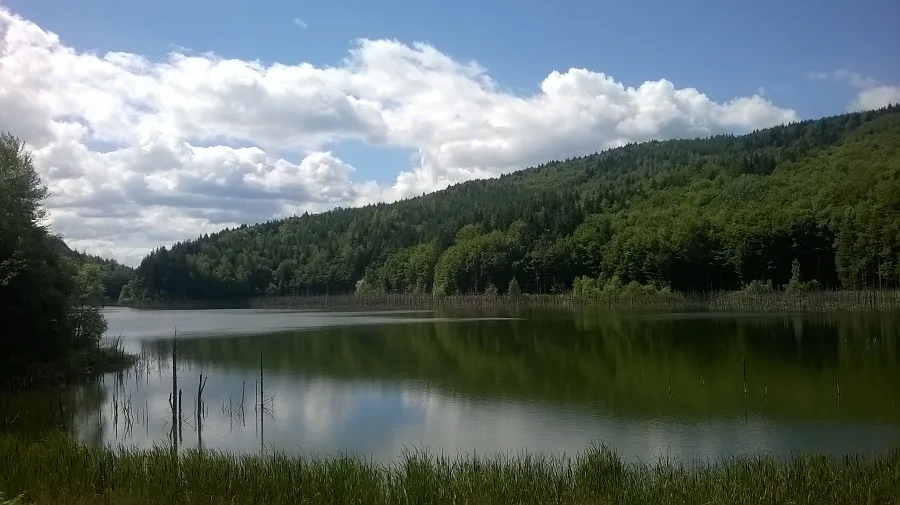
This new marvel of the picturesque Neamț landscape was formed at the foot of the Muncelu Ridge, following massive landslides affecting more than 35 ha of the left-hand slope of the Cuejdel Valley.
In practice, the landslides occurred successively, from 1978 until 1991, but it is still unknown whether further slope movements will happen in the area. The causes of the massive landslides that led to the formation of this spectacular lake must be sought in the steep slope gradient, abundant precipitation and the sedimentary rock structure, as well as in uncontrolled deforestation and the risky cutting of a forest road on the slope; to these natural factors and human imprudence the 1990 earthquake must also be added.
Until the years 1994–1995, the water level of the lake remained relatively constant, at an absolute altitude of 665.5 m. At this level, the dimensions of Lake Cuejdel were: 12.2 ha surface area, 1 km in length, 102 m average width, 7.44 m average depth and a maximum depth of 16 m near the dam.
The area where the main dam, between 25 and 30 m high, formed over a stretch of about 80 m is narrower, which helped block the streambed and close off the valley. Water continues to flow along the Cuejdel streambed through an opening approximately 3 m wide, located where the dam meets the right-hand slope of the valley. Encouragingly, seepage through the huge bank of earth and rock forming the dam during the first 2–3 years has ceased, largely as a result of the dam settling. A volumetric analysis of the lake showed that, in the past year, its water volume reached 870,000 m³ and its surface area exceeded 13.5 ha. It is also considered that, thanks to its solidity and substantial dimensions, the dam will not fail, although erosion and the deepening of the streambed must be carefully kept under control to prevent water from gradually draining away.
The shape of the lake and its morphometric characteristics are typical of lakes formed when large landslides block streambeds, so in many respects it resembles Lacu Roșu in the Bicaz Valley. Lake Cuejdel stretches along the main valley axis (NW–SE), and at the confluence of its main “suppliers” – the Cuejdel and Glodu streams – it branches into the two valleys, extending farther along the main Cuejdel valley… Even more spectacular here than at Lacu Roșu, where time and water have left their mark, ageing the lake landscape, are the “masts”: stems and trunks rising proudly from the depths. Since the mass of material pushed by landslides and partly carried by water was not distributed uniformly along the valley, four more pools formed in the resulting depressions, each covering an area of a few hundred square metres.
The natural reserve established here includes not only the water bodies, but also the area of the landslide that forms the natural dam and is, of course, situated downstream of the lake, as well as the forest parcels near the lake. These complete a very young protected area and – moreover – give an unusual natural charm to the whole ensemble, so that Lacul Cuejdel becomes increasingly attractive to nature lovers, hikers and those seeking relaxation in a delightful, invigorating setting.
The area has a specific micro-climate and vegetation characteristic of a lacustrine environment, increasingly appealing to various species of animals – amphibians, reptiles and birds – with such habitat preferences.
Even a simple glance around the lake, in the gentle depression brought to life in this way, quickly reveals the harmonious coexistence of young forests, about 25 years old, with middle-aged stands, between 40 and 50 years old, and the “elderly” woods, aged 120–160 years. Regarding the composition of these woods, they offer a comforting diversity, resulting from the alternation or mixture of beech, spruce, fir, hornbeam, sycamore maple and elm…
The rich vegetation around the lake also includes shrubs such as gooseberry (Ribes uva-crispa) and mezereum (Daphne mezereum), as well as a varied herb layer in which species favoured by pond formation have appeared: dog’s mercury (Mercurialis perenis), coralroot bittercress (Dentaria bulbifera), heart-leaved comfrey (Symphytum cordatum), marsh marigold (Caltha palustris), butterbur (Petasites hybridus), cowslip (Primula veris), wood sorrel (Oxallis acetosella), red lungwort (Pulmonaria rubra), lesser celandine (Ranunculus ficaria), sweet woodruff (Galium odoratum), and in spring, in some areas, wild garlic (Allium ursinum) covers over 60% of the surface.
Lake Cuejdel and its surroundings also form an aquatic ecosystem with permanent and temporary bodies of water ideal for amphibians and reptiles. Several species have been identified, some of which are present in large numbers: the yellow-bellied toad (Bombina variegata), the common frog (Rana temporaria), the fire salamander (Salamandra salamandra), the sand lizard (Lacerta agilis), the viviparous lizard (Zootoca vivipara), the Carpathian newt (Lissotriton montandoni) and the Alpine newt (Ichthyosaura alpetris). Others are encountered much more rarely: the marsh frog (Pelophylax ridibundus), which is the largest frog both in Romania and across Europe, the grass snake (Natrix natrix), the great crested newt (Triturus cristatus) and the smooth newt (Lissotriton vulgaris).
Of course, the birdlife is also typical of the mixed and coniferous forests of the mountainous area, and 37 bird species have been identified so far in this area – on the lake shore and in the surrounding woods. We will introduce them in three groups. Thus, resident species are represented chiefly by the nutcracker, hawfinch, treecreeper, great spotted woodpecker, Syrian woodpecker, raven, jay, hazel grouse, bullfinch and several species of tit.
The reserve also has visiting birds, which may be summer visitors, such as the white wagtail, cuckoo, house martin, robin, chiffchaff, wood pigeon, hoopoe and song thrush, or winter visitors, including the goldcrest, goldfinch and sparrowhawk…
The region’s climate is typical of low mountain areas, but there are also a number of local meteorological phenomena specific to the lake environment. The main direct water sources are the Cuejdel and Glodu streams, which discharge at the lake’s head. Consequently, the inflow of water is closely linked to precipitation throughout the year, supplemented by snowmelt.
Of course, even from the perspective of its youth – or precisely because of it – the lake presents a genuine scientific interest, its unprecedented appearance causing both changes to the area’s ecosystem and obvious transformations of the landscape, the result being especially exciting for everyone – researchers and tourists alike. As a “simple” nature lover, it is enough to allow yourself a few moments of day-dreaming and you can behold the full splendour of a polychromatic autumnal landscape or the novelty of a summer stop-over in such an Edenic space.
How long will you be able to resist, knowing that all this truly exists and is waiting for you to rediscover the joy of being human, of being a bird, of being a butterfly?
Video:
More on the same topic
Nominations for Destination of the Year 2025
In the category Enchanted Realms – Geographical areas or localities with a rich treasure of nature, history and tradition our proposal is: The city of Bicaz and its surroundings.

Attractive Romania presents “Neamțul în Bucate”
The culinary story of Neamț County invites travelers on a fantastic journey, a tour of its four picturesque regions, filled with tales and flavors that combine tradition, ecotourism and fresh, delicious dishes.
Mountain Villages, Picturesque Areas in Neamț
Tourists can now orient themselves better in a particularly beautiful area of Neamț, where the landscapes take your breath away.