Orthodox hermitages in the mountains of Neamț
DSC_8426
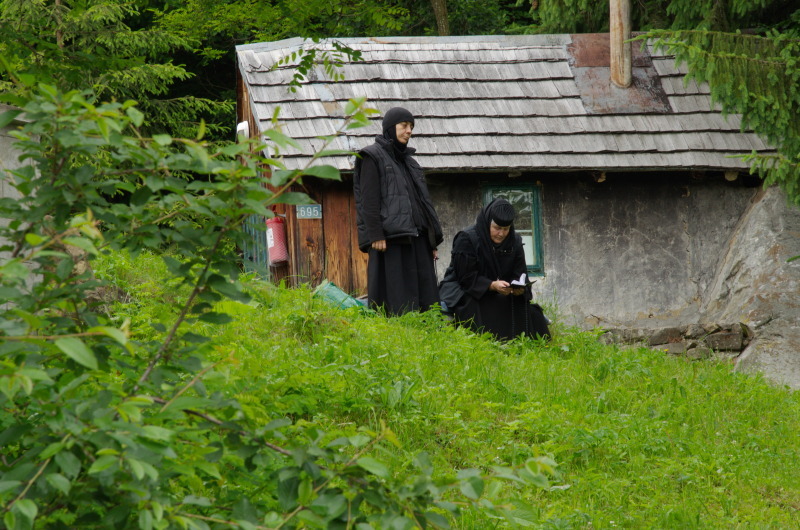
Hermitages were built by monks living as hermits who cherished tranquillity and needed monastic cells or small chapels for prayer, often in isolated, inaccessible places, sometimes among huge rocks, far from enemies and arsonists.
They form an important part of the monastic establishments that have survived the hardships of time, becoming places of worship around which religious life developed in the areas where they were founded hundreds of years ago.
Such hermitages, which began as secluded retreats, can be found around the Ceahlău Massif, the Romanians’ Mount Athos; some eventually gained monastery status through donations and princely grants, their growth and their importance.
We invite you to visit them during your stay in Neamț County.
Hangu Hermitage, which gained monastery status in the 17th century and was then an important monastery enclosed by a wall with four towers, one at each corner, is the successor to Silvestru’s Hermitage, founded around 1600 as a secluded monastic retreat. Hangu Hermitage has a history as old as it is fascinating, which you can discover on site and which was first written about by the German writer Wilhelm von Kotzebue, husband of Aspazia, the sister of the Cantacuzini princes. They drove out the monks and turned the monastery into a palace. The ruins of Palatul Cnejilor can still be seen today. Hangu Hermitage and Palatul Cnejilor also appear in the books of writers who stayed in Hangu: the French writer Jean Alexandre Vaillant, Vasile Alecsandri, Gheorghe Asachi, Alexandru Vlahuță and Alecu Russo. Alexandre Dumas also wrote about these places in his novel “Strigoiul Carpaților”, whose action takes place around the square tower of Palatul Cnejilor at Hangu Hermitage.
Hangu Hermitage has been on the list of historic monuments since 2004.
Durău Hermitage, now a historic monument, was under the authority of Hangu Hermitage in the 17th – 18th centuries. It began as a hermitage for nuns, also founded around 1600, and later gained the status of a monastery for nuns, as a document from 1779 attests. From the 19th century, however, the establishment at Durău developed into a monastery for monks. Bisericani Hermitage and Sihăstria Tarcăului Hermitage were under its authority. Durău Monastery was dissolved in 1959. A hermitage for monks was re-established in 1972, followed by a new monastery for nuns in 1991. Here, among other things, you can admire the paintings on the church walls and the wax paintings inside, created by Nicolae Tonitza and Corneliu Baba together with students and graduates of Academia Ieșeană de Arte Frumoase between 1935 and 1937.
Sihăstria Tarcăului Hermitage, set in the heart of the Goșman mountains between Brateș and Ardeluța, in a secluded place called Cichiva, was founded in 1833, when its small church was consecrated, as documents attest. These also state that, after leaving the authority of Durău Monastery, the monastic retreat came under Bistrița Monastery until 1900, when the hermitage gained the status of an independent monastery. Fluctuations in the number of monks led it to revert to hermitage status several times, before it regained monastery status in 1991 and was also designated a historic monument.
At Bisericani, a place steeped in history, the hermits’ settlement hidden in the fir forest amid remarkable scenery was first known in the 15th-16th centuries as “Sihăstria lui Iosif”. The monks’ zeal for holding services without interruption earned the retreat the name “Sihăstria bisericanilor”, meaning “of the devout, the churchgoers”, while the mountain became known as Bisericani Mountain. They built a wooden church with “Buna Vestire” as its patronal feast. In 1476, the wooden church was plundered and burnt by the Turks after the Battle of Războieni, and in 1498 it was burnt for a second time. Construction of the place of worship was continued by Ștefăniță Vodă (1517-1527), the grandson of Stephen the Great. In the early 17th century, the estate of Bisericani Hermitage expanded considerably through donations from princes and boyars, eventually encompassing much of the middle reaches of the Bistrița and almost the entire Tarcăului Valley. The monks were renowned translators from Greek and Slavonic, and some of their translated manuscripts are preserved at Biblioteca Academiei Române.
During the reign of King Carol I (1866-1914), specifically in 1872, Bisericani Monastery was converted into a prison. The prison was closed in 1905 because of the quality of the air and its exceptional properties in treating lung disease. Sanatoriul TBC Bisericani, now Spitalul de Pneumoftiziologie, was established in the monastery buildings, so between 1904 and 1960 the monastery shrank and became a hermitage under the authority of Durău Monastery, then Bistrița Monastery, until 1990.
In 1990, Bisericani Hermitage regained its monastery status and was included on the list of monuments of historical and religious importance. In summer, services for patients and medical staff are held in the monastery church within the hospital grounds. During the colder months, services are held in the church in the Iconiței area, built on the site of the oak whose branches are said to have held an icon of the Mother of God from around 1500 until about 1960. Across the road from this church is a monastic establishment with living quarters and a new church.
More on the same topic

Ethnographic museums, treasures of local history and traditions
Ethnographic museums are true treasures and expressions of love for traditions, folklore, and spirituality of the places, and so is the Ethnographic Museum Casa Bunicilor in the village of Mitocul Bălan, Crăcăoani commune.

The Story of the Seven Miraculous Icons of the Holy Virgin and Saint Anne from Neamț Land
Renowned not only for its beauty and historical significance but also called the “Jerusalem of Romanian Orthodoxy,” Neamț Monastery houses the miraculous icon of Virgin Mary with three hands…
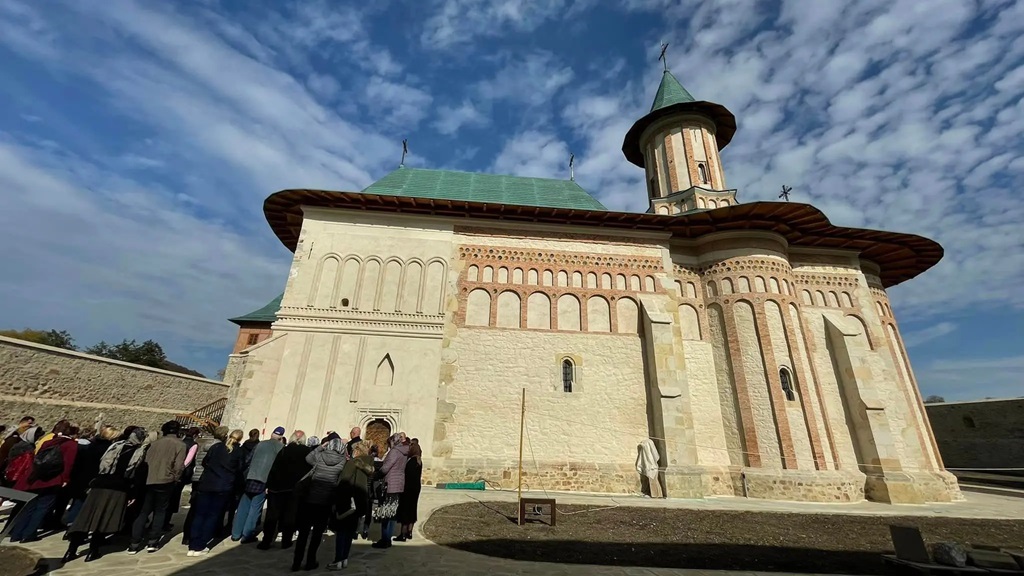
Tazlău Monastery Ensemble has been restored using European Regional Development Fund (ERDF)
After six years of hard work, the project of “reviving” one of the most prestigious establishments of Voivode Stephen the Great, in Tazlău commune, finally came to completion.