The Folk School of Art in Piatra Neamț, Half a Century Since Its Establishment
At the end of the 1960s, with the administrative-territorial reform in Romania that created the present counties, a number of new institutions were established.
In Neamț, institutions that began operating in February 1968 included the House of Creation (Casa de Creație, now the “Carmen Saeculare” Centre for Culture and Arts), the County Committee for Culture and Socialist Education and the County School Inspectorate.
Two years later, in December 1970, by a decision of the County People’s Council, the Popular School of Art in Piatra Neamț opened its doors, with music teacher Vasile Vasile as the institution’s first director; at its inauguration it was housed in the old building in the courtyard of School No 2.
In an article signed by the first head of the Popular School of Art Piatra-Neamț in the newspaper “Ceahlăul”, dated 23 December 1970, he states: “Responding to genuine needs of the amateur artistic movement, the new institution providing art education to the wider public assumes the task of training performers and instructors of amateur artistic groups in enterprises, institutions, houses of culture, cultural centres, schools, clubs and craft cooperatives throughout the county, contributing to raising the artistic movement to new heights and to the aesthetic education of workers from towns and villages.
The new school bases its activity on the old and rich cultural and artistic traditions documented in our county, traditions which, when properly understood, are like a marble column left from an old temple for a new temple.”
The new educational institution opened with six permanent sections at its headquarters: violin, accordion, theatre direction, artistic brigade direction, sculpture, folk dance, with another six permanent sections in the county: weaving-sewing – at Gârcina and Bodești, folk instruments – at Țibucani and Farcașa, accordion – at Roman and Bicaz and with four periodic sections: choral conducting, theatre direction, artistic brigade direction, choreography.
The first teaching staff was made up of prominent figures of artistic and cultural life, including Eduard Covali (then director of the Youth Theatre), sculptor Clement Pompiliu, director Gabriel Negri, Paul Findrihan (literary secretary at the Youth Theatre), teacher Ion Luca, a well-known museologist and keen folklore collector.
The fledgling institution set out to impose, through its representatives, the strict criterion of artistic authenticity and to fight against facile improvisation.
Rereading the local press of the time, we find another article written by Vasile Vasile in the newspaper “Ceahlăul” (23 December 1970): “The main objectives of the young educational institution are: attracting the most outstanding talents from the amateur artistic movement and training them to a standard that will raise artistic traditions to new heights, training craftspeople to produce work of high artistic quality, cultivating authentic artistic values and forms from the Neamț folklore region, developing students’ appreciation of art so that, in turn, they may pass this flame on to the groups from which they come, organising performances and exhibitions that will draw an ever-growing number of listeners, spectators and visitors towards artistic activity.”
In the photograph taken at the beginning of the 1970s appear, among others, Valentin Ciucă (centre), Medeea Ruckzuli, Gheorghe Diaconu (Pif), Smaranda Ciuhandru, Elena Niță-Ibrian, Sabin Rișco, Vasile Vasile, Ionel Țigănuș, Ionel Apetrei, Octavian Pravicenco, V. Galanton, Nela Frîncu, Ada Chicu.
These details are also found in the work published at the end of 2020 by the G.T. Kirileanu County Library Neamț: “PIATRA-NEAMȚ, AZI”, written by Violeta Simina Moșu (a work that served as a source for this article).
More on the same topic
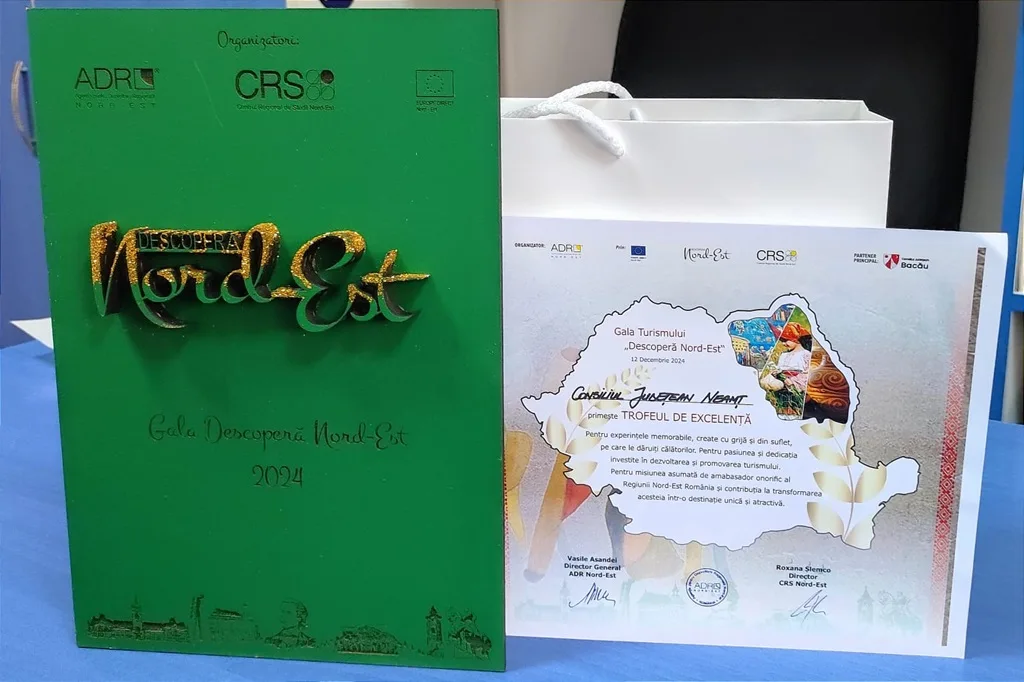
Neamț Awards at the Discover North-East Tourism Gala, 2024
The awards were presented at the 9th edition of the Discover North-East Tourism Gala on December 12, 2024: Newcomer – Award for new locations/attractions/tourist products or emerging tourist destinations: Zenzia Glamping Piatra-Neamț. Poem Rural Piatra-Neamț.
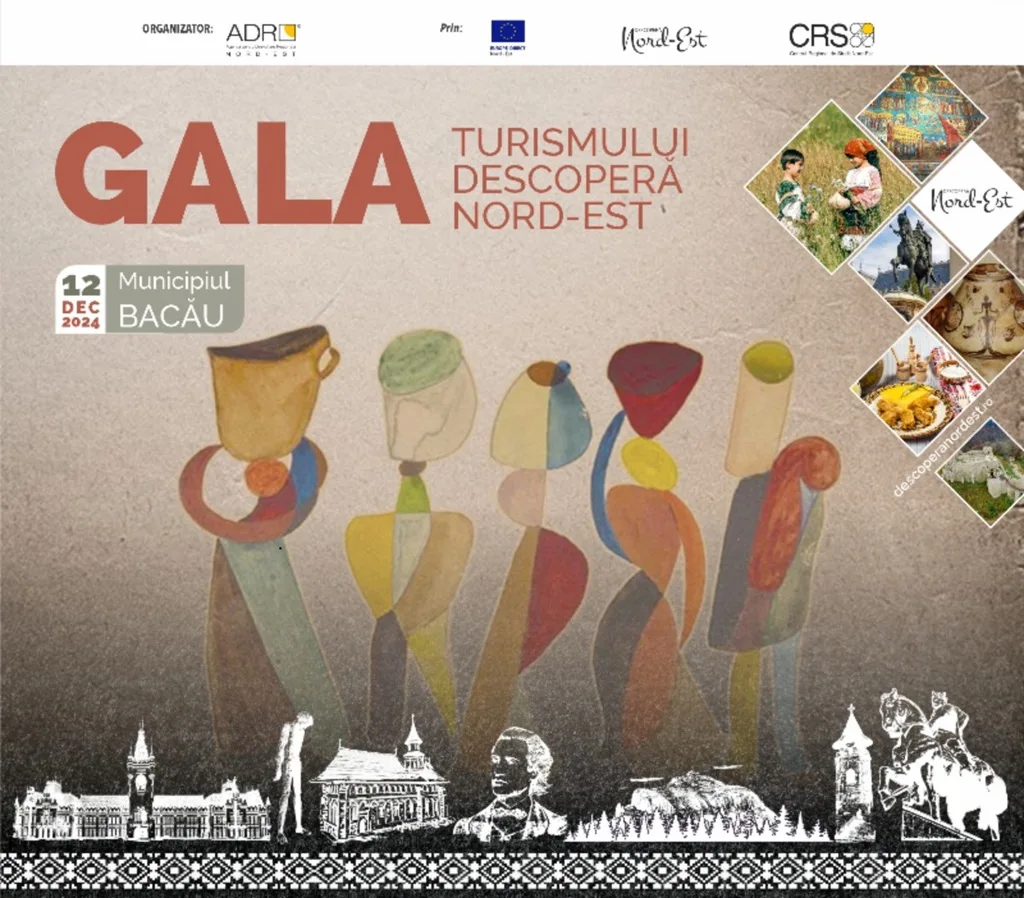
Excellence in Developing Tourism in Neamț at the 9th Edition
On December 12, 2024, we celebrate the tourism initiatives of Neamț County, alongside those from the North-East Region of Romania—a uniquely beautiful and rich area that deserves to be discovered by tourists.
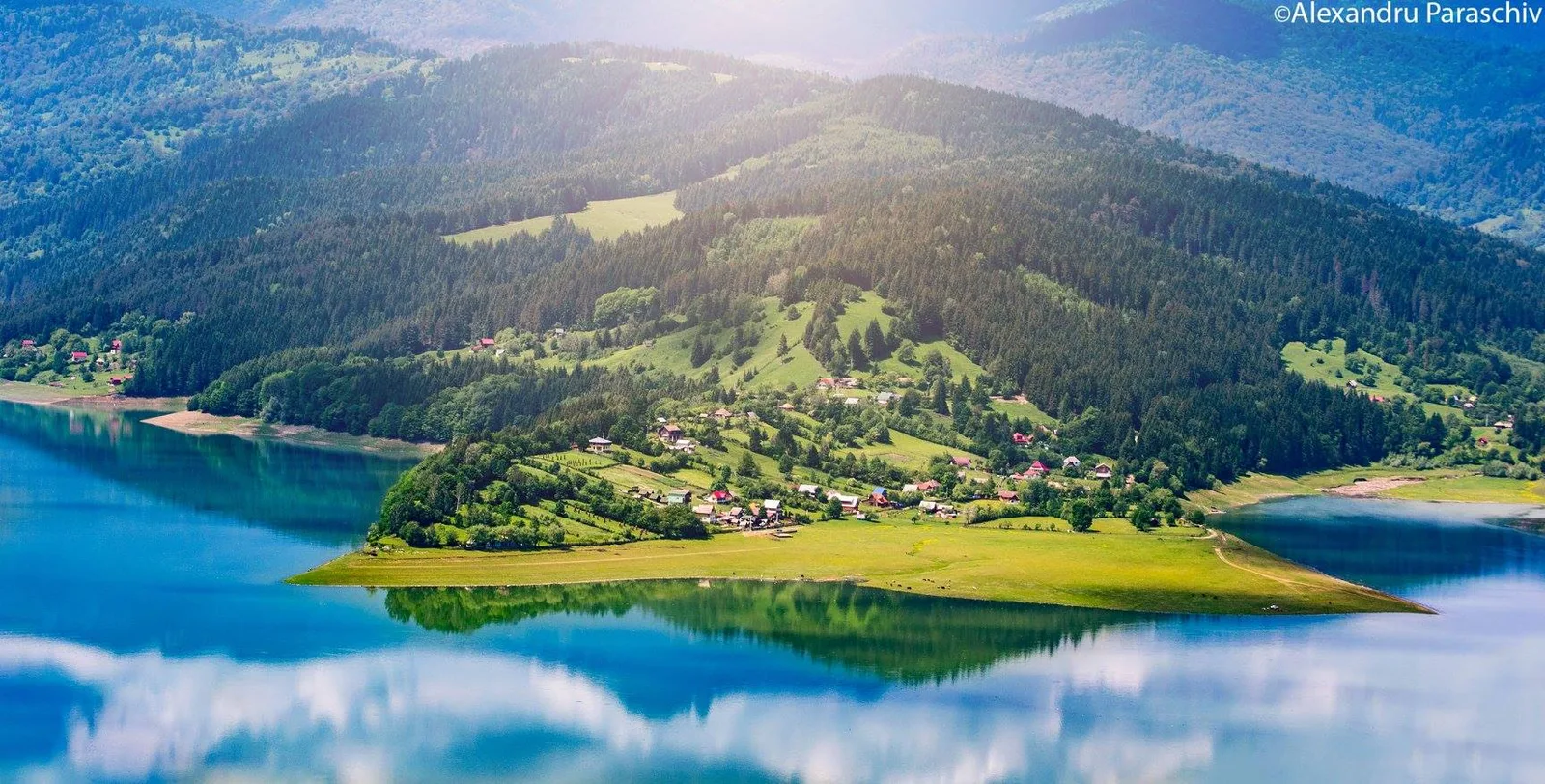
Nominations for Destination of the Year 2025
In the category Enchanted Realms – Geographical areas or localities with a rich treasure of nature, history and tradition our proposal is: The city of Bicaz and its surroundings.