Visit the Monasteries in Bistriței Valley
The monasteries in Bistritei Valley are known for their age, harmony and spiritual significance, bearing living witness to the steadfastness, faith and skill of the people who lived in this area.
These cultural and religious sites are true treasures of the Romanian nation, still retaining the architectural features of the period in which they were built and evoking the turbulent lives of their creators.
Visitors to Piatra Neamț can therefore take a journey along Bistriței Valley to visit the three monasteries that have kept the faith alive in this region.
Bistrița Monastery in Neamț County is in the village of Bistrița, in Alexandru cel Bun commune, 8 kilometres west of the town of Piatra Neamț, on the DN 15 Piatra Neamț-Bicaz road. Founded by Alexander the Good, the monastery has endured for over six centuries, sheltered by the surrounding forests, weathering the hardships and trials of history. Bistrița Monastery is one of the oldest monasteries in Neamț County. Bistrița Monastery preserves the Icon of Saint Ana, a Byzantine work of great historical and spiritual value, and the miracle-working icon given to Prince Alexander the Good in 1407 by Emperor Manuel II Paleologul
The Bistrița Monastery Museum, established as early as 1932, contains period coins, icons from the XVI-XVIII centuries, sculptures and frescoes discovered during archaeological investigations, fragments of princely garments and other objects from the voivodes’ necropolis.
Bisericani Monastery – built in the area of Pietrosu mountain at an altitude of 650 m, is 12 km west of the town of Piatra Neamț, on the DN Piatra Neamț-Bicaz. The road climbs through a series of hairpin bends as Bistriței Valley gradually reveals itself in all its splendour. At one point, you will discover the monastery’s towers, seemingly hidden behind the fir trees.
A hermitage belonging to Bistrița Monastery appears to have originally stood on the site of today’s monastery. It was only in 1498 that the Venerable Iosif left Bistrița Monastery and, together with other monks, began building a church using their own resources. The founders of Bisericani Monastery include Alexander the Good, Ștefan cel Mare, Ștefăniță Vodă, Petru Rareș and Alexandru Lăpușneanu.
The church at Bisericani Monastery is known for its exceptionally beautiful iconostasis, whose richly coloured ornamentation contrasts with the sobriety of the icons painted on matt backgrounds, and for its royal doors, distinguished by the intricate arabesque carving on the surfaces facing the nave.
Pângărați Monastery, a monastery with a long tradition in Bistritei Valley, is on DN15 Piatra Neamț – Bicaz, near the Dimitrie Leonida hydroelectric power station at Stejaru and Bisericani, east of Botosanu mountain and on the left bank of Pângărați Stream. Pângărați Monastery dates back to the 15th century, specifically to 1460, when the Venerable Simeon Sihastru, one of Stephen the Great’s advisers, built the first wooden church here, dedicated to the Holy Great Martyr Dimitrie.
According to the historian Nicolae Iorga, the monastery’s name, Pângărați, may come from a monk called Pangratie, a hermit who gave his name to the nearby stream.
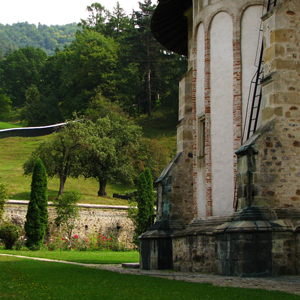
The old church at Pângărați has an architectural style unique among the monasteries of Moldavia and Romania. The windows are wooden, small and double, with metal grilles on the outside. The porch is lit by a rectangular window to the west and another to the north. The church’s exterior walls are plastered and whitewashed in an off-white shade.
More on the same topic

Neamț receives five nominations across four categories in Destinația Anului
We have good news for everyone who loves Neamț County and all its beauty: it is among the finalists in the Destinația Anului 2024 competition, with five nominations across four categories: Piatra Neamț in the Inspiring Cities category.

Military firefighters bring competition and lots of adrenaline to Târgu Neamț
Târgu Neamț is hosting the 3rd zonal stage of the professional emergency situation competitions, in which representative teams from several counties of the country will participate: Bacău, Botoșani, Iași, Neamț, and Suceava.
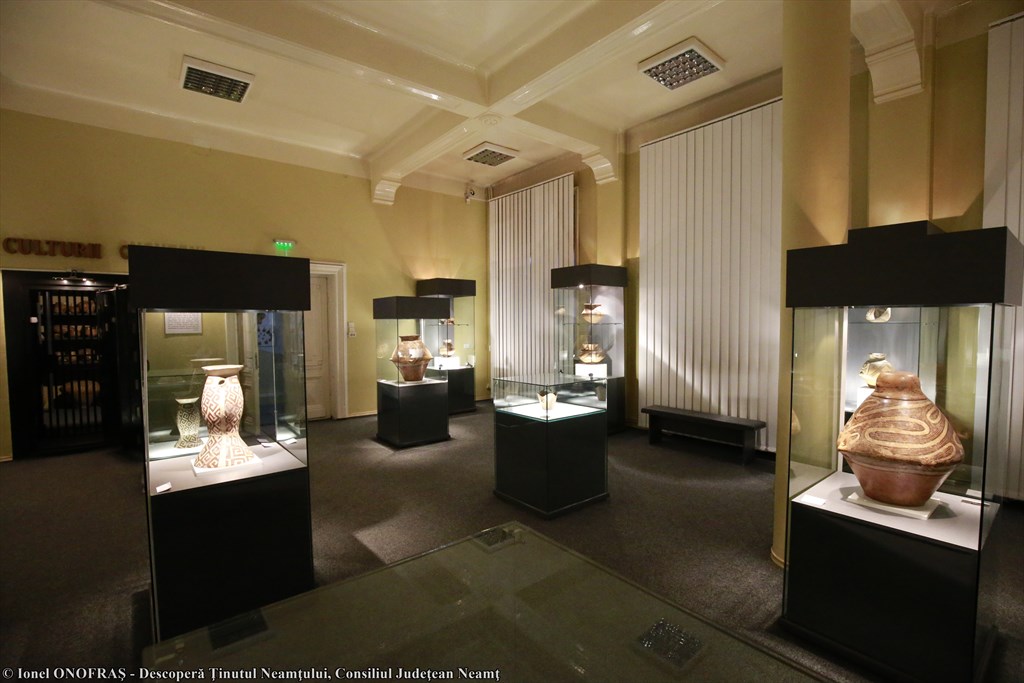
Discover, in Piatra Neamț, the most important Eneolitic art collection from the South-East of Europe
Photo Gallery: Nationally one of the kind, both history and art museum, it currently hosts the most spectacular artefacts, famous objects that belong to the Cucuteni–Trypillia Culture, which is in…