Visit the main protected areas in Neamț County
The protected areas in Neamț County impress visitors with their picturesque natural surroundings and conceal true paradises created by a generous nature. These fascinating landscapes are home to numerous attractions that visitors can explore.
Neamț County is full of incredibly beautiful landscapes, brought to life over time by an ancient and fascinating civilisation. Here in Neamț, the unleashed forces of nature have created a true open-air museum whose exhibits are these unique, intriguing and spectacular landscapes, which change their appearance with the seasons and make up these protected areas. Here is some information about the natural beauty found in these parks and nature reserves in the Neamț region.
Ceahlău National Park was established as a protected area in 1955, and its current boundaries were marked out in 2003, covering an area of 7,742.5 ha. The reserve comprises three protected areas: the “Ocolasul Mare” Scientific Reserve, the “Polita cu Crini” Botanical Nature Reserve and the “Duruitoarea Waterfall” and “Avenul Mare” Natural Monuments. They are home to over 1,100 species of flowering plants and 90 protected species of birds and other animals. Here lies Ceahlău Massif, the greatest tourist attraction in the Eastern Carpathians, the most important massif in Moldavia and considered the second holy mountain of Christianity.
Bicaz Gorge – Hășmaș National Park lies in the Hășmaș Mountains, within the counties of Neamț and Harghita, and the impressive size of the rocks in Bicaz Gorge makes this one of the country’s most attractive tourist areas. The attractions of the Bicaz Gorge protected area are: the resort of Red Lake, Cheile Sugaului Reserve (at the entrance to Bicaz-Chei), Laposului Gorge, Munticelu Cave, the tunnel cave or Glodului Cave, Bicajelului Gorge, Hasmasu Mare Peak (1,792 m altitude), Cupasului Gorge, Licas Sinkhole, Piatra Singuratica and Munticelu Cave.
Vânători-Neamț Natural Park has been a designated protected area since 1998, with the aim of protecting and conserving the European bison population, once part of Romania’s wild fauna. The park encompasses a diverse natural, cultural and historical heritage and covers 30,818 hectares, of which over 26,300 hectares are forest land. Nature reserves within Vânători-Neamț Nature Park: Codrii de arama – situated on Filiorul Hill in the commune of Agapia, it contains centuries-old sessile oaks and over 300 species of exceptionally beautiful plants; Padurea de argint – a mixed woodland and landscape reserve containing trees over 100 years old, as well as younger trees aged between 20 and 50 years; “Dragoș Vodă” Bison and Carpathian Wildlife Reserve – one of the 4 bison reserves in the country, it ranks among Europe’s largest reserves devoted exclusively to bison; Padurea de smarald (“Dumbrava” Oak Reserve) – a woodland reserve covering 56.6 ha, conserving centuries-old oaks and 209 species of vascular plants belonging to 50 families.
Bâtca Doamnei Lake lies at an altitude of 325 metres and is an important feature of the town of Piatra Neamț, offering wonderful views alongside its protective role. The lake is a valuable area for birds travelling along the Eastern Carpathian migration corridor and an important link in preserving biodiversity and natural habitats throughout the eastern part of the European continent. In recent years, black-necked grebes, red-necked grebes, goosanders, red-breasted mergansers and smews have wintered on the lake.
Vaduri Lake lies at an altitude of 350 m and has been designated a Special Protection Area for birds since 2004. The lake provides the food and shelter that many migratory bird species need to overwinter. In recent years, species such as mute swans, mallards, goldeneyes and little grebes have made the lake their winter home.
Pângărați Lake lies in the transverse section of the Bistrița Valley at an altitude of 370.6 m, with the Stanisoarei Mountains to the north and the Gotmanu Mountains to the south. Pângărați Lake is an important area for birds travelling along the Eastern Carpathian migration corridor. The lake is also an important link in preserving biodiversity and natural habitats throughout the eastern part of the European continent.
Cuejdel Lake formed on the Cuiejdel stream and is Romania's largest natural dam lake, situated in the Stanisoarei Mountains, 25 km from Piatra Neamț, within the commune of Gârcina. Its exceptional scenic beauty, geomorphological and limnological features, and distinctive biodiversity attest to its uniqueness and importance. These qualities led to Cuejdel Lake being designated a nature reserve in 2004, giving the area special protection.
More on the same topic
Nominations for Destination of the Year 2025
In the category Enchanted Realms – Geographical areas or localities with a rich treasure of nature, history and tradition our proposal is: The city of Bicaz and its surroundings.

Attractive Romania presents “Neamțul în Bucate”
The culinary story of Neamț County invites travelers on a fantastic journey, a tour of its four picturesque regions, filled with tales and flavors that combine tradition, ecotourism and fresh, delicious dishes.
Mountain Villages, Picturesque Areas in Neamț
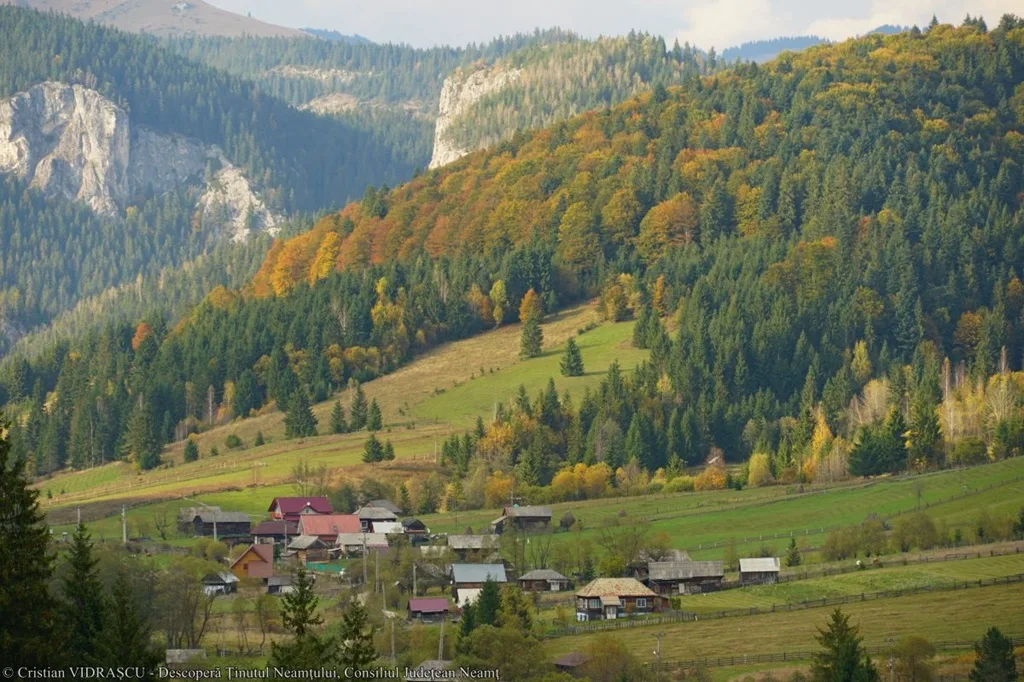
Tourists can now orient themselves better in a particularly beautiful area of Neamț, where the landscapes take your breath away.