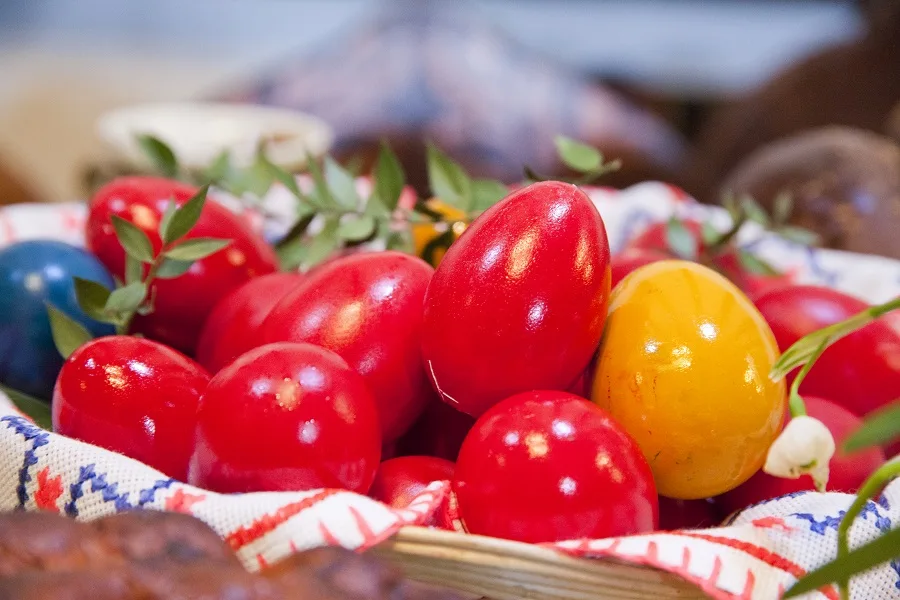
Easter Egg Painting in Neamț
The tradition of painting eggs was known to the Chinese about two thousand years before Christ, the eggs symbolising creation, fertility, life and the rebirth of nature.
Although the custom has largely disappeared in Europe, it is still practised in almost every household here. At Easter, housewives dye the eggs red to represent fire with its purifying power or the blood of Christ that was shed on the cross for the salvation of the world. Over time, the practice of painting Easter eggs has become an increasingly meticulous and inventive pastime, using both traditional and more modern methods.
To obtain red-coloured eggs, boil the eggs in a pot containing red onion skins, sliced red beetroot and a few tablespoons of vinegar to help the pigment penetrate the eggshell. For a more distinctive appearance or an artistic texture, the eggs may be wrapped in a thin stocking or gauze, with parsley leaves or single-coloured crepe paper, or strips of crepe paper in several colours, placed between the shell and the covering.
Natural dyes can also be used to colour eggs in shades other than red, using pigments from various fruits, vegetables or spices. A blue hue can be achieved by boiling the eggs in a pot containing half a red cabbage; although the dye itself is purplish, the eggs turn blue, and a darker blue can be obtained by leaving the eggs in the dye overnight. A light orange colour is produced by boiling yellow onion skins together with the eggs, while a yellow shade can be created by placing a few pinches of turmeric in a jar of tap water – this method, however, takes longer for the colour to penetrate the shell. Pastel lavender eggs can be obtained by boiling them in red grapefruit juice for 45 minutes. A little vinegar may be added during boiling in all of these methods to help the colour penetrate the shell more effectively.
To give the eggs a unique touch, each can be wrapped in carbon paper and then in a thin stocking, giving them a fine, distinctive texture.
More on the same topic
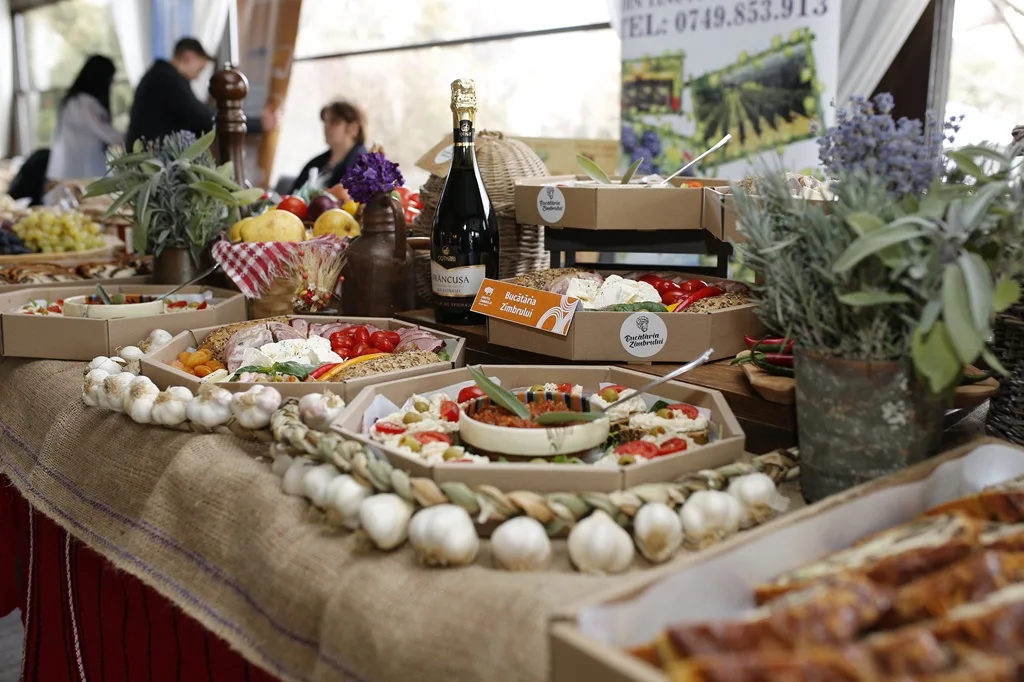
Attractive Romania presents “Neamțul în Bucate”
The culinary story of Neamț County invites travelers on a fantastic journey, a tour of its four picturesque regions, filled with tales and flavors that combine tradition, ecotourism and fresh, delicious dishes.
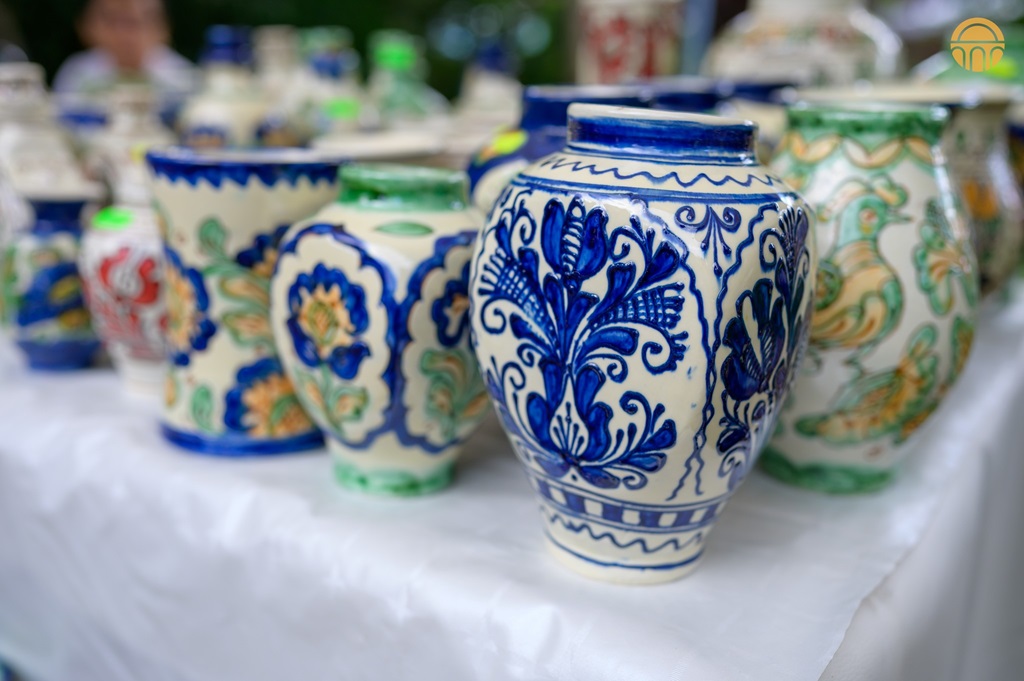
Craft Fair for the Feast of the Assumption in Piatra-Neamț
This weekend, local residents and tourists will be able to enjoy folk art and objects crafted with great talent and flair by traditional craftspeople from ten counties, who will come to keep local…
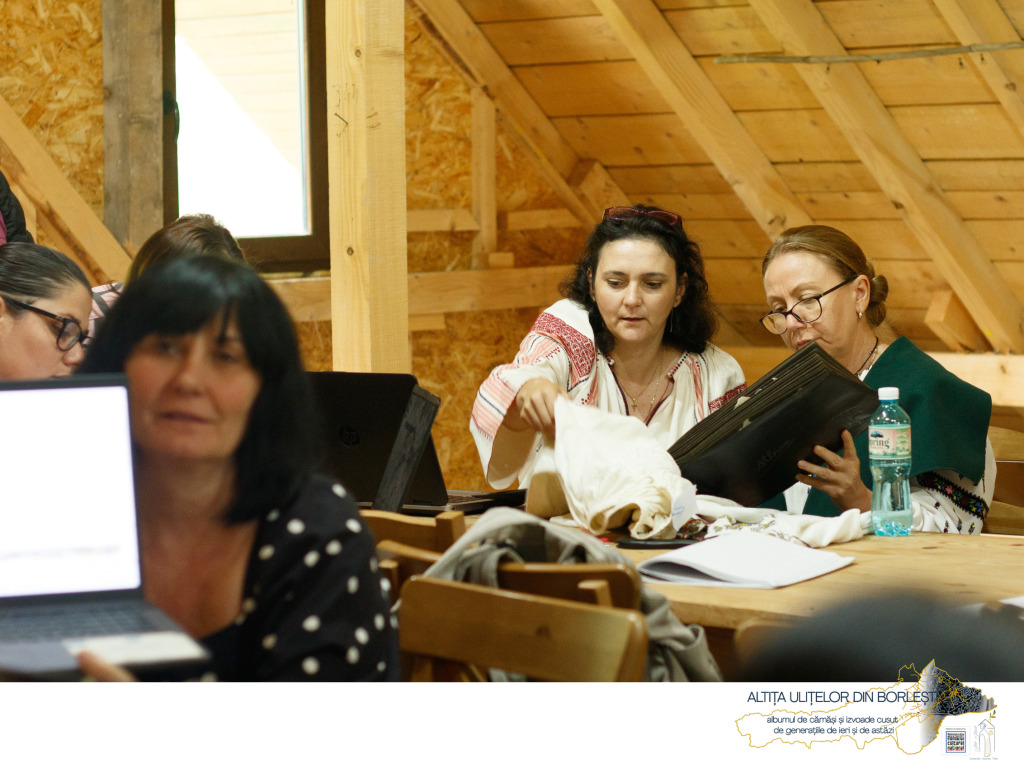
” Altița ulițelor din Borlești” at the AFCN Awards
At the ninth edition, the AFCN (National Cultural Fund Administration – NCFA) Awards has nominated “Altița ulițelor din Borlești” in the Activation of Intangible Cultural Heritage Category.