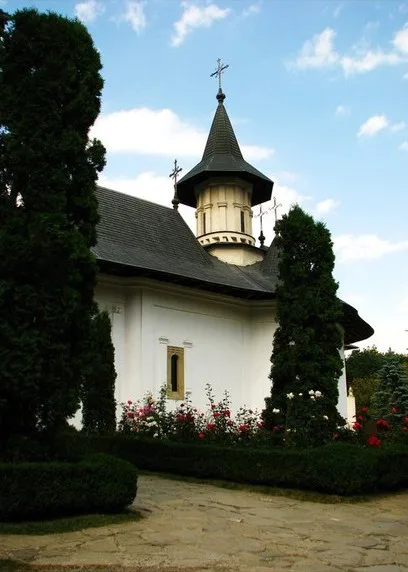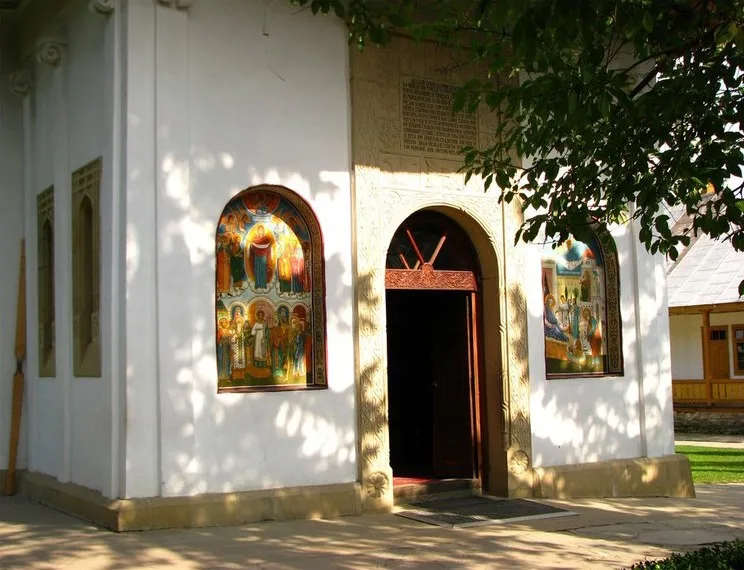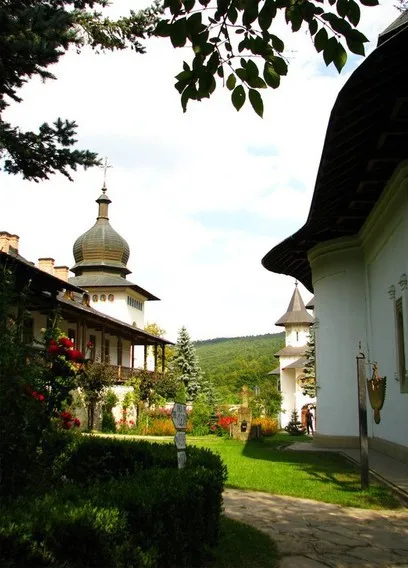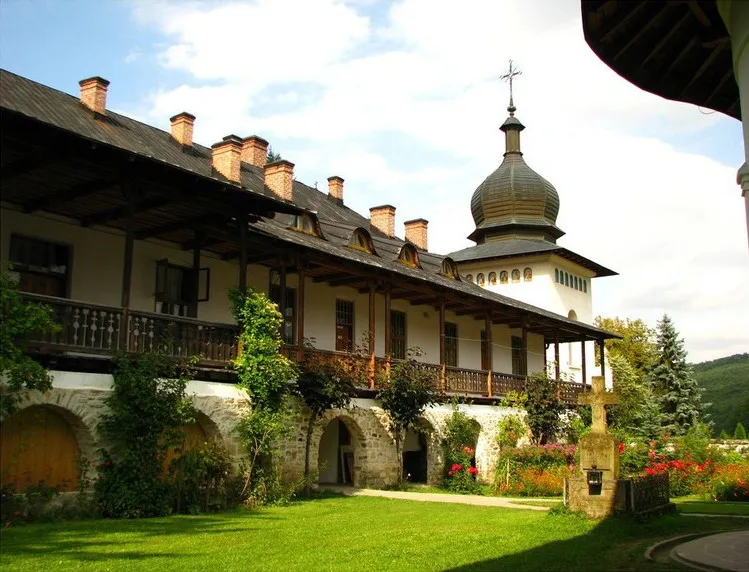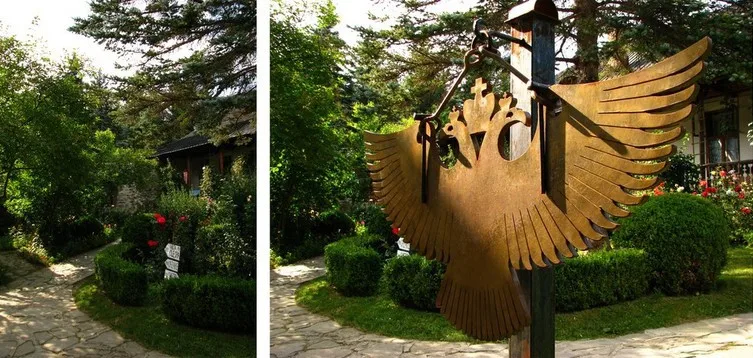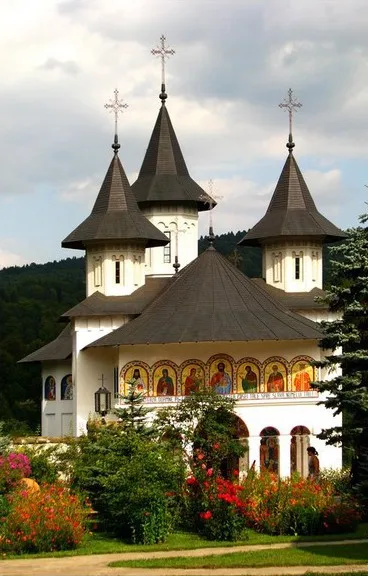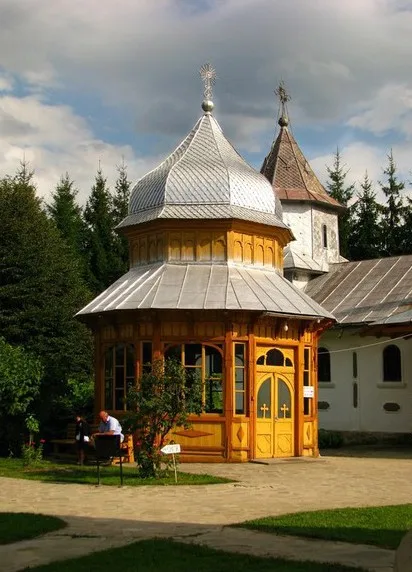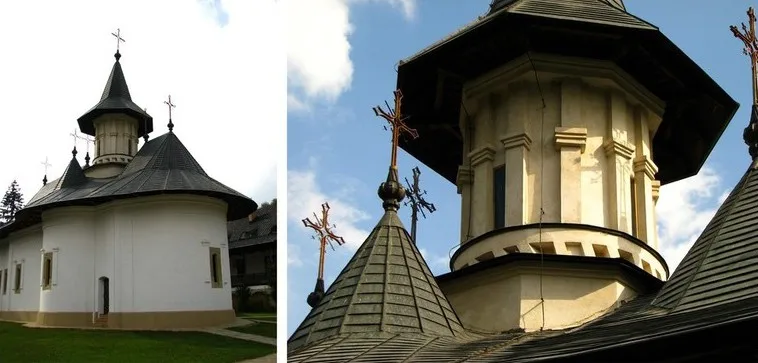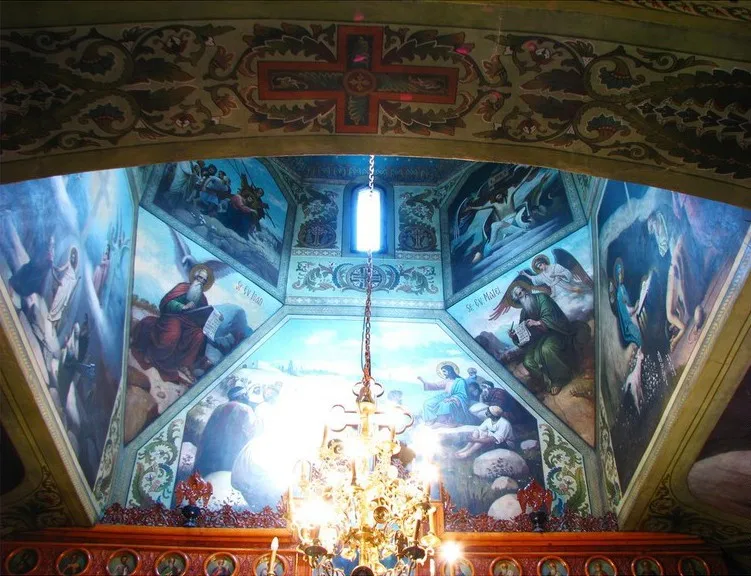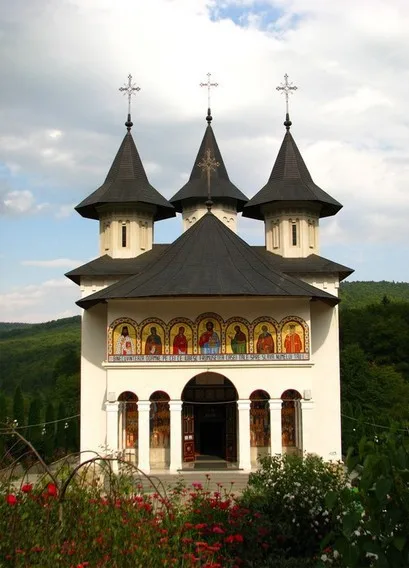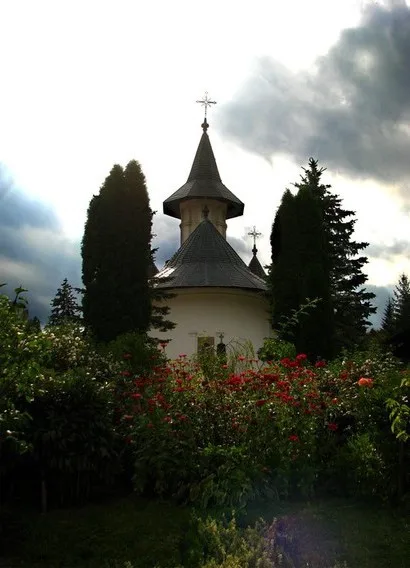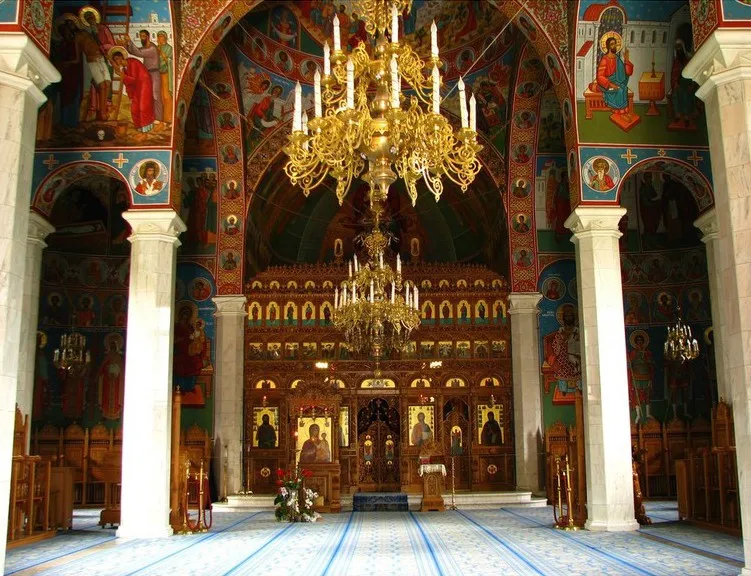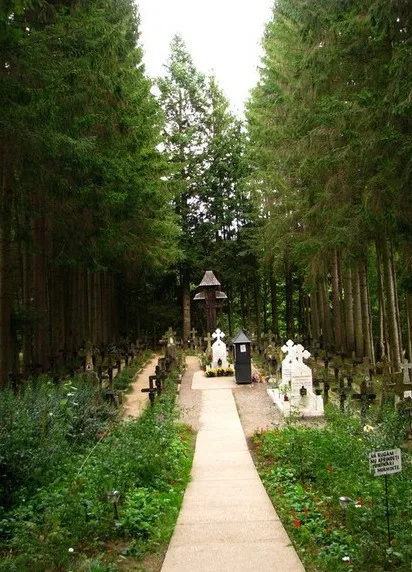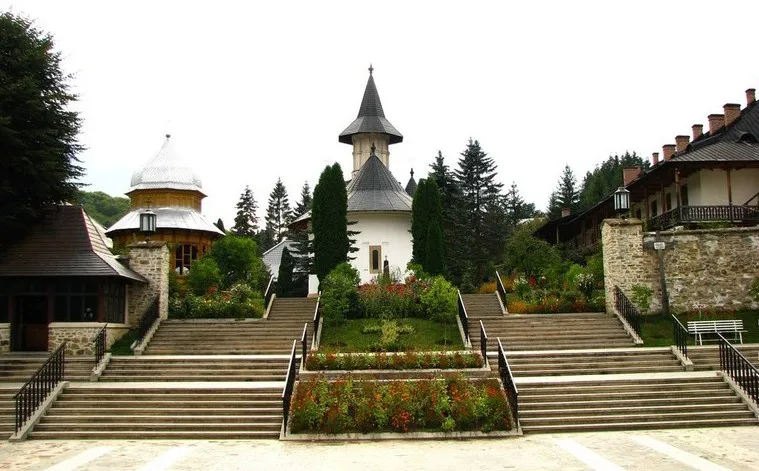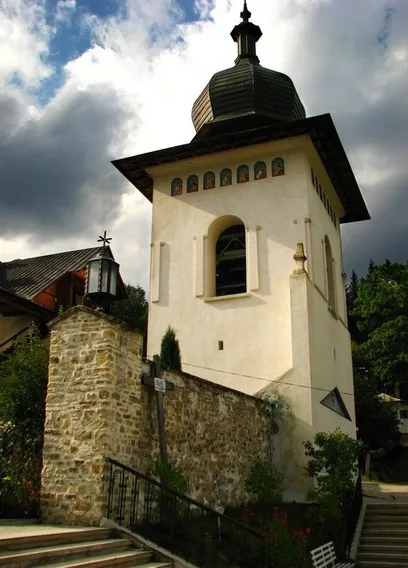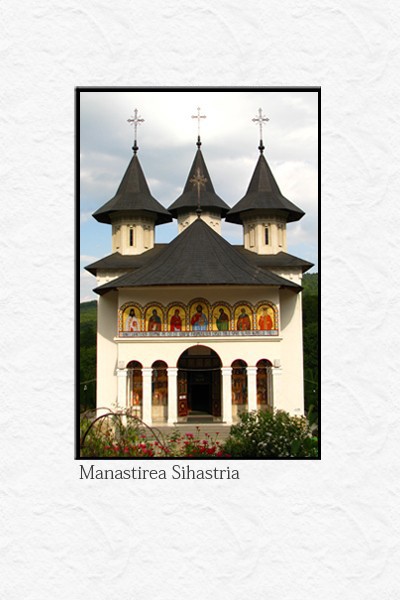
Sihăstria Monasterylies in the northern part of Neamț County, 22 km from the town of Târgu Neamț, on the road towards Pipirig – Vatra Dornei. The road to the monastery branches off after 15 km, crosses the Ozana and enters the Secu stream valley. After 4 km past rocks and centuries-old oaks,Secu Monasterycomes into view, and a further 3 km south brings you to Sihăstria Monastery in all its splendour. Throughout its three centuries of existence, the architecture of Sihăstria Monastery has faithfully continued the classical Moldavian style, which has survived into this late period despite so many changes. Address: Vanatori commune, Neamț County, Postcode 617500 Tel: 0233251896 0233251897 Fax: 0233251978 Web:http://sihastria.mmb.ro/Patronal feast of Sihastria Monastery: “Nativity of the Mother of God” (8 September) Year of construction: 1655, by the hermit Atanasie
The first church at Sihastria Monastery was founded in 1655 by Metropolitan Varlaam Motoc, who then provided it with monastic cells and other necessities. The site chosen was “Atanasie's glade”, as it offered favourable conditions for a hermit's life, and its first inhabitants were seven hermits from Neamț Monastery who had withdrawn to the area long before.
At the beginning of the XVIII century, repeated Tatar raids leftSihăstria Monasteryalmost in ruins. In 1734, Bishop Ghedeon of Roman built a new, sturdier and more spacious church, which he placed under the authority of nearby Secu Monastery, as was customary at the time. In 1821, the bloody battle between Alexandru Ipsilanti's Eterist bands and the Turks ended with the burning and plundering of the surrounding monasteries and the church at Sihastria Monastery.
With the support of Metropolitan Veniamin Costachi, work to rebuild the church at Sihastria Monastery began in 1824 and lasted 2 years. The restoration was led by the renowned “journeyman stonemason” Nicolae Cerneschi from Botosani, who contributed both his skills and substantial sums of money, thus becoming Sihastria Monastery's third principal founder. New religious objects were made in the workshops of Neamț Monastery: silver vigil lamps and censers, liturgical vessels and two bells needed to resume worship at the hermitage.
In 1837, a wooden chapel dedicated to the Holy Forebears Ioachim and Ana was built at Sihastria Monastery for winter services, along with two blocks of monastic cells on the eastern and northern sides of the monastery, and in 1842 a fountain with two spouts was built to bring water into the precinct. A devastating fire in 1941 destroyed the wooden chapel and some of the monastic cells, prompting several monks to leave for other monasteries. In 1942, Father Cleopa was elected acting abbot because Abbot Ioanichie was elderly and ill.