15 Reasons to Visit Neamț County – VI
VI – The Monasteries of Neamț
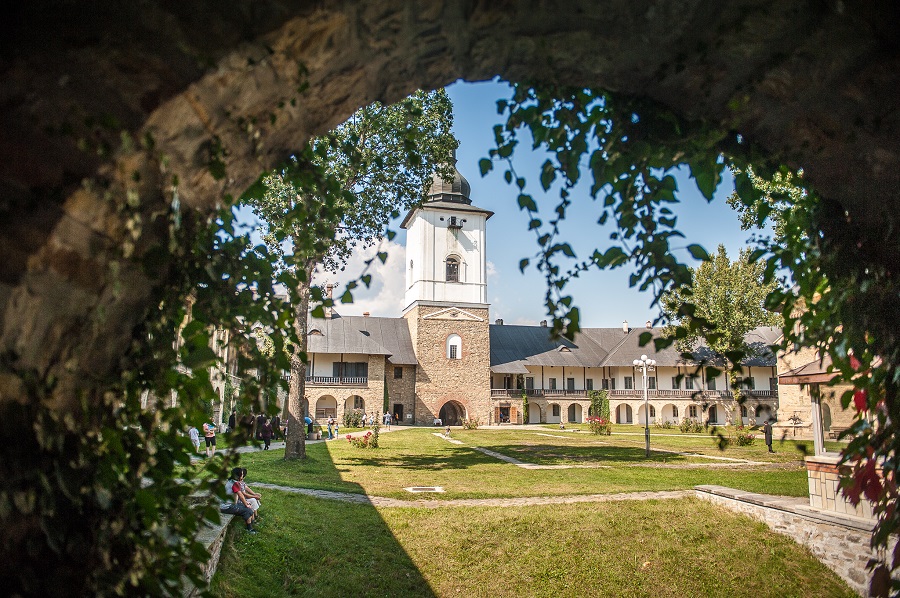
The monasteries of the Neamț area stand proudly through changing times, social orders, peoples and generations, as if they have always existed. Such a testament to Romanian faith is Neamț Monastery, one of the oldest monasteries in Moldavia and a jewel of Romanian Orthodoxy. Located in the commune of Vânători-Neamț, near the town of Târgu Neamț, the monastic complex includes the church, which dates from the 14th century, a museum and a library dating from the late 14th century that, in 1862, held over 12,000 volumes – records of important medieval historical, theological, cultural and artistic achievements. Neamț Monastery is the result of successive foundations in the 14th and 15th centuries by Petru Mușat, Alexandru cel Bun and Ștefan cel Mare.
A place full of history and sanctity awaits your visit, with reverence and goodwill in your heart. Here, time seems to stand still and gives the traveller a chance for quiet and contemplation.
Starting from the oldest monastery in Moldavia, Neamț Monastery, built in the 14th century by Musatini and then continuing with Bistrița Monastery founded by Alexander the Good in the 14th century where the eternal resting place of the voivode is also found, we find in the Neamț region the beginning of Romanian monasticism.
Next come the monasteries founded by Stephen the Great in the 15th century, Tazlău Monastery (1487) and Razboieni Monastery (1496). Three other renowned hermit settlements were established in this century, contributing to the spiritual heritage of Neamț County. These were “Iosif's Hermitage”, which became Bisericani Monastery, founded by Bogdan III and Petru Rareș, followed by Agapia Veche Monastery, also founded later by Petru Rareș, while the third settlement was “Silvestru's Hermitage”, built around Ceahlău Mountain.
Three other famous monasteries in Moldavia survive from the 16th century: Pângărați Monastery, founded by Alexandru Lapusneanu in 1560 (known for its unique architecture in Romania, with two churches built one atop the other); the Hermitage at Valeni, founded by Petru Schiopul in 1574; and Zosima’s Hermitage, which, through a donation by the high official Nestor Ureche, became Secu Monastery in 1602.
The 17th century saw the construction of monastic retreats and hermitages in the Bistrița Valley and the Ceahlău area. They include: Peon Hermitage from 1623, Hangu Hermitage founded by Miron Barnovschi in 1627, the monastic retreats of Durău, Casiana, Sofia and Cerebu, Agapia Noua Monastery from 1644, and Atanasie’s Hermitage from 1655, which became Sihastria Secului Hermitage in 1734.
With the construction of new hermitages and monasteries in the 18th century, the Neamț region became one of the best-known pilgrimage destinations in Romania. The monastic settlements were expanded with: Pocrov Hermitage from 1714, Almaș Hermitage from 1715, which later became Almaș Monastery, Sihla Hermitage from 1730, Vovidenia Hermitage from 1754, Horaicioara Hermitage from 1763 and Tibucani Hermitage from 1764. Văratec Monastery, founded in 1785, also came into being in this century.
In the 19th century, three more large monasteries were built in Moldavia which, together with the other monasteries from Neamț, form true oases of peace and prayer to God: Icoana Hermitage dating from 1823, Horaița Monastery founded in 1830 and Tarcău Hermitage built in 1833.
The spiritual and historical heritage offered to Romanians by the monasteries of Moldavia, in Neamț County, is priceless. Whether you are impressed by these sites as places imbued with religious significance or interested in the historical and architectural importance of the monasteries of Neamț, you will certainly have something to see and tell your friends about.
More on the same topic
A Thousand and one stories in Neamt
Dear Traveller, wherever you come from, we invite you to discover the blessed lands of Neamț, a sacred realm once inhabited by the ancient Dacians, rich in legends and myths, with a history and roots…
The Beloved Mountain, Explored in Every Season
No matter which season you choose to visit, the Ceahlău Massif offers a vibrant spectacle of untamed nature, inviting you to discover its fascinating natural richness, history, stories, and the legends that surround the entire mountain.

Days Dedicated to the Via Mariae Pilgrimage
A walking pilgrimage from Văratec Monastery to Voroneț Monastery in honour of the Holy Virgin Mary was organised recently, from 31 August to 3 September, by the Neamț and Suceava County Councils…