G.T. Kirileanu County Library Neamț – rare book exhibition
G.T. Kirileanu County Library Neamț – rare book exhibition
G.T. Kirileanu County Library Neamț is presenting an unusual exhibition for the people of Neamț, featuring rare-book treasures from the valuable collection donated to the town of Piatra Neamț and its residents by the distinguished scholar Gheorghe Teodorescu Kirileanu.
The exhibition is housed in the Treasury Room and can be visited throughout March and April, Monday to Friday, from 12:00 – 16:00.
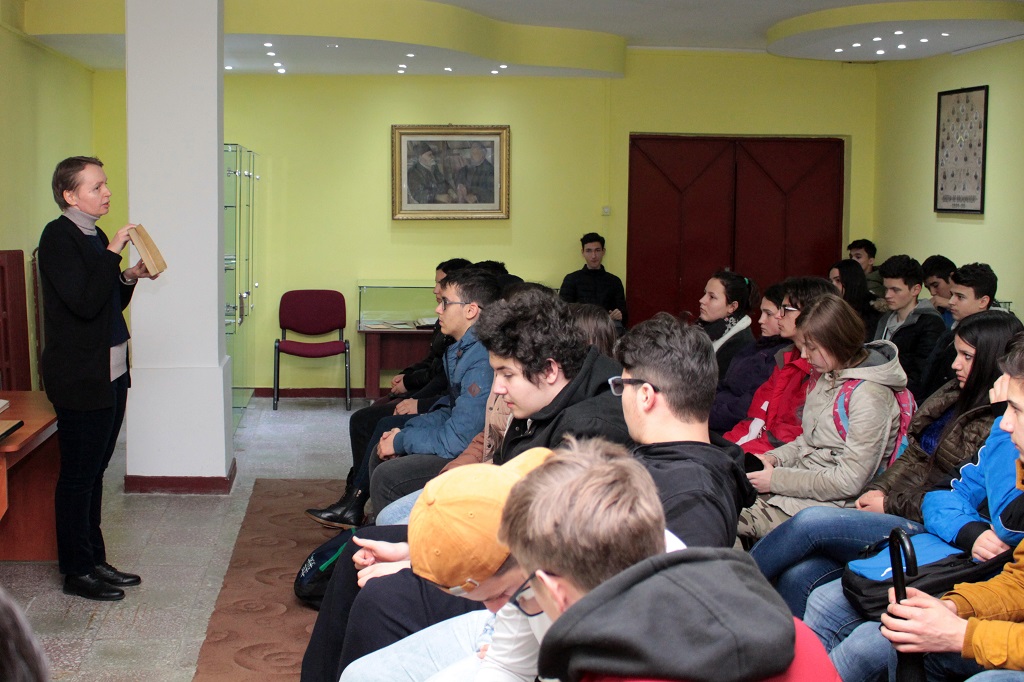
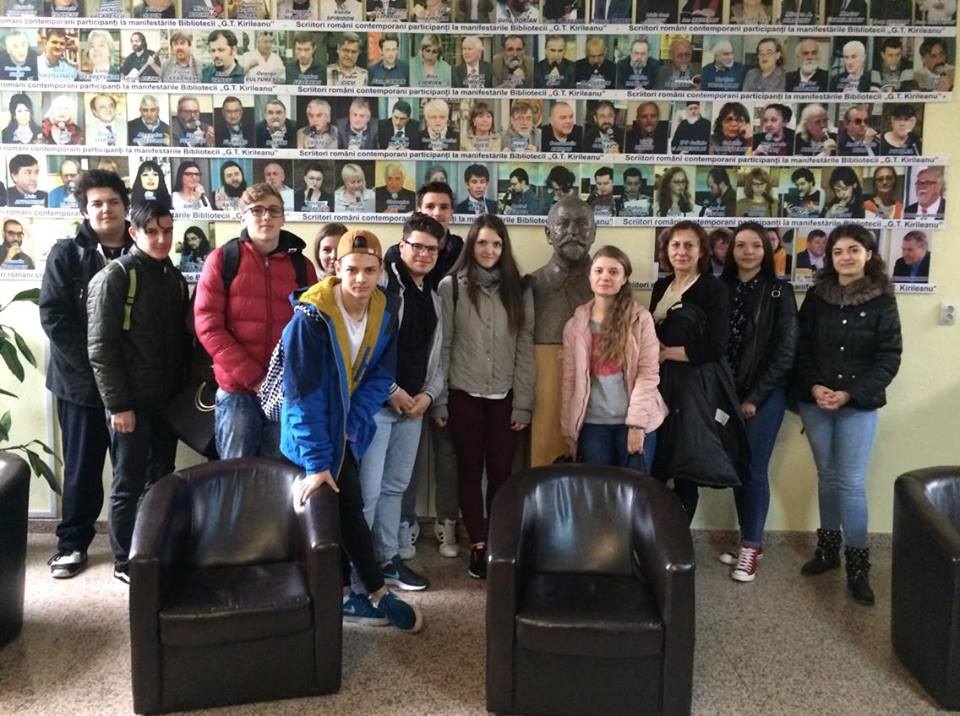
The exhibition opened on Tuesday, 13 March 2018, during an event honouring the library’s spiritual patron, Gheorghe Teodorescu Kirileanu, on the 146th anniversary of his birth (13 March 1872). The event was attended by pupils from classes X G and D at the Economic and Administrative Technological High School Piatra Neamț, accompanied by teachers Elena Butnaciuc, Irina Humă, Livioara-Magdalena Todiresei, Mihaela Dobrea and Maria Tudor.
The exhibition invites the people of Neamț to rediscover the priceless collection of books and periodicals that belonged to the renowned editor and librarian G.T. Kirileanu, reflecting, among other things, the encyclopaedic breadth of his knowledge and his passion for books. The exhibits range from early Romanian religious books (the oldest being “Carte Românească de Învățătură” or “Cazania lui Varlaam”, Iași – 1643) to publications from prestigious European publishing houses (dating from 1615), and from periodicals marking the beginnings of Romanian journalism (“Albina Românească”, “Curier de Ambe Sexe”, etc.) to editions reflecting the development of graphic illustration alongside printing techniques. The exhibition in the County Library’s Treasury Room also features a substantial number of luxury editions whose decorative bindings make each book a true work of art.
The exhibition therefore offers the people of Neamț another opportunity to explore the little-known history of books and printing.
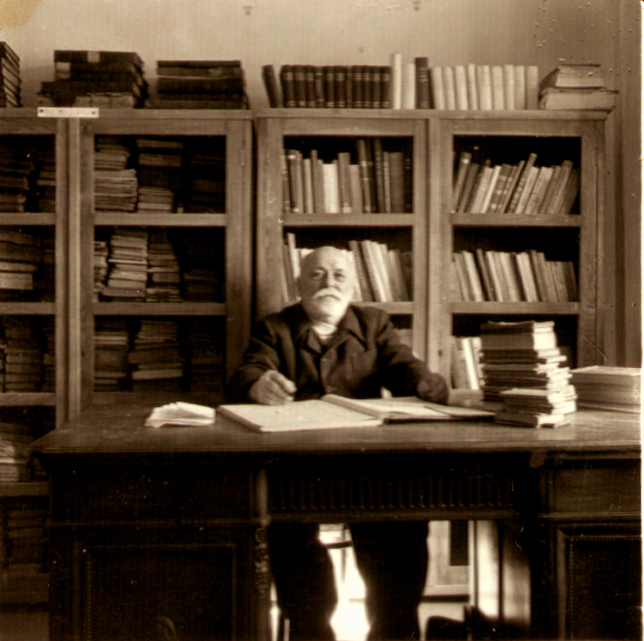
G.T. Kirileanu, library founder and witness to Romanian history
Gheorghe Teodorescu Kirileanu (13 March 1872 – 23 November 1960) donated 30,000 volumes (publications from 1630-1960) to the town of Piatra-Neamț through a deed dated 24 February 1956, which stipulated that a research library should be established in his house “for the enlightenment of the people”.
G.T. Kirileanu – magistrate, bibliophile, librarian, folklorist and editor of Creangă’s writings – was also one of the first editors of Eminescu’s political writings (1905). An honorary member (since 1948) of the Romanian Academy.
During his studies, he worked as secretary to the Council of School Inspectors and as custodian at the University Library in Iași (1897-1900).
After obtaining his law degree, he worked as a magistrate in Iași and then in Broșteni.
At Titu Maiorescu's urging, he became the foremost and longest-serving editor of Ion Creangă's writings from 1906 onwards.
His deep learning, integrity, and the quality and persistence of his cultural work had earned him a good reputation even during his student years: the distinguished philologist Al. Philippide had dubbed him a “rare bird”, while Louis Basset, King Carol I's private secretary, had unhesitatingly described him as a “black pearl”.
In 1906, he entered the service of the Royal Household, taking responsibility for Romanian-language correspondence and petitions addressed to the monarchs. Initially invited to oversee the publication of monographs on the royal estates to mark the 40th anniversary of Carol I's reign (1866-1906), Kirileanu was then offered a position with the Royal Household in București.
From 1909, he also served as librarian at the Royal Palace and worked closely with Prince Barbu Știrbey. He was removed from his post in 1930, when Carol II ascended the throne.
Throughout his life, he was a tireless researcher of our cultural and historical past, an unassuming and generous scholar, and a passionate student of folklore.
These qualities were also recognised in his appointment as secretary-general of the “Ferdinand I” Foundation, established by Romania's monarch in the final years of his life, partly on G.T. Kirileanu's advice.
His extensive correspondence (around 17,000 letters) illustrates the breadth of his connections and interests, involving figures from many different fields, from Titu Maiorescu, N. Iorga and Marta Bibescu to I. Simionescu, S. Mehedinți and Constantin C. Giurescu, from Kings Carol I and Ferdinand I to Barbu Stirbey, Dimitrie Gusti and Ion I. C. Brătianu, from I. Al. Brătescu-Voinești, Gr. Antipa and Octav Băncilă to V. Bogrea, Sextil Pușcariu, George Vâlsan and Al. Rosetti, and from Jean Boutiere, Marcel Godet and Andrei Veress to H. Tiktin, Perpessicius, Șerban Cioculescu and Dan Simonescu.
Director-manager, Mihaela MEREUȚĂ
Photo gallery:
More on the same topic

Neamț County, an Ambassador for Local Traditions and Values in Brussels
Neamț County showcased its values, traditions and development potential on the European stage during European Week of Regions and Cities, held in Brussels from 12 to 14 October.

Solo painting exhibition – Florin Mareș
Starting Saturday, 10 October 2026, the Art Museum in Roman opens a new solo exhibition by the visual artist Florin Mareș of Roman.

Book launch: “Regina Maria a României. Din viață în eternitate” by historian Narcis Dorin Ion
Neamț National Museum Complex invites audiences in Neamț to the launch of “Regina Maria a României.