An open circuit to the past: instruments and devices from the 19th–20th centuries in the collection of Roman History Museum
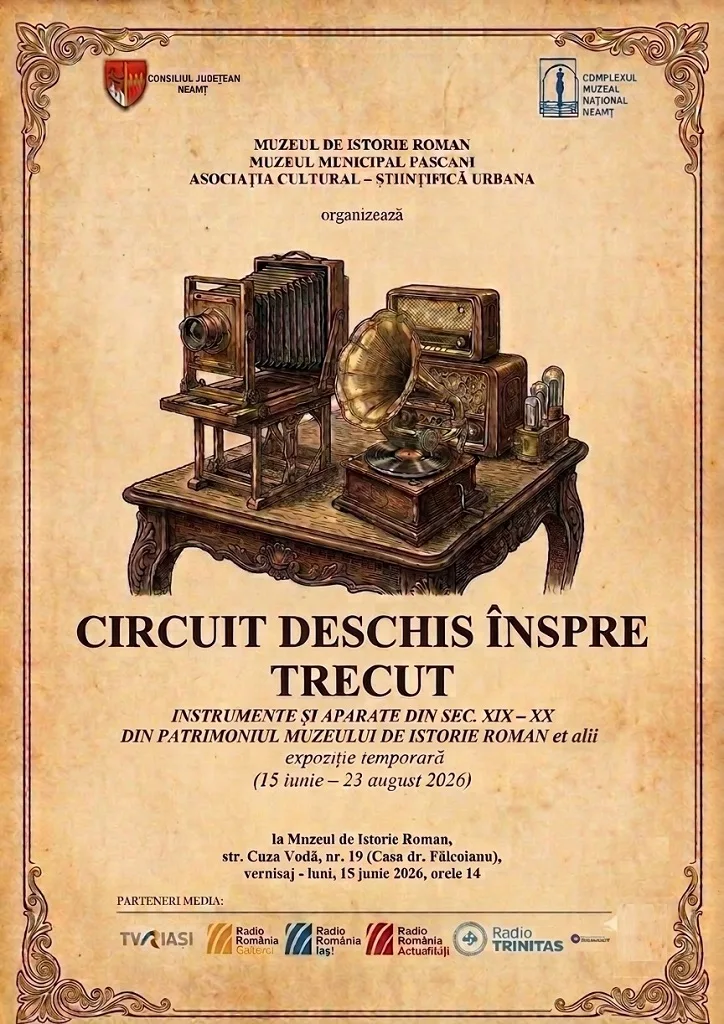
On Monday, 15 June 2026, at 14:00, a new temporary exhibition opens in building B (Fălcoianu House) of Roman History Museum, at 19 Cuza Vodă Street, featuring objects from the organising institution’s collection of late 19th-century and 20th-century technology and exploring their impact on society.
One of the first major changes came in acoustics, as access to music became more democratic, bringing it within consumers’ reach. People could now choose the soundtrack to their own lives in the privacy of their homes. The museum’s display cases feature a Columbia gramophone and a selection of His Master’s voice, Lyrophon, Columbia, Zonophone record, Gramophone records.
This development continued after the middle of the century with the transition to vinyl records and record players (such as Balad and Supraphone models). The radios illustrate the rapid transition from luxury item to mass-market product, with two of the models on display also featuring a built-in record player, a combination from the ’60s that brought radio and vinyl records together in a single centrepiece for the home.
Visitors can admire everything from large radios with elegant wooden cases, such as the Philips, Familial Radio and Austrian Ingelen models that dominated drawing rooms in the ’30s and were designed to blend in with the furniture of the time, to post-war Romanian radios, iconic models produced by the national industry (Electronica or Tehnoton). Other exhibits include the Opereta (1957) and Orion (1959) radios, as well as popular models from the ’60s and ’70s such as Istria, Select T68, Nordic and Zefir.
Portable and “pocket” devices have also been included. Emerging as technology became more widely accessible in the ’70s, models such as Mikki 2, Yunost, Gaiety and the well-known Romanian Gloria 3 took sound out onto the streets, into parks and on picnics, giving young people new mobility and independence.
One object of particular historical significance is a handmade French radio built during the Second World War and used to listen secretly to Allied broadcasts. It bears witness to resistance against the occupying forces.
Connected to a central station, with no option to change channels, these devices became an ideological “alarm clock”, the sole source of news and the perfect tool for cultural homogenisation and state-controlled propaganda.
The Candlestick telephone (1910-1930) recalls a time when making a telephone call was an exceptionally rare event. In the ’60s, Romanian-made switchboard telephones began to organise institutional bureaucracy and the flow of information. In contrast to civilian uses, military telephones (a Soviet model from the ’50s and a Romanian model from the ’70s) highlight another aspect of technology: security, state secrecy and survival during geopolitical crises, when everyday language gave way to the rigour of commands.
Another major cultural link in the modern world, the camera, also features in this exhibition. Used to create a visual record of personal or community life, this “magic eye” took many forms, including Rolleiflex, Agfa Box, Zeiss Ikon Contessa,Smena, Zorki, Kiev, Lubitel and Asian models (Canon, Petri, Meikai).
At home and at school, slide projectors (Aspectomat 300, Etude, Iod) made an impression on younger generations. We also remember the ritual of evenings when the lights went out and the room’s wall became a large screen, bringing children together around the same projected images from stories.
The exhibition also finds a conceptual balance through two objects with different functions, representing opposite scales of how human life is organised: the wider public realm and the intimate domestic space.
A theodolite from 1931-1938 shows how technology served the systematic planning of land. This high-precision Swiss instrument “mapped out” urban modernisation, allowing engineers to plot the axes of boulevards and property boundaries.
A Diamant television from the ’80s best represented the late communist period, an era marked by severe restrictions and television programming reduced to just two hours a day.
Through cooperation between Roman History Museum – C.M.N.N., Pașcani Municipal Museum and Roman collectors Sorin Grumuș and Leonard Luca, we support good practice in the cultural sector while encouraging the preservation and collection of these objects, which are more than assemblies of circuits, wood, Bakelite and metal: they are extensions of our fundamental need to communicate and express our identity.
The exhibition remains open to the public from 15 June to 23 August 2026.
Organisers: Neamț County Council, Neamț National Museum Complex – Roman History Museum, Pașcani Municipal Museum and Asociația Cultural – Științifică Urbana.
Exhibition curator: museum specialist Iulia Cristina Lazăr
We look forward to welcoming you!
More on the same topic
Neamț County, an Ambassador for Local Traditions and Values in Brussels
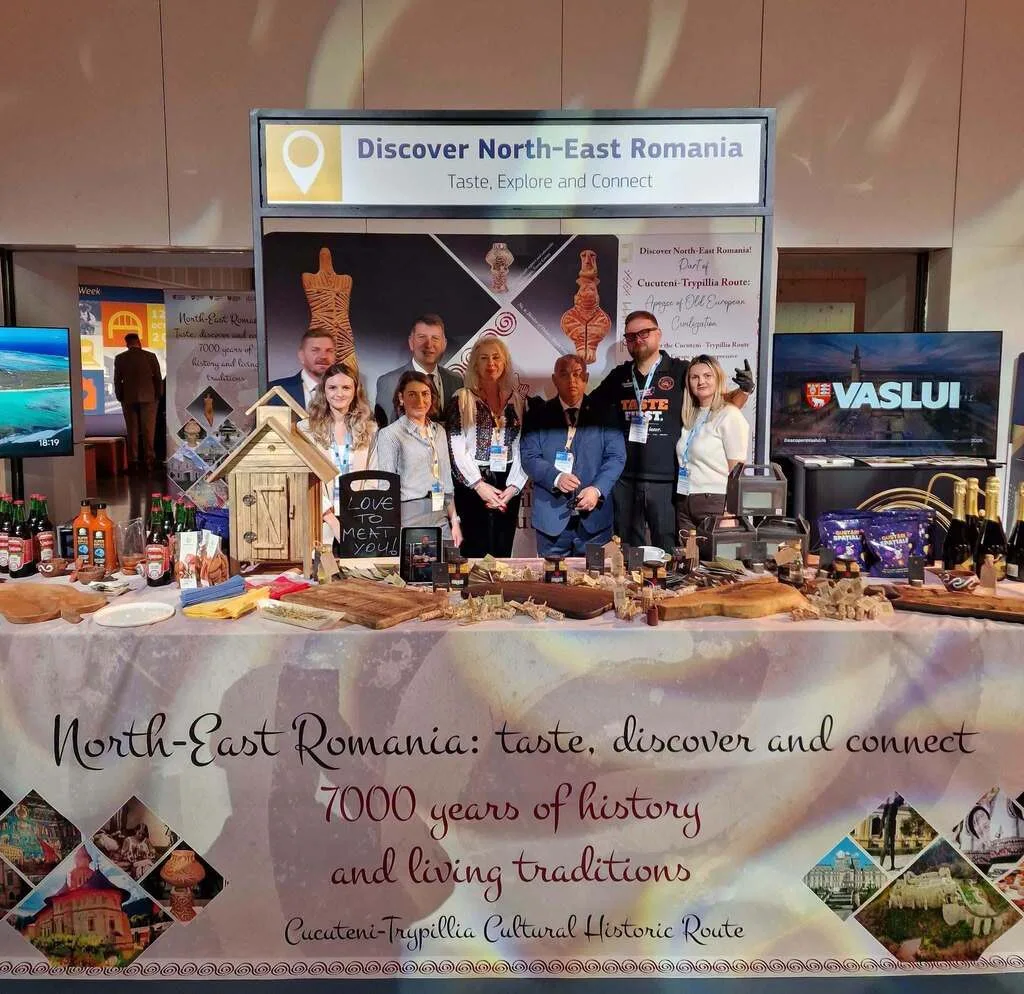
Neamț County showcased its values, traditions and development potential on the European stage during European Week of Regions and Cities, held in Brussels from 12 to 14 October.
Solo painting exhibition – Florin Mareș
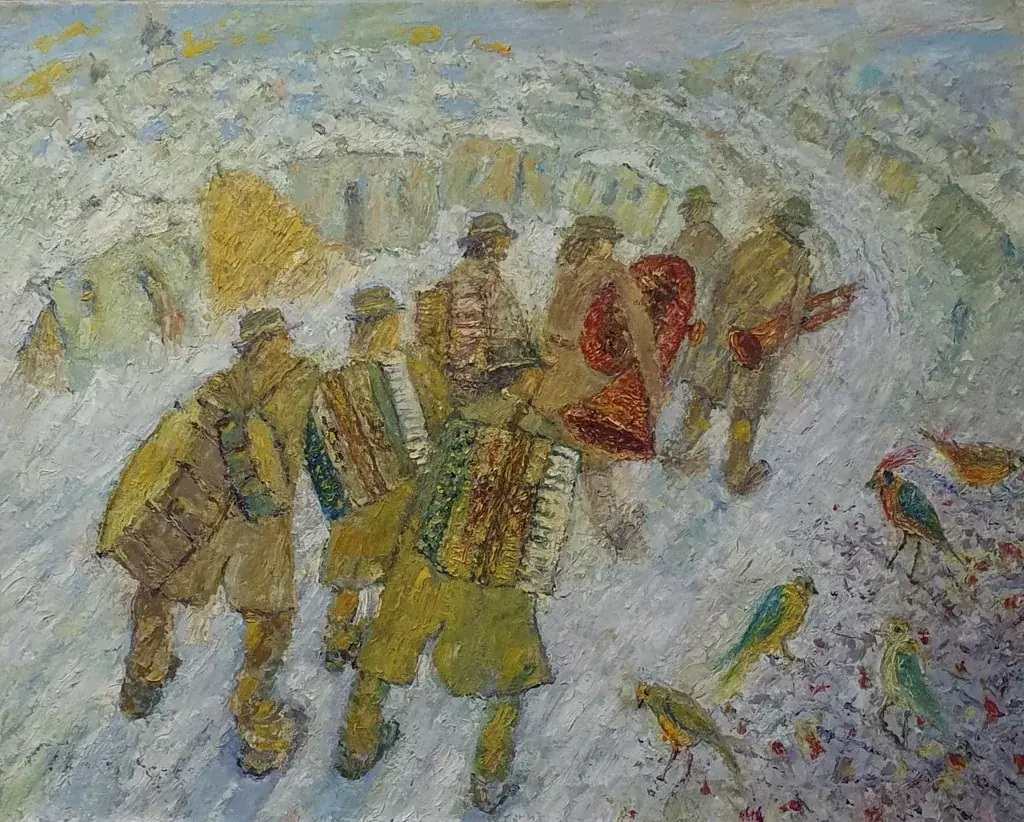
Starting Saturday, 10 October 2026, the Art Museum in Roman opens a new solo exhibition by the visual artist Florin Mareș of Roman.
Book launch: “Regina Maria a României. Din viață în eternitate” by historian Narcis Dorin Ion
Neamț National Museum Complex invites audiences in Neamț to the launch of “Regina Maria a României.