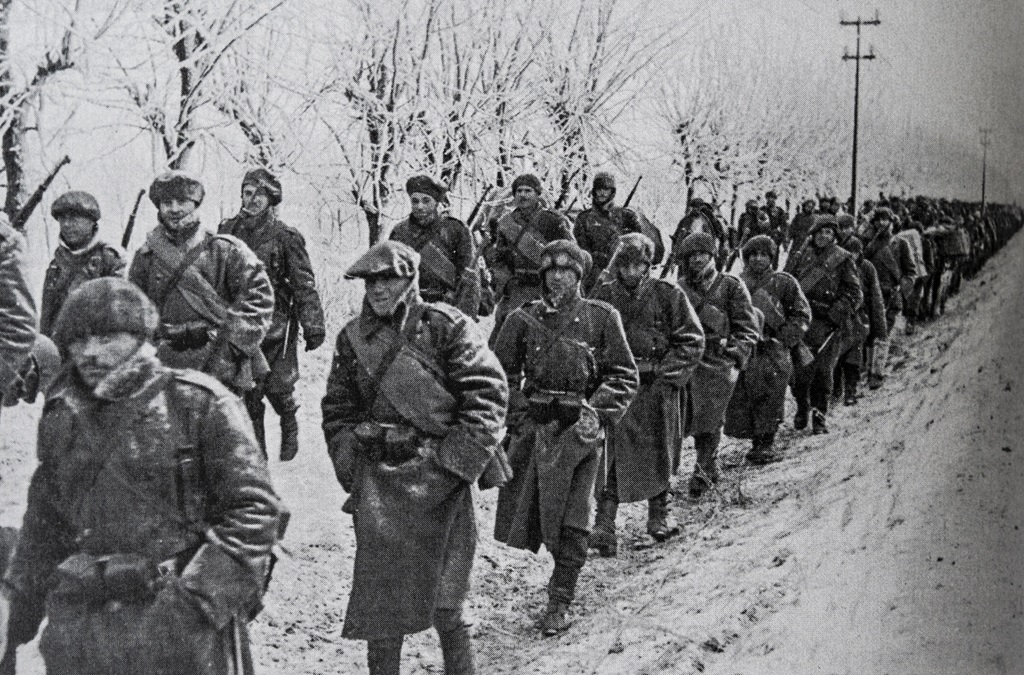
Outdoor exhibition “Divizia 4 Vânători de Munte pe frontul de Răsărit în imagini”
To mark Mountain Troops Day, celebrated annually on 3 November, Neamț National Museum Complex is organising the outdoor exhibition entitled Divizia 4 Vânători de Munte pe frontul de Răsărit în imagini, to honour the memory of the mountain troops who lost their lives in the Second World War, as well as the few surviving war veterans from Neamț County and elsewhere. This date was chosen because, under General Headquarters Order number 294, dated 3/16 November 1916, the Military Ski School in Bucharest was transformed into the “Mountain Troops Corps”, organised into three battalions of three companies each, with a total strength of 2,000 men and Captain Virgil Bădulescu appointed to command.
At the beginning of the Second World War, the mountain troops, elite units of the Royal Romanian Army, were grouped within the 4th Mixed Mountain Brigade, commanded by General Gheorghe Manoliu.
The brigade was established on 20 June 1939 by Royal Decree number 2879, with its headquarters stationed in the town of Aiud. Its first commander was Colonel Nicolaie Pălăngeanu, with Lieutenant Colonel Octav Catană serving as chief of staff.
It comprised the 8th and 9th Mountain Troops Groups, the 4th Mountain Artillery Group, the 13th, 14th, 17th, 18th, 19th and 20th Mountain Troops Battalions, the 3rd and 6th Mountain Gun Battalions, and the 4th Mountain Pioneer Battalion. From 1200 on 20 June 1941, the Mountain Corps and all its major formations came under the operational control of the German Supreme Command, whose headquarters were stationed in the town of Piatra Neamț (German 11th Army).
At the beginning of the world war, during 22–29 June 1941, the brigade was involved in military operations in the Tomnatec, Șipotele Sucevei area, then launched offensive operations in northern Bucovina during 2–5 July, along the Ciudeiu-Cernăuți axis and towards Hotin, where it helped liberate the town on 8 July.
On 18 September, it crossed the Dnieper at Berislav and was directed towards Balki, where it carried out major military operations at Malaia Bielosjorka during 24–30 September 1941. It pursued the retreating Soviet troops, then received orders to defend the Sea of Azov coast during 18 October–8 November 1941. On 9 November, it was sent back towards Romania, but on 19 November it was ordered to move to Simferopol, in Crimea, to take part in military operations against Russian partisans in the mountainous Iaila area. The 4th Mixed Mountain Brigade contributed to the destruction of 114 camps, the capture of over 500 partisans and the killing of 1,850, for which it received a commendation in the German 11th Army’s order of the day.
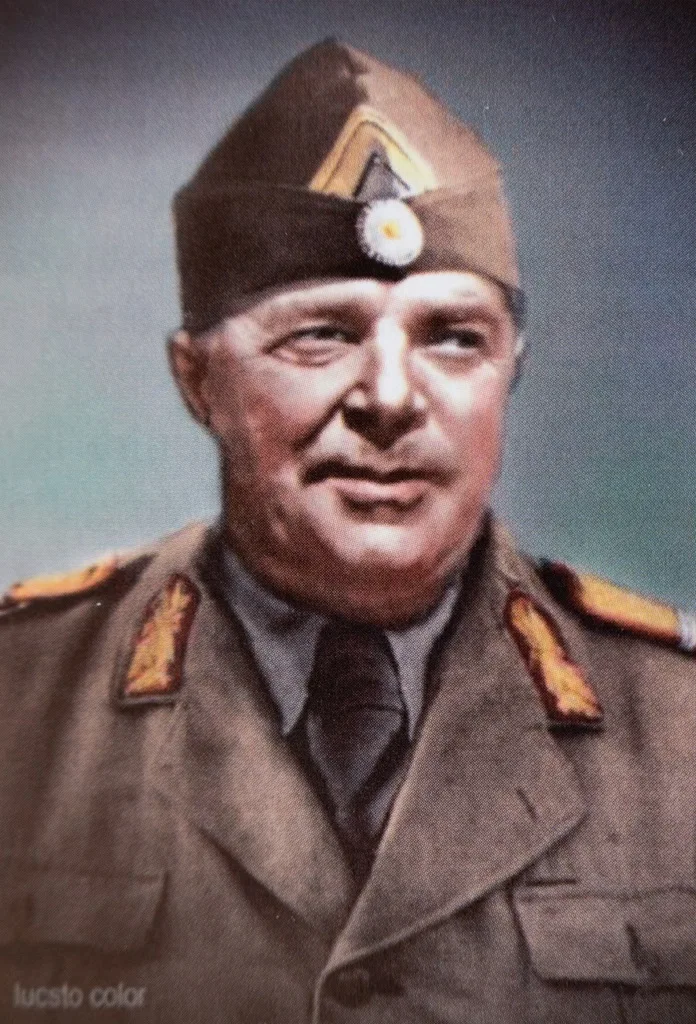
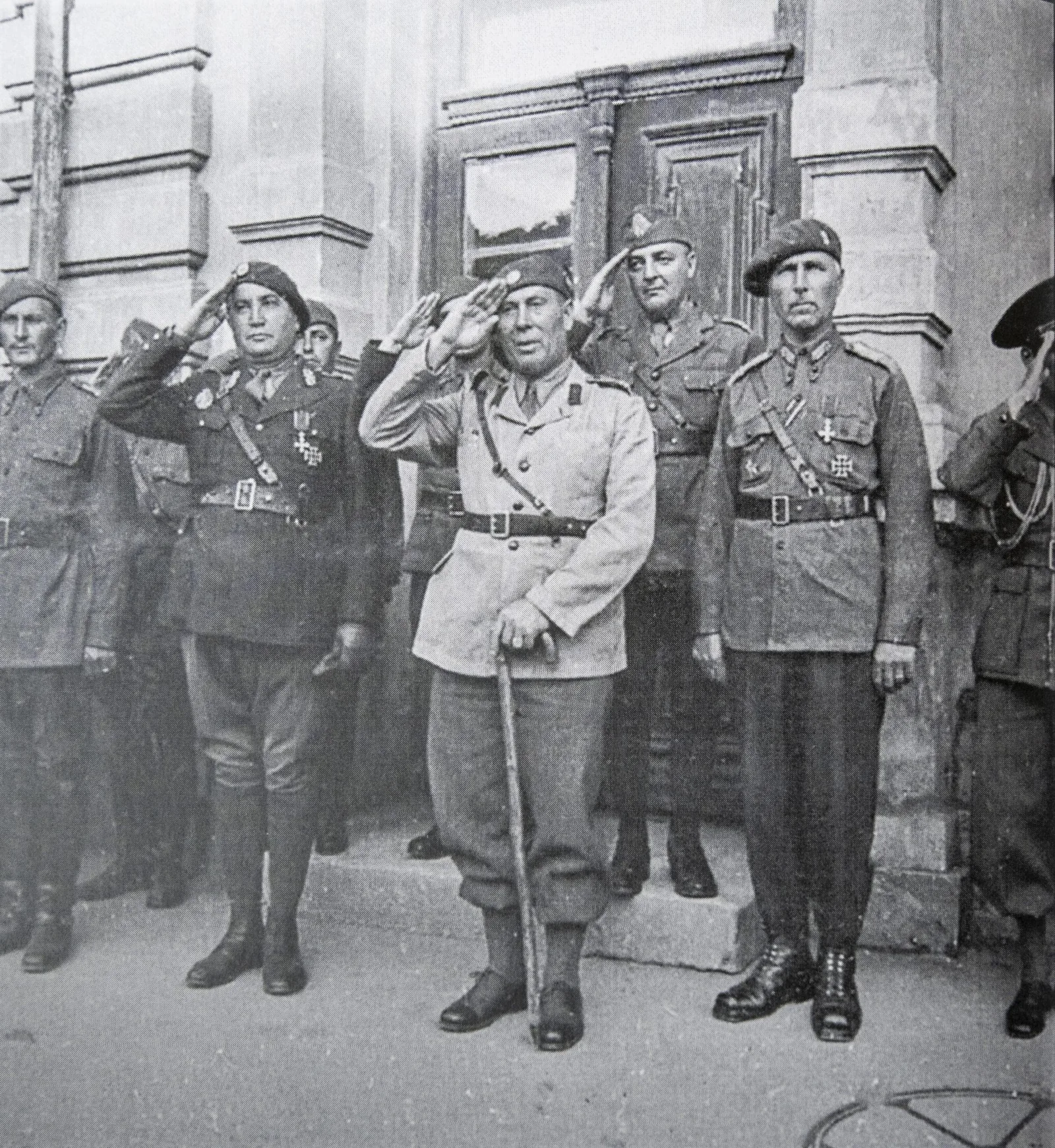
To highlight the Romanian Army’s contribution on the Eastern Front, the political and military regime in Bucharest decided to reorganise the 4th Mixed Mountain Brigade, which became the 4th Mountain Troops Division on 15 March 1942. In the spring of 1942, the 4th Mountain Division took part in the fighting in Crimea and the defence of the Black Sea coast between Sudak and Alușta, before being deployed to the Sevastopol front in June, where it made a significant contribution to the city’s capture. After being withdrawn from the battle lines at Sevastopol, it returned to the front at General Gheorghe Manoliu’s request, becoming the only major Romanian formation to fight its way into Sevastopol and raising the tricolour on the monument commemorating the battles of 1856.
It then marched some 500 kilometres in 11 days to an area north of the Sea of Azov, south of Melitopol, taking up its new positions between 2 and 6 October 1943. In these new positions, the division’s units fought to exhaustion at Danilo Ivanovka, Radianovka, Novo Alexandrovka, Vladimirovka and Akimovka. Following heavy losses, on 4 November 1943, the 4th Mountain Division was merged with the 24th Infantry Division under the name 4th/24th Infantry Division.
After receiving the order to cease hostilities, on the morning of 24 August 1944, the 4th Mountain Division crossed the Prut and Siret and regrouped in the Valea Cânepii, Gropeni area, disarming the German units it encountered along the way. After 26 August, it joined the “General Nasta” Group, which organised the withdrawal of the 3rd Army Corps’ units. On 3 September, it was deployed to the Vlădeni area, north-west of Brașov, then to Hațeg on 10 September, where it merged with the recruit units.
Until 16 October, when its operational mission ended, it remained in the General Staff’s reserve, and was demobilised in November 1944. After its mobilised personnel had been demobilised, the 4th Mountain Troops Division moved in December 1944 to the town of Piatra Neamț, into the barracks allocated to it by the General Staff through the Estates Directorate.
On 21 May 1945, under General Staff Order number 52,777, the 4th Mountain Troops Division, the 8th and 9th Mountain Troops Groups, the 4th Mountain Artillery Group, and the 13th, 14th, 17th, 18th, 19th and 20th Mountain Troops Battalions were disbanded.
Museum curator Manuel Dan
More on the same topic

Neamț County, an Ambassador for Local Traditions and Values in Brussels
Neamț County showcased its values, traditions and development potential on the European stage during European Week of Regions and Cities, held in Brussels from 12 to 14 October.
Solo painting exhibition – Florin Mareș
Starting Saturday, 10 October 2026, the Art Museum in Roman opens a new solo exhibition by the visual artist Florin Mareș of Roman.
Book launch: “Regina Maria a României. Din viață în eternitate” by historian Narcis Dorin Ion
Neamț National Museum Complex invites audiences in Neamț to the launch of “Regina Maria a României.