Remembering I.I. Mironescu at the County Library
Remembering I.I. Mironescu, 80 years after his death,
at the County Library
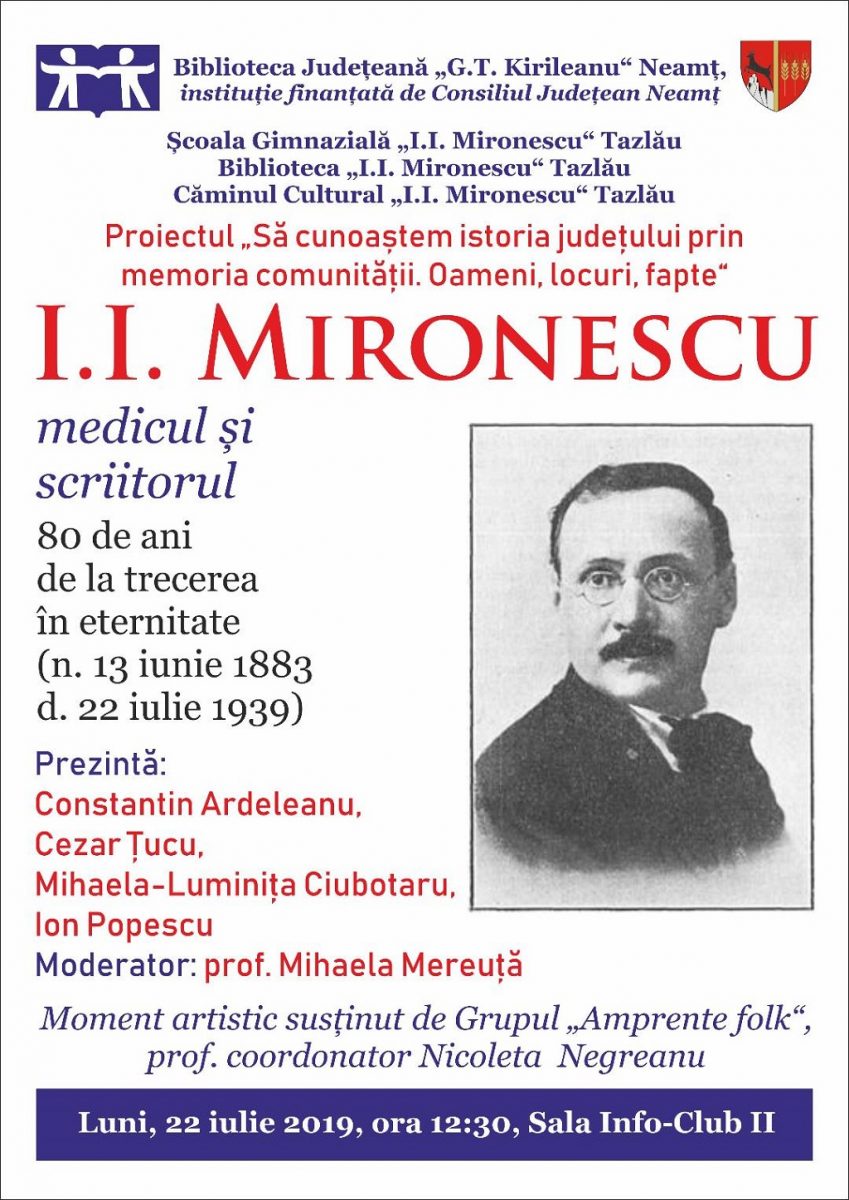
G.T. Kirileanu County Library Neamț is organising a commemorative conference dedicated to the writer and dermatologist I. I. Mironescu, marking 80 years since his death, as part of the project “Discovering the county's history through community memory. People, places, events”, on Monday, 22 July 2019, starting at 12:30, in the Info-Club II Room.
The event partners are “I. I. Mironescu” Lower Secondary School Tazlău, “I.I. Mironescu” Library Tazlău and “I. I. Mironescu” Cultural Centre Tazlău.
Constantin Ardeleanu, Cezar Țucu, Mihaela-Luminița Ciubotaru and Ion Popescu will speak about his literary, medical and social work. The event will be moderated by teacher Mihaela Mereuță, director and manager of G.T. Kirileanu County Library Neamț.
The “Amprente folk” group, led by teacher Nicoleta Negreanu, will give a performance to mark the occasion.
The dermatologist, writer and member of parliament I.I. Mironescu (b. 13 June 1883 – d. 22 July 1939), whose real name was Eugen I. Mironescu, was Tazlău’s most distinguished resident. Shaped by the literary circle of the magazine “Viața românească”, under the guidance of Garabet Ibrăileanu, I.I. Mironescu devoted himself chiefly to literary sketches and novellas.
His house in Tazlău offered a warm welcome on countless occasions to the writers Mihail Sadoveanu, George Topîrceanu, Garabet Ibrăileanu, Panait Istrati and Otilia Cazimir.
The physician Eugen Mironescu died on 22 July 1939, aged just 56. Everyone mourned his loss: from his ordinary fellow townspeople to renowned professors, doctors and cultural figures.
“Dr Mironescu truly loved the place where he spent his childhood: he established Tazlău as a spa and climatic resort, chaired the local tourism office, founded the primary school in Tazlău and established the physiotherapy and climatic treatment centre in Tazlău; he donated 34 prăjini of land to the Primary School in Tazlău, on condition that 400 mulberry trees be planted each year so that the very hardworking women of this village could expand silk production. A few years earlier, he organised an impressive celebration marking 72 years since the primary school’s foundation, attended by eminent figures from across the country. At his own expense, using his modest professor’s salary – for he never accepted money from his patients – he created the park in Tazlău, adorned with flowers and enclosed by a well-built fence. Once it was finished, he donated it to the commune. Dr Mironescu was a father to his native village, supporting it and making it known throughout the country” (Avântul newspaper, 1939).
“His life was not the University, his excellent medical practice, politics or literature; his life was his home village” (Mihail Sadoveanu).
“Doctor Mironescu was unrivalled as a teller of anecdotes. Topîrceanu, too, told stories beautifully and with wit. But Mironescu surpassed him – especially in humorous folk tales – for he brought to them a hearty peasant humour. When telling a story, Mironescu resembled a brilliant comic actor. He told it with feigned innocence, gesturing like the characters he portrayed and modulating his voice to suit the dialogue. Throughout, not a single smile creased his face. He maintained the solemn expression of a Jesuit. The contrast between his words and his expression made his humour all the greater” (Mihail Sevastos, prose writer and memoirist).
“Mironescu – driven by boundless affection and a deep understanding of ordinary people struggling with material hardship – provided medical care entirely free of charge throughout the winter and summer holidays, when he usually returned to Tazlău” (Gheorghe Iorga, former director of the Documentary Library in Piatra Neamț).
“Mironescu embodied, better than any other young writer, folk wisdom expressed in authentic local speech. His rustic humour also took refined forms, while retaining a family resemblance to that of his great predecessor Ion Creangă. But Mironescu was not only a brilliant writer and a storyteller unmatched in our time; he was also a dedicated laboratory scientist and an engaging professor who knew how to captivate his pupils. He taught his subject in a way that gave students pleasure as well as knowledge. No lecture hall was ever large enough to hold everyone who wished to hear him speak” (Professor Grigore T. Popa, MD, Dean of the Faculty of Medicine in Iași).
“He established a clinic with the ambition of matching those abroad, and devoted himself to teaching his speciality with the aim of easing the suffering of his fellow human beings. He was an authoritative and competent leader, a mentor and a friend” (Dr Gheorghe Năstase, senior lecturer at the dermatology and syphilology laboratory in Iași).
More on the same topic
Neamț County, an Ambassador for Local Traditions and Values in Brussels
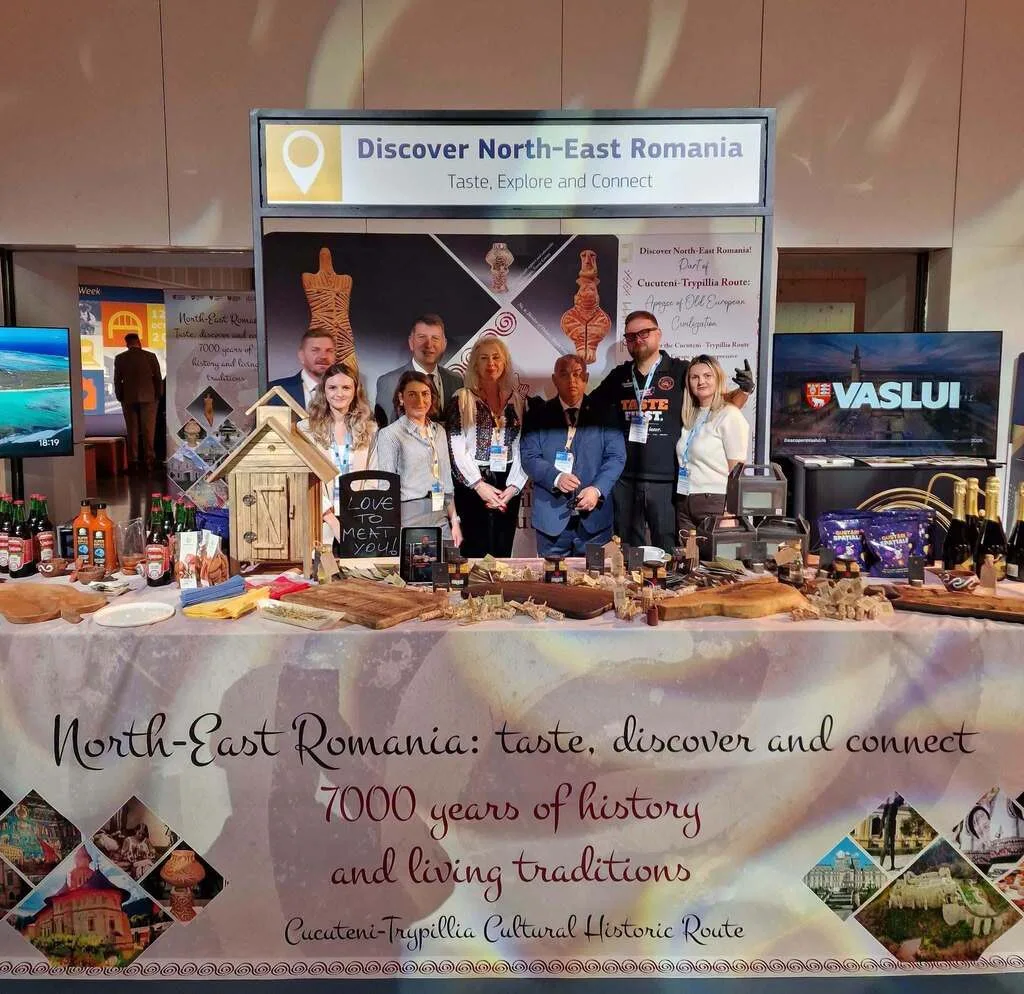
Neamț County showcased its values, traditions and development potential on the European stage during European Week of Regions and Cities, held in Brussels from 12 to 14 October.
Solo painting exhibition – Florin Mareș
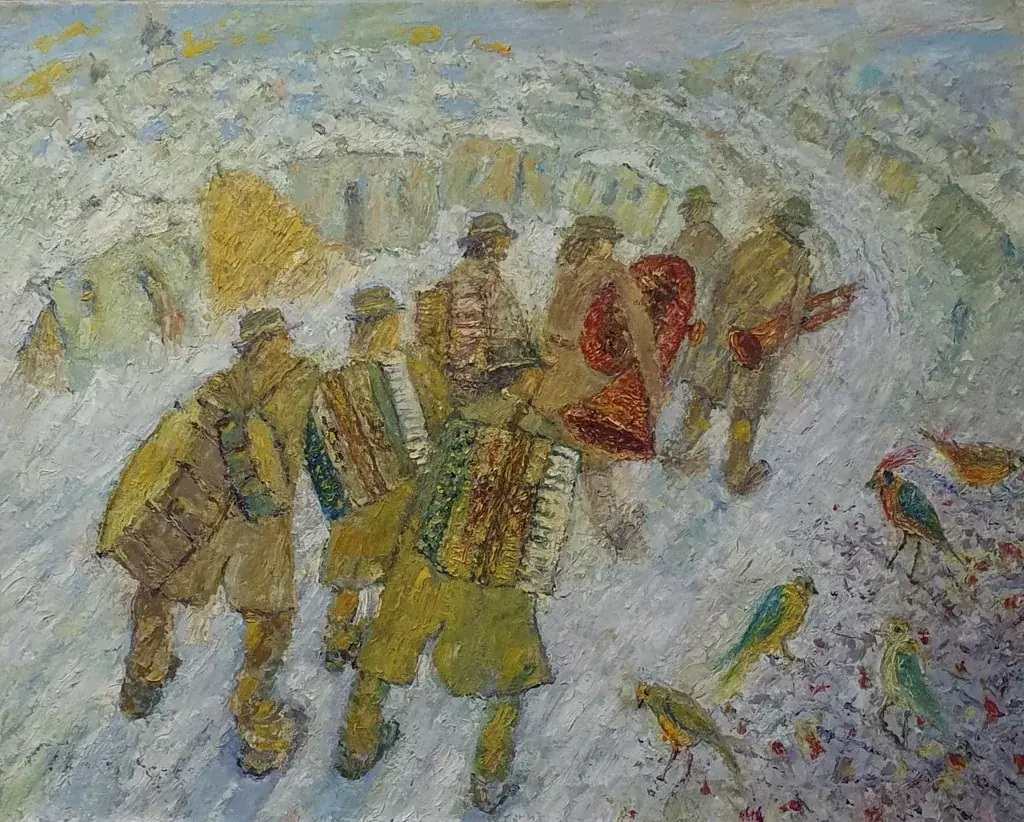
Starting Saturday, 10 October 2026, the Art Museum in Roman opens a new solo exhibition by the visual artist Florin Mareș of Roman.
Book launch: “Regina Maria a României. Din viață în eternitate” by historian Narcis Dorin Ion
Neamț National Museum Complex invites audiences in Neamț to the launch of “Regina Maria a României.