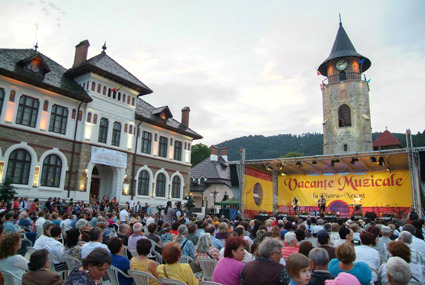
Vacanțe Muzicale Festival – Tuesday, 5 July 2022
Tuesday, 5 July 2022 – “Calistrat Hogaș” Hall at Neamț County Council, at 18:00
VIOLA FANTASIA
Soloists, LUCIAN MORARIU – viola
VINICIU MOROIANU – piano
Programme:
Franz Schubert – Sonata D 821 Arpeggione
Adrian Connell – Memories, for viola and piano
George Enescu – Konzertstück
Giacomo Puccini – Nessun Dorma, from the opera Turandot (Arr. Lucian Moraru)
Piotr Ilici Ceaikovsky – Lensky’s aria, from the opera Evgheni Oneghin
Lucian Moraru – Borșa (folk suite from Maramureș)
Giulio Caccini – Ave Maria (Arr. Lucian Moraru)
Carlos Gardel – Por una Cabeza (Arr. Lucian Moraru)
Lucian Moraru – Improvizație (based on a musical theme by Erik Satie)
Angel Villoldo – El choclo (Arr. Lucian Moraru)
Erik Satie – Gnossienne no. 4 (Arr. Lucian Moraru)
Gerardo Matos Rodriguez – La Cumparsita (Arr. Lucian Moraru)
Astor Piazzolla – Milonga del Angel
Astor Piazzolla – Libertango
VIOLA FANTASIA is a recital for a broad audience, blending the warm sound of the viola with the strength of the piano in a unique performance style full of emotion and virtuosity, with the aim of giving listeners an unforgettable evening.
LUCIAN MORARU
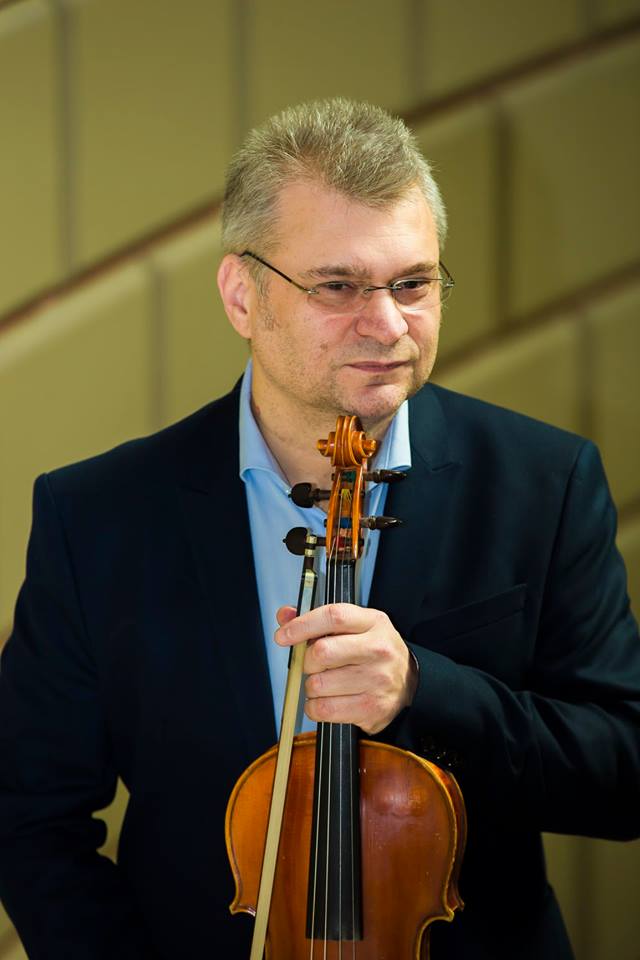

Born in Galați, he began studying the violin at the age of five. He then studied at the Academy of Music in București under Valeriu Pitulac and the violinist Ștefan Gheorghiu. After 1990, he attended chamber music masterclasses in Kerkrade in the Netherlands with Milan Scampa (a member of the Smetana Quartet), and in London with Amadeus Quartett.
He began his musical career as a member of the “George Enescu” Philharmonic Orchestra in București, while also pursuing an extensive solo career, performing under renowned conductors including Sergiu Comissiona, Zoltán Peskó, Petre Zbârcea, Mihai Brediceanu, Daisuke Soga, Horia Andreescu and Iosif Ion Pruner. In recitals, he has performed alongside pianists including Sandu Constantin, Viorela Ciucur, Viniciu Moroianu, Horia Mihail, Horia Maxim, Iosif Ion Pruner, Andreea Butnaru and Marinela Mitria.
His concerts and solo recitals include appearances in countries such as Romania, the USA, Sweden, Canada, Greece, Russia and Italy. He plays a viola made by the Italian luthier Bruno Tondo.
He takes part in various chamber music projects, including string quartets, string trios and string quintets. In early 2005, he founded “Traffic Strings” – an instrumental group with a varied repertoire spanning pre-Classical, Classical, Romantic, modern and contemporary music.
In 2002, Lucian Moraru left his career as an orchestral musician with the “George Enescu” Philharmonic, choosing to broaden his professional activities as a freelancer in the music industry, working as a music producer, studio producer and musical director for theatre productions and television broadcasts. He also composes and creates musical arrangements and orchestrations for instruments and ensembles including violin, viola, cello, string quartet, string orchestra, clarinet, trumpet, saxophone and panpipes.
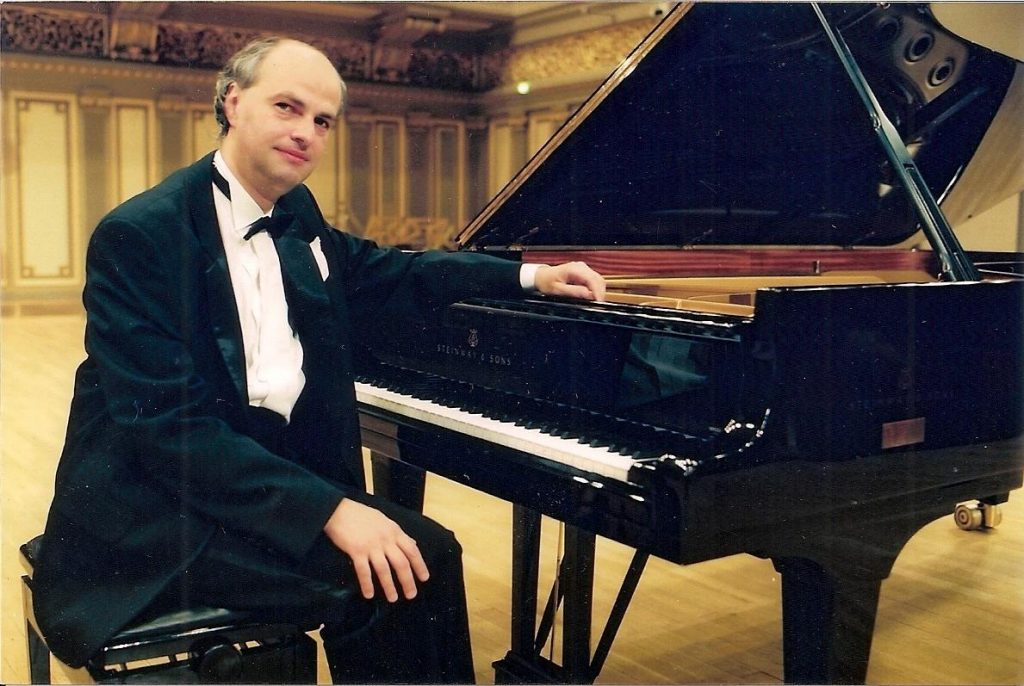
VINICIU MOROIANU
He was born in București in 1962 into a family of musicians.
He graduated from the “Dinu Lipatti” Music High School in his home city, where he studied with Marta Paladi. At the National University of Music, Viniciu Moroianu studied under pianist and professor Gabriel Amiraș, a former pupil of the great Russian teacher Heinrich Neuhaus. He studied accompaniment with Suzana Szorenyi.
From 1973 onwards, he won first prize in national piano competitions and was also a prizewinner at international competitions in Paris (1979) and București (1991). He received the Romanian Music Critics’ College Award (1981) for his performance of Enescu’s third piano sonata and the “Dinu Lipatti” Foundation Award in București (1992) for restoring and performing Lipatti’s Fantezia op. 8 in concert. He has established his reputation through more than a thousand stage appearances.
His extensive repertoire includes concertos with orchestra (the complete Beethoven cycle and more than twenty other works, including Romanian compositions), recital programmes and chamber music.
He has taken part in the “George Enescu” (eight editions), “Dinu Lipatti” (three editions) and “Academia Sighișoara” (eleven editions) international festivals, as well as festivals in Besancon, San Jose, Graz, Chișinău and Bratislava.
He has performed on stages in Greece, Switzerland, France, Italy, Germany, Spain, Belgium, Denmark, Luxembourg, Hungary, Ukraine, the Republic of Moldova and Bulgaria. He has performed with all the orchestras in Romania, as well as ensembles from Great Britain, Austria, Switzerland, the Republic of Moldova and Bulgaria.
He is a founding member of Societatea Română Mozart (1991).
In 2005, a doctorate in music was awarded for the thesis “Two centuries of compositional thought reflected in Dinu Lipatti’s works for solo piano”.
His pupils include Mihai Ritivoiu, Andrei Licareț, Ana Silvestru, Silvan Negruțiu, Simona Strungaru, Abel Corban, Maria-Diana Petrache and Cătălin Răducanu.
He has taught at Universitatea Națională de Muzică in București since 1990, holding teaching posts in chamber music (until 1994) and piano.
Vacanțe Muzicale la Piatra Neamț – Tuesday, 5 July 2022 – Piața Turnului, at 21:00
AN EVENING OF TRADITIONAL ROMANIAN FIDDLER MUSIC
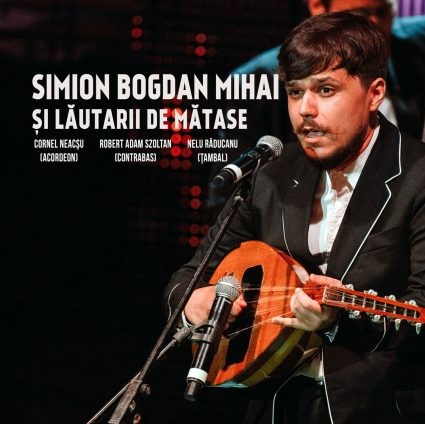
BOGDAN MIHAI SIMION and LĂUTARII DE MĂTASE
Although he comes from a family of economists and is studying for a doctorate in literature, Bogdan has found his purpose in life through traditional music. He learnt to play the cobza, one of the oldest instruments in Romania, and gave voice to the “Șamanul Mut” project. He sought out veteran traditional musicians in every corner of the country and invited them… to a concert. Some of them are astonished when they discover the young man's intentions.
LĂUTARII DE MĂTASE
“Traditional fiddler music is urban music, whose beginnings emerged in București during the interwar period, when București was neither rural nor urban. It became more firmly established and, in my view, reached its aesthetic peak after the Second World War, around the mid-‘50s. Traditional fiddler music is also a form of traditional music. It is perhaps the last form of music passed down orally to emerge in Romania, and I found it all the more interesting because, as a very recent musical form, it has, in my view, always been treated unfairly. By folklorists, ethnomusicologists, the Romanian state, intellectual circles and political circles alike, and in general it has been harder to promote than other forms of music.” (Bogdan Mihai Simion)
Very few people still know how to play these instruments as they were played in the past. They are București's Lăutarii de Mătase: Victor Teioanu, Milan from Bobești, Costel Vasilescu, Nelu Răducanu and Gigel Mihai. They are perhaps București's last traditional fiddler musicians, still hoping for a revival of Romanian traditional music. The idea of bringing them together came from Bogdan Mihai Simion.
We look forward to welcoming you!
More on the same topic
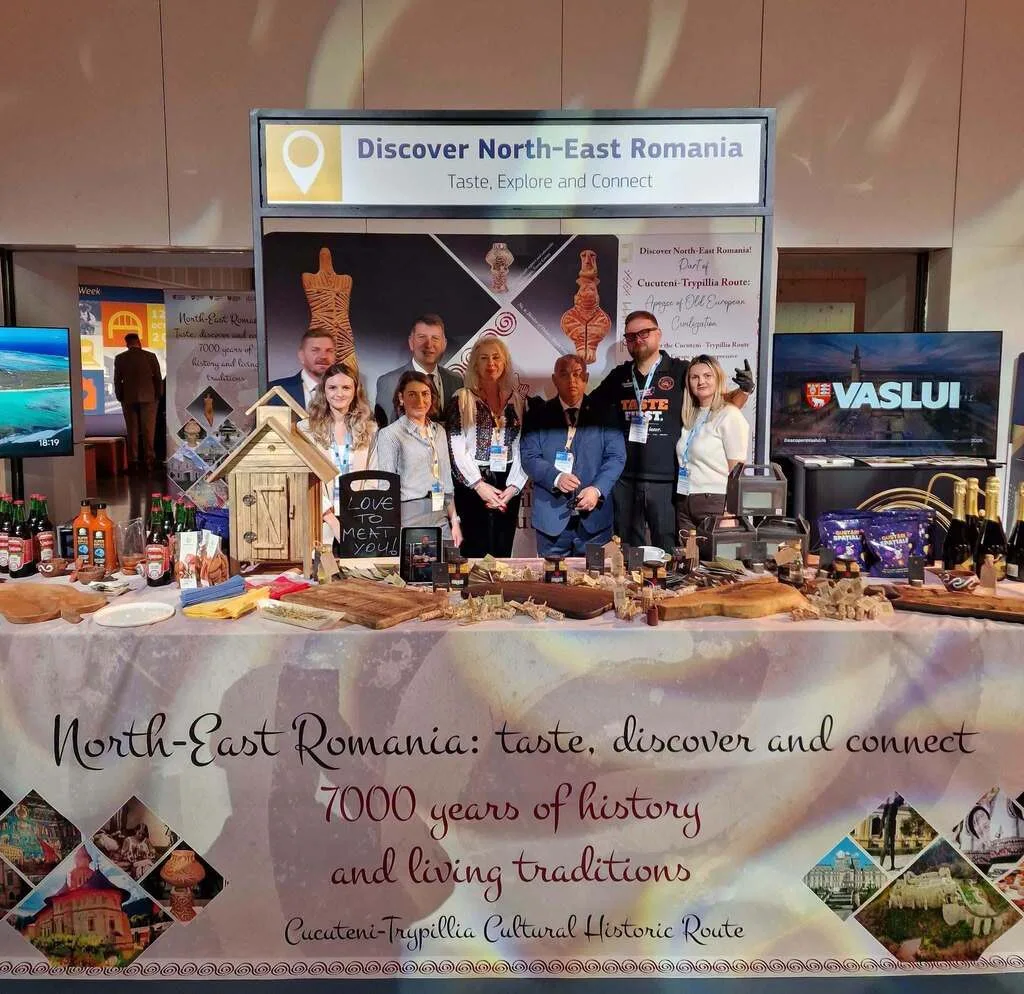
Neamț County, an Ambassador for Local Traditions and Values in Brussels
Neamț County showcased its values, traditions and development potential on the European stage during European Week of Regions and Cities, held in Brussels from 12 to 14 October.
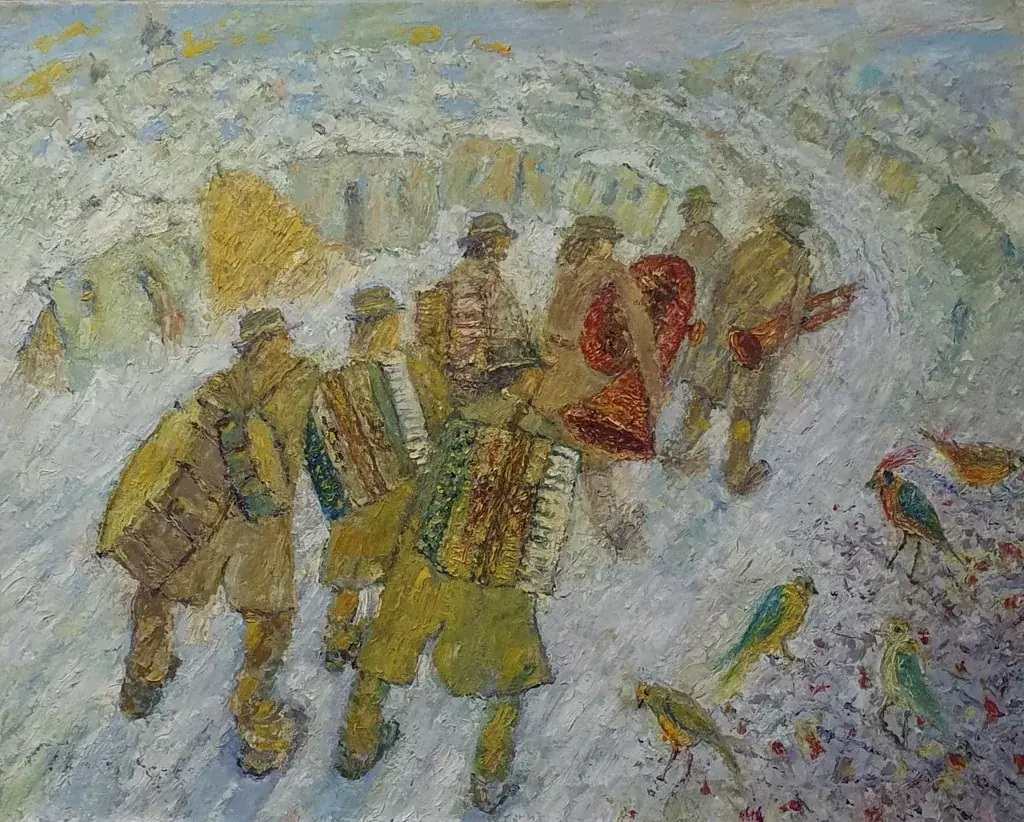
Solo painting exhibition – Florin Mareș
Starting Saturday, 10 October 2026, the Art Museum in Roman opens a new solo exhibition by the visual artist Florin Mareș of Roman.
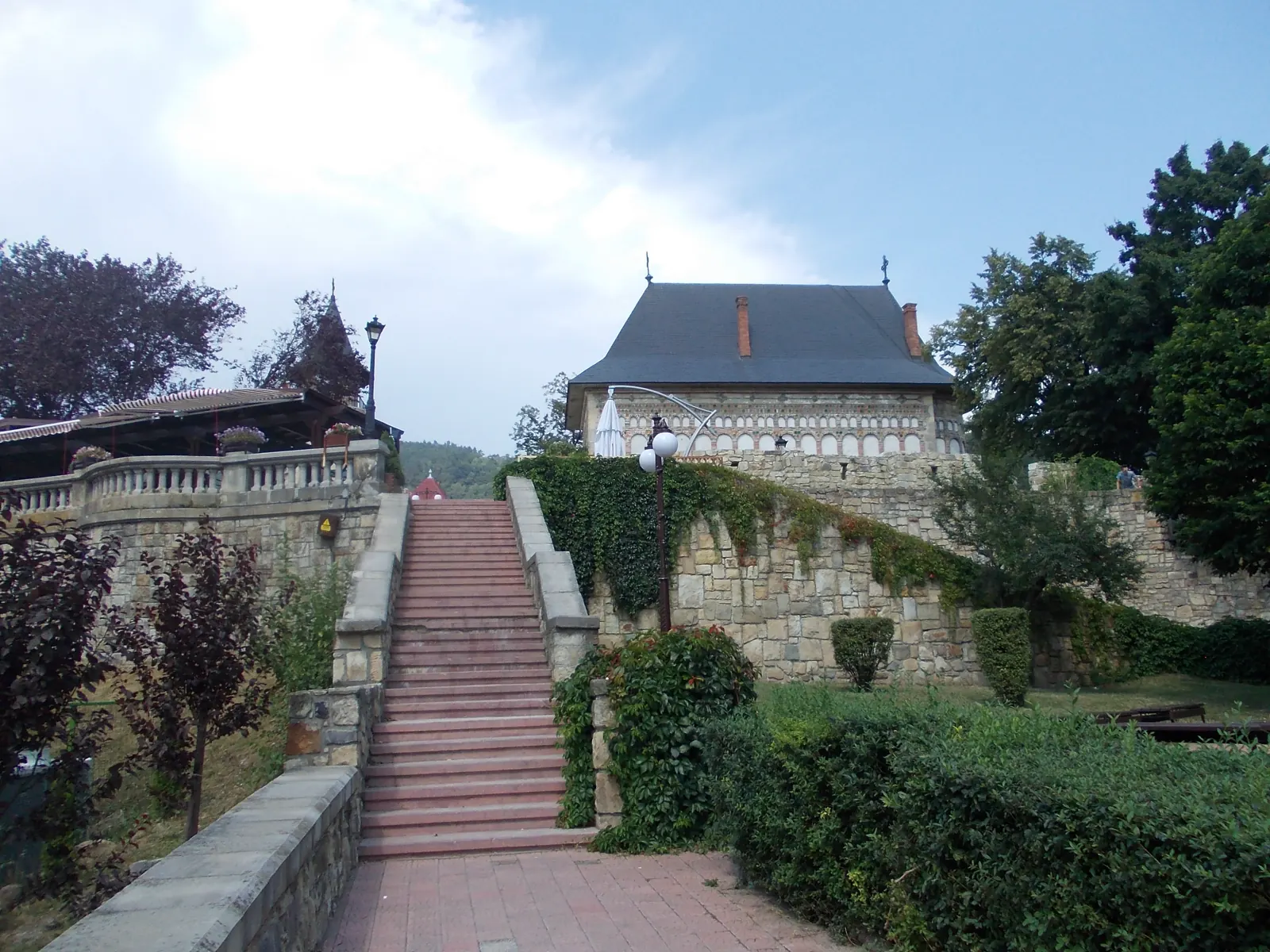
Book launch: “Regina Maria a României. Din viață în eternitate” by historian Narcis Dorin Ion
Neamț National Museum Complex invites audiences in Neamț to the launch of “Regina Maria a României.