The holy water pavilion – the circular building at Neamț Monastery
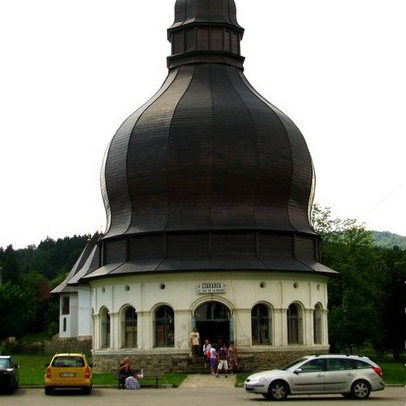
In front of the bell tower at the entrance to the monastic complex at Neamț Monastery stands a circular building that draws visitors’ attention with its distinctive architecture, size and beauty. Built between 1836 and 1847, it is known as the holy water pavilion or baptistery.
Standing 30 m tall, this building has a unique shape, with a roof fashioned like a bishop’s mitre. The interior is equally impressive, with a stone basin at its centre carved by the stonemason N. Legherhaus.
The interior paintings of the holy water pavilion at Neamț Monastery were created between 1974 and 1977. The frescoes were painted by Theodor Varahil Moraru from Piatra Neamț, during the tenures of abbots Theodor Norocel and Efrem Chiscariu. Still used to bless water on major feast days, particularly “the Ascension of the Lord” and “the Descent of the Holy Spirit”, this holy water pavilion holds an important place among the buildings of the monastic complex at Neamț Monastery.
In 1999, the holy water pavilion was clad in copper sheeting, which gives it a distinctive beauty, especially given the size of its dome. That year, the “Saint Ioan Iacob de la Neamț” bookshop was also fitted out inside the building with suitable furniture. Visitors can discover a true centre of Romanian culture here, with a wealth of theological and liturgical books, small icons and numerous church objects.
More on the same topic

Ethnographic museums, treasures of local history and traditions
Ethnographic museums are true treasures and expressions of love for traditions, folklore, and spirituality of the places, and so is the Ethnographic Museum Casa Bunicilor in the village of Mitocul Bălan, Crăcăoani commune.

Neamț receives five nominations across four categories in Destinația Anului
We have good news for everyone who loves Neamț County and all its beauty: it is among the finalists in the Destinația Anului 2024 competition, with five nominations across four categories: Piatra Neamț in the Inspiring Cities category.

The Story of the Seven Miraculous Icons of the Holy Virgin and Saint Anne from Neamț Land
Renowned not only for its beauty and historical significance but also called the “Jerusalem of Romanian Orthodoxy,” Neamț Monastery houses the miraculous icon of Virgin Mary with three hands…