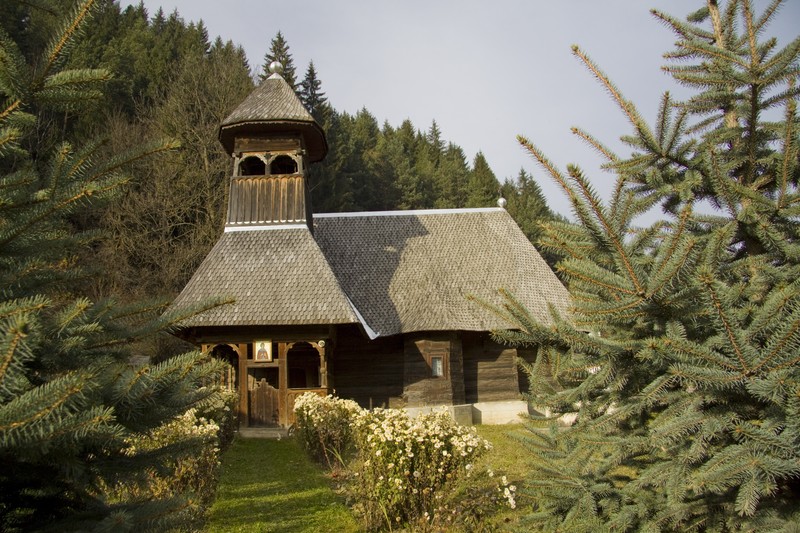
“Saint Parascheva” Wooden Church in Farcașa
The church in Farcașa
The old wooden church in Farcașa is considered the most “richly adorned” in the county and stands out among other places of worship for its elaborate ornamentation, which reflects the boundless creativity of the area's folk traditions. Dating from 1774, the church was built to a trefoil plan, with a vaulted sanctuary, a porch on the south side and a bell tower above it.
What is striking about this monument of great artistic and architectural value is the distinctive way in which craftsmen from the Bistrita Valley decorated the church. Beneath the roof, a decorative band made of two overlapping boards stands out, each adorned with two rows of rosettes and concentric arches created using paint stippling and pyrography.
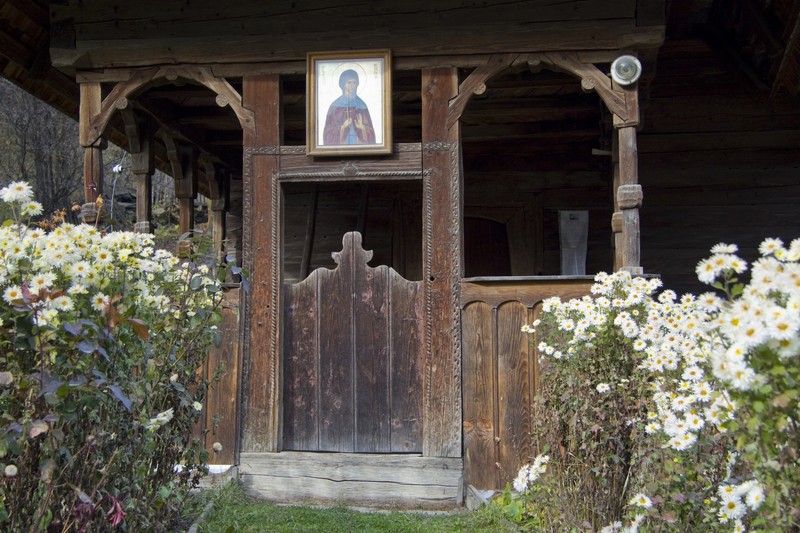
The church also houses a collection of icons and ethnographic objects belonging to craftsmen from various regions.
Photos of the wooden church in Farcașa, Neamț County
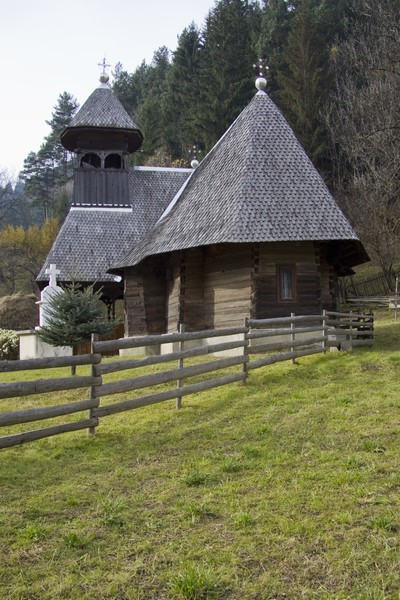
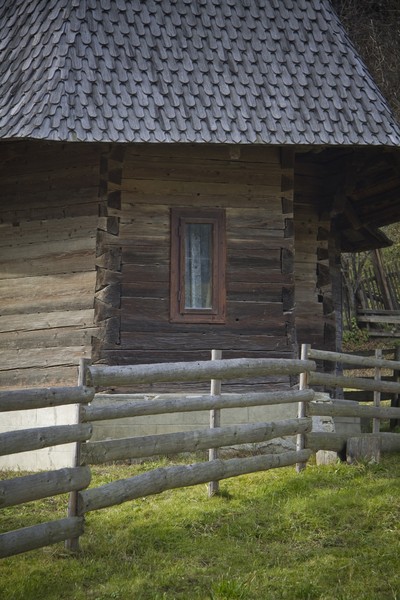
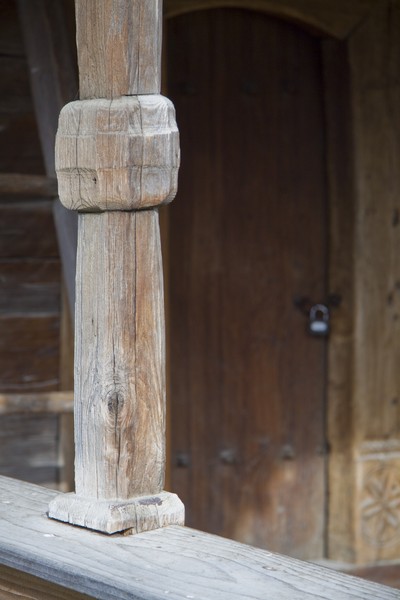
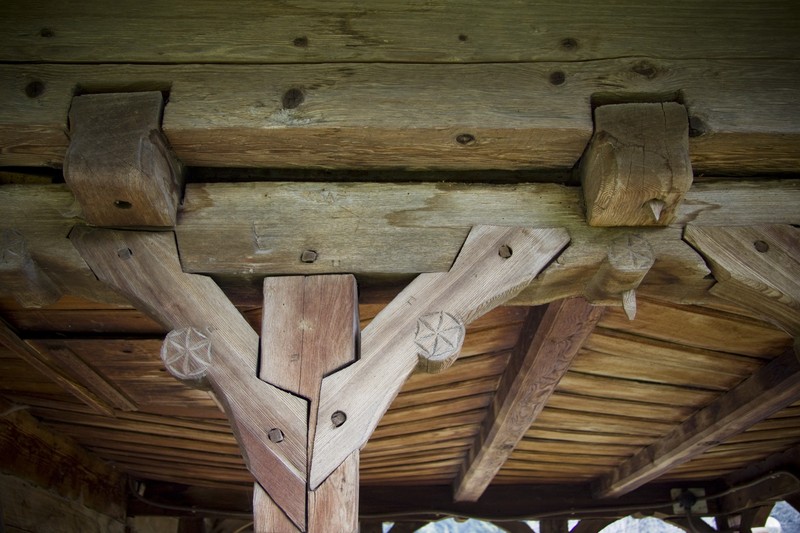
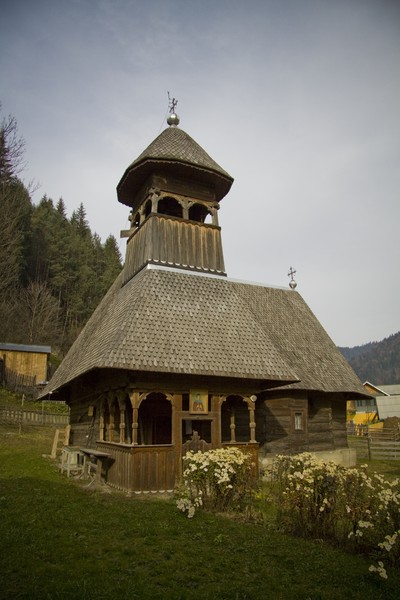
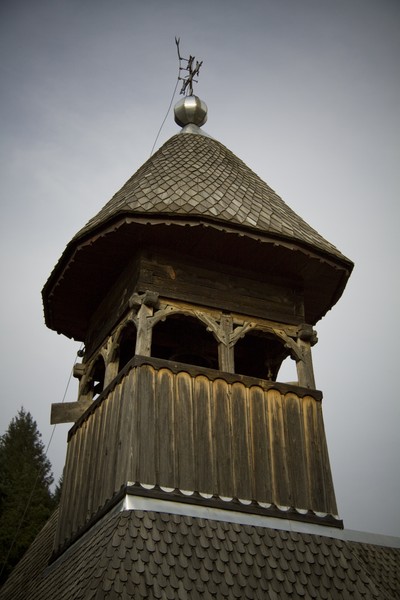
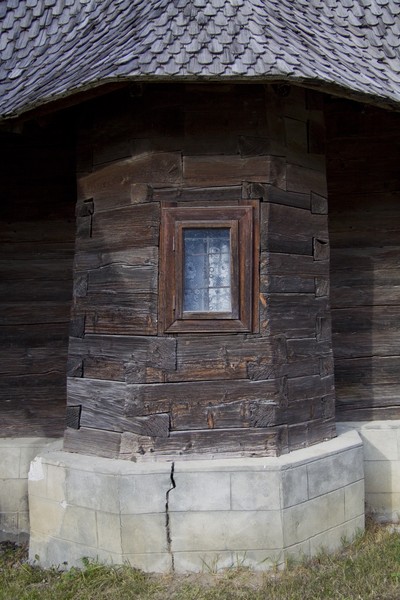
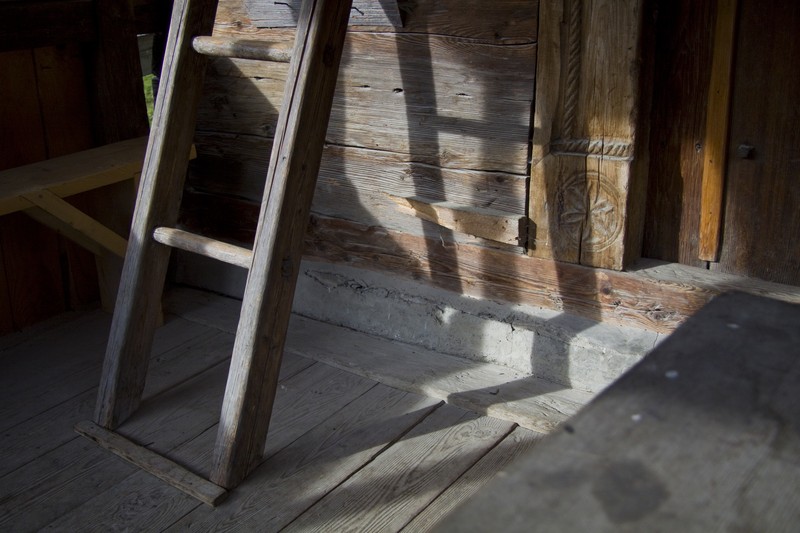
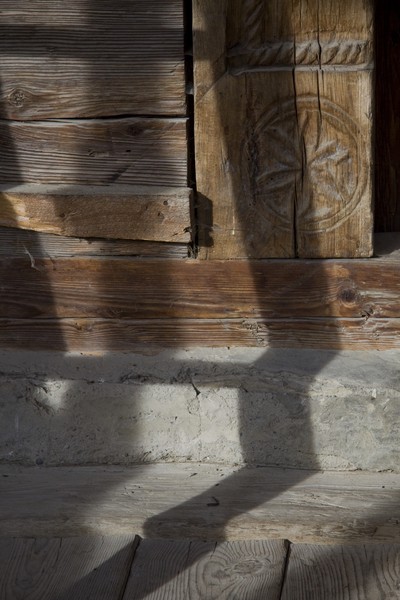
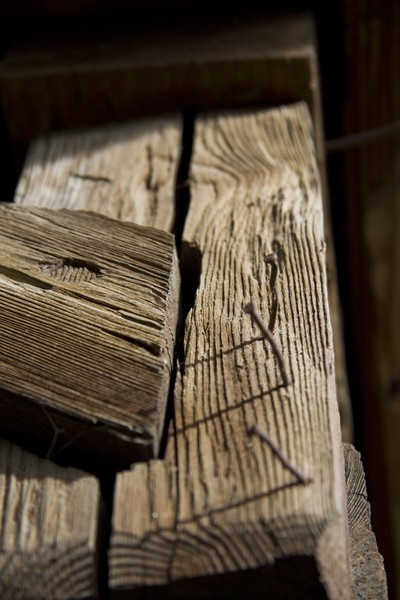
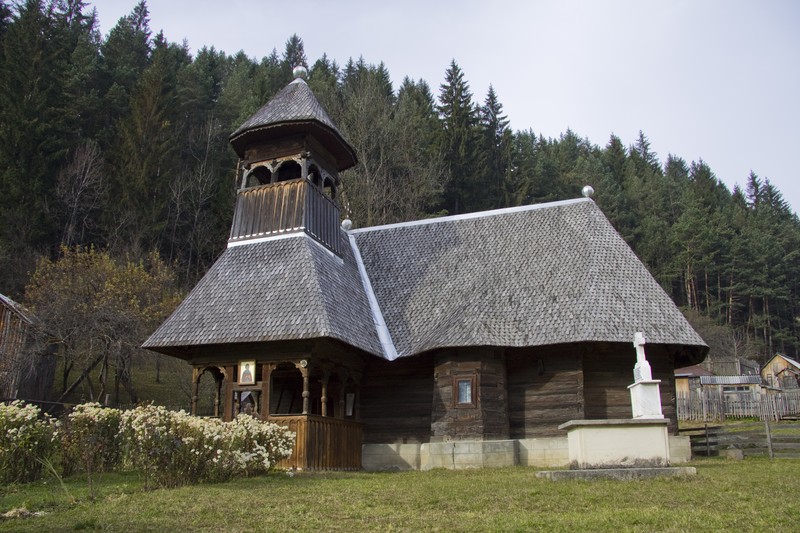
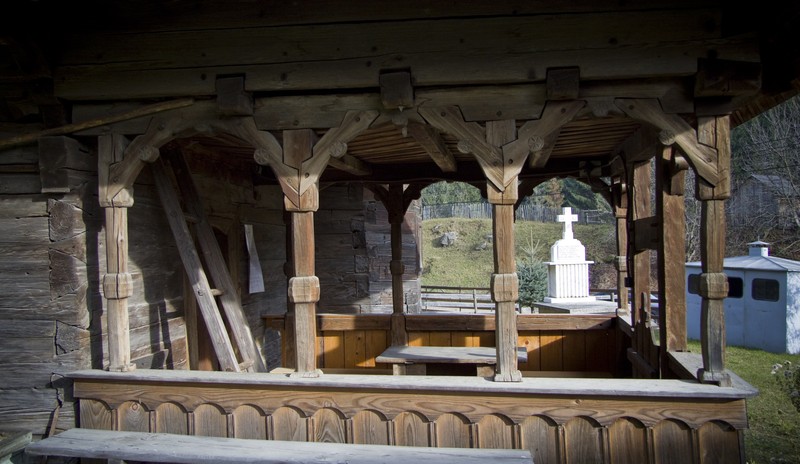
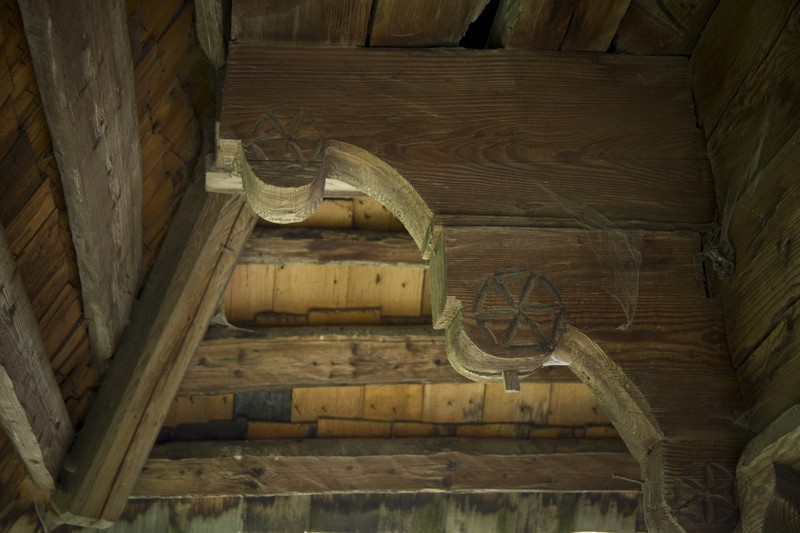
The beams supporting the roof are decorated with beak-shaped ends and incised rosettes, the door frames are made of elm wood and adorned with raised cord motifs symbolising the sun and light, and the domes are painted red and black and decorated with rosettes and dotted arches. Another interesting motif appears on the sanctuary vault, where the two colours alternate to create a chequerboard pattern.
The church’s original iconostasis was painted by Ion Zugravul in 1837, while the iconostasis now inside the church was made in 1853.
Particularly noteworthy are the Transylvanian icons painted on glass, which date from the beginning of the last century, a Psalter whose pages bear a note written by the grandfather of the great storyteller Ion Creangă, and a bowl made of birch bark. Alongside these objects, visitors to the church in Farcașa can also admire an 18th-century folk-style icon painted on wood with an uneven plaster coating, featuring an original composition depicting the Resurrection of Jesus.
More on the same topic

Ethnographic museums, treasures of local history and traditions
Ethnographic museums are true treasures and expressions of love for traditions, folklore, and spirituality of the places, and so is the Ethnographic Museum Casa Bunicilor in the village of Mitocul Bălan, Crăcăoani commune.

Neamț receives five nominations across four categories in Destinația Anului
We have good news for everyone who loves Neamț County and all its beauty: it is among the finalists in the Destinația Anului 2024 competition, with five nominations across four categories: Piatra Neamț in the Inspiring Cities category.

The Story of the Seven Miraculous Icons of the Holy Virgin and Saint Anne from Neamț Land
Renowned not only for its beauty and historical significance but also called the “Jerusalem of Romanian Orthodoxy,” Neamț Monastery houses the miraculous icon of Virgin Mary with three hands…