“Sfântul Gheorghe” Wooden Church in Galu, Poiana Teiului commune
The wooden church in Galu stands in the village cemetery and is dedicated to “Saint Gheorghe”. According to an inscription above the porch, it dates from 1918, but a note in a Gospel book printed in București states that it “… was donated… to the church in the village of Galu… in the year 1780, November 8”.
This has given rise to several hypotheses: the church may be older than believed and have undergone repairs in 1818, or the present church may have been built on the site of a place of worship dating from before 1780.
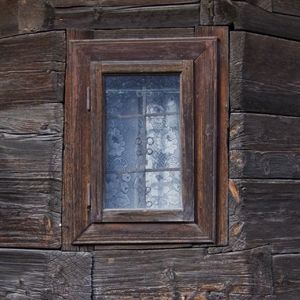
The church was built on a cruciform plan extending southwards, with an open porch and four small wooden columns on each side flanking the entrance. On the exterior, the wooden shingle covering allows all the building’s main elements to stand out. The sanctuary, side apses and square bell chamber above the porch can be clearly distinguished. The fir-beam walls are also distinctive: their dovetail joints highlight the skill of the craftsmen who worked here using only wooden pegs.
Inside, the church is lined with fir boards and divided by a wall of thick planks with an arched opening. This brings out the structure of the ceiling and vaults: a flat ceiling in the narthex and vaults formed from curved sections on an octagonal plan in the nave and sanctuary. The iconostasis was made by the craftsman Ion Zugravul, and its carved decoration displays a splendid combination of folk motifs characteristic of the Bistrița Valley.
The church is built in the Moldavian style but shows Transylvanian influences, reflecting the large-scale migration from Transilvania to the Bistrița Valley at the end of the 18th century. This monument to folk art impresses with features rarely found together in a single building: the exclusive use of wood, even in the joints, balanced miniature proportions, purity of style and skilled craftsmanship.
More on the same topic

Ethnographic museums, treasures of local history and traditions
Ethnographic museums are true treasures and expressions of love for traditions, folklore, and spirituality of the places, and so is the Ethnographic Museum Casa Bunicilor in the village of Mitocul Bălan, Crăcăoani commune.

Neamț receives five nominations across four categories in Destinația Anului
We have good news for everyone who loves Neamț County and all its beauty: it is among the finalists in the Destinația Anului 2024 competition, with five nominations across four categories: Piatra Neamț in the Inspiring Cities category.

The Story of the Seven Miraculous Icons of the Holy Virgin and Saint Anne from Neamț Land
Renowned not only for its beauty and historical significance but also called the “Jerusalem of Romanian Orthodoxy,” Neamț Monastery houses the miraculous icon of Virgin Mary with three hands…