Almaș Monastery – Neamț County
Almaș Monastery
Location: Almaș Monastery lies in the valley of the Almaș stream in Gârcina commune, in a glade at the foot of a wooded hill, approximately 12 km north-west of the town of Piatra Neamț and at an altitude of 510 m
Address: Almaș village, Gârcina commune, Neamț county Tel: 0744694789, 0233242240 Web: www.manastireaalmas.ro Patronal feast of Almaș Monastery: “All Saints' Sunday” Year of construction: 1659, by Vasile and Maria Almaș
History of Almaș Monastery
The monastery at Almaș has its origins in an old monastic community dating from the 15th century, led by the hermit Vasile Almaș, who came from Tara Hategului. With the help of local freeholders, he built a wooden chapel in 1659, dedicated to Saint Nicolae, and adorned it with the large icons and iconostasis brought from the church in the village he had been forced to leave in exile. These religious objects survive to this day and can be seen in the museum of Almaș Monastery.
Local craftsmen Vasile Gaman, Gheorghe Ursu and Moroiu Constantin carved the iconostasis and furniture from oak.
Almaș Monastery, Neamț County
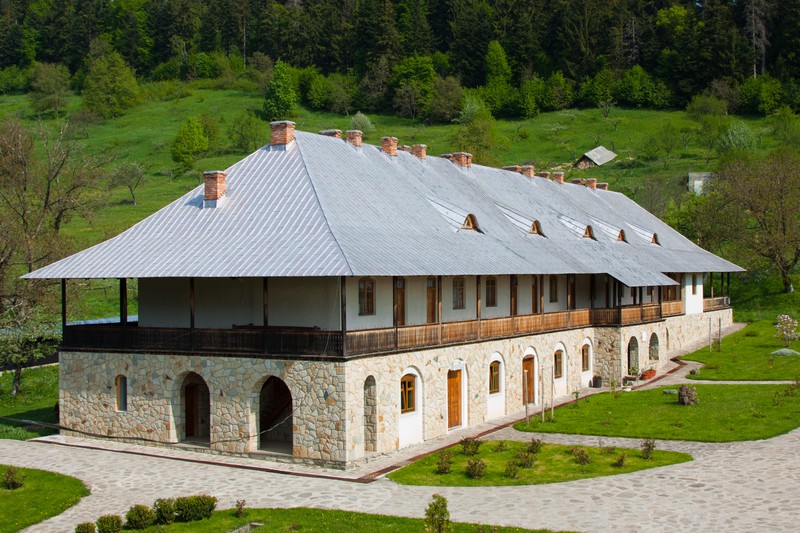
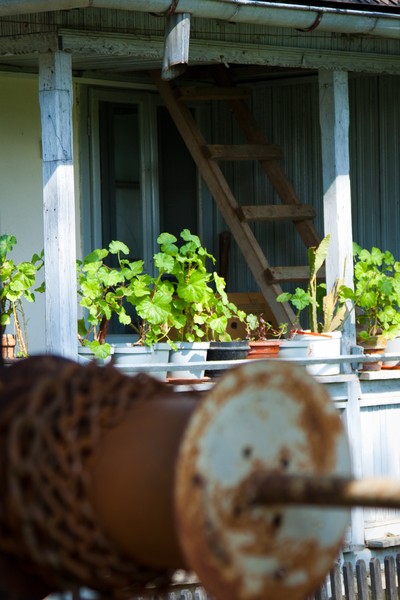
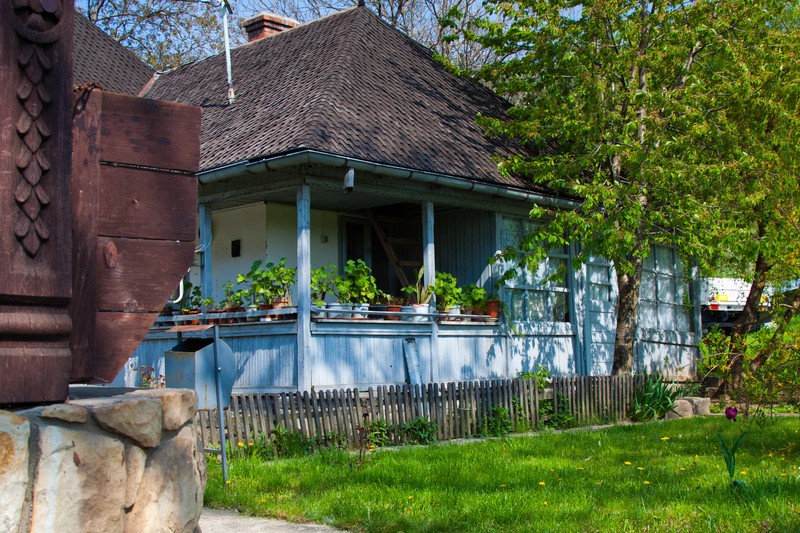
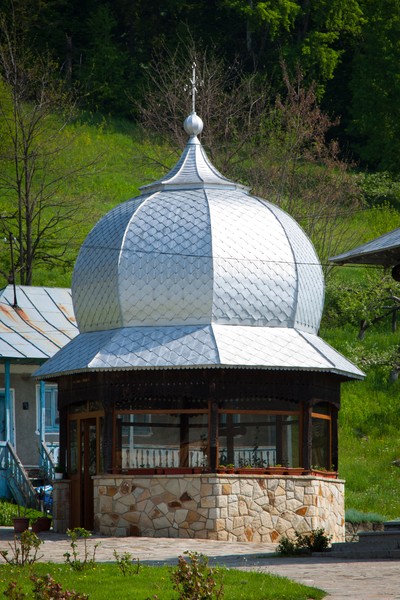
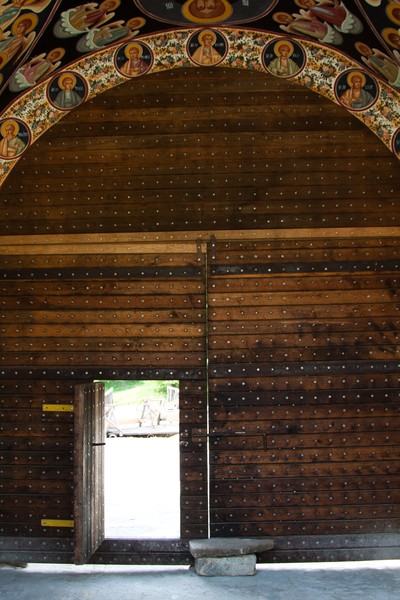
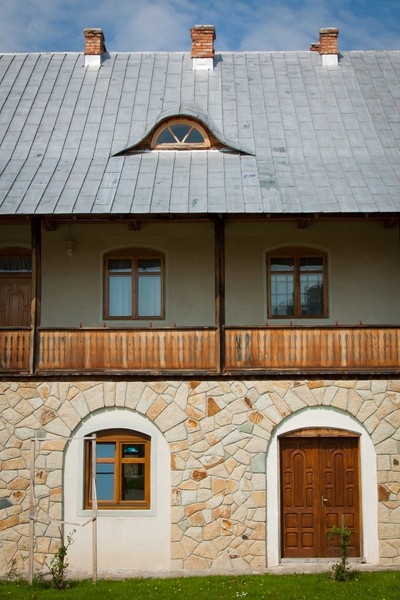
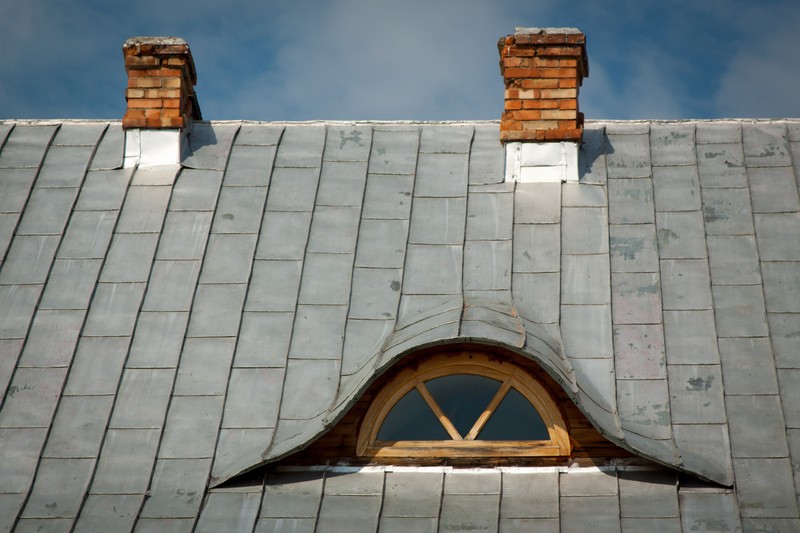
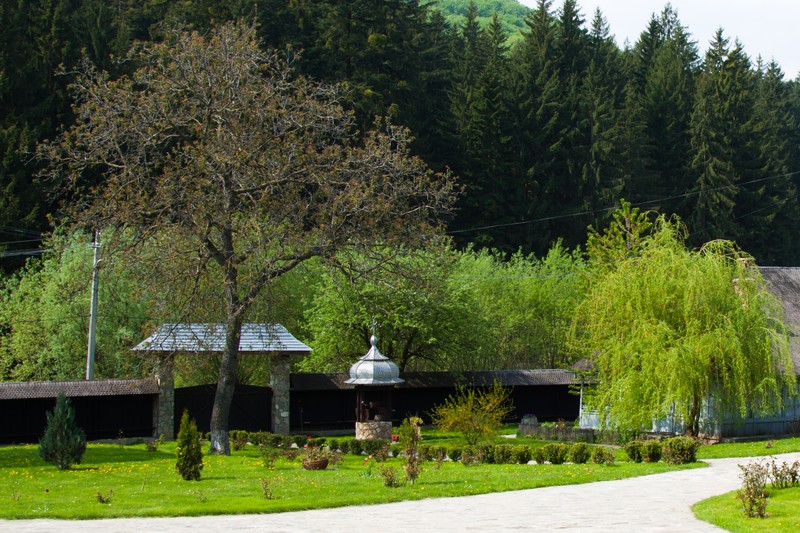
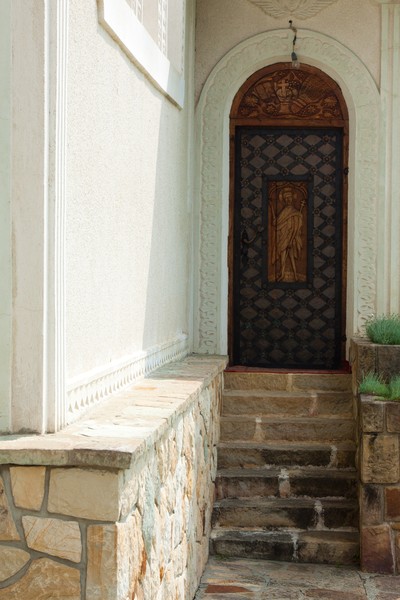
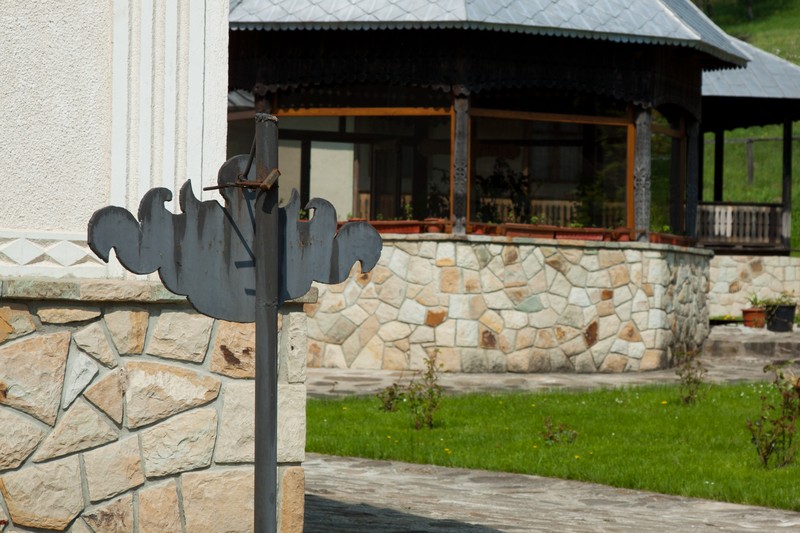
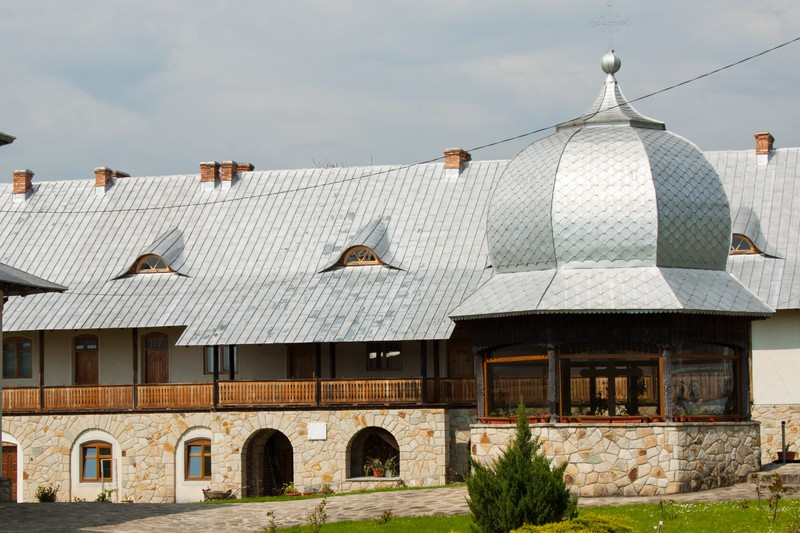
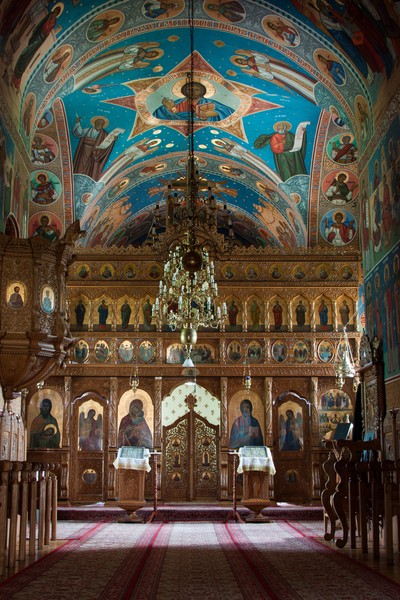
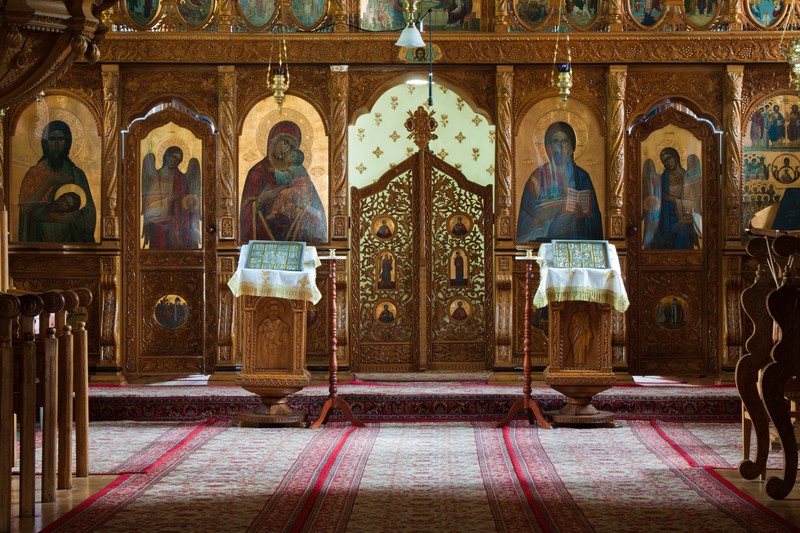
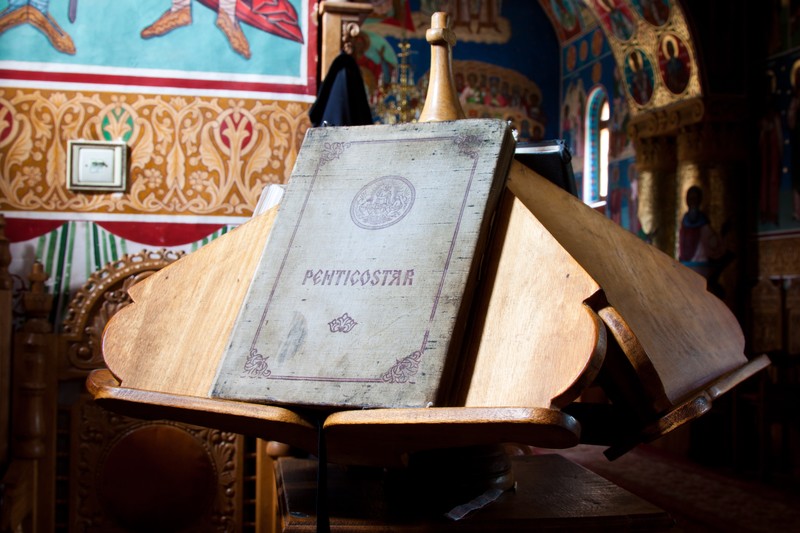
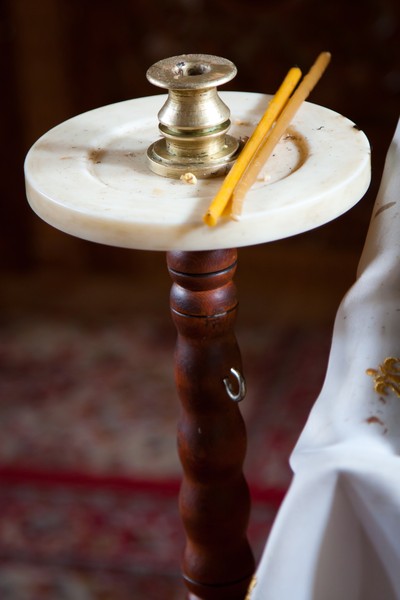

Later, the chapel of Almaș Monastery, which had become the place of prayer for Almaș Hermitage, was destroyed by the Tatars, an attack in which Maria Almaș, wife of the founder Vasile Almaș, also lost her life. In 1715, Lady Ecaterina Cantacuzino, wife of the sword-bearer Iordache Cantacuzino, rebuilt the wooden place of worship dedicated to Saint Nicolae.
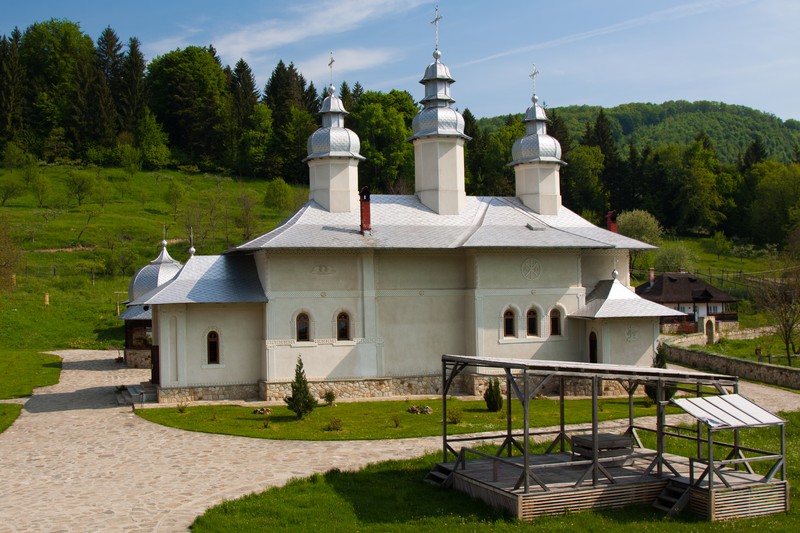
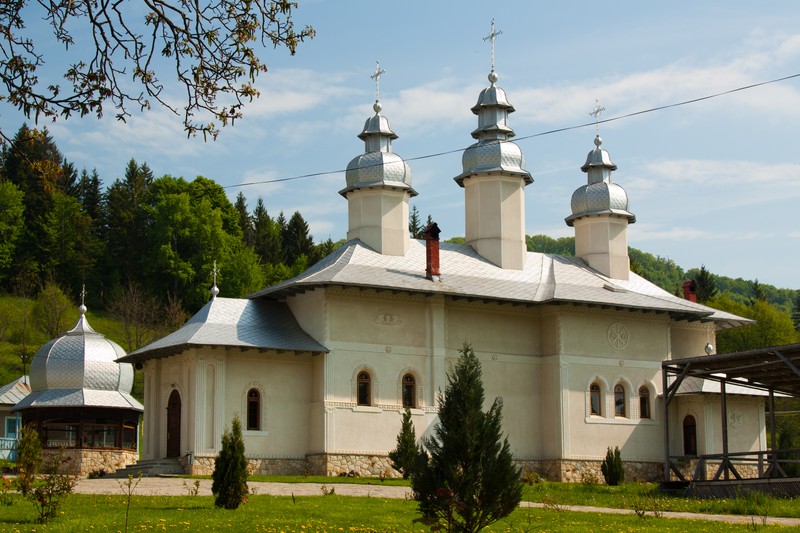
Like almost all the monasteries in Neamț County, Almaș Monastery was plundered by the Eterists in 1821, and the monks were tortured and driven out. The church, which can still be admired within the monastery today, was built in stone, with work beginning in 1821, and was founded by the family of the chancellor Bals. It was dedicated to All Saints' Sunday. Later, Prince Constantin Mavrocordat continued the construction of the narthex and endowed the monastery with several properties and estates.
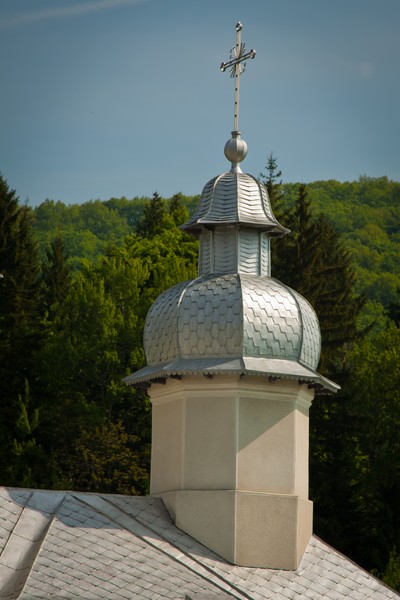
The church has distinctive architecture. Built in the shape of a cross, it has three towers along an east-west axis, with the central tower standing taller than the others. Outside, two porches attached to the sanctuary on its southern and northern sides serve as a vestry and a room for preparing the Eucharistic gifts. Although originally a monastic complex for monks, it became home to nuns following its reconstruction in 1821. The monastery's first abbess was Glafira Holban, followed by the nun Suzana, sister of Melchisedec Stefanescu, Bishop of Roman.
Almaș Monastery remained active until 1959, when it was closed under Decree 410 and the nuns were forced to leave for the monasteries of Văratec and Agapia. An important aspect of this holy place's history is that, despite the oppression and orders imposed during the Phanariot regime, services were never held here in Greek.
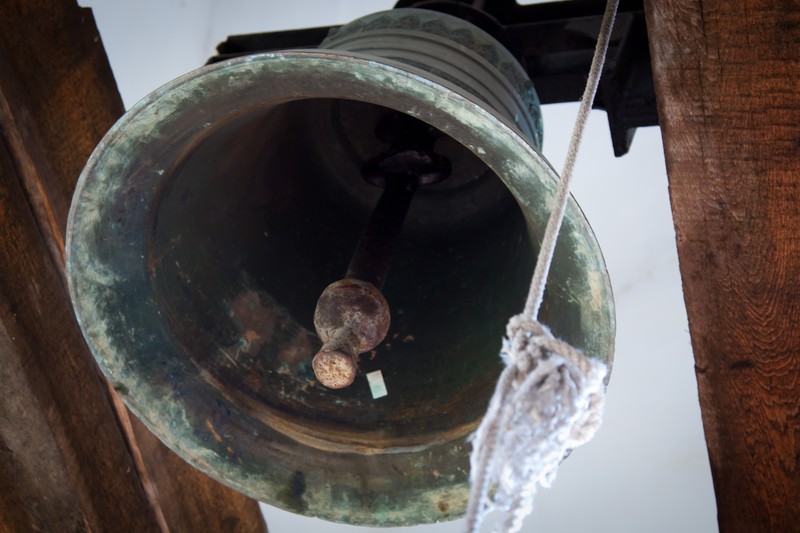
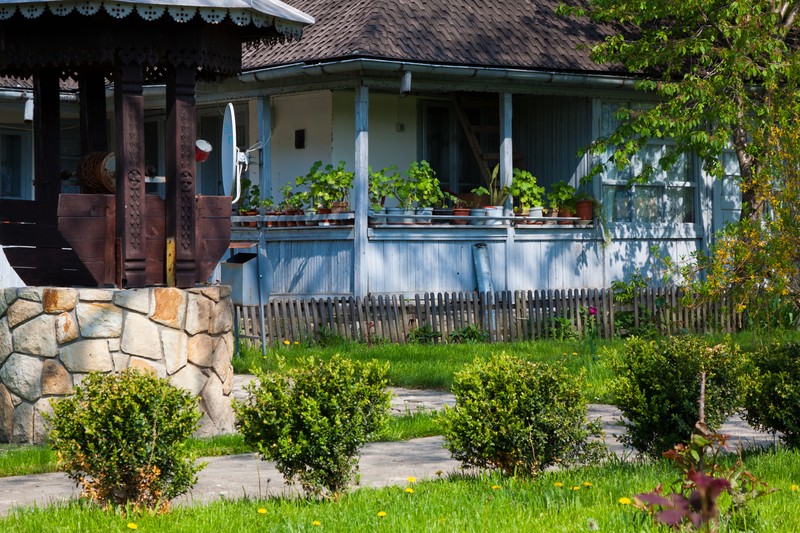
On 12 January 1987, the monastic settlement at Almaș was re-established as a hermitage for monks, with Archimandrite Zenovie Ghidescu as abbot. Work then began to restore the hermitage and the outbuildings within the holy site. Of the old buildings, the bell tower that guarded the entrance to the grounds survives today, as does a small peasant house containing the “Saint Nicolae” Chapel, built in 1725.
Holy Synod Decision 5057 of 22 June 1990 elevated the hermitage to the status of a monastery, with Archimandrite Laurentiu Nita as abbot. The church was painted by the artists Morosanu, Bratiloveanu and Stancu from Suceava between 1988-1995. Consecrated by His Eminence Daniel, Patriarch of the Romanian Orthodox Church, on 1 October 1995, the church of Almaș Monastery was dedicated to the Protection of the Mother of God.
More on the same topic

Ethnographic museums, treasures of local history and traditions
Ethnographic museums are true treasures and expressions of love for traditions, folklore, and spirituality of the places, and so is the Ethnographic Museum Casa Bunicilor in the village of Mitocul Bălan, Crăcăoani commune.

Neamț receives five nominations across four categories in Destinația Anului
We have good news for everyone who loves Neamț County and all its beauty: it is among the finalists in the Destinația Anului 2024 competition, with five nominations across four categories: Piatra Neamț in the Inspiring Cities category.

The Story of the Seven Miraculous Icons of the Holy Virgin and Saint Anne from Neamț Land
Renowned not only for its beauty and historical significance but also called the “Jerusalem of Romanian Orthodoxy,” Neamț Monastery houses the miraculous icon of Virgin Mary with three hands…