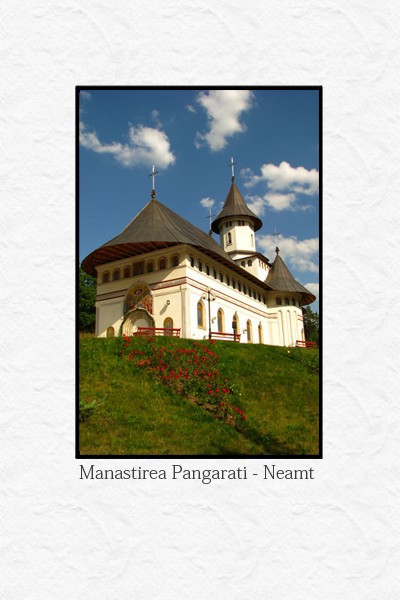
Pângărați Monastery – Neamț County
Pângărați Monastery, a religious foundation with a long tradition in the Bistrita Valley, stands on DN15 Piatra Neamț – Bicaz, near the Dimitrie Leonida hydroelectric power station at Stejaru and Bisericani, east of Botosanu Mountain and on the left bank of the Pângărați stream. The monastery is close to Bistrița (one of the oldest monasteries in Moldavia), Bisericani (named after the word “bisericosi”, meaning devout, which described its first monks), and on the way to Petru Voda Monastery (known for Father Iustin Parvu). Address: Pângărați commune, Neamț County, postcode 617305 Tel: 0040233240337 Fax: 0040233240502 E-mail: teofil@manastireapangarati.ro Web: www.manastireapangarati.ro Patronal feast of Pângărați Monastery: Saint Dimitrie the Great Martyr Year of construction: 1560, by Prince Alexandru Lapusneanu
Pângărați Monastery – a brief history
Pângărați Monastery dates back to the 15th century, specifically to 1460, when the venerable Simeon Sihastru, one of Stephen the Great’s advisers, built the first wooden church here, dedicated to Saint Dimitrie the Great Martyr. In 1476, the church of Pângărați Monastery was burnt down by the Turks, and the monks hid in the mountains, where they remained until the war ended.
In 1560, Voivode Alexandu Lapusneanu turned the hermitage into a monastery and replaced the wooden church with a stone church of unique design, which has survived to this day. Although Pângărați Monastery initially had only a small area of land granted by Alexandru Lapusneanu, in less than a century it became one of the largest landowners in the Bistrita Valley, alongside the great monasteries of Neamț and Bistrița.
Pângărați Monastery: photographs
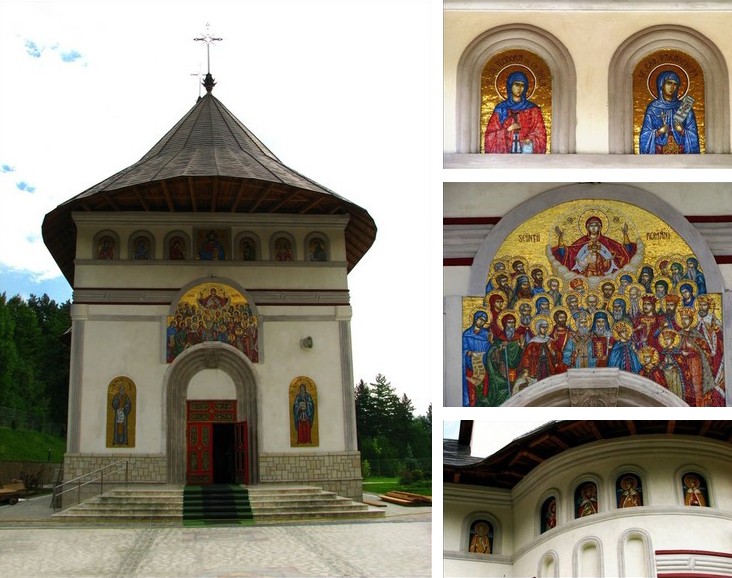
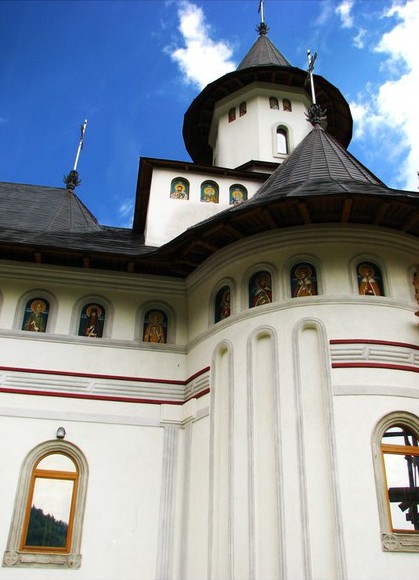
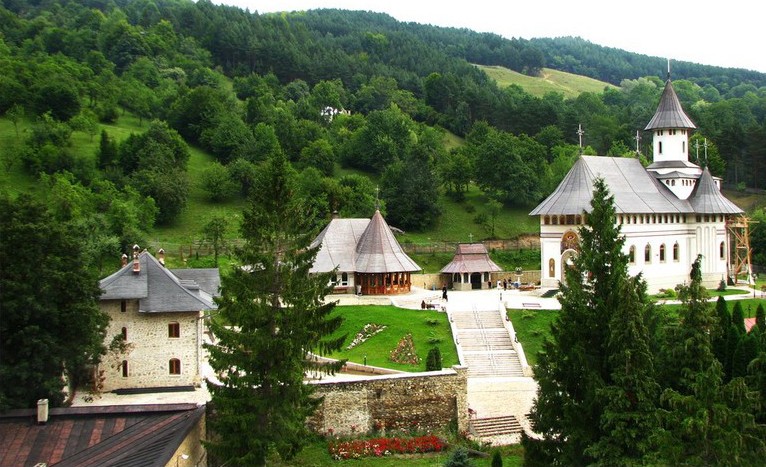
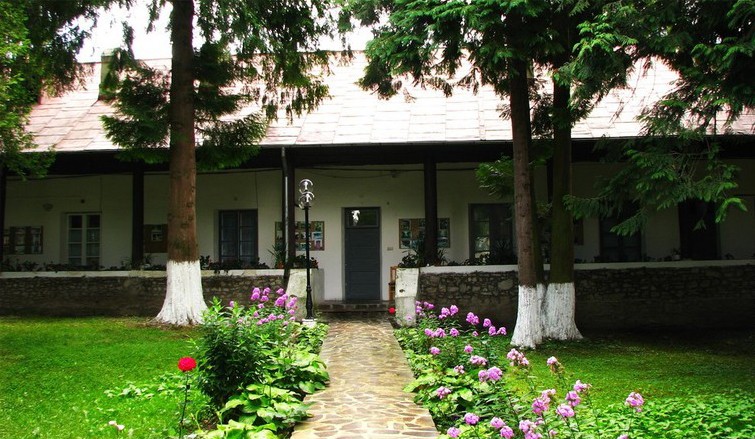
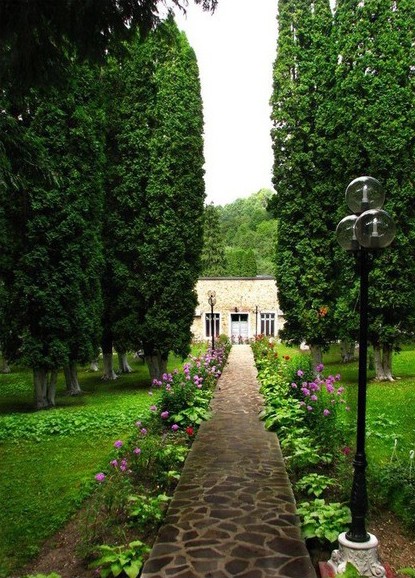
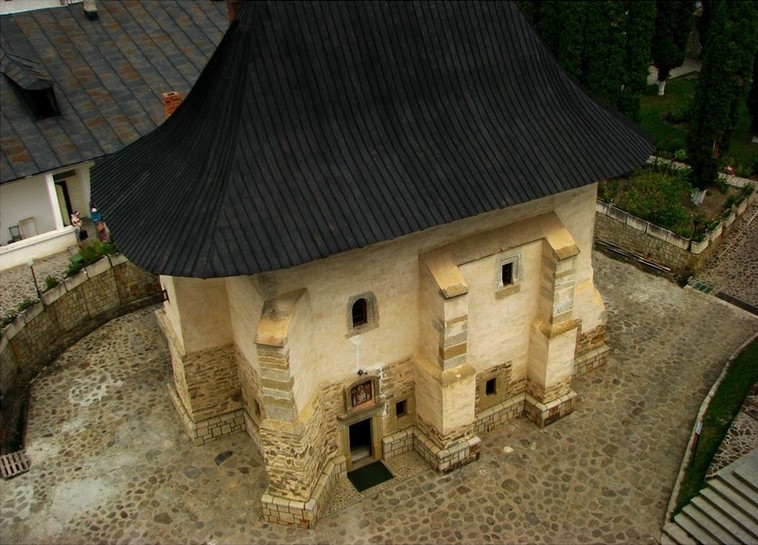
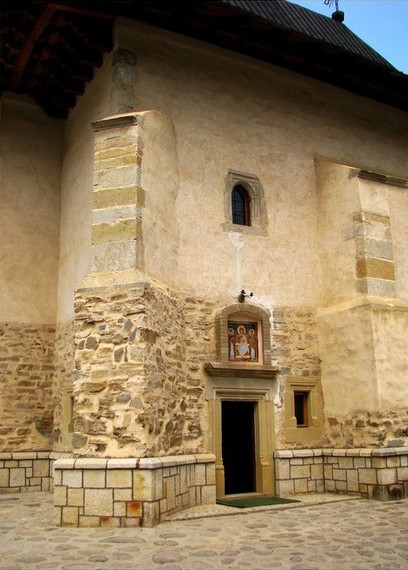
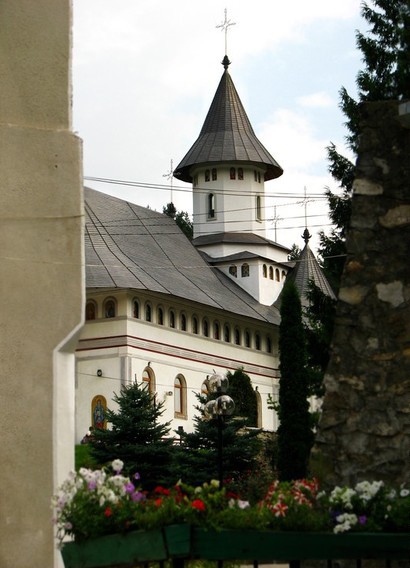
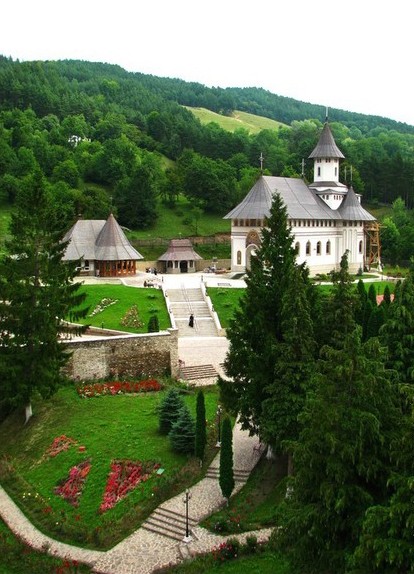
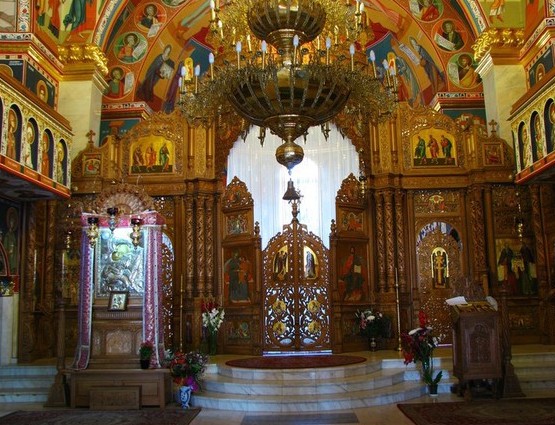
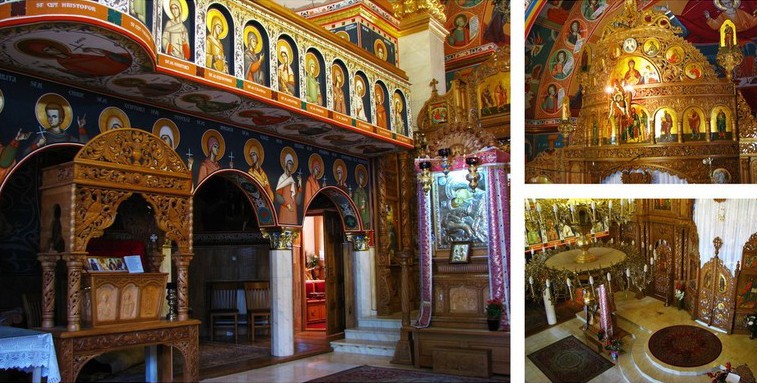
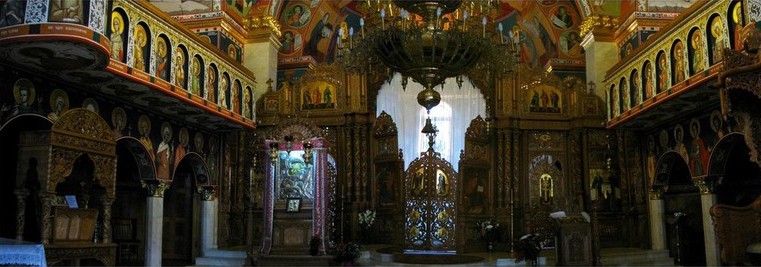
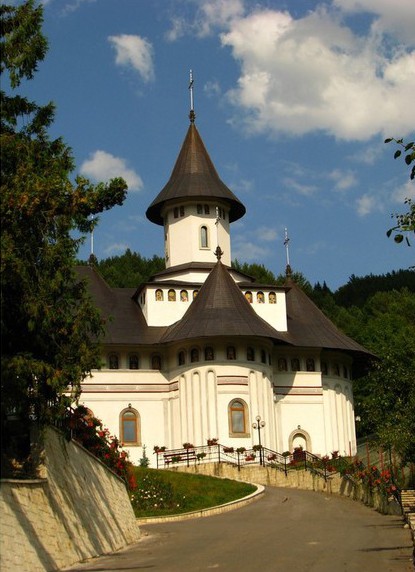
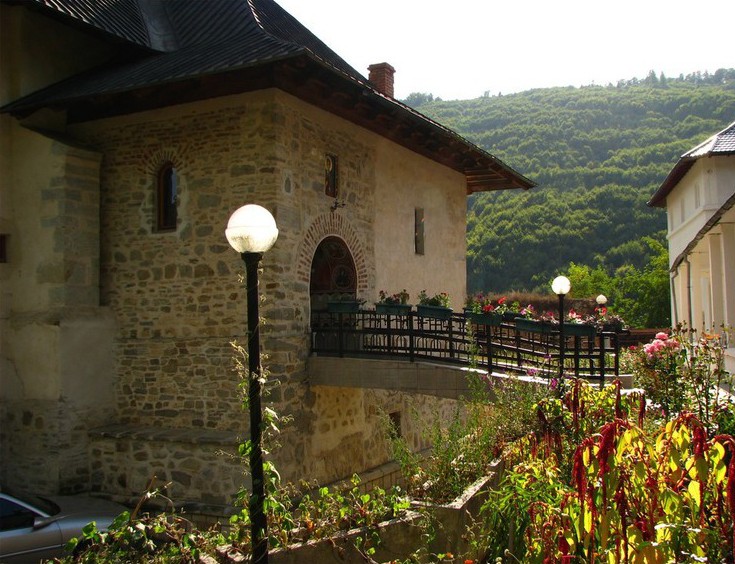
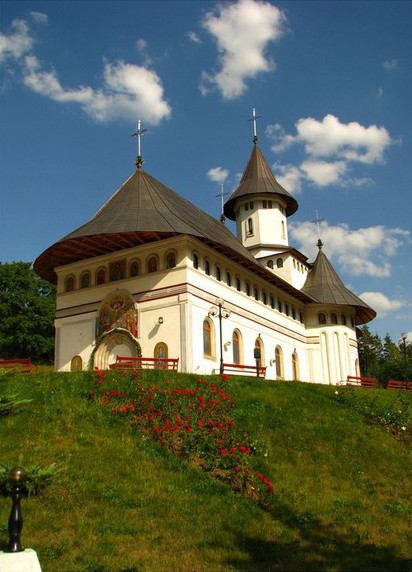
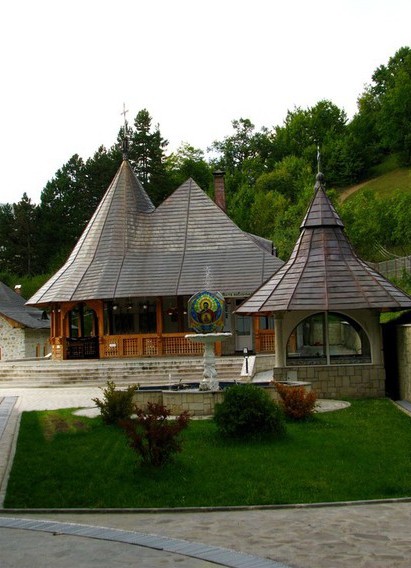
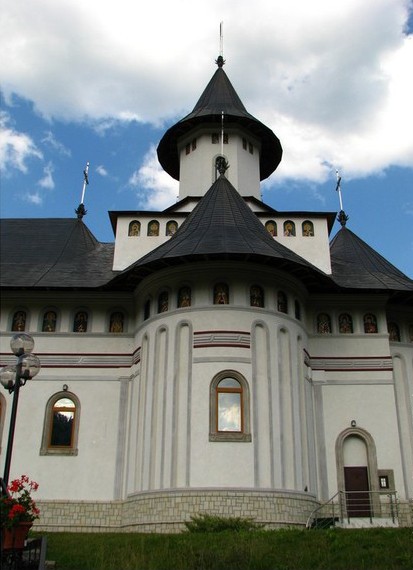
Click here to view all photo albums
According to the historian Nicolae Iorga, the monastery’s name, Pângărați, may derive from a monk called Pangratie, a hermit who gave his name to the nearby stream. The monastic settlement at Pângărați first appears under this name in a document issued by Petru Schiopul’s chancery on 9 July 1577, which mentions the fame of the icon painters at Pângărați.
Over time, the hermitage at Pângărați was restored and enlarged. In 1642, the Grand Treasurer Dumitru Soldan built a vestry and the bell tower, while in the 19th century, Abbot Macarie converted the concealed basement chamber into a church and built the imposing block of monastic cells to the south-west, housing the abbot’s quarters, refectory and library. In 1850, Abbot Varnava restored Pângărați Monastery and constructed new buildings.
After 1863, monastic life at Pângărați Monastery gradually declined, although services and spiritual life have continued uninterrupted to this day. In 1960, the monastery was closed, and until 1990 the monastic complex housed the Stejarul Biological and Geographical Research Station. On 23 May 1991, by a decision of the Holy Synod, Pângărați Monastery was established as a monastery for monks, and restoration work began on the roof, exterior façades, windows and bell tower.
Since 1996, Father Abbot Teofil Lefter has worked to restore the former beauty of the historic monastic foundation at Pângărați, building an imposing church where God can be glorified and the founders, clergy and faithful who laboured in this monastery can be commemorated.
The Heritage of Pângărați Monastery
The old church at Pângărați Monastery is a substantial stone building that appears large and tall from the outside, but is small and less spacious inside. In fact, the building houses two churches, one above the other – the lower church in the basement, entered from the south and originally dedicated to the Holy Apostles Petru and Pavel, and the upper church, entered from the north and dedicated to Saint Dimitrie the Great Martyr.
The small lower church is actually a concealed chamber converted into a low-ceilinged chapel, with a narthex, nave and sanctuary, all with vaulted ceilings. The upper church has a cruciform plan and no tower. Its sanctuary is lit by two windows, one facing east and the other north, in the area where the Eucharistic gifts are prepared. The wooden iconostasis was carved and painted in 1778 by the monastery’s abbot, while the nave has very narrow, shallow apses.
The old church at Pângărați has an architectural design unique among the monasteries of Moldavia and Romania. The windows are small, double wooden windows, with metal grilles on the outside. The porch is lit by a rectangular window to the west and another to the north. The church’s exterior façades are plastered and whitewashed in an off-white shade.
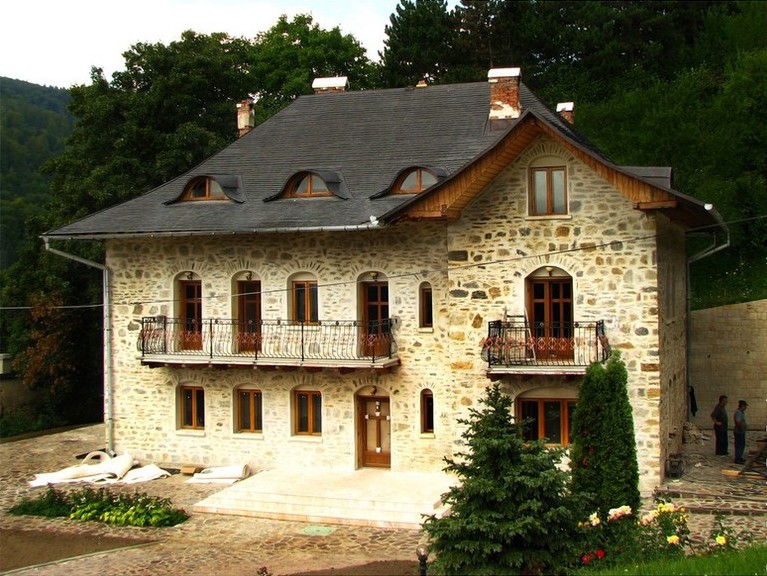
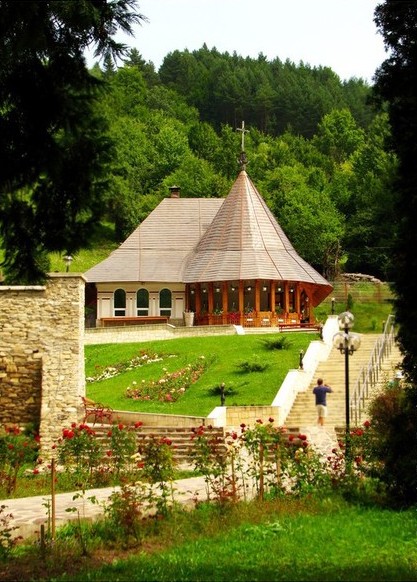
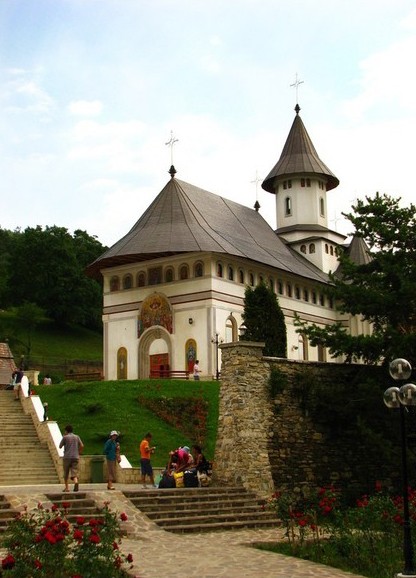
The monastic complex at Pângărați is enclosed on the west and east by a stone wall 5 m high. Inside, concrete paths are bordered by roses of many colours. After 1992, another church was built within the complex, and the former palace was renovated to house the abbot’s quarters.
More on the same topic

Ethnographic museums, treasures of local history and traditions
Ethnographic museums are true treasures and expressions of love for traditions, folklore, and spirituality of the places, and so is the Ethnographic Museum Casa Bunicilor in the village of Mitocul Bălan, Crăcăoani commune.

Neamț receives five nominations across four categories in Destinația Anului
We have good news for everyone who loves Neamț County and all its beauty: it is among the finalists in the Destinația Anului 2024 competition, with five nominations across four categories: Piatra Neamț in the Inspiring Cities category.

The Story of the Seven Miraculous Icons of the Holy Virgin and Saint Anne from Neamț Land
Renowned not only for its beauty and historical significance but also called the “Jerusalem of Romanian Orthodoxy,” Neamț Monastery houses the miraculous icon of Virgin Mary with three hands…