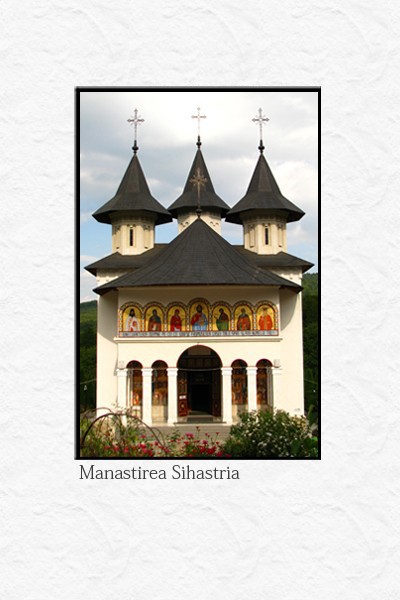
Sihăstria Monastery – Neamț County
Sihăstria Monastery is in the northern part of Neamț County, 22 km from the town of Târgu Neamț, on the road towards Pipirig – Vatra Dornei. The road to the monastery branches off after 15 km, crosses the Ozana and follows the valley of the Secu stream. After 4 km past rocks and centuries-old oaks, Secu Monastery comes into view, and another 3 km south brings you to Sihăstria Monastery in all its splendour. Over its three centuries of existence, the architecture of Sihăstria Monastery has faithfully continued the classical Moldavian style, which has survived into this late period despite so many changes. Address: Vanatori commune, Neamț County, Postcode 617500 Tel: 0233251896 0233251897 Fax: 0233251978 Web:http://sihastria.mmb.ro/ Patronal feast of Sihastria Monastery: “Nativity of the Mother of God” (8 September) Year of construction: 1655, by the hermit Atanasie
Sihăstria Monastery – a brief history
The first church at Sihastria Monastery was founded in 1655 by Metropolitan Varlaam Motoc, who then provided it with monastic cells and other necessities. The chosen site was “Atanasie's Glade”, as it offered favourable conditions for a hermit's life, and its first inhabitants were seven hermits from Neamț Monastery who had retreated to the area long before.
At the beginning of the 18th century, repeated Tatar raids left Sihăstria Monastery almost in ruins. In 1734, Bishop Ghedeon of Roman built a sturdier, more spacious church, which he placed under the authority of nearby Secu Monastery, as was customary at the time. In 1821, the bloody battle between Alexandru Ipsilanti's bands of Hetairists and the Turks ended with the burning and plundering of the surrounding monasteries and the church at Sihastria Monastery.
With the support of Metropolitan Veniamin Costachi, work to rebuild the church at Sihastria Monastery began in 1824 and lasted 2 years. The restoration was led by the renowned “journeyman stonemason” Nicolae Cerneschi from Botosani, who contributed both his skills and substantial sums of money, thus becoming Sihastria Monastery's third principal founder. New religious objects were made in the workshops of Neamț Monastery: silver icon lamps and censers, liturgical vessels and two bells needed for the hermitage to resume its activities.
In 1837, a wooden chapel dedicated to the Holy Forebears Ioachim and Ana was built at Sihastria Monastery for winter services, along with two blocks of monastic cells on the eastern and northern sides of the monastery, and in 1842 a fountain with two spouts was built to bring water into the monastery grounds. A devastating fire in 1941 destroyed the wooden chapel and some of the monastic cells, prompting several monks to leave for other monasteries. In 1942, Father Cleopa was elected acting abbot because the abbot, Father Ioanichie, was elderly and ill.
With the support of Neamț Monastery, he had restored the grounds and the burnt monastic cells by 1944, and built two further blocks of cells with over 20 rooms. Father Cleopa strengthened the spiritual life of Sihastria Monastery and built a new chapel in 1946. He remained abbot until 1949, when he was sent to Slatina Monastery as abbot with a group of 23 fathers, but returned permanently to Sihăstria Monastery on 29 September 1964. Sihăstria Monastery is closely linked to the life of Father Cleopa, who, alongside Father Paisie Olaru and Father Iustin Parvu from Petru Voda, is one of the great spiritual fathers of Neamț County.
The main church at Sihastria Monastery, dedicated to the “Nativity of the Mother of God”, was painted by Protos Bartolomeu Florea and reconsecrated on 16 October 1988. The service and Hierarchical Divine Liturgy were celebrated by His Beatitude Father Teoctist, Patriarch of the Romanian Orthodox Church, together with His Grace Eftimie, Bishop of Roman and Husi, joined by over 15 priests and deacons amid thousands of worshippers.
The “Saint Teodora” Cathedral was also built within the Sihastria monastic complex in 1998, dedicated to the saint from Sihla Hermitage.
The Heritage of Sihastria Monastery
Sihăstria Monastery houses religious objects, liturgical vessels and a library of great historical and cultural value. These include a 17th-century icon of the Mother of God and Child painted on wood, an icon with a skilfully crafted silver covering made by “Porfirii the painter” in 1797, and other remarkable 18th-century icons with carved and painted frames. Nearby, you can also visit the collections of religious objects at Agapia, Secu and Văratec monasteries. Sihastria Monastery's liturgical vessels and other silver objects date from the 18th century and were carved by monks. The monastery library holds over a thousand volumes printed in the 17th–18th centuries, many supplied by the printing house at Neamț Monastery.
Photos of Sihăstria Monastery
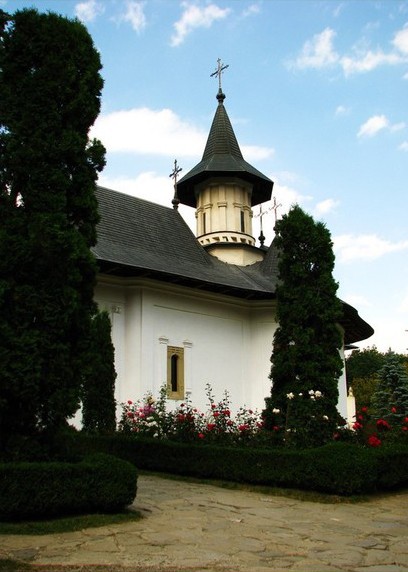
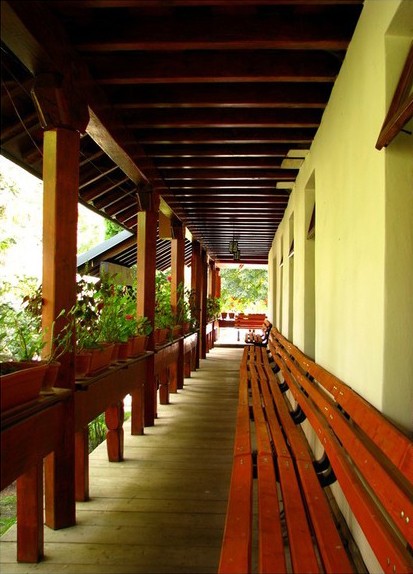
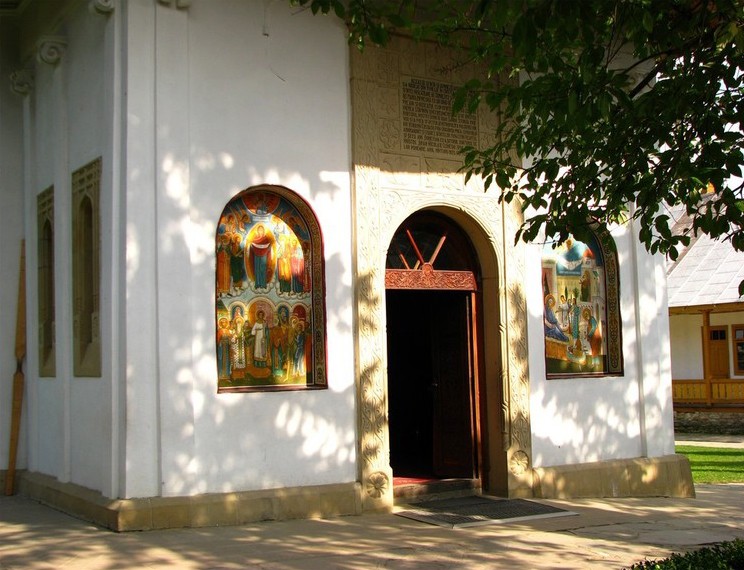
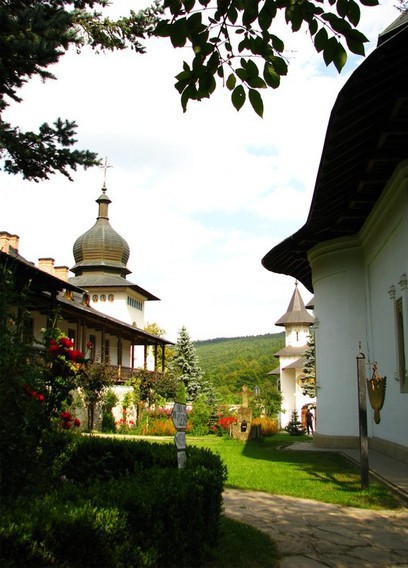
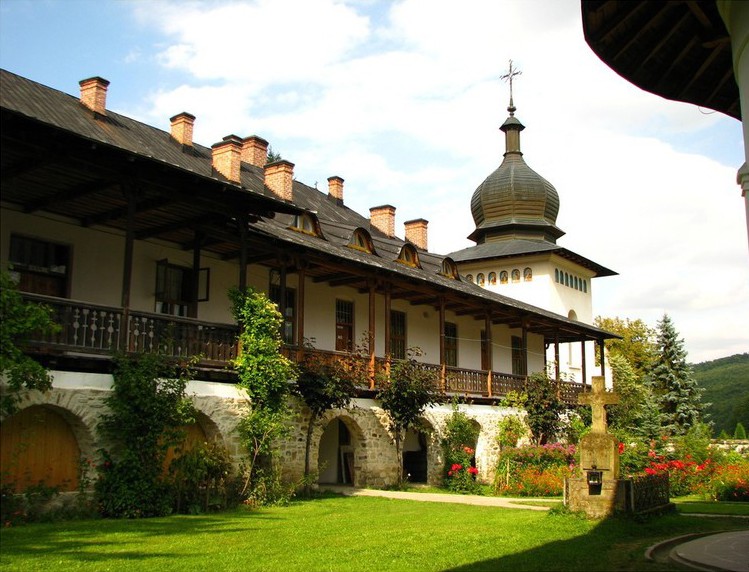
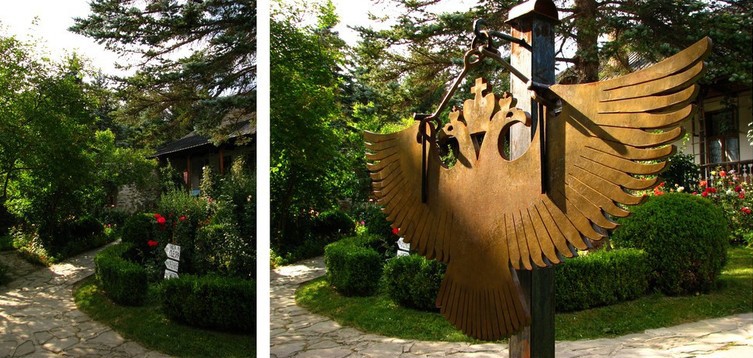
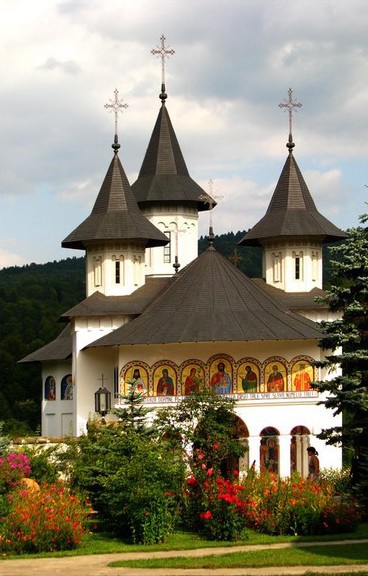
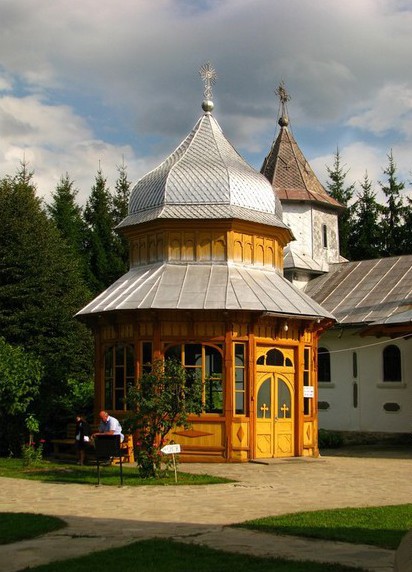
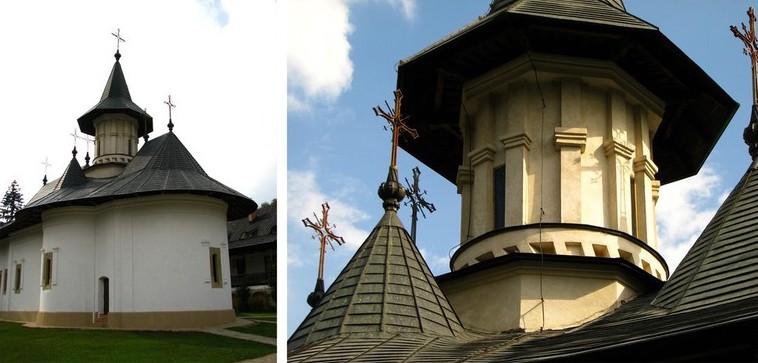
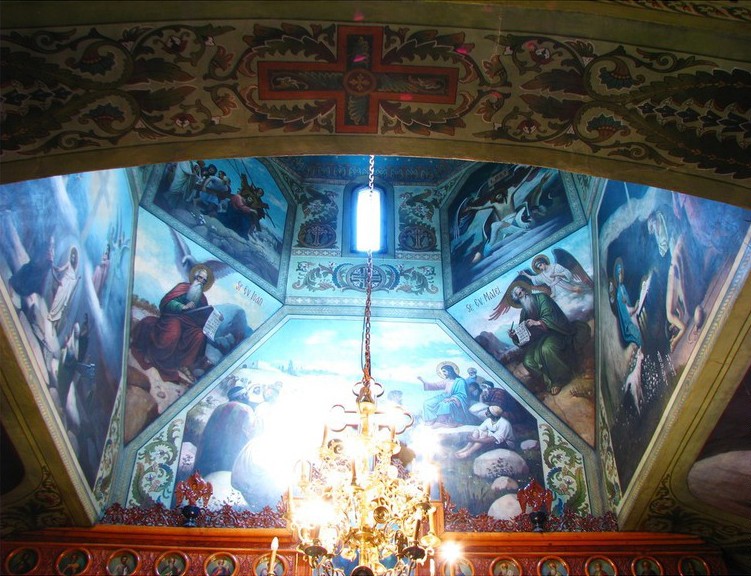
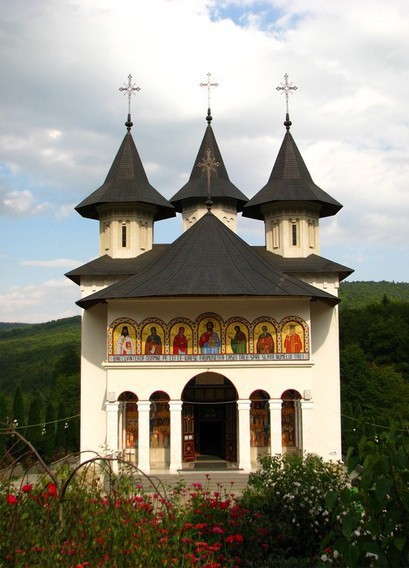
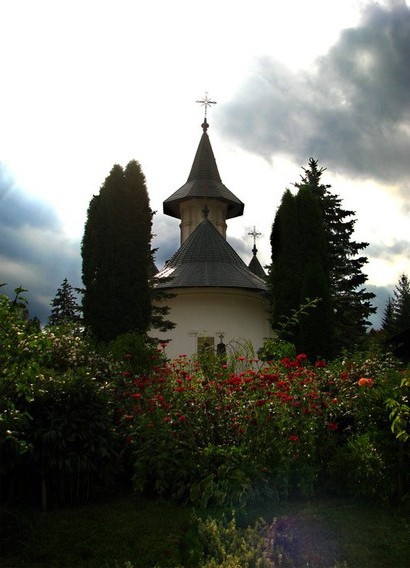
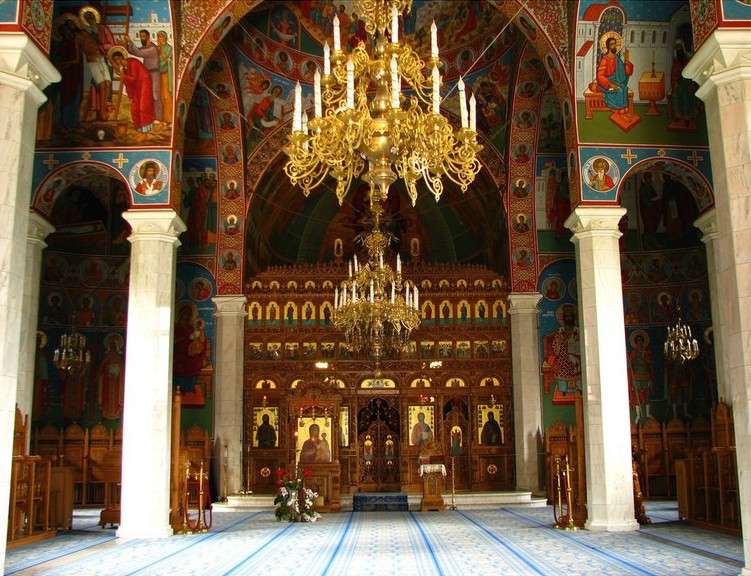
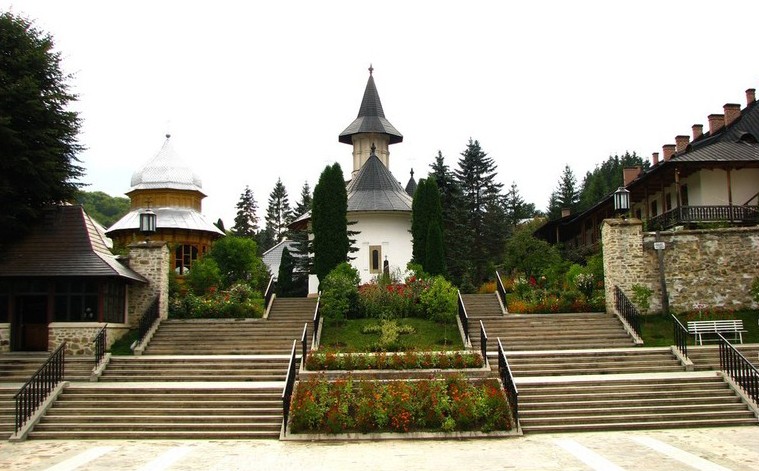
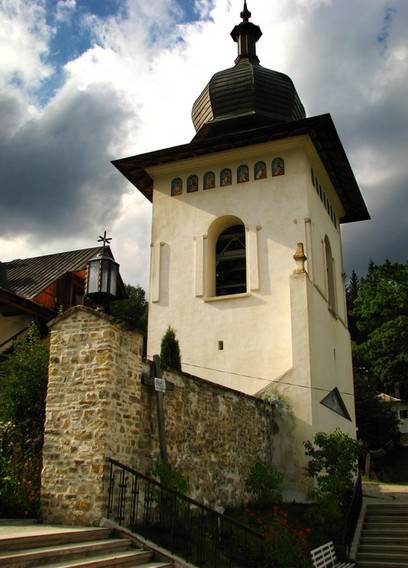
Click here to view all photo albums
Over the years, the monks at Sihastria Monastery have illuminated and copied books of worship and patristic teachings, continuing the longstanding cultural tradition of Neamț calligraphers. Among them was the schema-monk Vasile, a skilled calligrapher who in 1820 copied a manuscript miscellany containing philokalic selections from the Holy Fathers on prayer of the mind.
The Cemetery and Church at Sihastria Monastery
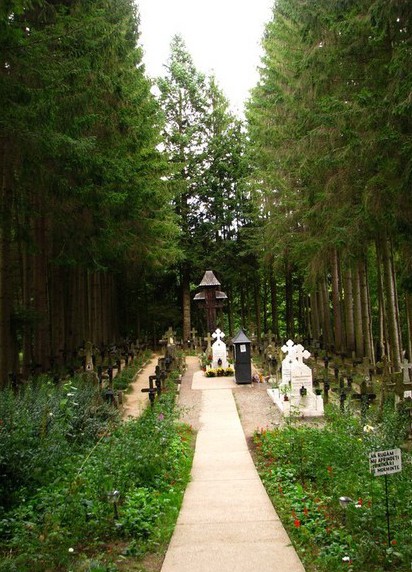
Sihăstria Monastery is a pilgrimage site that attracts dozens of worshippers each year, eager to visit the old wooden church and the cemetery where Father Cleopa and Father Paisie Olaru are buried. You can travel from Sihastria to Sihla Hermitage to see Saint Teodora's Cave by car or on foot, following the blue cross trail marker.
The cemetery church was built between 1987 and 1999, following the plan of an old wooden church dedicated to the “Holy Archangels Mihail and Gavriil” from the village of Hlapesti, in Dragomirești commune, Neamț County, which was relocated to Sihastria. The icons adorning the church are the originals, while the iconostasis was painted by Archimandrite Vartolomeu Florea. The church was consecrated on 7 August 1999 and dedicated to the “Resurrection of the Lord” and “Saint Ioan the Evangelist”. Services in this church are held only on Saturdays, from spring until late autumn, chiefly for the departed fathers buried in the cemetery.
Sihastria Monastery's cemetery was established in its current location by Father Cleopa. Between 1944-1945, the remains of monks from the three cemeteries previously at Sihastria Monastery were moved here. The cemetery contains Father Cleopa's tomb, where dozens of worshippers pray daily for the repose of his soul. Beside it is the tomb of one of Moldavia's great spiritual fathers, Father Paisie Olaru, which also receives many pilgrims.
Sihăstria Monastery is a place of worship filled with light and grace, a place of rare natural beauty and extraordinary tranquillity, and one of the important monasteries in Moldavia, Neamț County; if you manage to visit it, you will feel your soul flooded with divine grace.
More on the same topic

Ethnographic museums, treasures of local history and traditions
Ethnographic museums are true treasures and expressions of love for traditions, folklore, and spirituality of the places, and so is the Ethnographic Museum Casa Bunicilor in the village of Mitocul Bălan, Crăcăoani commune.

Neamț receives five nominations across four categories in Destinația Anului
We have good news for everyone who loves Neamț County and all its beauty: it is among the finalists in the Destinația Anului 2024 competition, with five nominations across four categories: Piatra Neamț in the Inspiring Cities category.

The Story of the Seven Miraculous Icons of the Holy Virgin and Saint Anne from Neamț Land
Renowned not only for its beauty and historical significance but also called the “Jerusalem of Romanian Orthodoxy,” Neamț Monastery houses the miraculous icon of Virgin Mary with three hands…