Pilgrimage to the Hermitages of Sihăstria Monastery in Neamț County
Neamț County is home to the most representative monastic complex in Moldavia and the whole country. One of these places of worship, which played an important role in the history of medieval Moldavia, is Sihăstria Monastery.
Set on the edge of ancient forests, on a sunny plateau tucked into the mountainside, Sihăstria Monastery is where some of the country's greatest spiritual fathers lived their monastic lives: Father Cleopa, hieroschemamonk Paisie Olaru, schemamonk Irineu Protcenco and archimandrite Ioanichie Balan.
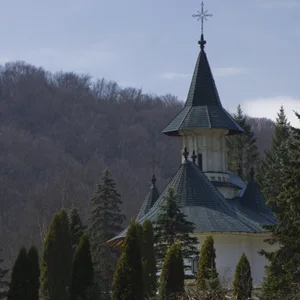
Sihăstria Monastery oversees four hermitages within Neamț County, places of prayer and work set in secluded and exceptionally beautiful surroundings. Pilgrims can visit these hermitages, built where dozens of God-loving hermits practised asceticism over the centuries.
Sihla Hermitage is situated approximately 8 km from Sihăstria Monastery (access via a forest road), in a peaceful area of ancient woodland offering varied and particularly enchanting views and landscapes. The hermitage church was built of wood in the traditional style of Moldavian churches, with a single cross-shaped tower above the nave, and its interior is divided into a sanctuary, nave and porch.
In 1763, a small church “made from a single fir tree”, just a few paces long, was built beneath the welcoming shelter of a boulder. The church is built in the shape of a ship from wooden beams, clad externally with boards and roofed with shingles. On the northern side of Sihla Mountain, a secluded path leads up to Sfânta Cuvioasă Teodora Cave. Here she practised asceticism for many years, with many tears, fasting and prayer.
Daniil Sihastrul Hermitage is situated 2 km from Sihla Hermitage, in a solitary setting with bare rocks and small caves near “Râpa lui Coroi”. As the site is secluded and difficult to reach, the hermitage was built with help from the faithful. The hermitage church, two blocks of monastic cells, bell tower and holy water pavilion were thus built from fir and oak timber.
“Inaltarea Sfintei Cruci” Hermitage lies 3 km from Sihăstria Monastery, in the glade named after the hermit Ioan, who lived in seclusion there in the 17th century. The road to the hermitage is called “Drumul Crucii” and is marked with wayside crosses painted with scenes from the final days of Jesus’s life on earth.
“Saint Mina” Hermitage at Târgu Neamț dates from 1933, when the first dependency of Sihăstria Monastery, Grași Dependency, was established here. The present hermitage was built after 1990, with a new block of monastic cells, a small brick chapel and an adjoining homestead needed by the monks. Construction of a larger church began here in 2003, dedicated to “Sfântul Mare Mucenic și Tămăduitor Pantelimon”.
In recent years, Sihăstria Monastery and these hermitages have expanded their missionary and spiritual work, welcoming many pilgrims from Romania and abroad.
More on the same topic

Ethnographic museums, treasures of local history and traditions
Ethnographic museums are true treasures and expressions of love for traditions, folklore, and spirituality of the places, and so is the Ethnographic Museum Casa Bunicilor in the village of Mitocul Bălan, Crăcăoani commune.

The Story of the Seven Miraculous Icons of the Holy Virgin and Saint Anne from Neamț Land
Renowned not only for its beauty and historical significance but also called the “Jerusalem of Romanian Orthodoxy,” Neamț Monastery houses the miraculous icon of Virgin Mary with three hands…
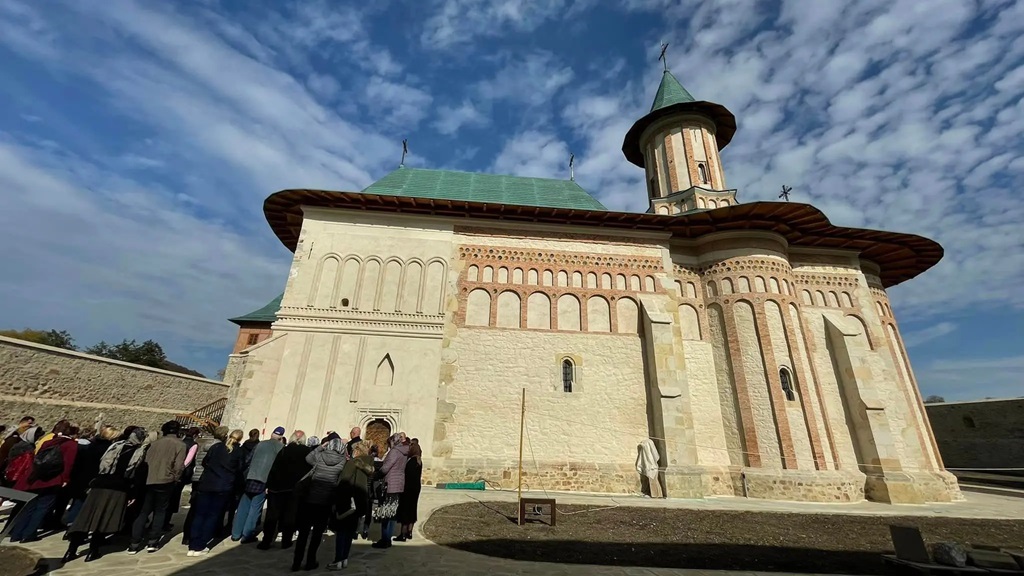
Tazlău Monastery Ensemble has been restored using European Regional Development Fund (ERDF)
After six years of hard work, the project of “reviving” one of the most prestigious establishments of Voivode Stephen the Great, in Tazlău commune, finally came to completion.