Plugușorul and the Young Men’s Plough – traditions on New Year's Eve in Neamț
In the Neamț region, traditions and customs at the turn of the year echo an ancient way of life that still survives today. This is the home of Romanian folk culture, where the accounts left by travellers have always held inestimable value. Thus, on New Year’s Eve, the following traditions and customs take place:
Plugusorul – 31 December The Plugusor tradition continues today in the villages of Neamț, differing from one ethnographic area to another. Although this celebration is known by various names such as Plugusor, Urat, Uratura de Sfintul Vasile, Buhai, Plug, Plugul Mare or Plugul flacailor, all these customs carry the same message: health for the hosts, fertility of the lands and abundance of the harvests.
The first to go out with the Plugusor are children, organised in groups of 5–10 well-wishers. From around 10:00 in the morning, they begin to visit the surrounding houses and offer their greetings. Dressed in thick clothes, with caps adorned with colourful ribbons and carrying whips and little bells tied with basil to small wooden paddles, they set off to carol for relatives and neighbours.
Along with their little bells, they also carry a buhai, without which the Plugusor tradition cannot take place. The buhai is a traditional instrument made from a small wooden tub with a sheepskin base, through which a strand of horsehair is drawn. After offering their greetings, the children are rewarded with apples, pretzels, walnuts or money.
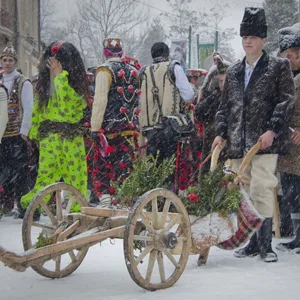
The Great Plough or “Plugul Flacailor” (31 December) The groups of the Great Plough are formed by adults. They begin making their rounds to recite New Year’s wishes on New Year’s Eve, after darkness falls. This tradition enjoys special prestige in the Neamț region, because both young people and the elderly take part in the celebration. Accompanied by musicians, the Plough troupe walks alongside the plough pulled by oxen or horses.
Alongside the swaying movement of the procession, one can also observe the festive folk costume of the Moldavian peasant. Dressed in embroidered shirts, white traditional trousers, red sashes and broad leather belts, boots, sheepskin waistcoats, woollen overcoats or sheepskin coats, the well-wishers also wear black or grey astrakhan hats with “necklaces of beads and ivy stars with basil”, signs of the rank held during the ceremony.
Elders say that girls who manage to steal these basil strands will have luck throughout the year. The distinguishing feature between Plugusor and Plugul Flacailor is the plough placed on wheels and adorned with fir trees decorated with coloured ribbons, tassels, pretzels and red apples. At the top, an embroidered cloth is placed, giving the ritual a special status.
The plough is pulled by two to four pairs of oxen or horses and, when it enters a householder’s yard, the leader of the group begins to recite the Plugusor, accompanied by the sounds of the buhai and the flute. At the end, the young men plough a furrow in the middle of the courtyard as a sign of abundance, a custom whose roots lie in the ancient Dacian belief in the perpetuation of life and a new beginning.
More on the same topic
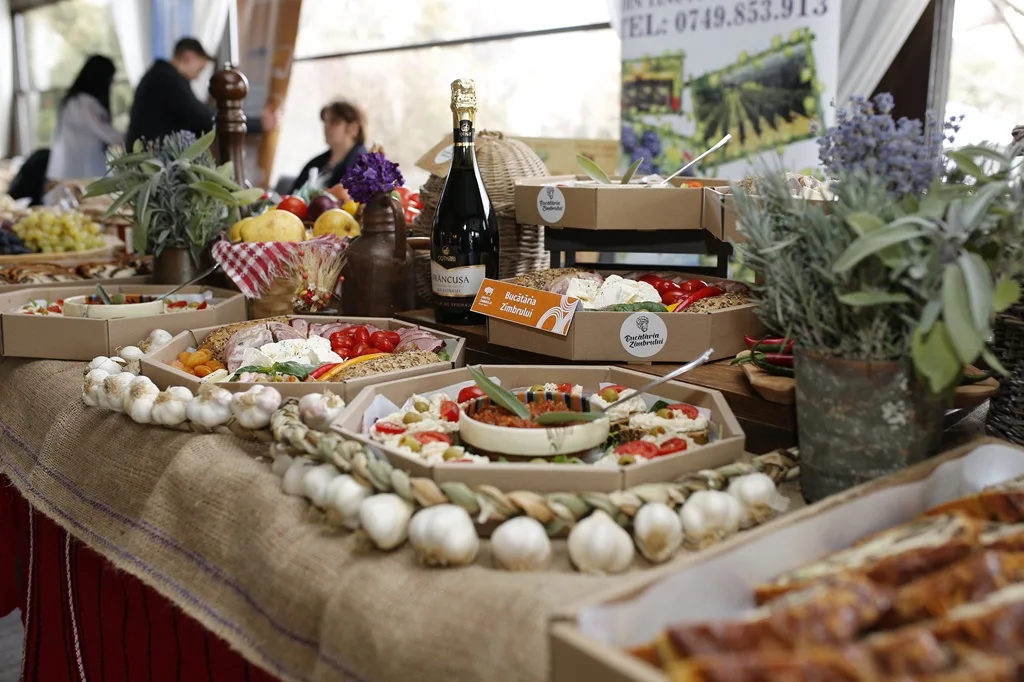
Attractive Romania presents “Neamțul în Bucate”
The culinary story of Neamț County invites travelers on a fantastic journey, a tour of its four picturesque regions, filled with tales and flavors that combine tradition, ecotourism and fresh, delicious dishes.
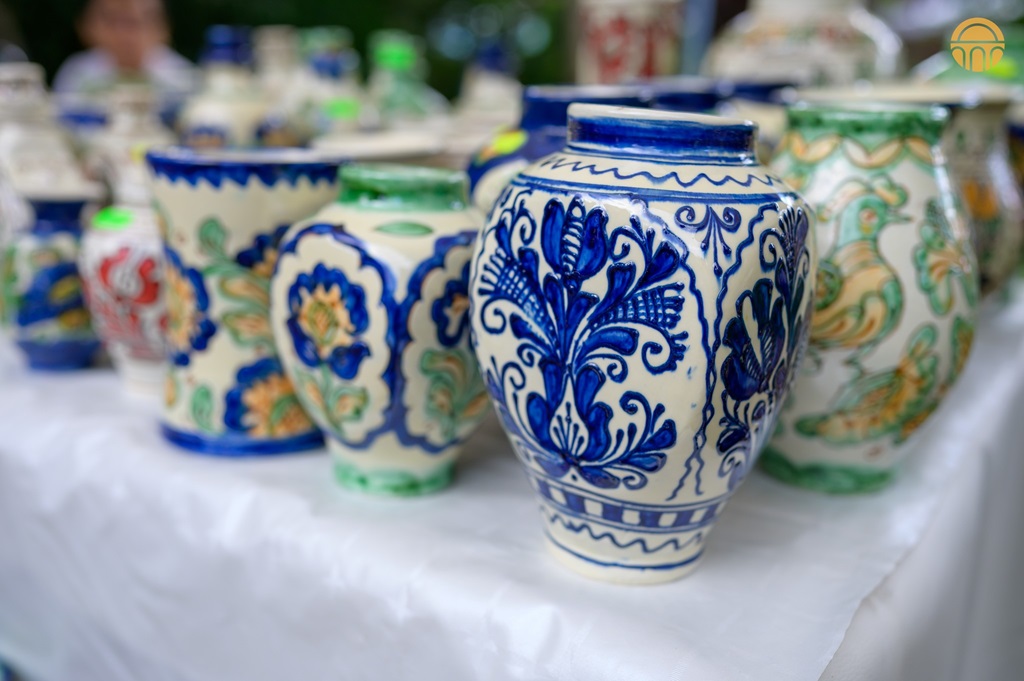
Craft Fair for the Feast of the Assumption in Piatra-Neamț
This weekend, local residents and tourists will be able to enjoy folk art and objects crafted with great talent and flair by traditional craftspeople from ten counties, who will come to keep local…
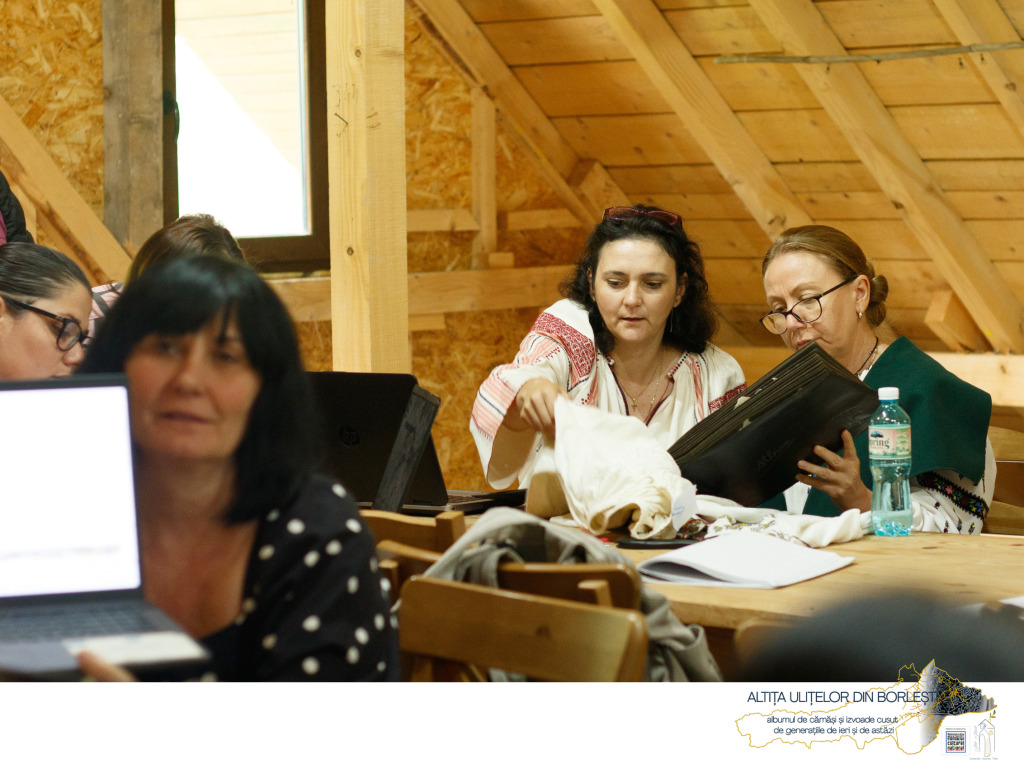
” Altița ulițelor din Borlești” at the AFCN Awards
At the ninth edition, the AFCN (National Cultural Fund Administration – NCFA) Awards has nominated “Altița ulițelor din Borlești” in the Activation of Intangible Cultural Heritage Category.