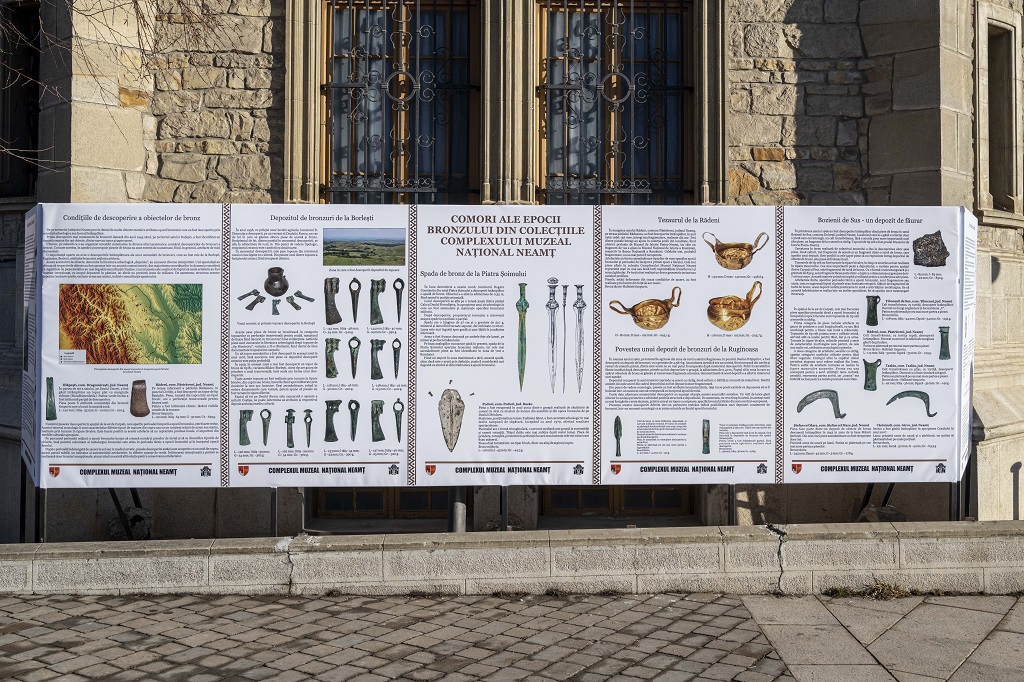
Bronze Age treasures on display in Piața Libertății until the end of April
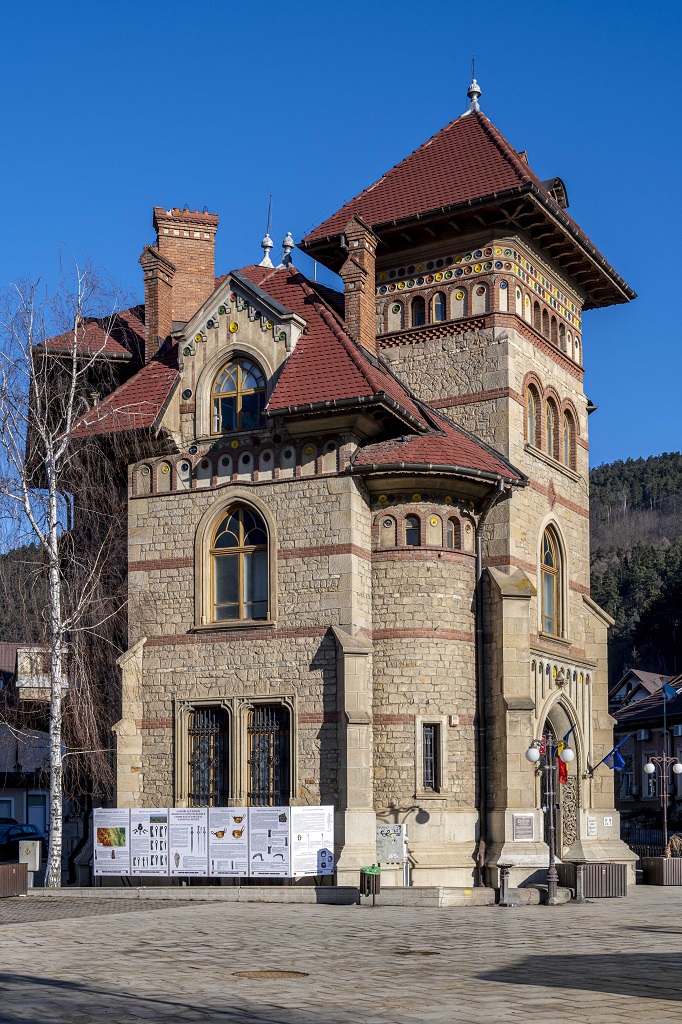
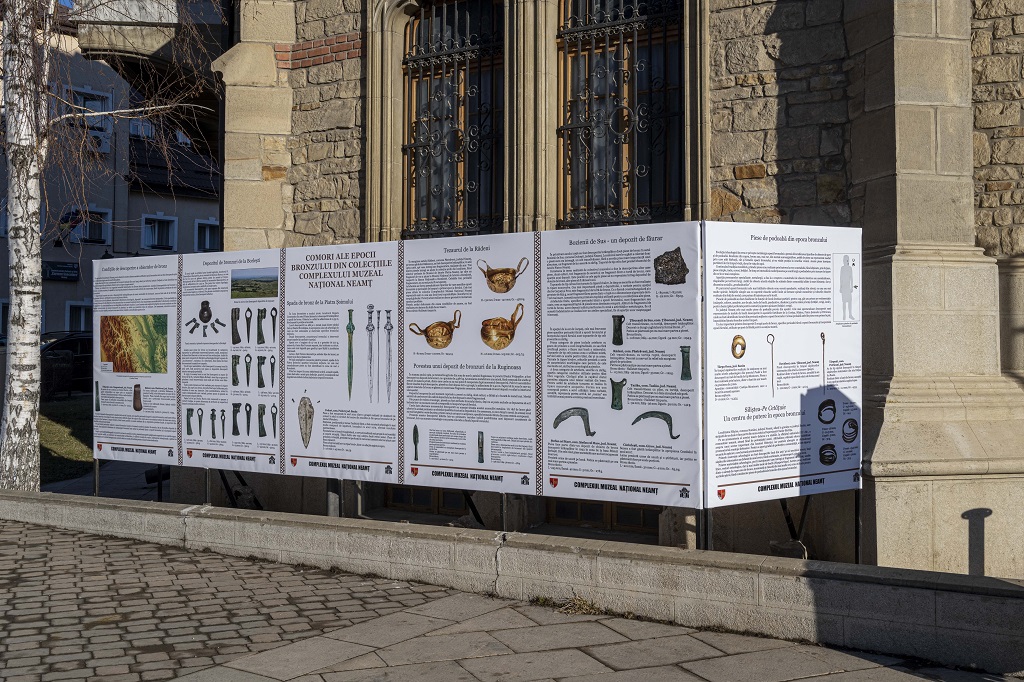
Neamț National Museum Complex presents the photographic and documentary exhibition “Comori ale epocii bronzului din colecțiile Complexului Muzeal Național Neamț” to visitors. The information panels will be displayed in Piața Libertății from 23 February – 30 April this year.
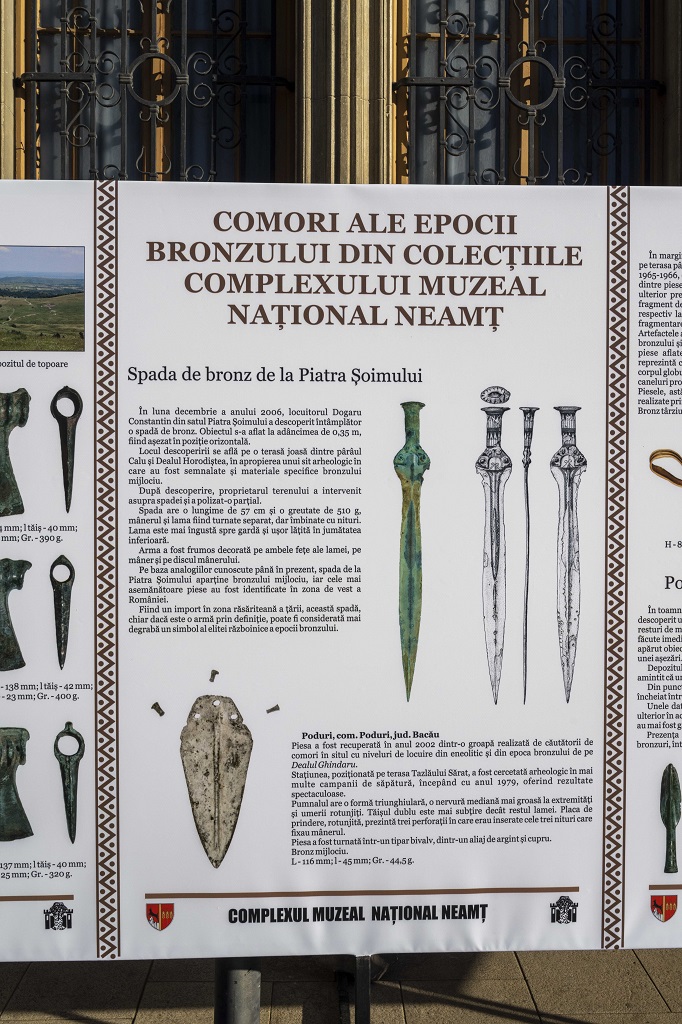
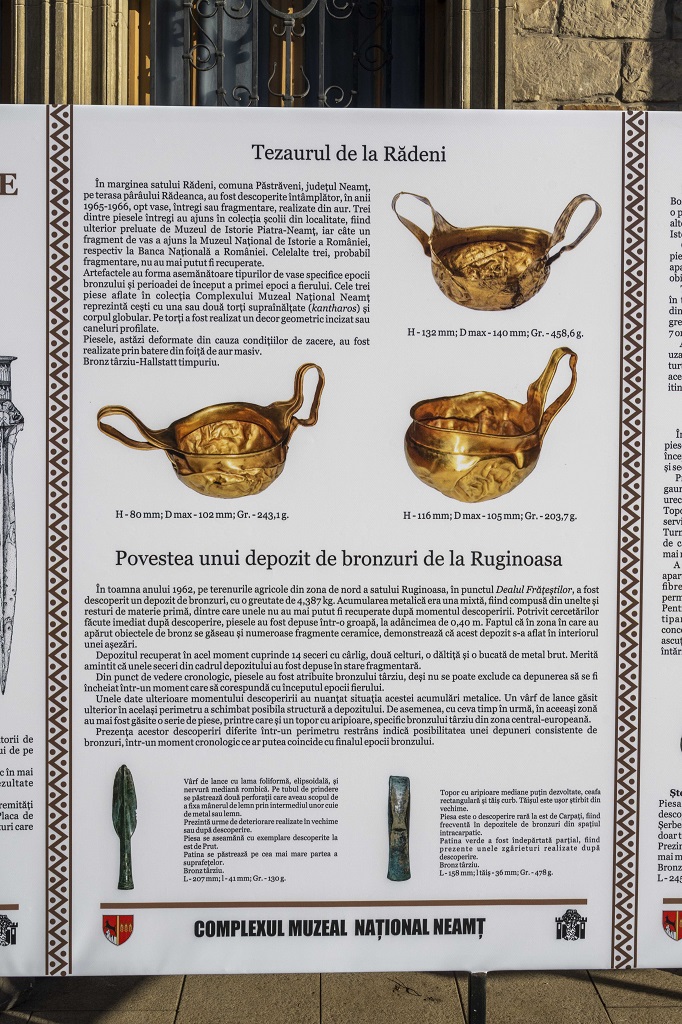
The exhibition presents a selection of metal finds of exceptional heritage value, focusing particularly on the stories behind the discovery of these unique artefacts. The information panels include photographs of the objects and details of where and how they were discovered, their distinctive features, how they were made and their cultural affiliations. The exhibition includes copper, bronze, silver and gold objects found by chance or during archaeological investigations in the counties of Neamț and Bacău.
*
Numerous metal objects dating to the Bronze Age have been found in Neamț County, either during archaeological investigations or by chance. The first substantial discovery of bronze objects dates to 1945, when a hoard of eight objects, comprising an axe and seven sickles, was identified in the village of Doljești. Later, as systematic investigations were undertaken at various prehistoric sites, the number of bronze finds increased. Even so, bronze objects are not particularly numerous in settlements and burial grounds, and are generally small. Chance discoveries of bronze hoards, such as those at Borlești, Ruginoasa and Bozieni, dating to the Middle and Late Bronze Age, were particularly significant. Very few objects dating to the Early Bronze Age have been found east of the Carpați. Various types of axes made of copper or containing small amounts of arsenic or tin, cast in two-part moulds, belong to this period. These artefacts may well have been imports from neighbouring cultures rather than locally made objects. During the Middle Bronze Age, metal objects began to increase in number and variety, but bronze metallurgy reached its peak in the Late Bronze Age and the beginning of the Iron Age. After lying in soil or water for a long time, objects discovered today are covered in copper oxide, known as noble patina, in various shades of green, which indicates the artefacts' authenticity. The patina is deliberately removed only in exceptional cases, when there is no other way to conserve the artefacts.
Museum curator Alexandru Gafincu,
Researcher Vasile Diaconu
More on the same topic

Neamț County, an Ambassador for Local Traditions and Values in Brussels
Neamț County showcased its values, traditions and development potential on the European stage during European Week of Regions and Cities, held in Brussels from 12 to 14 October.

Solo painting exhibition – Florin Mareș
Starting Saturday, 10 October 2026, the Art Museum in Roman opens a new solo exhibition by the visual artist Florin Mareș of Roman.

Book launch: “Regina Maria a României. Din viață în eternitate” by historian Narcis Dorin Ion
Neamț National Museum Complex invites audiences in Neamț to the launch of “Regina Maria a României.