Exhibition – Female Representations in Prints by Women Artists (Piatra Neamț Art Museum)
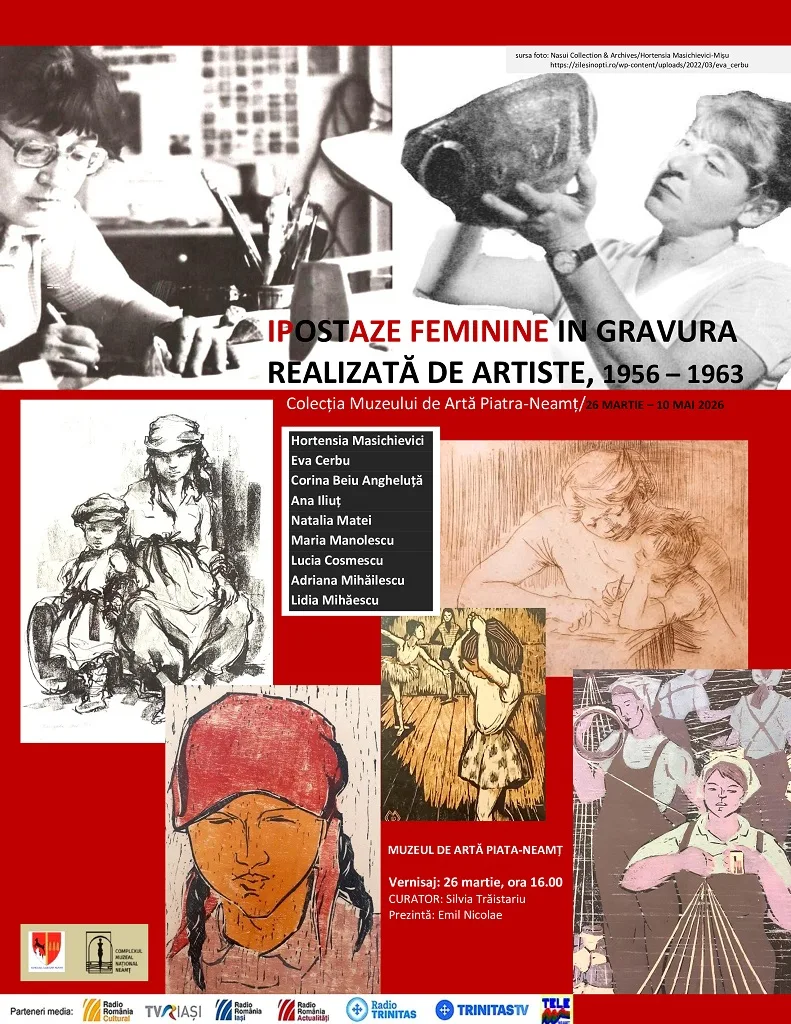
The Piatra Neamț Art Museum is hosting the exhibition “Ipostaze feminine în gravura realizată de artiste, 1956 -1963,” from 26 March to 10 May 2026, a curatorial project that seeks to restore women’s printmaking to its place in art history and recognise its significant contribution to the development of Romanian printmaking.
At the opening, which will take place on 26 March at 16.00, speakers will include the project’s curator, Silvia Trăistariu – a museum curator at the Piatra Neamț Art Museum – and Emil Nicolae, writer and art critic.
The exhibition brings together 30 prints from the Neamț museum collections by leading women artists of the period – Hortensia Masichievici – Mișu, Eva Cerbu, Corina Beiu Angheluță, Ana Iliuț, Natalia Matei, Lidia Mihăescu, Lucia Cosmescu, Adriana Mihăilescu and Maria Manolescu.
Against a backdrop dominated by the constraints of socialist ideology, the period 1956–1963 marks a phase of consolidation and redefinition in modern Romanian printmaking, alongside the emergence of distinct female voices in the graphic arts.
The women artists of this generation transformed technique into poetry and restriction into expressive power, redefining the graphic language of Romania in the 1950s and 1960s and marking a transition from the constraints of socialist realism towards more personal and experimental forms of artistic expression.
Through the selected works, the exhibition documents a wide range of portrayals of women, from scenes of everyday life and activities connected with family and motherhood to moments of introspection or symbolic compositions, reflecting both the social realities of the period and the lyrical dimension of women’s perceptions. The exhibition also highlights women’s dual role in printmaking: not only as subjects of representation, but also as creators actively involved in shaping visual meaning.
In technical terms, the works make varied use of intaglio and relief printmaking processes – etching, aquatint and woodcut – exploring the relationship between strength and refinement through line, tone and texture.
The exhibition thus outlines both the significant contribution of women’s graphic art to the development of Romanian printmaking, through its technical quality and stylistic innovation, and the importance of these artists in shaping a female perspective on society and human experience in Romania during the 1950s and 1960s.
More on the same topic
Neamț County, an Ambassador for Local Traditions and Values in Brussels
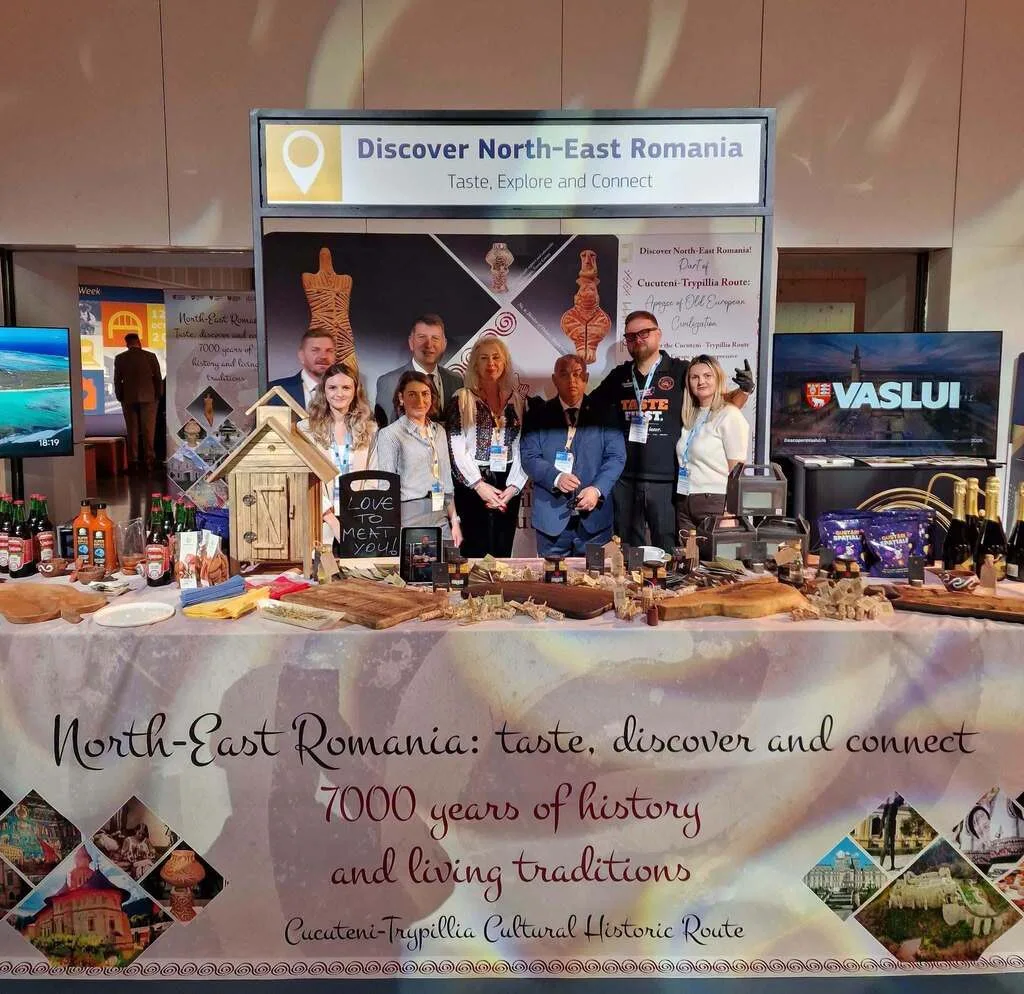
Neamț County showcased its values, traditions and development potential on the European stage during European Week of Regions and Cities, held in Brussels from 12 to 14 October.
Solo painting exhibition – Florin Mareș
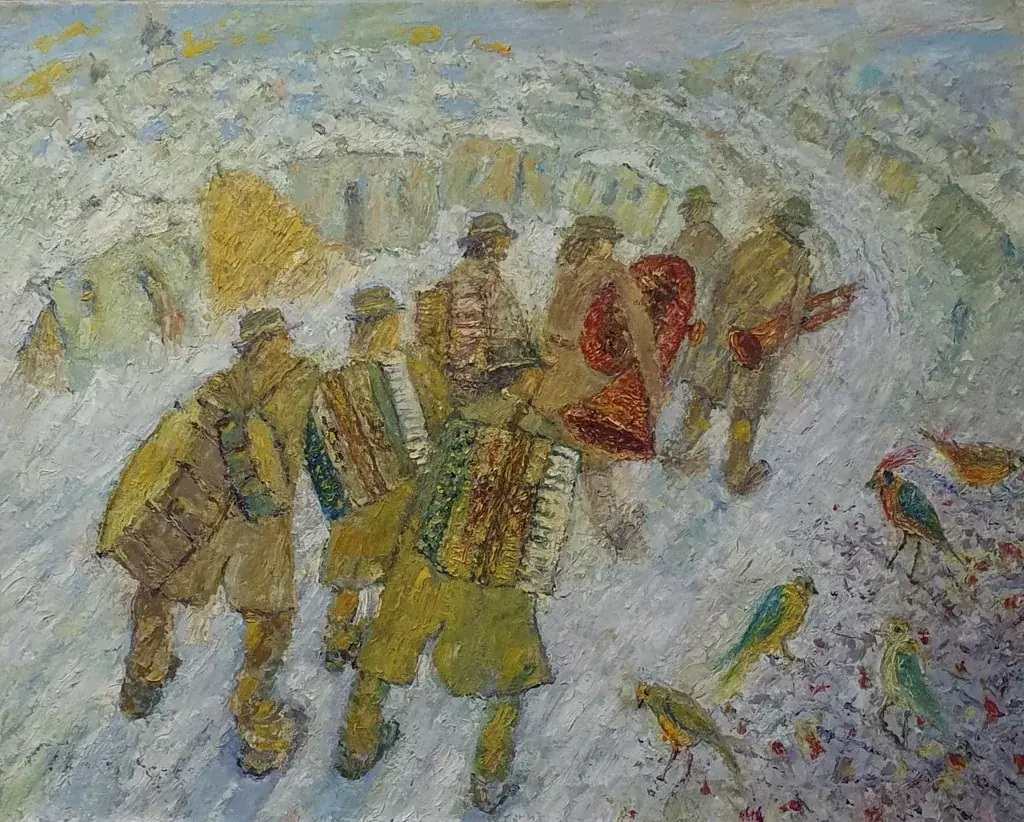
Starting Saturday, 10 October 2026, the Art Museum in Roman opens a new solo exhibition by the visual artist Florin Mareș of Roman.
Book launch: “Regina Maria a României. Din viață în eternitate” by historian Narcis Dorin Ion
Neamț National Museum Complex invites audiences in Neamț to the launch of “Regina Maria a României.