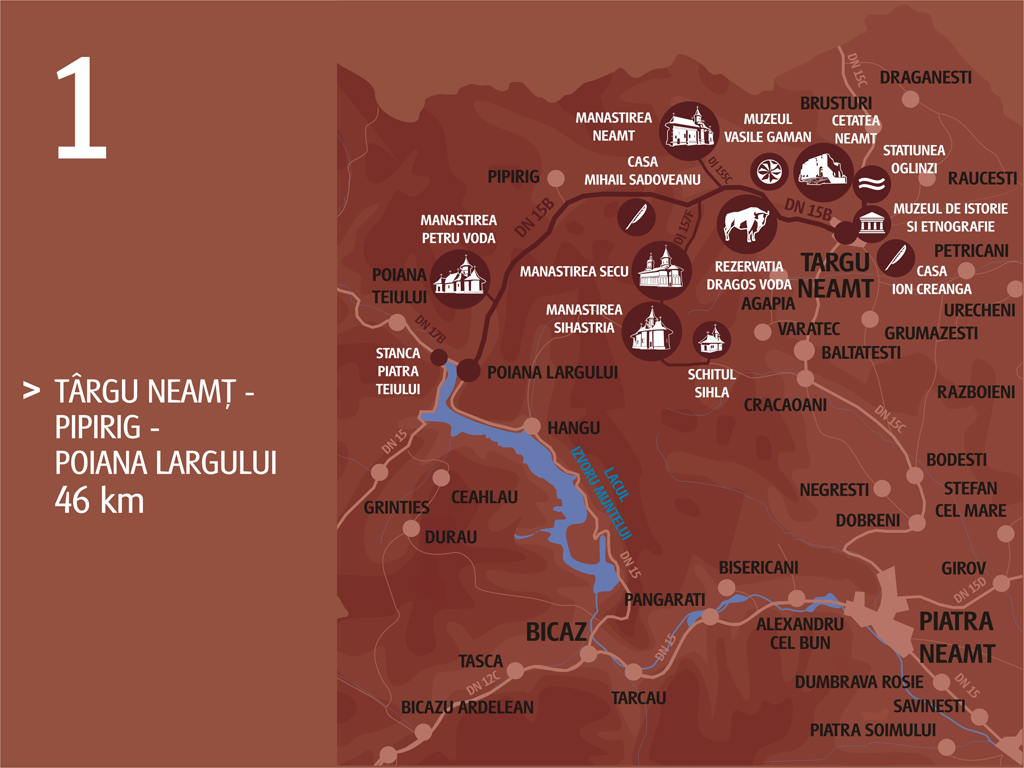
Route from Târgu Neamț towards Pipirig and on to Poiana Largului
Tourist Circuit Maps Neamț County
If you choose to visit the Neamț region, where high mountains and remarkable landscapes greet you at every turn, you will discover one of Romania's most delightful areas. Today we suggest the route from Târgu Neamț towards Pipirig and on to Poiana Largului, where you will encounter the beauty of this region, from historical monuments to the wonders of wildlife.
A region of wonderful, unassuming and welcoming people who can tell you about the fascinating history of Neamț and take pride in the oldest monastery in Moldavia, also known as the “Jerusalem of Romanian Orthodoxy”. A journey along this route should include its visitor attractions, whose variety makes them ideal for relaxation.
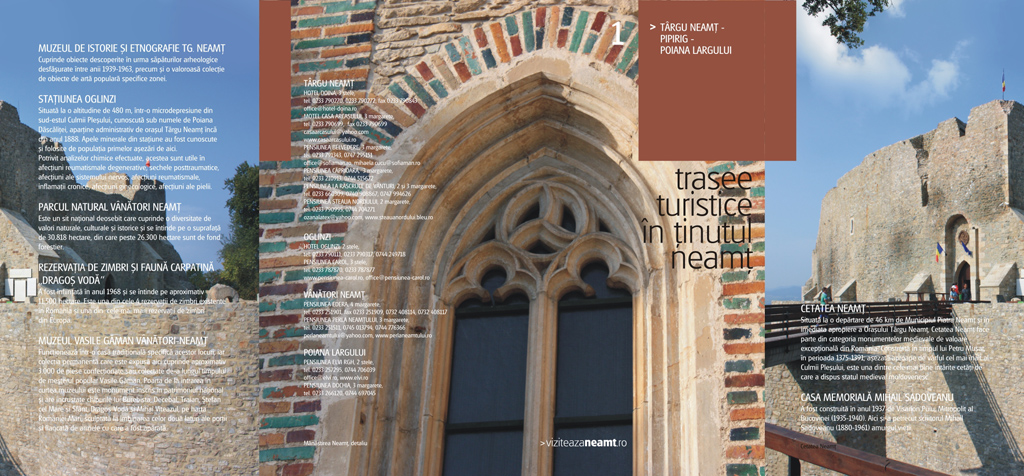
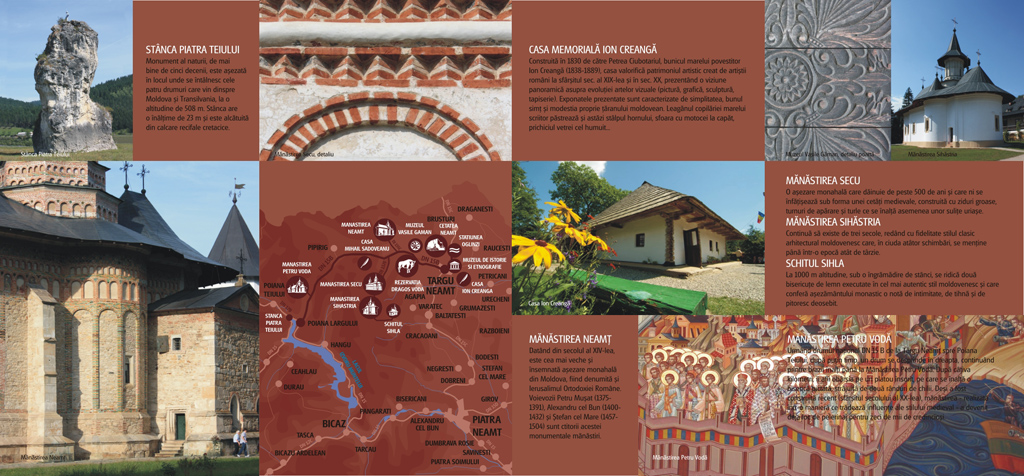


Neamț Citadel is a medieval fortress in Moldavia, built by Petru Musat, near the town of Târgu Neamț and approximately 46 km from the town of Piatra Neamț. Set near the highest peak of the Plesului Ridge, it is one of Romania's medieval monuments of exceptional value. Its strategic position and role in the major events that shaped this part of the country show that Neamț Citadel was one of the most strongly fortified strongholds of the medieval Moldavian state.
Ion Creangă Humulești Memorial House – The house where Nica al lui Stefan a Petrei was born and spent his childhood was built in 1830 by Petre Ciubotariu, the storyteller's grandfather. The memorial house soon became one of the most visited memorial museums in Neamț County. It is a typical example of vernacular architecture, built from thick logs coated with clay, with a narrow clay veranda and a broad wooden shingle roof. Behind the house, beneath a shelter made of planks, various household objects and agricultural tools of considerable ethnographic value are displayed.
Târgu Neamț History and Ethnography Museum offers an overview of the rich medieval history of the town of Târgu Neamț and the traditional crafts of the Neamț Depression, from spinning and weaving to processing agricultural produce and working with wood, metals and ceramics. The exhibition also includes a range of traditional rural equipment for processing fruit and seeds, wood, wool, etc., housed in a specially arranged pavilion in the museum courtyard.
Oglinzi Resort lies approximately 3 km north of the town of Târgu Neamț, at an altitude of 480 m, in a peaceful area with a moderate temperate continental climate. Today, Baile Oglinzi Resort has a treatment centre offering warm baths, paraffin wraps, galvanic baths, diadynamic currents, ultrasound, massage and therapeutic exercise. Rheumatic, gynaecological, dermatological and respiratory conditions, the after-effects of injuries and asthenic neuroses can be treated here.
“Vasile Gaman” Museum, Vanatori – Neamț – The museum occupies a traditional house typical of the area, and its permanent collection comprises approximately 3,000 items made or collected over the years. The exhibits include a wealth of rare items, from very old agricultural tools, manuscripts, medals and decorations, and icons painted on wood to traditional costumes, masks and ceramic vessels, all bearing witness to life in the traditional Romanian village.
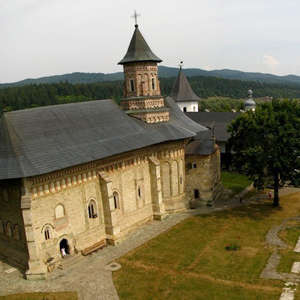
Neamț Monastery dates from the 14th century according to documentary records and is the oldest and most important monastic settlement in Moldavia, also known as the “Jerusalem of Romanian Orthodoxy”. Today, the grounds of Neamț Monastery contain two churches, two chapels, a bell tower with 11 bells, the “Veniamin Costache” The monastery also has the oldest monastic library, with 18,000 volumes, and has made a significant contribution to the development of medieval Romanian culture and art.
Vânători-Neamț Natural Park has been a designated protected area since 1998 and aims to protect and conserve the European bison population, once part of Romania's wildlife. The park encompasses a wealth of natural, cultural and historical heritage and covers 30,818 hectares, of which over 26,300 hectares are forest land. Its wildlife includes a range of rare or endangered species, such as brown bears, wolves, lynx, otters, European bison, foxes, wildcats, martens, Carpathian red deer, roe deer, wild boar, hares, etc.
“Dragoș Vodă” European Bison and Carpathian Wildlife Reserve is one of the 4 European bison reserves in Romania and is ranked among Europe's largest reserves dedicated exclusively to European bison. Situated in northern Neamț County, within the commune of Vânători-Neamț, near the DN15 national road and Neamț Monastery, the reserve is one of the county's most visited attractions.
“Mihail Sadoveanu” Museum in the village of Mănăstirea Neamț opened in 1966 and occupies the house where the writer Mihail Sadoveanu spent his later years. The museum exhibition preserves the atmosphere of the period and includes furniture, the piano, the samurai sword, an ivory chess set, documents, personal belongings, photographs, portraits of the writer and his parents, volumes of historical documents dating from 1500, a library containing his complete works (75 volumes), several first editions (61) and translations that belonged to the writer Mihail Sadoveanu.
Secu Monastery is a monastic settlement that has endured for over 500 years. The first hermitage was built in 1530, and Prince Petru Rareș (1527-1546) built the church of Zosima Hermitage on the site of the present monastery cemetery church. The buildings that make up the Secu monastic complex today were built from 1602 onwards by the high steward Nestor Ureche.
Sihăstria Monastery – The first church of Sihastria Hermitage was founded in 1655 by Metropolitan Varlaam Motoc, who then provided it with monastic cells and other necessities. Sihăstria Monastery is closely associated with the life of Father Cleopa and is well known to pilgrims for this connection. The “Saint Teodora” Cathedral, with its distinctive architecture, was also built within the monastic settlement in 1998. The cathedral is imposing, with an open outer narthex, gilded icons on its façade and three towers.
Sihla Hermitage lies 6 km from Sihăstria Monastery and is one of Moldavia's renowned hermitages. Here, the great saint of Sihla and Moldavia, the Venerable Teodora, led a hermit's life in a cave in the forest behind the hermitage. The cave can be visited.
Petru Voda Monastery – This monastic settlement was built at the end of the 20th century at the request of the faithful in the village of Petru Voda and with the support of the local authorities, who provided the land needed for construction in Hasca Glade. Construction of the “Dormition of the Mother of God” Church began in 2003, with craftsmen from Maramureș building it in the Maramureș style.
Piatra Teiului Rock has been designated a natural monument for more than five decades and stands at “Coada Lacului”, where the four roads from Moldavia and Transilvania meet, at an altitude of 508 m. The rock is 23 m high and consists of Cretaceous reef limestone containing abundant Sarmatian fossil fauna.
More on the same topic
A Thousand and one stories in Neamt
Dear Traveller, wherever you come from, we invite you to discover the blessed lands of Neamț, a sacred realm once inhabited by the ancient Dacians, rich in legends and myths, with a history and roots…

A quarter of a century of medieval events in Neamț
The Zilele Cetății Neamț Medieval Festival marks a quarter of a century. Now in its 25th edition, this year's event will open its doors from 10–12 July to a world of stories and pages of history from the time of Stephen the Great, Prince of Moldavia.
South-eastern Europe’s most important collection of Eneolithic art – a finalist in Destinația Anului 2026
The development of human communities in Neamț County, dating back to the Upper Palaeolithic, contributed to the emergence of Europe’s most remarkable and most extensively studied prehistoric…