Durău Monastery – Neamț County
Durău Monastery
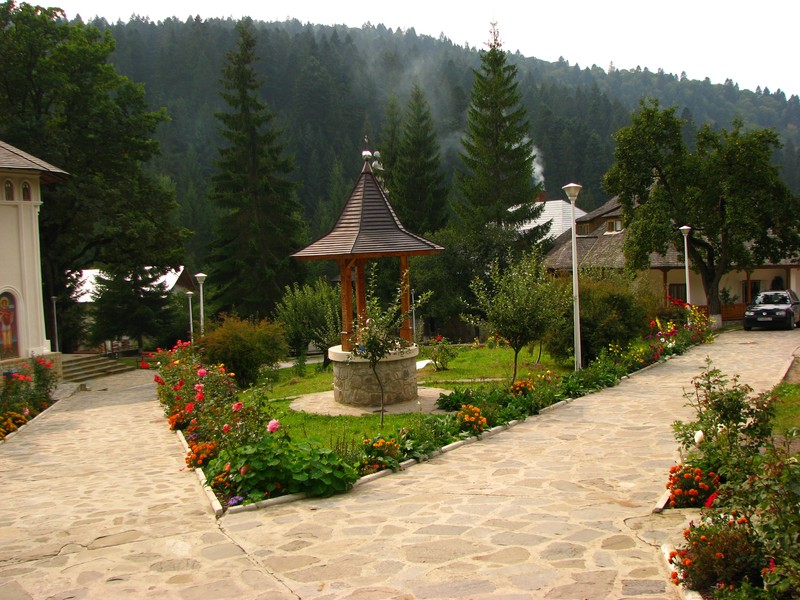
Durău Monastery is in the resort of Durău, 88 km north-west of the town of Piatra Neamț and 65 km west of the town of Târgu Neamț. Duruitoarea Waterfall lies 5 km from the monastery and, according to tradition, gave the monastery its name. Also nearby, in Ceahlău commune, are the ruins of Palatul Cnejilor, with impressive panoramic views of Ceahlău.
Address: Durău resort, Ceahlău commune, Neamț County, postcode 617130 Tel: 0233428391 Patronal feast day of Durău Monastery: “Annunciation” (25 March) Year of construction: built in 1830-1835 by a few monks, with help from schema-nun Safta Brancoveanu and funded by three wealthy merchants from the town of Piatra
Durău Monastery – a brief history
Durău Monastery was built on the site of a nuns’ hermitage founded in the 17th century by one of the daughters of Prince Vasile Lupu. The first documentary mention of Durău Monastery dates from 1779, when schema-nun Nazaria was abbess. The nuns from Durău later withdrew to Văratec Glade, where they founded the monastery of Văratec. In 1802, hieroschemamonk Petru revived the hesychast community at Durău, bringing several monks from nearby hermitages.
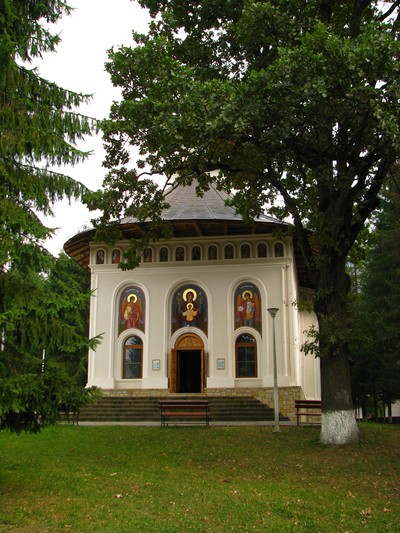
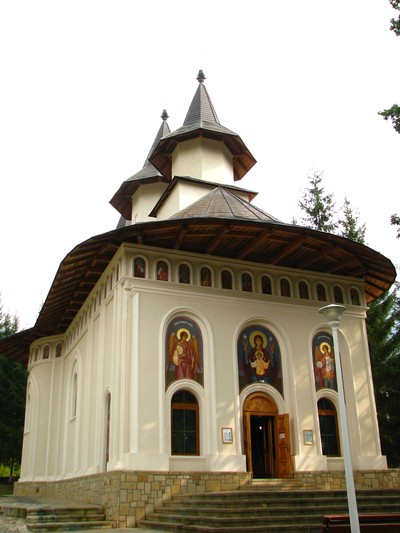
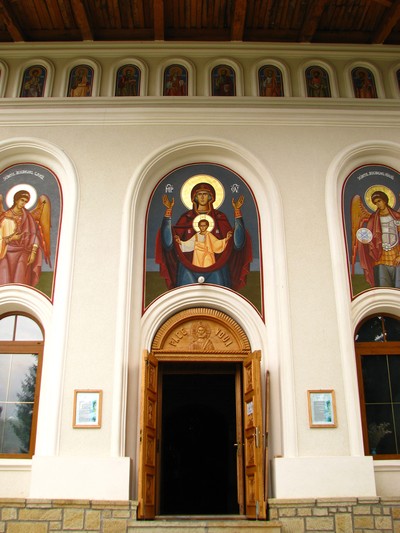
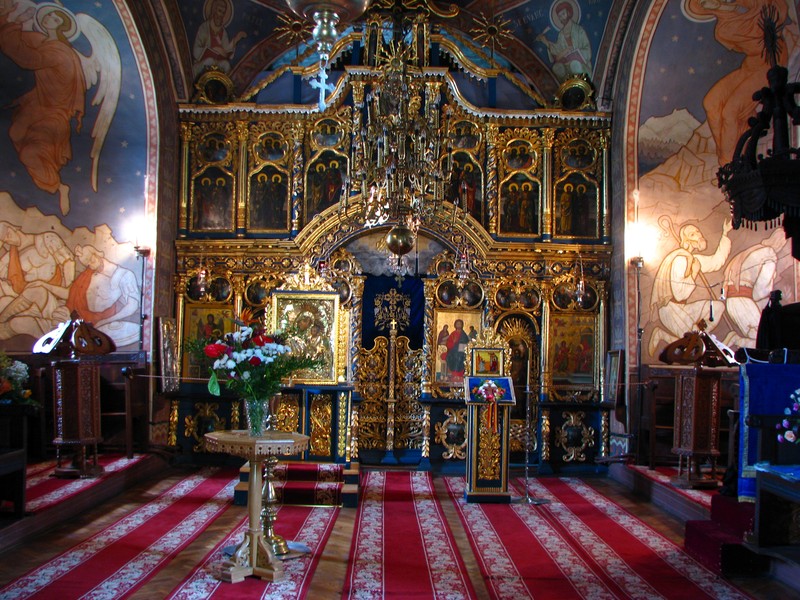
Construction of the present church on the site of the old wooden church began in 1830, undertaken by a few monks from Neamț Monastery and Secu Monastery, with help from schema-nun Safta Brancoveanu and funded by wealthy merchants from the town of Piatra. The porch of the church at Durău Monastery, which can still be admired today, was painted in oils in 1835 by the monks Pimen, Macarie and Ghervasie. The church’s iconostasis, carved from limewood and gilded, was painted in Constantinople in 1835. Completed in 1835, the church was dedicated to the “Annunciation” and consecrated by Metropolitan Veniamin Costachi.
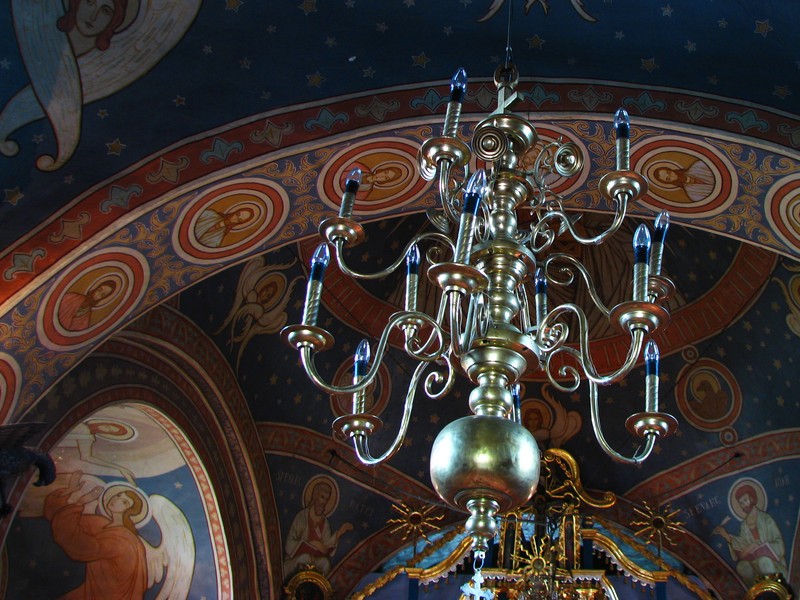
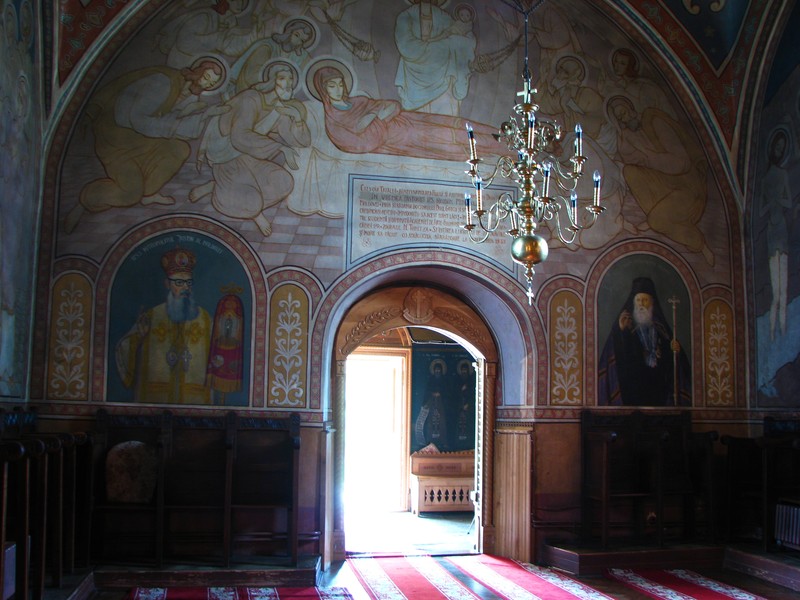
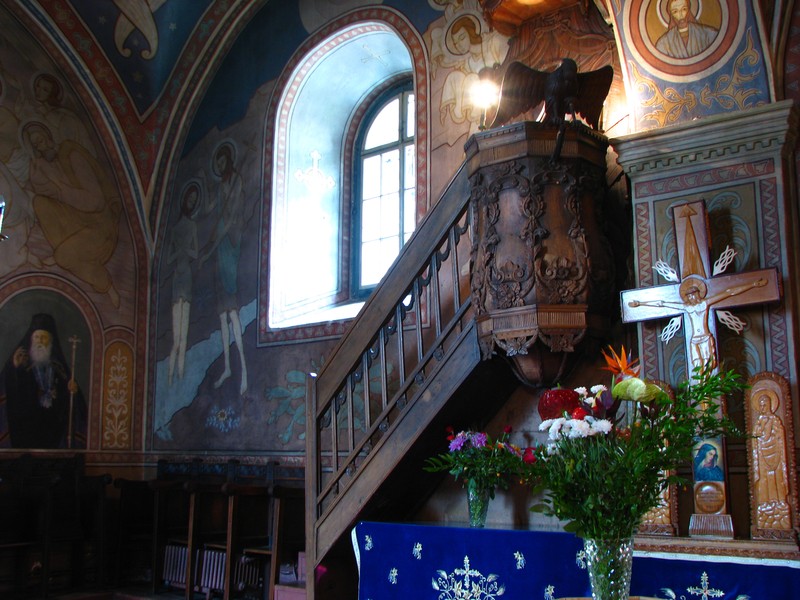
The narthex, nave and sanctuary of Durău Monastery remained unpainted from 1835 until 1935, when Nicolae Tonitza and his apprentices, students and graduates of the Academy of Fine Arts in Iasi – including Corneliu Baba – decorated them with wax paintings using the encaustic technique. After the paintings were completed in 1937, the church was consecrated again on 14 September.
Durău Monastery: photos
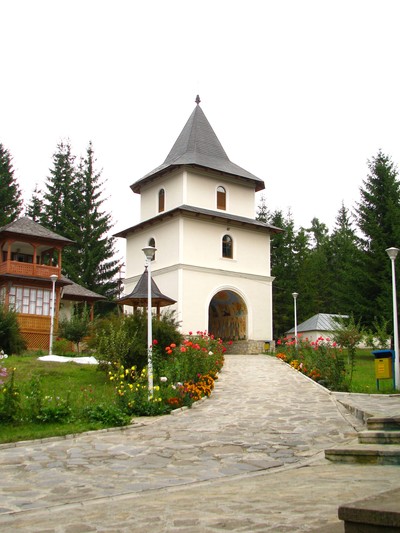
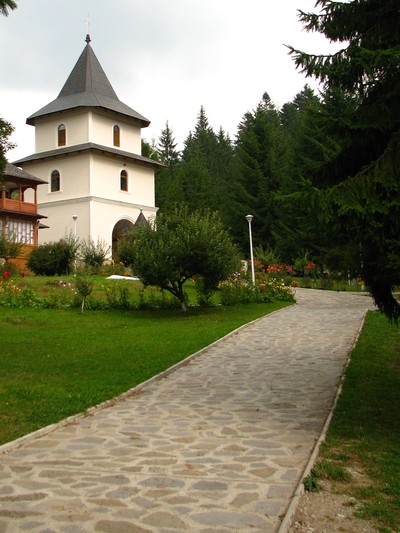
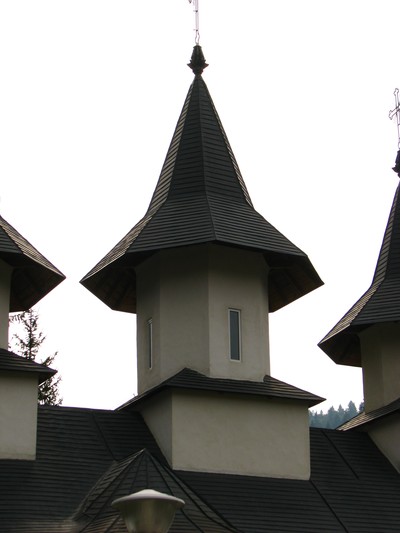
A bell tower was built at the entrance to Durău Monastery in 1835, 40 metres north of the sanctuary. It is a substantial masonry building with a square plan and three levels. The tower’s first floor houses a chapel dedicated to the “Transfiguration”, painted in 1938 by the monk Varahil Moraru, as well as a permanent exhibition of religious art where visitors can admire a beautiful 18th-century church iconostasis.
From 1959, Durău Monastery served as a parish church, then as a monks’ hermitage. In 1991, it became a nuns’ monastery again. Durău Monastery continues the ancient monastic tradition of the Ceahlău area and Moldavia today, offering pilgrims an opportunity for spiritual reflection and sincere prayer.
In 1991, through the efforts of His Eminence Daniel, Patriarch of the Romanian Orthodox Church, the “Saint Daniil Sihastru” Cultural and Pastoral Centre was established at Durău Monastery to promote Orthodox spirituality.
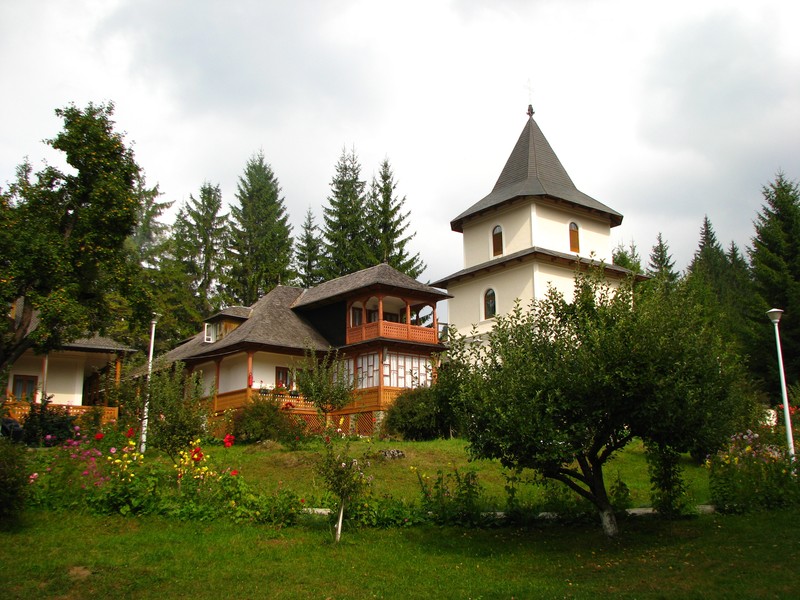
The monastic complex at Durău Monastery comprises: the “Annunciation” Church , Metropolitan Veniamin Costachi’s House, Varahil Moraru House, the abbess’s residence, the masonry bell tower and the wooden bell tower.
Durău Monastery established two hermitages: Saint Teodora de la Sihla Hermitage in Ceahlău commune and Venerable Parascheva Hermitage in Borca commune, Neamț County. Over the years, the beautiful setting of this secluded hermitage at the foot of Ceahlău has attracted many notable figures who found peace of mind here during their holidays: Alexandru Vlahuță, Barbu Delavrancea, Caragiale, Aurel Baesu, Mihail Sadoveanu, Metropolitan Veniamin Costache, Emil Garleanu, N. Gane.
More on the same topic

Ethnographic museums, treasures of local history and traditions
Ethnographic museums are true treasures and expressions of love for traditions, folklore, and spirituality of the places, and so is the Ethnographic Museum Casa Bunicilor in the village of Mitocul Bălan, Crăcăoani commune.

Neamț receives five nominations across four categories in Destinația Anului
We have good news for everyone who loves Neamț County and all its beauty: it is among the finalists in the Destinația Anului 2024 competition, with five nominations across four categories: Piatra Neamț in the Inspiring Cities category.

The Story of the Seven Miraculous Icons of the Holy Virgin and Saint Anne from Neamț Land
Renowned not only for its beauty and historical significance but also called the “Jerusalem of Romanian Orthodoxy,” Neamț Monastery houses the miraculous icon of Virgin Mary with three hands…