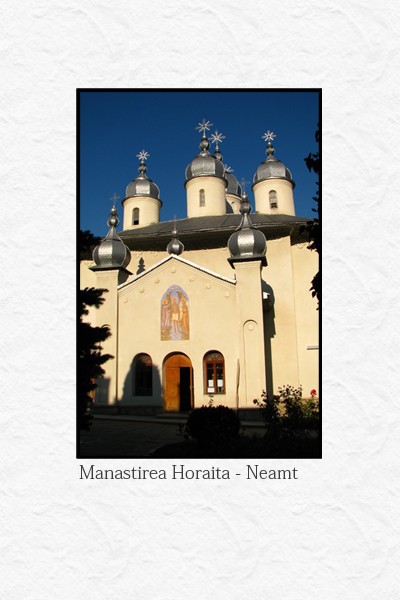
Horaița Monastery – Neamț County
Horaița Monastery stands at an altitude of 600 m, not far from the foot of Horaiciorul Mountain, near the eastern slopes of the Stanisoarei Mountains in the Eastern Carpathians, between Almaș and Văratec monasteries. Horaita Monastery can be reached on foot or by car. From DN 15 C Piatra Neamț-Târgu Neamț at Dobreni, it is a further 15 kilometres along county road 156A through Negrești and Poiana, or a further 6 kilometres from Crăcăoani along an unmodernised local road.
Address: Poiana village, Crăcăoani commune, Neamț County Tel: 0233/246210 E-mail: horaita@mmb.ro Web: http://horaita.mmb.ro/ Patronal feast day of Horaita Monastery: “Baptism of the Lord” (6 January) Horaița Monastery was built in 1822-1824 by Father Irinarh Roseti.
Horaița Monastery: a brief history
In the first half of the 19th century, in 1822-1824, the venerable Father Irinarh Roseti built Horaita Monastery’s first wooden church, dedicated to the “Descent of the Holy Spirit”. Horaita Monastery takes its name from the landowners who held Crăcăoani commune.
The present monastery church was built during the tenure of Abbot Ermoghen Buhus, in 1848-1867, and consecrated by the Metropolitan of Moldavia – Calinic Miclescu. Princes Grigorie Alexandru Ghica and Alexandru Ioan Cuza also contributed to its construction.
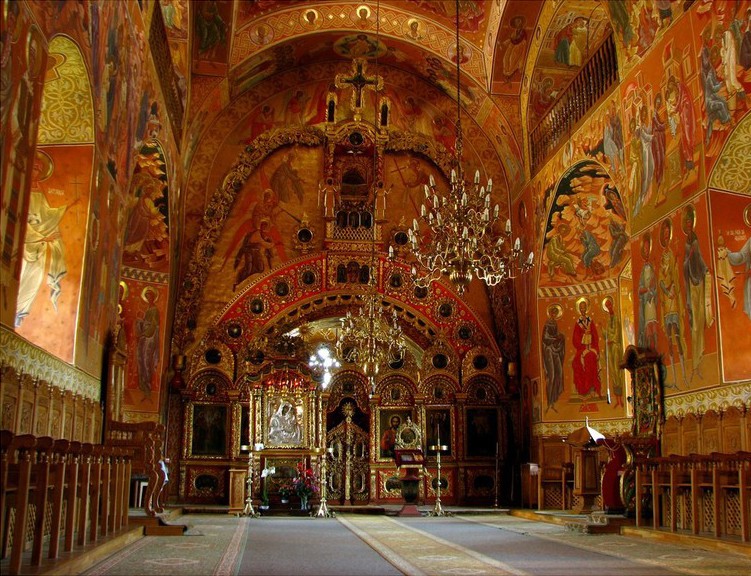
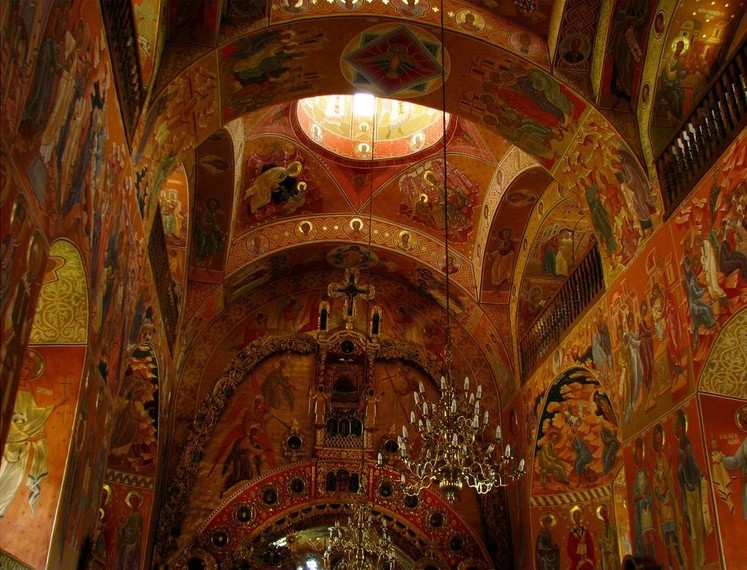
The church at Horaita Monastery is architecturally unique, combining elements of Roman-Byzantine architecture with Russian influences evident in the number and arrangement of its 8 towers. The church is 30 metres long, 17 metres wide and 20 metres high. Its walls, 1.6 – 4 metres thick, are built of stone, while the vaults are brick. The interior of the church at Horaita was painted in a Neo-Byzantine style against a brick-red background by Mihai Chiuaru and his apprentices in 1988-1993.
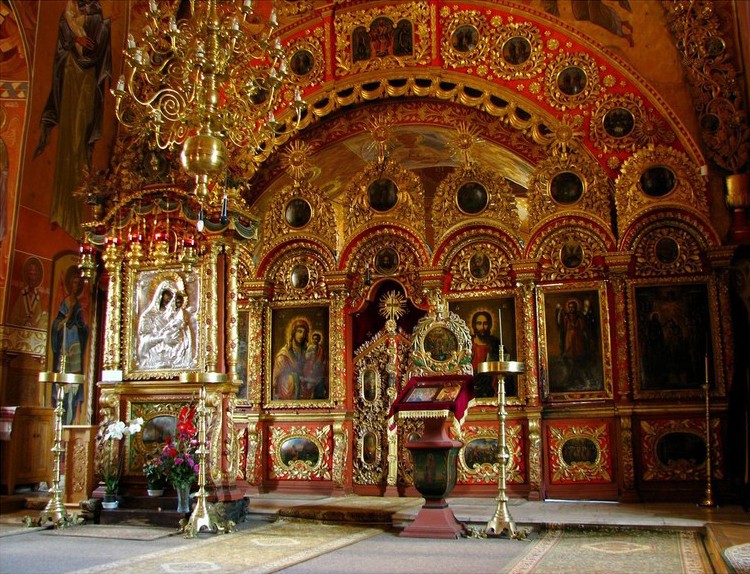
The iconostasis at Horaița Monastery, made in Vienna, is unique in the country, and probably in the world, because of the placement of the pulpit above the Royal Doors and the arrangement of two tiers that departs from Orthodox tradition: the tier of the Holy Apostles and the tier of the Old Testament prophets. Its carving represents the last survival of the Baroque style in the country and incorporates three types of wood: lime, pear and thuja.
Photos of Horaița Monastery
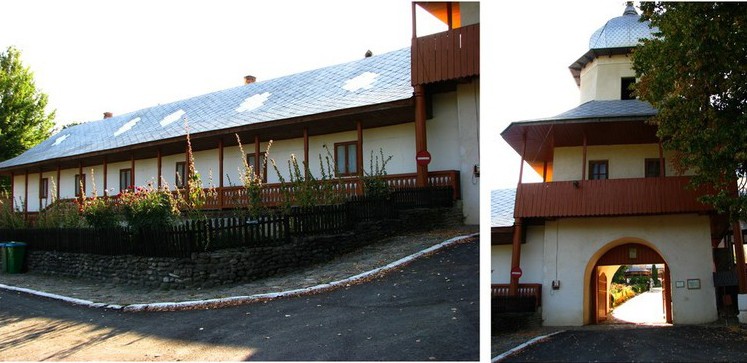
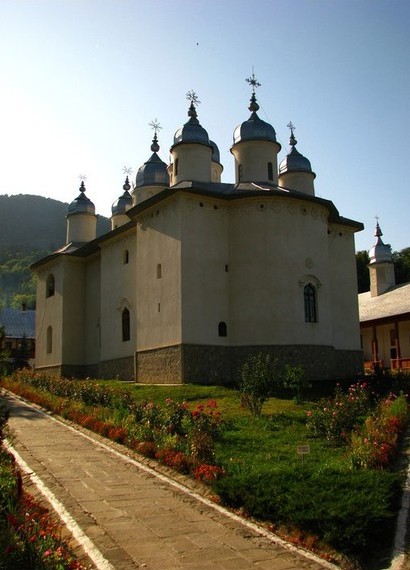
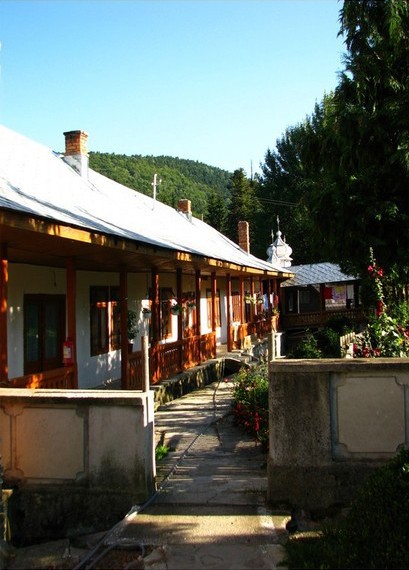
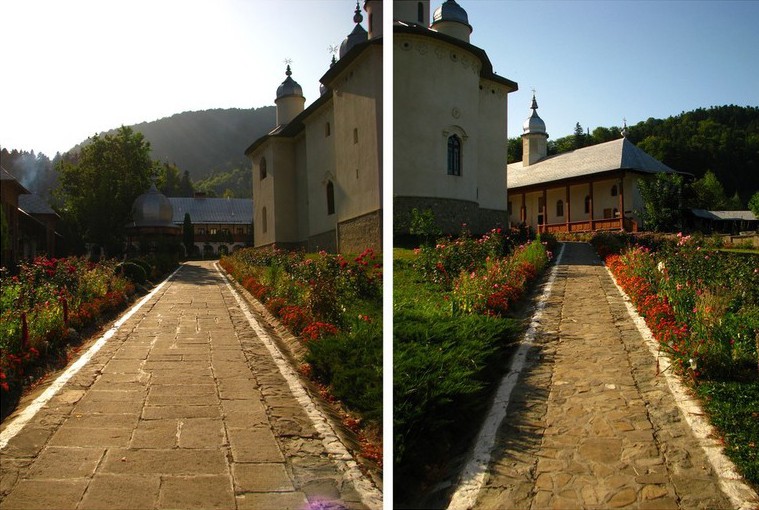
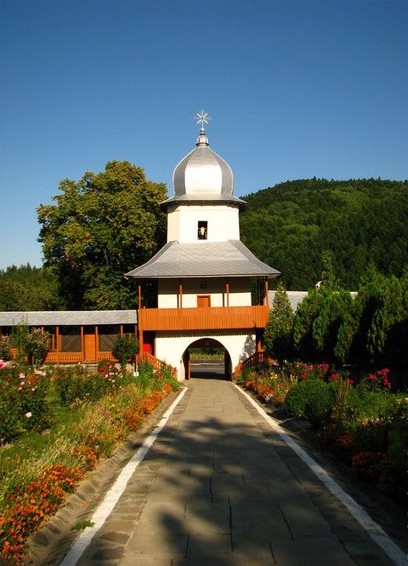
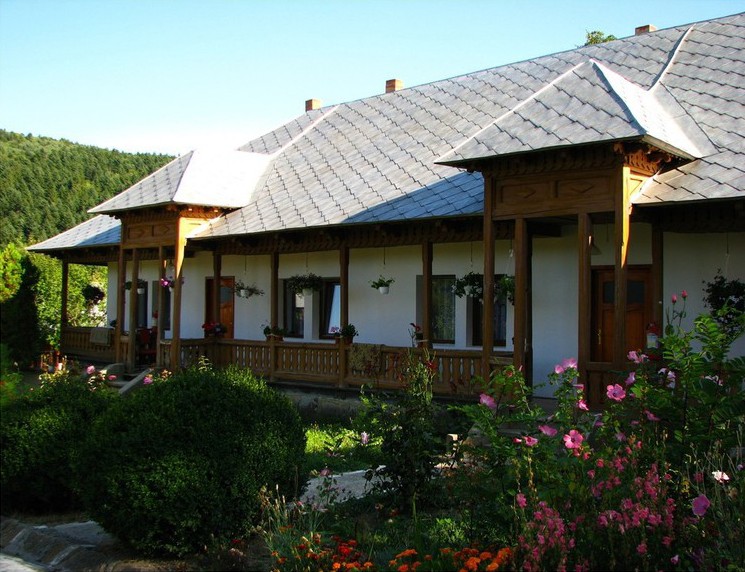
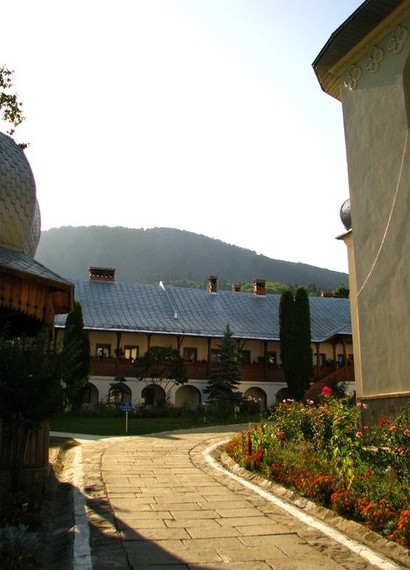
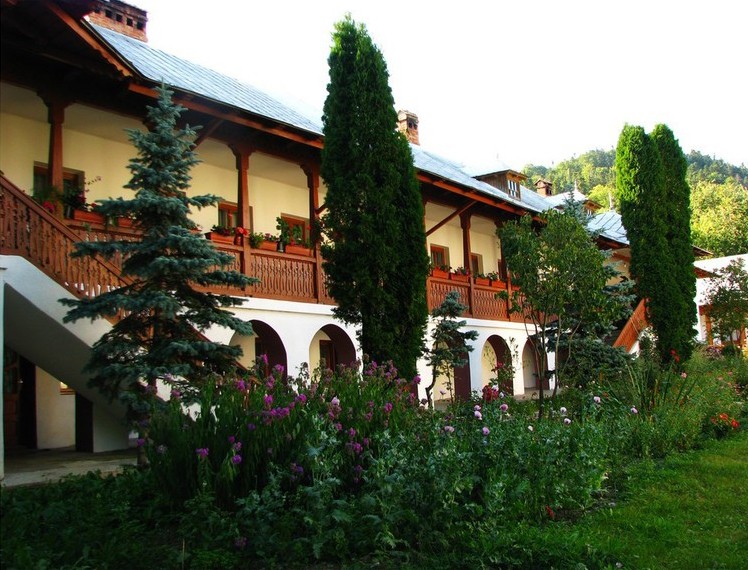
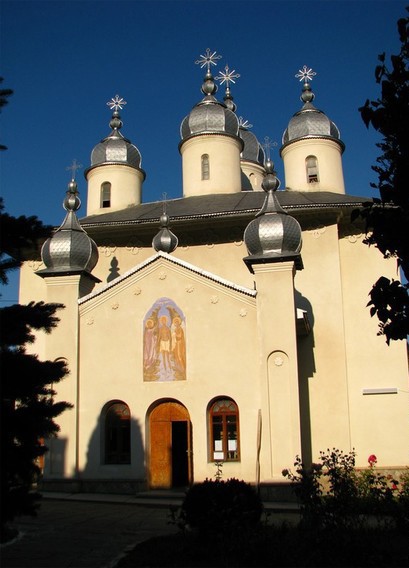
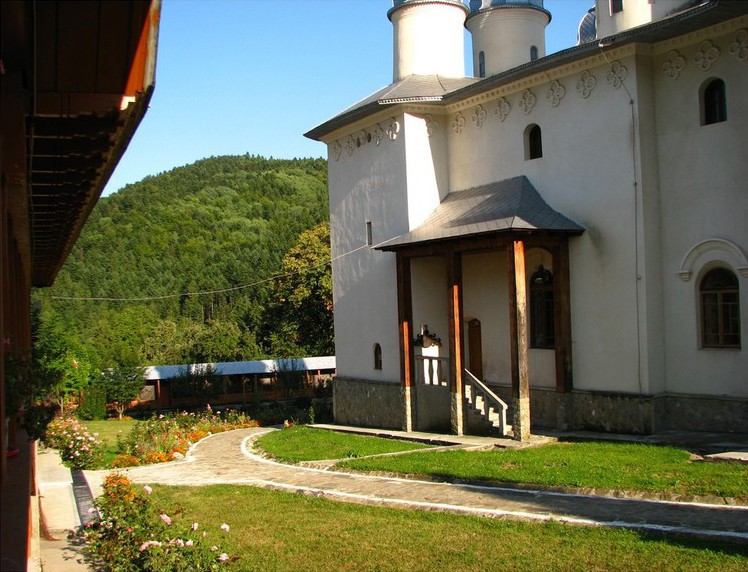
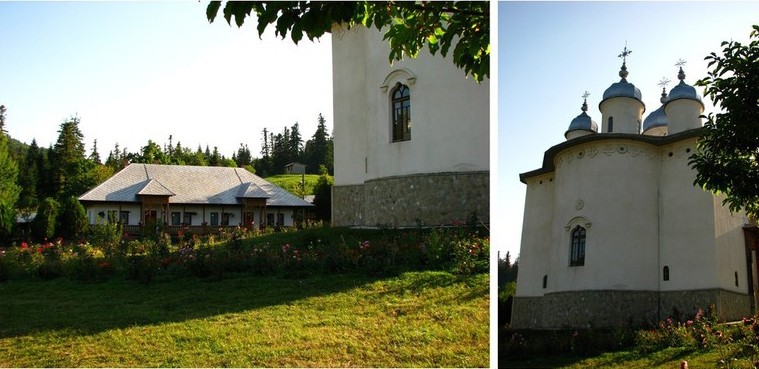
Click here to view all photo albums
The monastery’s most treasured possession is the miracle-working Icon of the Mother of God “Deliverer from Drought”, made in the first half of the 18th century and covered in silver in the second half of the 19th century, which comes from Horaita’s wooden church.
The monastic complex at Horaita also includes, on its northern side, the Chapel of Saint Hierarch Nicolae, built in 1850-1852, and the bell tower, built in 1853-1855, which shares the monastery’s dedication to the “Descent of the Holy Spirit”. The remaining buildings here were built after 1920.
Horaița Monastery and Horaicioara Hermitage, set in a place blessed by God, continue the tradition of their worthy predecessors, harmoniously combining obedience, hesychasm, prayer and work. Pilgrims wishing to experience this haven of inner and spiritual peace can stay within the monastic complex, with meals kindly provided by the monastery’s residents.
More on the same topic

Ethnographic museums, treasures of local history and traditions
Ethnographic museums are true treasures and expressions of love for traditions, folklore, and spirituality of the places, and so is the Ethnographic Museum Casa Bunicilor in the village of Mitocul Bălan, Crăcăoani commune.

Neamț receives five nominations across four categories in Destinația Anului
We have good news for everyone who loves Neamț County and all its beauty: it is among the finalists in the Destinația Anului 2024 competition, with five nominations across four categories: Piatra Neamț in the Inspiring Cities category.

The Story of the Seven Miraculous Icons of the Holy Virgin and Saint Anne from Neamț Land
Renowned not only for its beauty and historical significance but also called the “Jerusalem of Romanian Orthodoxy,” Neamț Monastery houses the miraculous icon of Virgin Mary with three hands…