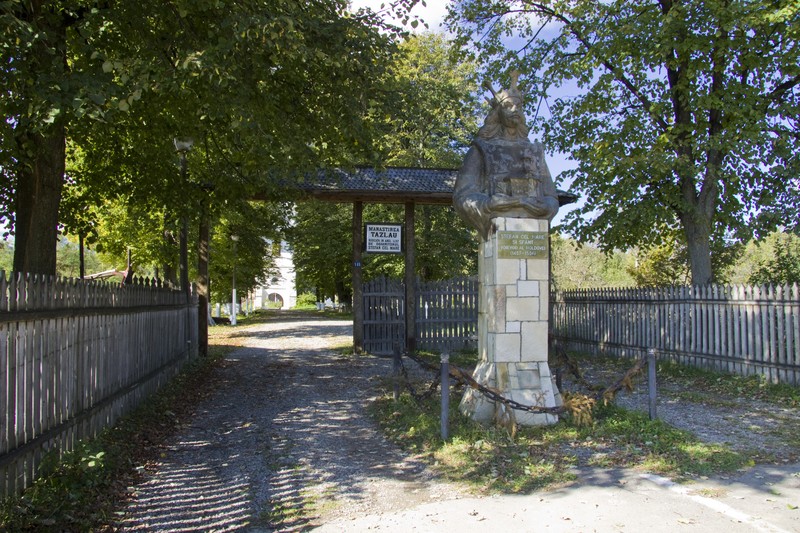
Tazlău Monastery – Neamț County
Tazlău Monastery
Tazlău Monastery is situated at the foot of Magura Tazlaului, 36 km south of the city of Piatra Neamț.
Address: Tazlău commune, Neamț County
Tazlău Monastery’s patronal feast: “Nativity of the Mother of God”, celebrated on 8 September
Year of construction: founded in 1497 by Stephen the Great on the site of a wooden church built by Alexander the Good
History of Tazlău Monastery
The monastic establishment at Tazlău is first mentioned in a document dated 30 October 1458, when Stephen the Great, at the request of Eustatie, abbot of Bistrița Monastery, confirmed the boundaries of Tazlău Monastery’s protected woodland as far as Rachitis. Between 1496-1497, the masonry church dedicated to the “Nativity of the Mother of God” was built at Tazlău on the site of the old wooden church built by Alexander the Good, becoming one of Voivode Stephen the Great’s most monumental foundations.
36km
Tazlău Monastery is situated at the foot of Magura Tazlaului, 36 km south of the city of Piatra Neamț.
Photos of Tazlău Monastery, Neamț County
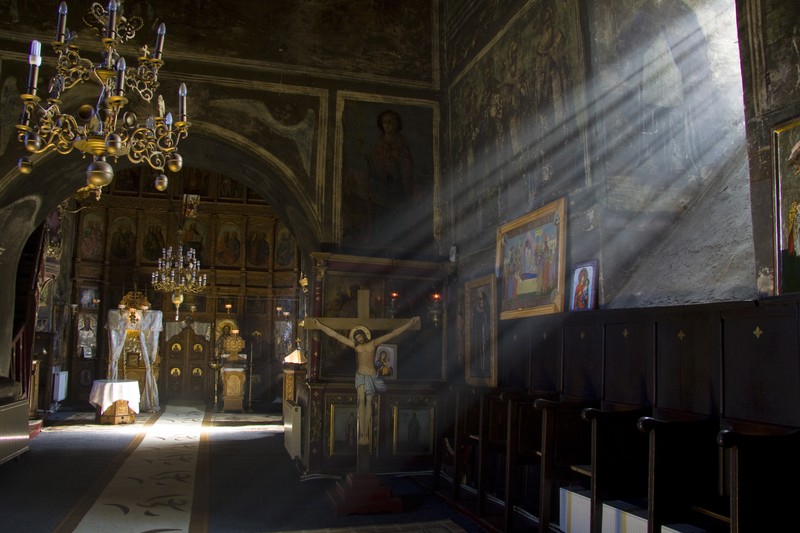
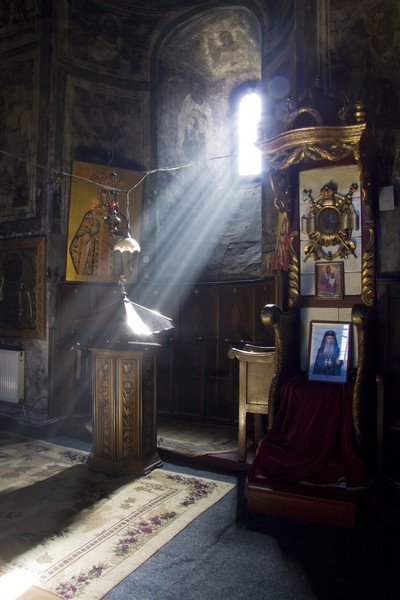
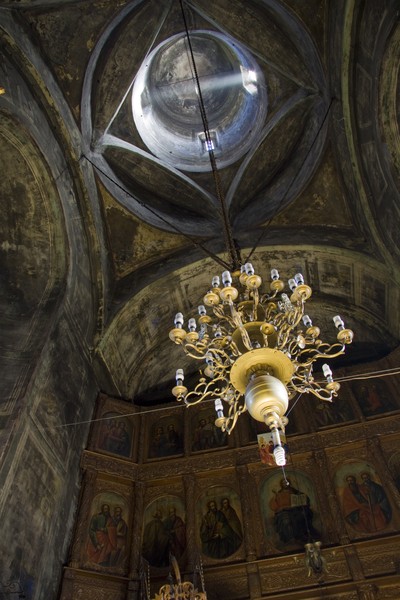
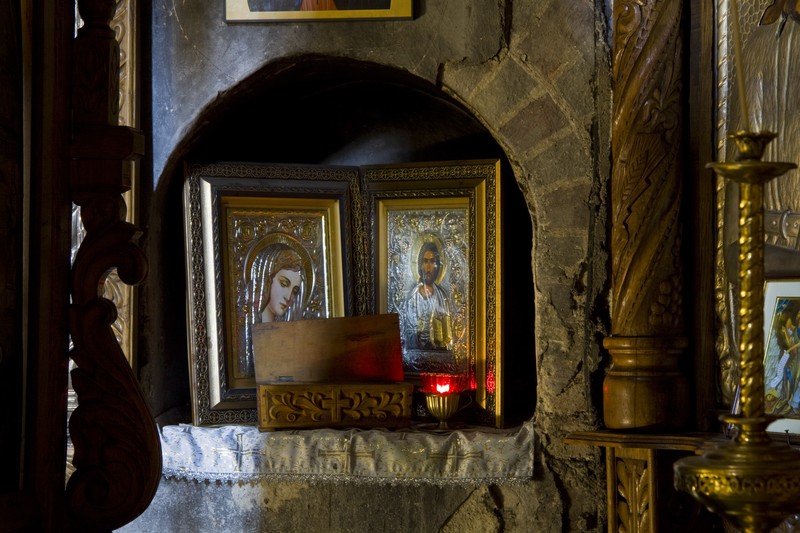
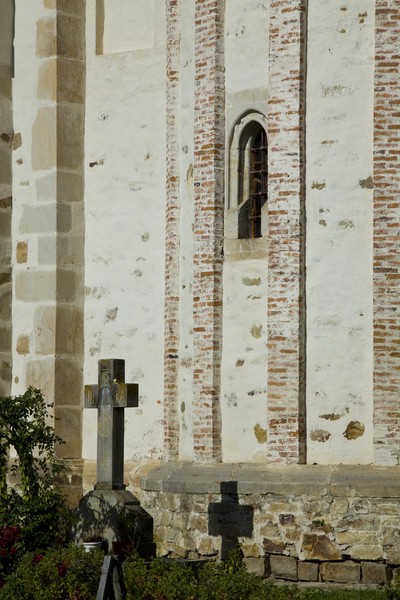
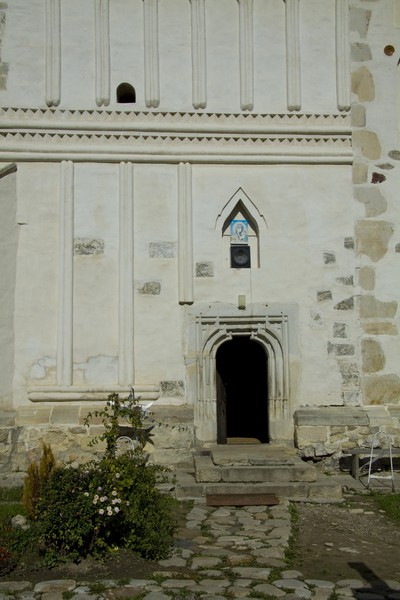
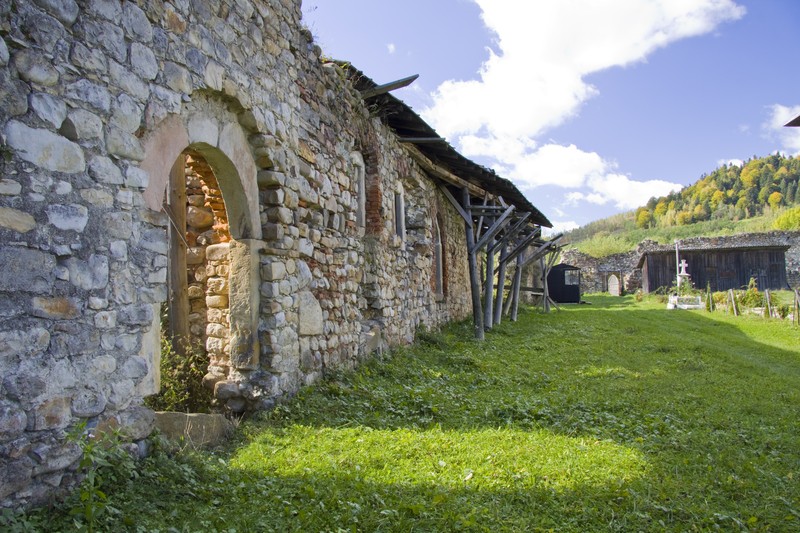
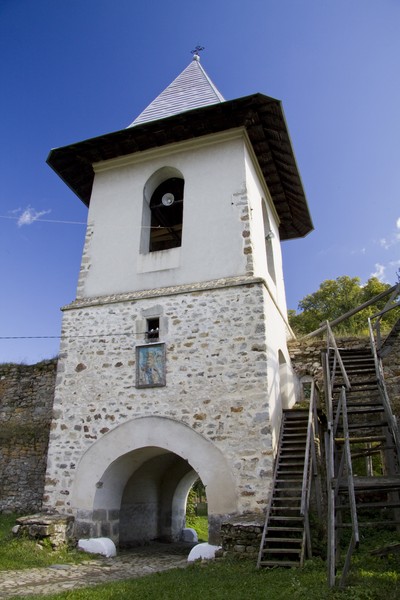
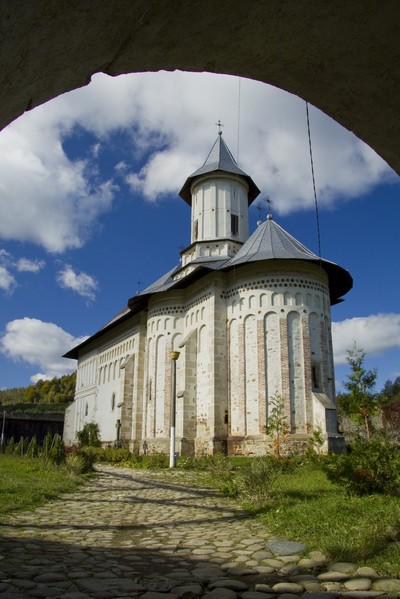
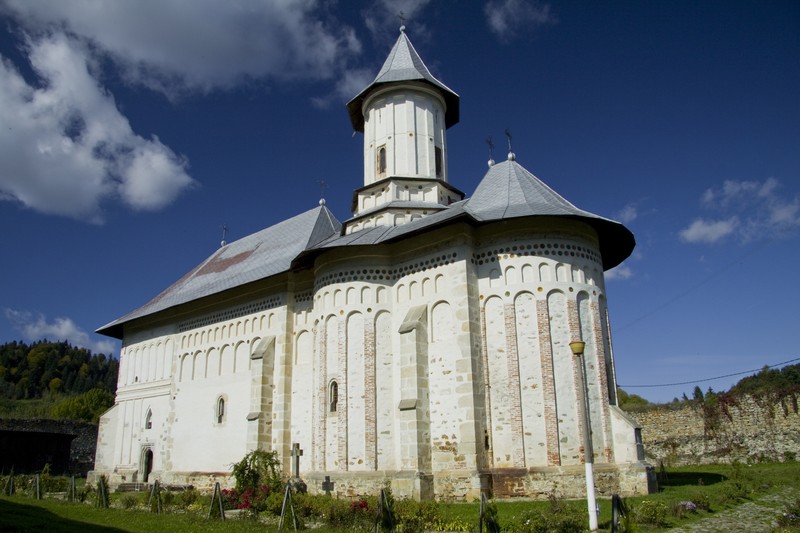
The monastery church at Tazlău has a trefoil plan, with rounded side apses that are small compared with the elongated sanctuary apse. It has buttresses at the narthex, which projects beyond the main walls, at the apses and at the corners of the porch added at the end of the 16th century, during the rule of the Movilesti family. The exterior is decorated with two rows of small recesses beneath the cornice and a row of elongated niches extending the full height of the façades around the church.
Like a fortress, Tazlău Monastery's church was enclosed by stone walls with battlements and external buttresses. In 1514, the church was plundered by bands of Szeklers, and towards the end of the 17th century it was placed under the authority of the patriarchates of Constantinopol and Ierusalim, ushering in a period of economic and spiritual decline.
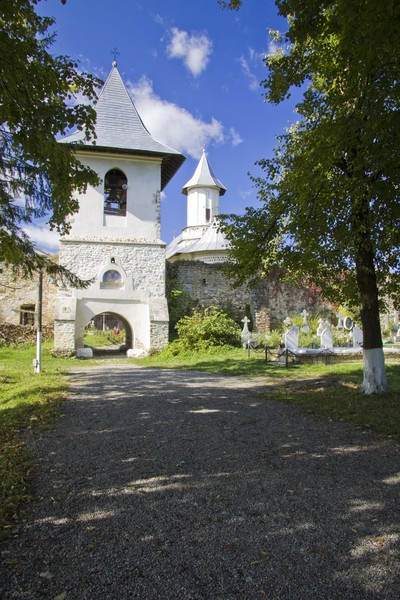
Prince Petru Rareș built the bell tower at the entrance and repaired the damage that Tazlău Monastery had sustained over time, restoring it to its original condition. Alexandru Lapusneanu built the porch adjoining the narthex, while Ieremia Movila installed an alderwood door made in 1596 “by a certain Cozma Maistrul”. In 1711, Constantin Mavrocordat placed it under the authority of Mount Sinai, and in 1835 it became a parish church.
In the mid-17th century, Archimandrite Zaharia built the abbot's palace beside the bell tower built by Petru Rareș, strengthening the defences and security at the three gates. Between 1858 – 1859, a series of repairs at Tazlău Monastery altered the original form of the monastery founded by Voivode Stephen the Great, introducing architectural “innovations”. The interior paintings were also renewed; the earlier decoration had been predominantly red, with a pattern recalling the arrangement of stone blocks in the masonry facing.
In 1879, a fire brought monastic life at Tazlău Monastery to an end. The place of worship was rebuilt in 1894, and the church, now a parish church, primarily served the needs of the village. The bell tower, also destroyed by the flames, was rebuilt in 1902 in a style influenced by Russian art. The arched entrance to the monastery grounds passes beneath the bell tower on the eastern side, while traces of the princely house and former monastic cells survive within the enclosure.
In 1990, the church of the holy voivode Stephen the Great once again became a monastery for monks, returning to its original purpose.
More on the same topic

Ethnographic museums, treasures of local history and traditions
Ethnographic museums are true treasures and expressions of love for traditions, folklore, and spirituality of the places, and so is the Ethnographic Museum Casa Bunicilor in the village of Mitocul Bălan, Crăcăoani commune.

Neamț receives five nominations across four categories in Destinația Anului
We have good news for everyone who loves Neamț County and all its beauty: it is among the finalists in the Destinația Anului 2024 competition, with five nominations across four categories: Piatra Neamț in the Inspiring Cities category.

The Story of the Seven Miraculous Icons of the Holy Virgin and Saint Anne from Neamț Land
Renowned not only for its beauty and historical significance but also called the “Jerusalem of Romanian Orthodoxy,” Neamț Monastery houses the miraculous icon of Virgin Mary with three hands…