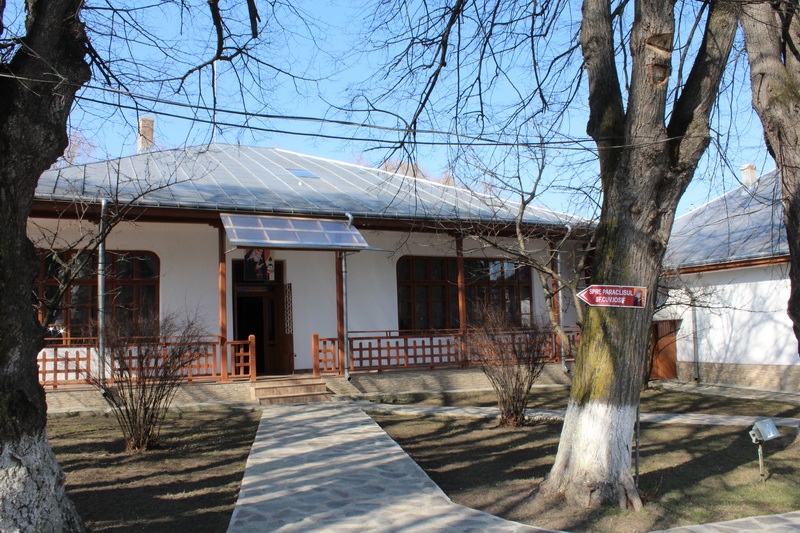
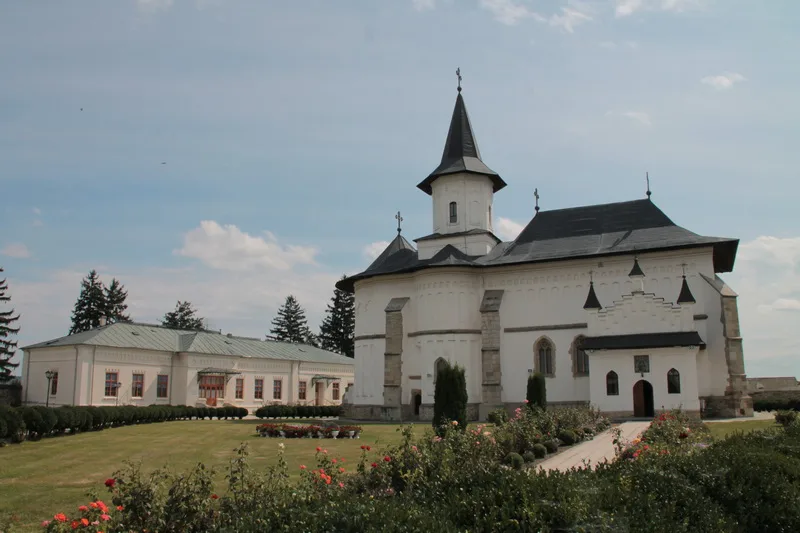
The Neamț region is a blessed place where monasteries have sprung up, each a treasure of monastic life devoted to God. Our pilgrimage can begin at the first church of the Roman Bishopric, dedicated to Sfânta Vineri and built by Roman Voivode, the father of Alexander the Good, from whom the settlement, now the city of Roman, is thought to have taken its name. At the time, it housed the remains of princes, which is why it was chosen as the episcopal seat as early as that period. Petru Rareș built a new church on the site, dedicated to Sfânta Parascheva, which we admire today as an outstanding architectural achievement, eloquent evidence of the decorative mastery attained by the art and culture of that turbulent age. This is why Roman Episcopal Cathedral, a work of inestimable value created by Romanian genius, forms part of both national and world heritage.
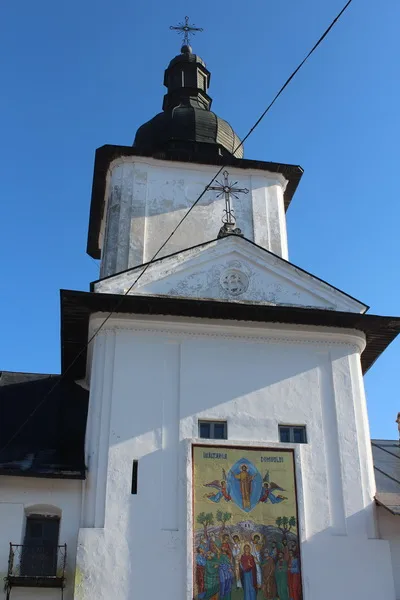
Following our itinerary, we then head towards Neamț Monastery, also known as the Jerusalem of Romanian Orthodoxy, set in the valley of Nemțișor Stream, in a glade filled with sacred stillness and surrounded by the forested heights of the Neamț Mountains. Monks established it there during the reign of Petru Mușat, who built a stone church that later princes surrounded with stone walls, buildings and monastic cells. The monastery was then strengthened during the reign of Alexander the Good (1400-1432), but it was Stephen the Great who, in 1497, following his victory at Codrii Cosminului that same year, built the church dedicated to the Ascension of the Lord within the monastery grounds, a representative monument of the architecture and decorative wall art of his time. The monastery museum houses objects of recognised historical and artistic value, including the icon of the Mother of God, also called Lidianca, received by Alexander the Good as a gift from Emperor Ioan al VIII-lea Paleologul (1425 – 1448), icons painted by Nicolae Grigorescu (1838-1907), an epitaphios from 1437 and various liturgical objects. On arriving at Secu Monastery, built in a corner of paradise as far back as the time of Petru Rareș, you are struck by the beauty of the setting, with its white buildings and the abundance of flowers on either side of the paths, and by the beauty of the paintings adorning the church built between 1812-1818. The church's patronal feast is celebrated on 29 August, the day of the Beheading of Saint Ioan Botezătorul. The monastery's museum preserves a valuable treasury of beautiful liturgical objects, crosses, Gospel books, manuscripts and printed works of exceptional historical and artistic value, including the liturgical veil depicting the Entombment of the Saviour, embroidered in gold thread with pearls and precious stones (1608), and Cazania Mitropolitului Varlaam (1643).
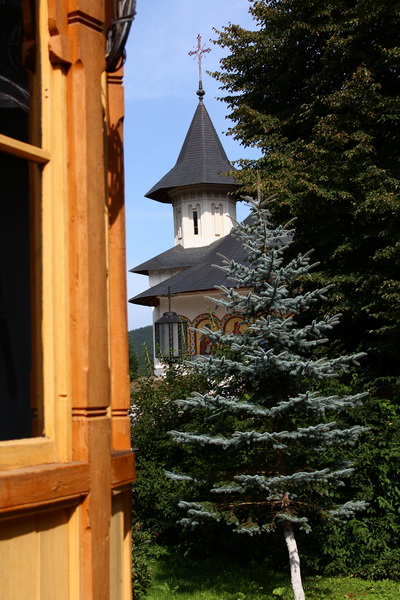
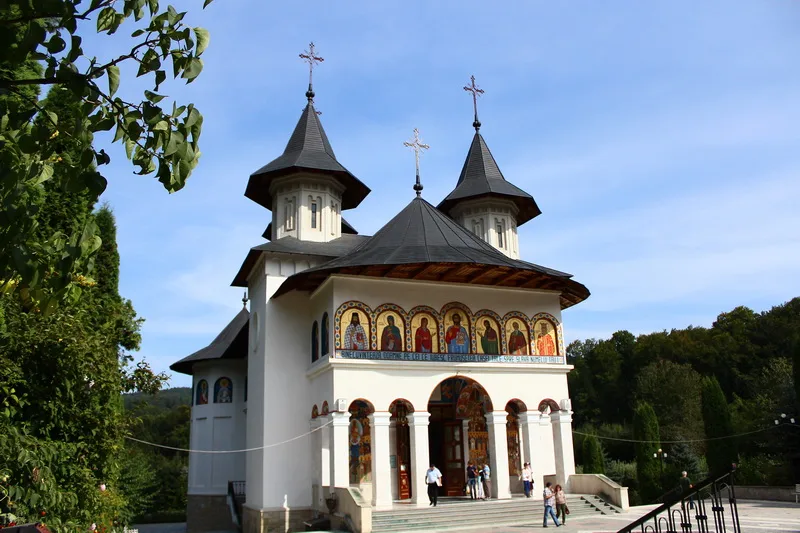
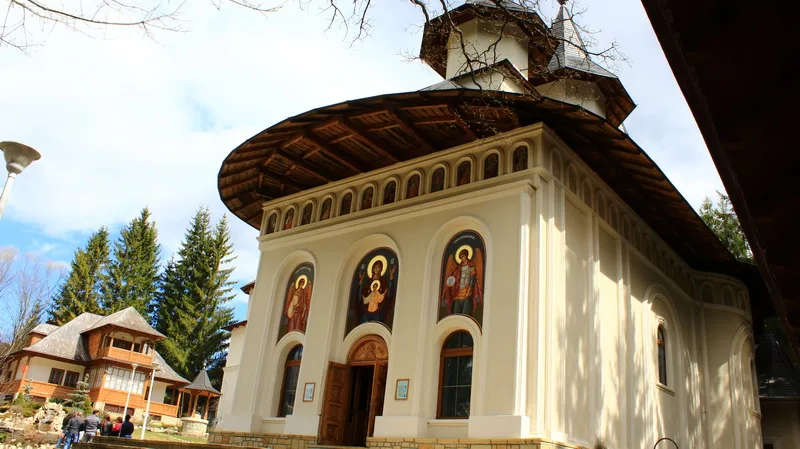
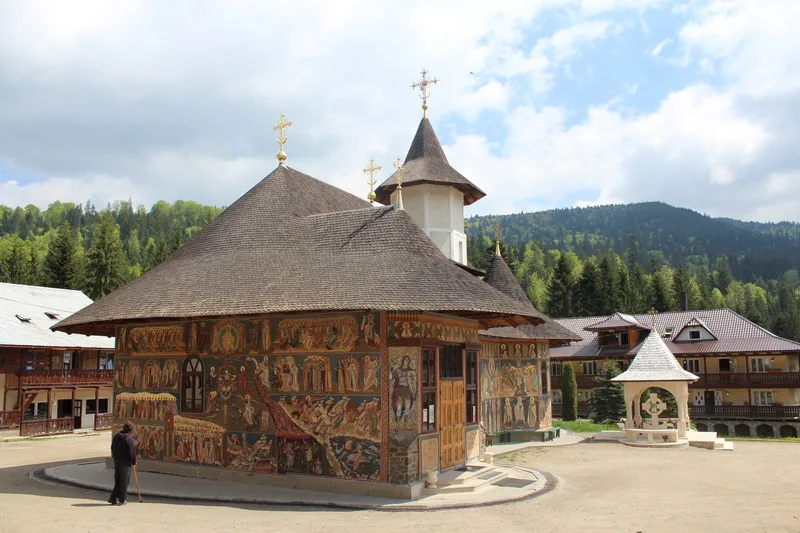
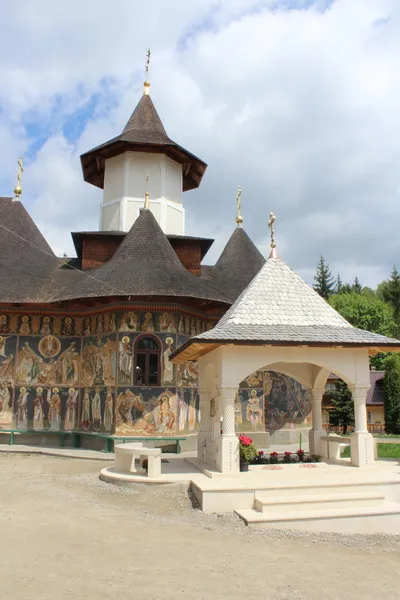
Not far from Secu, deeper in the forest, we discover Sihăstria Monastery, founded in 1655 with a church, monastic cells and everything the monks needed for monastic life, visited by pilgrims on their way to Sfânta Teodora de la Sihla Cave and later because of Father Cleopa Ilie, one of the best-known Romanian spiritual fathers. After troubled times marked by Tatar and Turkish raids and plundering, the burning of the monastery in 1821, the loss of its treasures and the monks' flight to other places of worship, years of restoration and rebuilding followed here. The monastery church was built in 1825 and dedicated to the Nativity of the Mother of God (8 September). Continuing along our trail, we head towards Petru Vodă Monastery, situated in Hașca Glade at the foot of the Stânișoarei mountains, built there by Father Archimandrite Iustin Pârvu in 1991, a place of worship unique in Romania, known both as a centre of pilgrimage and ecumenical tourism in the Neamț region and as a memorial to the martyrs of the communist regime's prisons: Archimandrite Iustin Pârvu, Father Atanasie Ștefănescu and the poet Radu Gyr. The monastery is dedicated to the Holy Archangels Michael and Gabriel, whose feast is celebrated on 8 November. At Father Iustinian Pârvu's initiative, a home for older people, a children's home with two school classes (I and II), and a medical dispensary providing healthcare were established at the monastery. From here, we can head towards the final stop on our proposed pilgrimage, Durău Monastery. First established around 1779 as a community of nuns and later a hermitage for monks, the monastery is situated in the Durău spa and climatic resort, at the foot of Ceahlău, considered the holy mountain of Romanian Orthodoxy. The present church, dedicated to the Annunciation (25 March), was built between 1830 and 1835 and painted in 1935 by Nicolae Tonitza and his pupils. The Sfântul Daniil Sihastru Pastoral Cultural Centre has stood within the grounds of Durău Monastery since 1996.
Here we conclude our proposed ecumenical journey, but we will continue to present other itineraries through which you can discover the spirituality, culture and historical heritage of places in Neamț.
Photo: Marius Chiriac
More from the collection
Open the collection