2 of 10
Folk Artisans and Ethnographic Museums
17 photographs27 min read
© Neamț County Council
Location: Piața Curtea Domnească, no. 1, Piatra Neamț, Neamț County, Romania
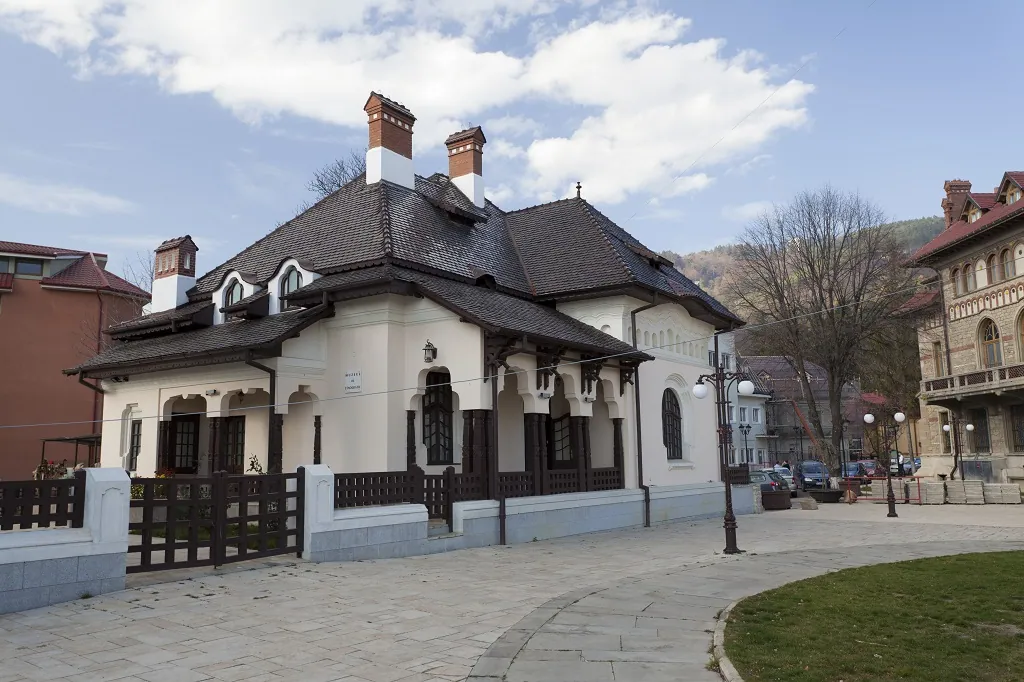
Ethnography Museum in Piatra Neamț
GPS coordinates: N 46 55.993, E 26 22.083
History/legend: The Regional Archaeological Museum in Piatra Neamț was founded as early as 1934 by the priest and archaeologist Constantin Matasă; the other departments, including ethnography, grew from this nucleus. The heritage of folk culture attracted the interest of many intellectuals, who assembled small private or school collections. The richest was the collection of ethnographic objects assembled by researchers in the Bistrița Valley before the reservoir at Bicaz was built. It was stored and displayed in a house on the grounds of Durău Monastery until 1975, when it was transferred to Piatra Neamț following the establishment of the County Museum of Ethnography. The museum’s staff were tasked with seeking out and collecting the oldest and most interesting evidence of life and work in Neamț County. To date, the Ethnography Museum in Piatra Neamț holds more than 5,000 objects representing every aspect of folk culture in Neamț County.
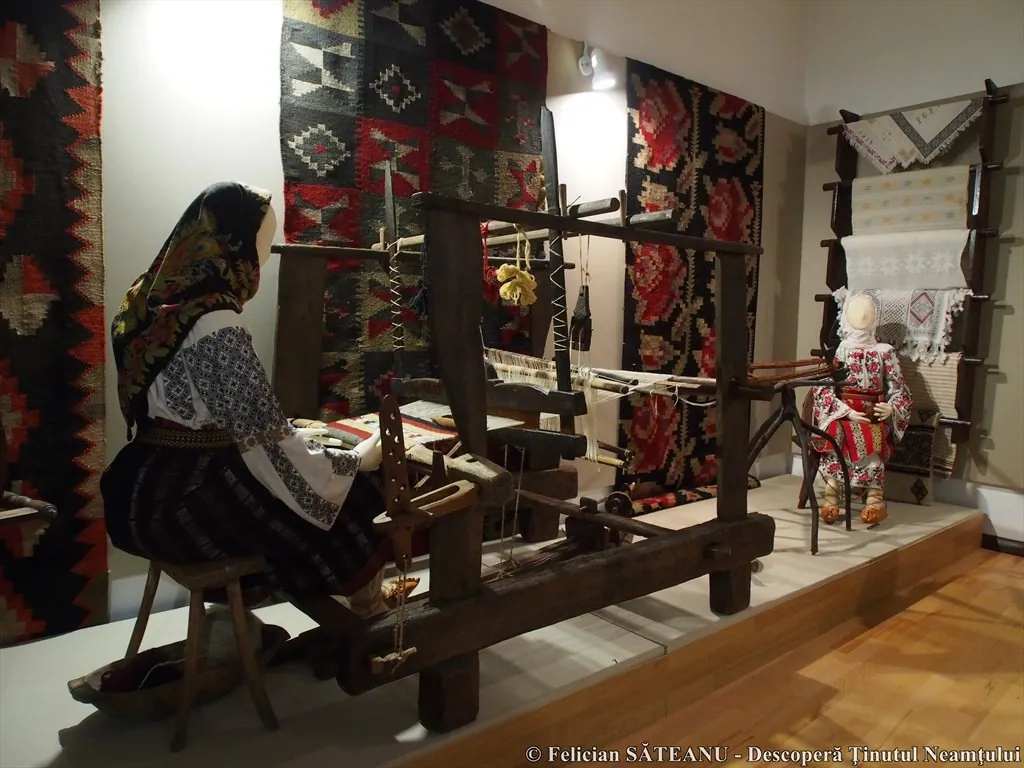
The collection of traditional tools and equipment contains a wide range of evidence of the technologies used by people in this area: wooden and iron ploughs, harrows and woven hurdles for threshing maize; tally sticks and shepherds’ staffs, cowbells and bells, axes and hatchets, two-man saws and saws, pickaroons and horseshoes, scythes and pitchforks, grindstones, anvils and bellows, pickaxes and hammers, fishing equipment (fish spears, nets, seines, lift nets, fish weirs, basket traps, dugout canoes), hunting snares and traps, carts and timber carts, sleighs and sledges, grinders and hand mills, tools for processing textile fibres (flax breakers, yarn swifts, bobbin winders, warping frames, looms, reels …), oil and grape-must presses, carpenters’ workbenches with their chisels and planes, and many other tools, including equipment used in traditional industry (mills, sawmills, large presses, fulling mills for homespun woollen cloth and fulling vats, brandy stills). All these recall the work done by hand by local people for centuries, even millennia; these methods were gradually abandoned from the beginning of the 20th century and survive today only as museum exhibits.
The collection of household and farmstead objects: the many forms carved from wood (hollow-log beehives, beehives, well buckets, mortars for pounding salt, grain measures, kneading troughs, cheese chests, scoops and pepper pots, spoons…), or made from staves (pails, small buckets, butter churns, small casks, tubs, washtubs, ), trivets and cauldrons, oil lamps and fire steels, furniture (benches, dowry chests, corner cupboards, plate racks), various baskets, and elements of traditional architecture (porch posts and church iconostasis posts). These gave traditional homes their old-world atmosphere.
The spoon collection is one of the largest in the country and was acquired from a keen collector of spoons.
The collections of the Ethnography Museum in Piatra Neamț are representative of Neamț County’s folk culture. Over nearly four decades, this heritage has been presented in a series of exhibitions and academic publications.
Getting there: Piața Curtea Domnească nr.1, Piatra Neamț (DN15 / DN15C / DN15D)
Opening hours and admission fees:
Museum opening hours
10:00 – 18:00 (April – September)
9:00 – 17:00 (October – March)
Closed on Mondays.
Museum admission fees
– adults: 16 lei/person
History and Ethnography Museum Târgu Neamț – exhibition of traditional technology
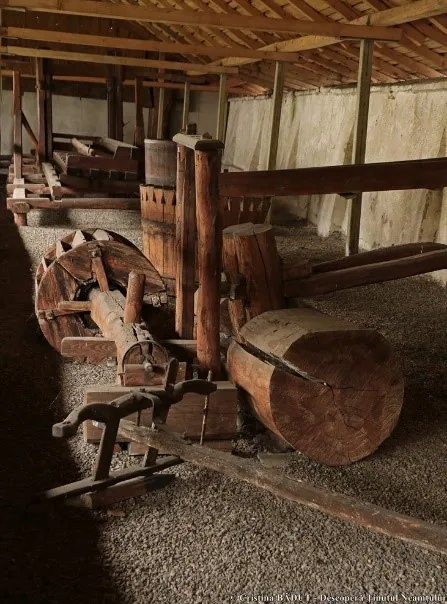
Location: Ștefan cel Mare Street, no. 37, Târgu Neamț, Neamț County, Romania
GPS coordinates: N 47 12.442, E 26 21.409
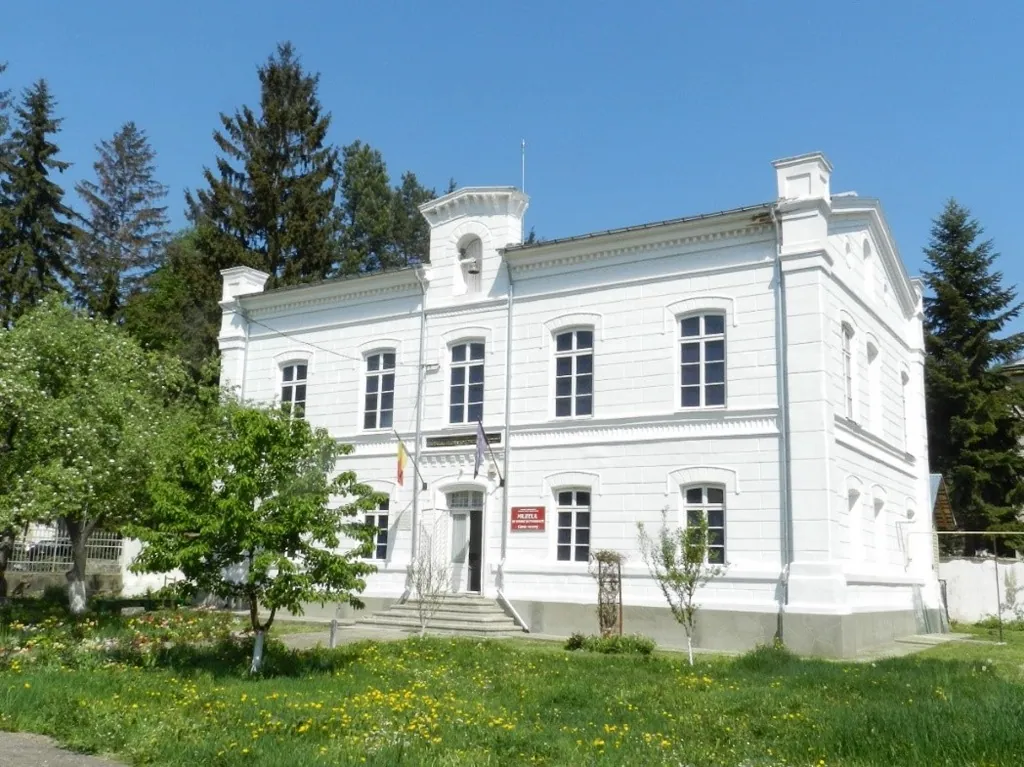
History/legend: The museum in Târgu Neamț occupies a historic building – Școala Domnească – built in 1852 during the reign of Voivode Grigore Ghica. Here, the great storyteller Ion Creangă, the scholar and philosopher Vasile Conta and many townspeople learned “their letters”. On the eastern side of the school’s spacious courtyard, a large barn was built in traditional style to house some of the most valuable and widespread forms of traditional machinery – the last surviving examples: a watermill, a fulling mill for woollen cloth and a washing vat, a water-powered saw, a massive press and distilling equipment. All this large equipment was acquired between 1980 and 1985, saving it from destruction so that it could be preserved, protected and displayed for everyone to learn about.
The apparatus for making fruit juice and oil is the most impressive: it consists of a massive oak press with a very heavy beam called the “harrow”, 8 m long and fitted onto a thick screw that, when turned, lowers the beam to press fruit in the juice-making device and hemp seeds in the oil-making device in turn. The great weight of the beam ensured efficient pressing. Beside the press are its other components: a hearth with a hotplate on which the hemp seeds were roasted, a large chest for storing the seeds, and a crusher for grapes or apples. Built in 1920, the apparatus was housed in a wattle shed and served the villagers of Agapia commune until 1980, when it became a museum exhibit of exceptional value for its form, size and craftsmanship.
The water-powered saw, known as a “frame saw” or a “plank mill” was built in 1932 by a skilled craftsman from Gheorghieni. Although he was elderly by 1985, he came to Târgu Neamț to reinstall the saw he had built in his youth. The saw on display is 15 m long and stands on a solid base supporting a frame with rollers, called a “carriage”, which moves the log towards the saw frame and blade for cutting. Power comes from water falling from the channel onto the bucket wheel, whose shaft drives the cogwheel and lantern pinion – all housed in a pit dug below ground level. The museum collection in Neamț needed an example of this machinery, representing the craft of sawing timber, which was widespread in villages along mountain streams from the early 19th century until the mid-20th century.
The watermill used the same power system as the saw, but repositioning the lantern pinion made the runner stone turn horizontally beneath the bedstone, crushing the cereal grains between them. The mill on display, brought from the village of Borlești, has two horse heads at its grain hopper as guardians of the machinery.
The fulling mill for woollen cloth is a relatively simple traditional installation, consisting of troughs in which woollen cloth is placed and beaten with heavy wooden mallets to make it denser; the mallet handles are fitted into vertical posts called “uprights”. Wooden cams on a shaft turned by the waterwheel raise and lower the mallets in turn. Beside it is a hearth with a cauldron of hot water, which flows through a chute directly onto the cloth in the trough. Also beside the mill is the fulling tub – a perforated tub in which water falling from the chute swirled and compacted thick woollen fabrics. In the past, this installation made villages along the mountain and hill streams of Neamț famous for the quality of their fulled woollen cloth. The mill on display was brought from the village of Crăcăoani, which had a great many water-powered installations.
The fruit brandy still also has two parts: a copper boiler set into the hearth, where the fermented fruit is placed, and a barrel containing a cooling coil. It became widespread because of the extensive plum and apple orchards. These installations varied greatly in size, from small ones such as the example on display, brought from the village of Humulești, to full-scale distilleries, which had appeared by the 19th century.
The installations on display at the museum in Târgu Neamț are living testimony to the ingenuity and skill of the woodworkers who made them, and to the knowledge of the villagers who used them for themselves or for people in areas where such skills were scarce.
How to get there: Ștefan cel Mare Street, no. 37, Târgu Neamț (DN15B or DN15C)
Opening hours and admission fees:
Museum opening hours
10:00 – 18:00 (April – September)
9:00 – 17:00 (October – March)
Closed on Mondays.
Museum admission fees
– adults: 16 lei/person
– groups of adults and students*: 8 lei/person
– preschool children and school pupils: 4 lei/person
*NOTE: A group means a minimum of 10 people
Contact details: telephone: +40.233.790.594, website: http://mietn.muzeu-neamt.ro/
“Neculai Popa” Museum Târpești
Location: Neculai Popa Street 342-306, Târpești village, Petricani commune, Neamț County, Romania
GPS coordinates: N 47.150639, E 26.438472
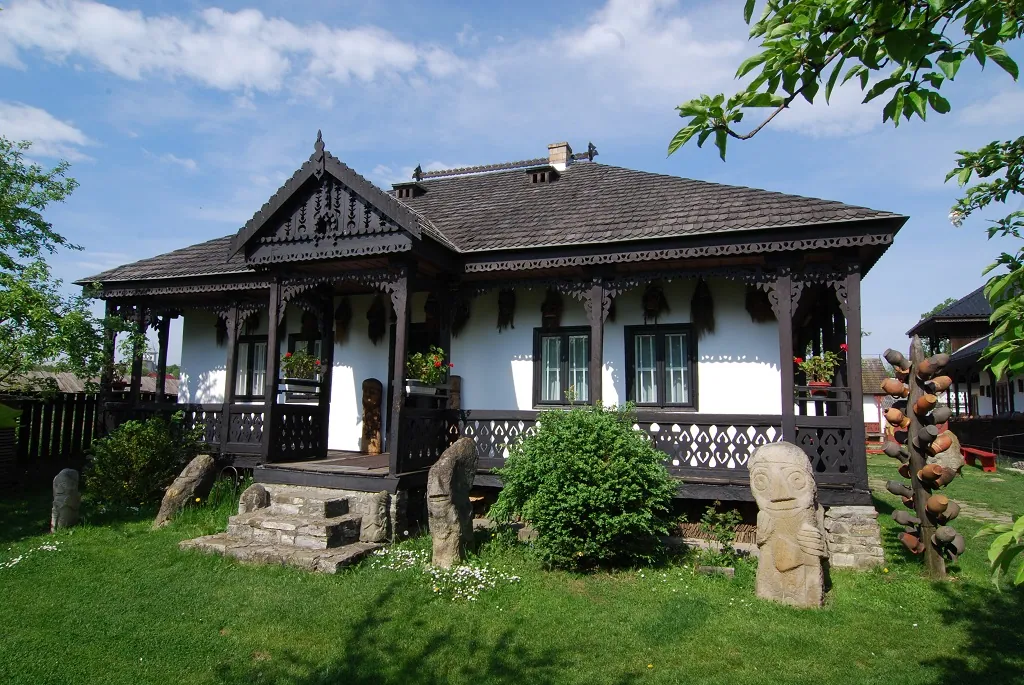
History/legend: The “Nicolae Popa” Museum in Târpești, founded by the folk craftsman after whom it is named (1919-2010), is a private museum 12 km from the town of Târgu Neamț, in Petricani commune.
In a courtyard enclosed by a wattle fence, as in days gone by, a path lined on both sides with trees and wooden and stone statues leads to a traditional house with a wooden veranda. This is the home of Nicolae Popa, a folk craftsman from Târpești who carved stone and wood; today, it is one of the most beautiful and interesting ethnographic museums in Moldavia.
Nicolae Popa, the museum’s founder, was known as a folk craftsman, artist, exceptional collector and writer. As a child, he learned to make New Year masks; later, he learned to carve original human figures in stone (sandstone) and wood. He donated more than 1,900 pieces of folk art and ethnography to museum collections in Romania and abroad. His works were also shown at exhibitions in Romania and in major cities in Italy, Poland, Yugoslavia, France, Switzerland, Argentina, the USA, Mexico, Belgium, Germany, the Netherlands, Mongolia, China, Sweden, Japan, Canada and Bulgaria.
The museum complex consists of two buildings. The first was built as a home by Vasile and Elena Popa. Its four rooms house most of the folk craftsman’s creations (masks and costumes for Christmas and New Year performances, and naïve sculptures in wood and stone), along with a collection of waistcoats embroidered with traditional decorative motifs from the Neamț region. Construction of the second building, known as “Casa colecțiilor”, began in 1974, and it opened to the public three years later. It houses a range of archaeological, numismatic and ethnographic collections, as well as religious objects and naïve paintings.
The idyllic picture of traditional village life is completed by the courtyard, adorned with the craftsman’s creations and captivating in its harmony of nature and naïve art. A monumental oak gate leads to the group of sculptures, incorporating a substantial number of human figures like a family tree.
Some of his decorative wood carvings are also on display in the permanent exhibition of the History and Ethnography Museum in Târgu Neamț.
How to get there: DN15C – DJ 155I
Opening hours and admission fees:
Museum opening hours
Monday – Sunday: 08.00 – 20.00
Museum admission fees
– adults – 10 lei/person
– preschool children and school pupils – 5 lei/person
Contact details: telephone: +40.747.134.040, +40.758.640.653, email: popamuseum@gmail.com; popamuseum@yahoo.com, website: http://www.muzeulpopa.ro/
Private Museum Vasile Găman
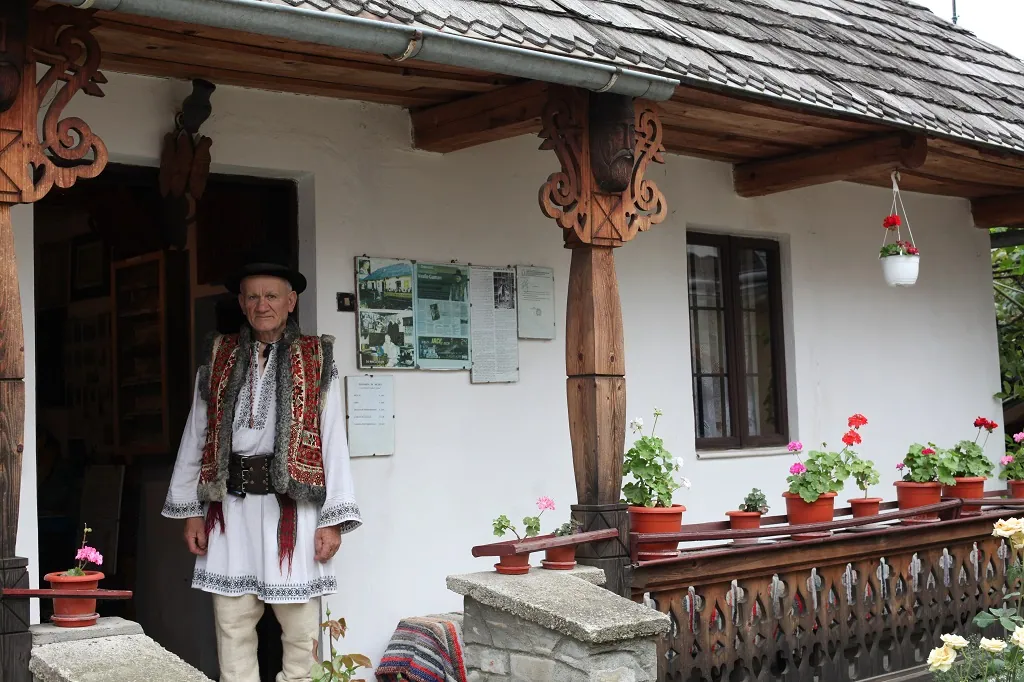
Location: The museum is in the village of Lunca, Vânători-Neamț commune, Neamț County;
GPS coordinates: N 47.22518, E 26.30032
History/legend: Vasile Găman, a talented and modest folk sculptor, lives in the village of Lunca, Vânători-Neamț commune, in this blessed land where Neamț Citadel has stood watch for six centuries and from which he drew his creative strength and love for his ancestral land and people, expressing them in symbolic forms carved from the noble timber of its forests. The skilled craftsman and his two sons, Gheorghe and Vasile, have painstakingly carved dozens of crosses, wayside crosses, iconostases and choir stalls for many churches in Neamț County and across the country, earning a well-deserved reputation.
Evidence of Vasile Gaman’s talent and skill can be found throughout his homestead, beginning with the large gate on which, as he says, “I carved the history of our people with a chisel for all passers-by to know.” It is a unique work, conceived with great complexity, depicting important historical events and scenes and the figures of great princes in a unified style of high artistic quality.
Love for the traditions of the people of the Ozana Valley led to collections that saved tools and household objects, dish racks and small tables, old costumes, sheepskin waistcoats and woollen coats, pots of every kind, musical instruments, old coins, icons, books and maps, and countless other treasures from destruction after they had been cast into attics or barns because they were no longer useful. Vasile Gaman sought them out, brought them home, cleaned and preserved them, but had nowhere to display them. So, in 1988, he built a house especially to display the ever-growing collections. The Vasile Gaman House Museum follows local tradition, with two rooms separated by a central hallway, a richly decorated veranda and a long porch at the back. Every room is crammed with objects, leaving you unsure where to look first: at the festive costumes? At the woollen carpets and woven rugs? At the props for New Year dances? Or at the crosses, figurines and carved panels made by the craftsman? All deserve a close look, for they hold the secrets of how ancestors lived and worked, or the feelings of contemporary makers.
Vasile Gaman has taken care to pass on the craft he has practised all his life. He first taught it to his sons, who are now well-known and respected craftsmen in their own right. He then taught many pupils at the village school before becoming an instructor in woodwork at the Folk Art School and later at the “Carmen Saeculare” Centre for Culture and Art in Piatra Neamț. He is proud that many of his pupils have taken up the craft – a “golden bracelet”, as he calls it, that brings great satisfaction and recognition.
When you head towards Neamț Monastery, take a short detour along a lane to the right for about 2 km and visit the Gaman family. Alongside the examples of hard work and talent and the remarkable cultural treasures collected and displayed in the museum, you will find people who warmly welcome visitors; if you happen to be there for a feast, you can taste the “poale-n brâu” pies skilfully made by the craftsman’s wife and have a small glass of plum brandy made by the craftsman himself. Everything here is done gladly, amid a sacred stillness and with a love of beauty.
Biographical details:
- Vasile Gaman was born in 1936 in the village of Lunca, in the commune of Vânători-Neamț, where he still lives;
- Graduated from the School of Arts and Crafts in Tîrgu Neamț in 1954;
- Certified woodworker with his own workshop since 1960;
- Sculpture instructor at the Folk Art School in Piatra Neamț – 1990-2010;
- Member of the Romanian Academy of Traditional Arts, Sibiu, 1996;
- Honorary citizen of the commune of Vânători-Neamț.
Access: From National Road 15B, the village of Lunca lies on DC169, to the right after approx. 4 km when travelling from Târgu Neamț to Pipirig; follow the signs to the museum. GPS coordinates: N 47.22518, E 26.30032
Contact details: 0736 324 173
Olga Mavrocordat-Sturdza History and Ethnography Museum Grințieș (“living” museum complex)
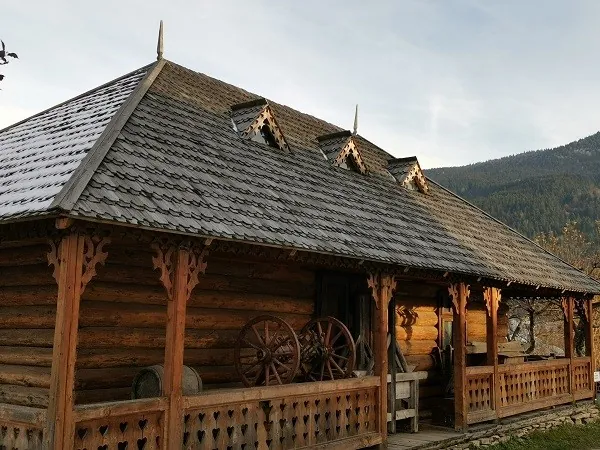
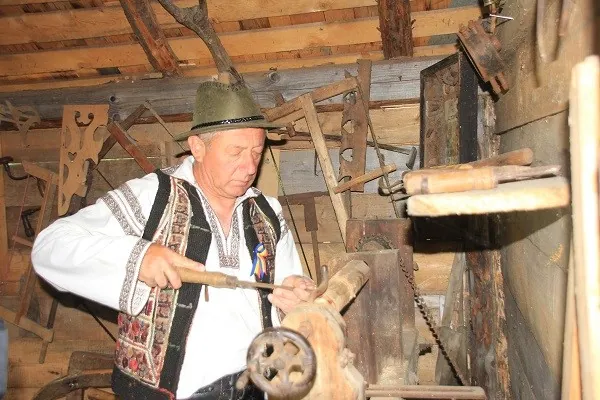
Location: village of Grințieș, commune of Grințieș, Neamț County
History/legend: The museum was founded in 2015 by a group of householders from Grințieș who specialise in woodcraft. The house is built in a traditional mountain style, with a wide porch running all the way around, a veranda at the front and three gables at the back – the sort of house a well-off person, teacher or priest would have lived in at the end of the 19th century. Its roof is covered with small wooden shingles with a simple decorative pattern. Several kinds of wooden “flowers”, made by our craftsmen, decorate the veranda, porch and “soffit”. The mountain house has a “best room” with a bed, table, dish rack, traditional chairs and other wooden or clay exhibits. The large room contains two pairs of looms, warping frames, yarn winders and other tools used in cottage industry. The cottage industry workshop draws on the skills of two weavers, a woman and Ilie Alexandru, a village teacher who learnt the craft from his mother.
The museum also has an annex housing two workshops, one for blacksmithing and one for carpentry, built in the same mountain style, characterised by restraint and good taste. All three workshops are “living” – traditional but operational – and the craftspeople can demonstrate their skills by making various objects in front of visitors. The blacksmith’s workshop makes small axes, hatchets, horseshoes, hooks, rings and other items. The carpentry workshop has a woodturning lathe on which various objects can be turned: wooden stirring sticks, table or chair legs, spindles, distaffs and other items; it also has a workbench where handles can be fitted to tools, wooden ornaments made, wood planed, and decorative “flowers” for houses cut with thin saws (fret saws), among other tasks. Wooden billets are split to make shingles, which are then decorated with drawknives on a “shaving horse”, a pedal-operated device for holding and shaping the wood. The exhibits include a coffin, dowry chests, and items made by coopers and wheelwrights. The traditional workshop was assembled from donated objects of considerable age (the lathe is over 100 years old). Other wooden objects, particularly coopered items used in agriculture or animal husbandry, are kept in the attic of the house, which has been arranged as an exhibition space. The workshops’ craftspeople are Valentin Ghiorghiu and Ludovic Gabor or Ilie Ichim and Daniel Dieaconu. The museum is in the Town Hall courtyard and is in the care of the Pro Grințieș Association.
Access: from national road DN15, on the right when travelling from Poiana Largului towards Tulgheș
Contact details: Prof. Dr Daniel DIEACONU – 0757 152 478
Elena and Vasile Ciocârlan – folk craftspeople: hemp weaving and masks
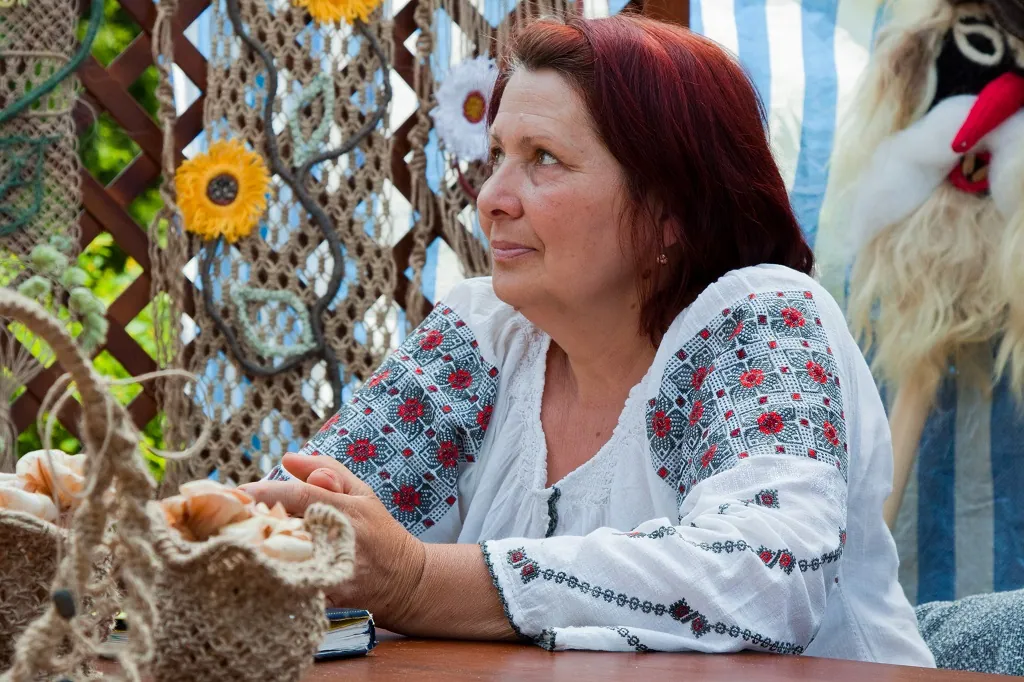
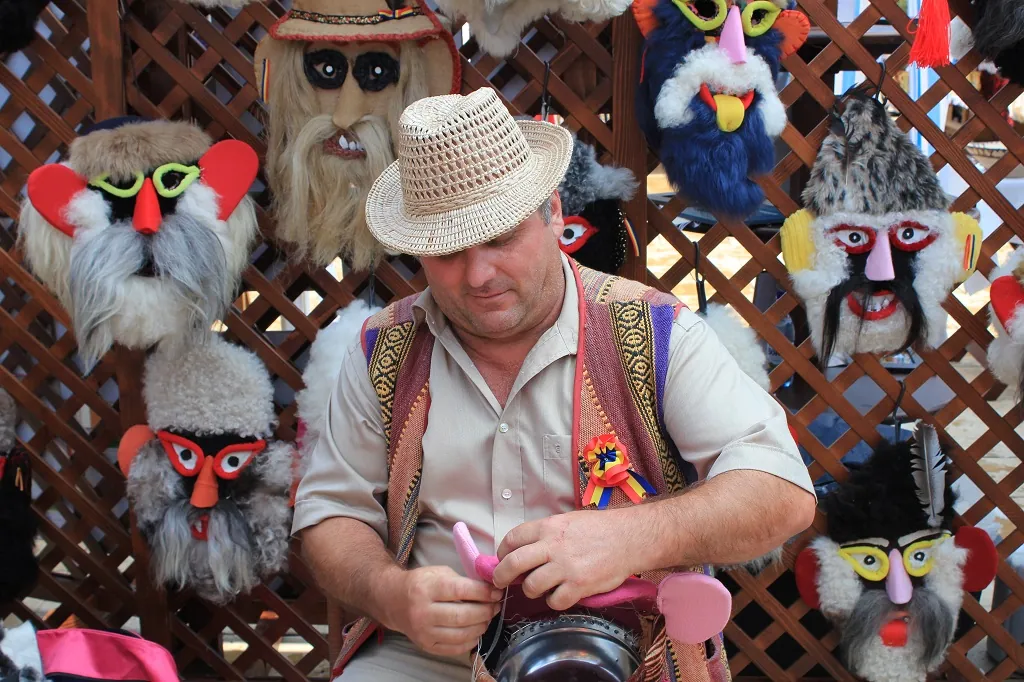
Location: Principală Street (DJ 208G) no.435, Ștefan cel Mare village, Ștefan cel Mare commune, Neamț County, Romania
History/legend: In Ștefan cel Mare commune in Neamț County, folk craftsman Vasile Ciocârlan carries on the craft of mask making. Born and raised in a village, where traditions, customs and, above all, traditional festive rituals are more faithfully preserved and keenly observed, Vasile Ciocârlan has made a craft of creating a variety of masks with ingenuity, sharp irony and great skill, expressing his own criticism of folk characters. His remarkably expressive masks take an astonishing variety of forms, creating a fantastical world with a distinctive picturesque quality. Combining inventiveness with tradition, folk craftsman Vasile Ciocarlan creates not only masks but stories too – about one person, another, anyone. Every Romanian knows someone who “always has their mouth open” or someone who “has big ears”. In the same way, with subtle irony and a keen critical eye, the craftsman skilfully brings out character traits, types of people and the ills of the times. The masks thus make it possible to express truths that could not otherwise be spoken.
To make his masks, craftsman Vasile Ciocârlan uses a wide range of materials, including animal hide and fur, canvas or thick woollen cloth, carved wood and tree bark. Sometimes, achieving the expression he wants calls for more unusual materials: pieces of metal shaped into plates or rings, thick coloured cord, bird feathers, hemp tow, horsehair or pig bristles, coloured cardboard, beads, buttons, pieces of glass, beans, animal horns or shards of mirror.
With skill and dexterity, he creates anthropomorphic masks depicting an old man, an old woman, a bear trainer, a coppersmith, a lady and a Jew, as well as zoomorphic masks depicting a billy goat, a goat, a ram and a bear. These and other masks are made by hand in Vasile Ciocârlan’s workshop at his home in the Ștefan cel Mare village, in the commune of the same name. Because they are handmade, the masks are always unique, each bearing the craftsman’s personal stamp in the most original way possible.
With his deep knowledge of the customs and traditions of the Neamț region, Vasile Ciocârlan uses his masks to complete the atmosphere of winter celebrations in the villages of Moldavia.
Elena Ciocârlan, wife of Mr Vasile Ciocârlan, is a folk craftswoman who set up a workshop at home to create beautiful folk art objects and has mastered the craft of working with hemp. Although many village women once practised this craft, very few have kept the knowledge of knotting and plaiting hemp cord alive. These plaited pieces may look easy to make, but they require painstaking work, an eye for design and considerable patience. The patterns formed by plaiting hemp cord and alternating knots and lines are limited only by each craftsperson’s imagination.
Elena Ciocârlan learned the basics of the craft from old books; after that, the rest came naturally. With patience and hard work, she has used hundreds of metres of wound and twisted cord to create countless handmade objects built around knots. Her work includes decorative tablecloths, plant pot holders, flower baskets and large decorative panels designed to cover parts of the walls at home. Hemp cord plaited into geometric patterns has a beauty of its own, producing highly distinctive decorative pieces.
Mrs Elena Ciocârlan and Mr Vasile Ciocârlan are members of the Association of Folk Craftspeople of Moldavia and, as such, bring their masks and plaited hemp products to numerous festivals and events devoted to folk culture and traditions.
Access options: (E85 – DJ 208G / DN15C – DN15D – DJ 208G)
Contact details: telephone: +40.749.811.589, email: e_ciocarlan@yahoo.ro
Ștefan Grigoriu, Târgu Neamț – folk woodcarver
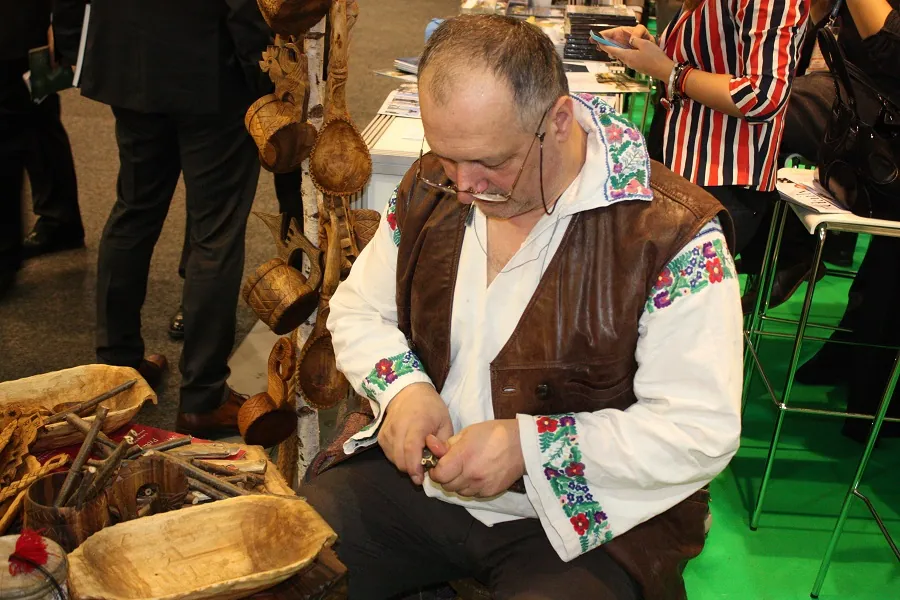
Location: the craftsman’s workshop and home are in the town of Târgu Neamț, at 42 Slt. Radu Teoharie Street
GPS coordinates: N 47.202349, E 26.364932
History/legend: Craftsman Ștefan Grigoriu lives in Târgu Neamț and is the grandson of Nicolae Popa, the renowned craftsman from Târpești who created an ethnographic museum. He learned to carve and make masks under Nicolae Popa’s guidance; his passion for the craft probably comes from him and from his uncles, who are well-known carpenters in Petricani. “I took part in the 2015 ITB fair in Berlin (World’s Leading Travel Trade Show, this year, 4–8 March) with my products, and did well,” he tells us modestly, showing us the varied objects he has made, which reveal his talent and skill. “But I do not just make things for fairs. I make plate racks, wooden pails, scoops, salt cellars, large spoons with ball-shaped handles, ladles, walking sticks with ball-shaped knobs, small fruit bowls, candlesticks, rustic furniture, small tables and chairs, benches, headboards, pencils and wooden masks to order, because this is how I make my living. I use all kinds of wood, but lately I have mostly used fir, cherry, walnut and sycamore. Of course, I am often invited to craft fairs held in towns and shopping centres, but I cannot accept every invitation. I am a member of the Nemțeanca Craftspeople’s Association in Târgu Neamț, the Association of Folk Craftspeople of Moldavia and the Association of Folk Craftspeople of the Neamț Region.”
Access: From DN15C Piatra Neamț – Târgu Neamț, turn right at the roundabout at the entrance to the town of Târgu Neamț, onto Slt. Radu Teoharie Street. No. 42 is in the first cul-de-sac on the right, after Cafeneaua Danioti.
Contact details: tel. 0742 925 725
Constantin Lungu – wood and metal carver
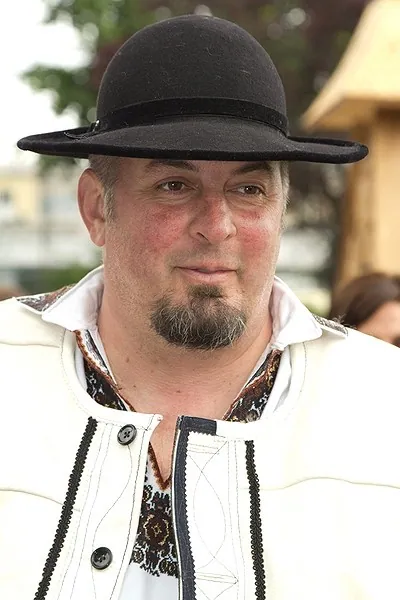
Location: Workshop: 1A Trandafirilor Street, Târgu Neamț, Neamț County, Romania (on the access road to Neamț Citadel)
GPS coordinates: N 47.198333, E 26.352389
Folk art and handicrafts shop: Arcașului Street, Târgu Neamț, Neamț County, Romania (on the road between “Sfântul Ierarh Nicolae” Church and “Ion Creangă” Secondary School in Târgu Neamț, the first house on the left)
GPS coordinates: N 47.215167, E 26.343861
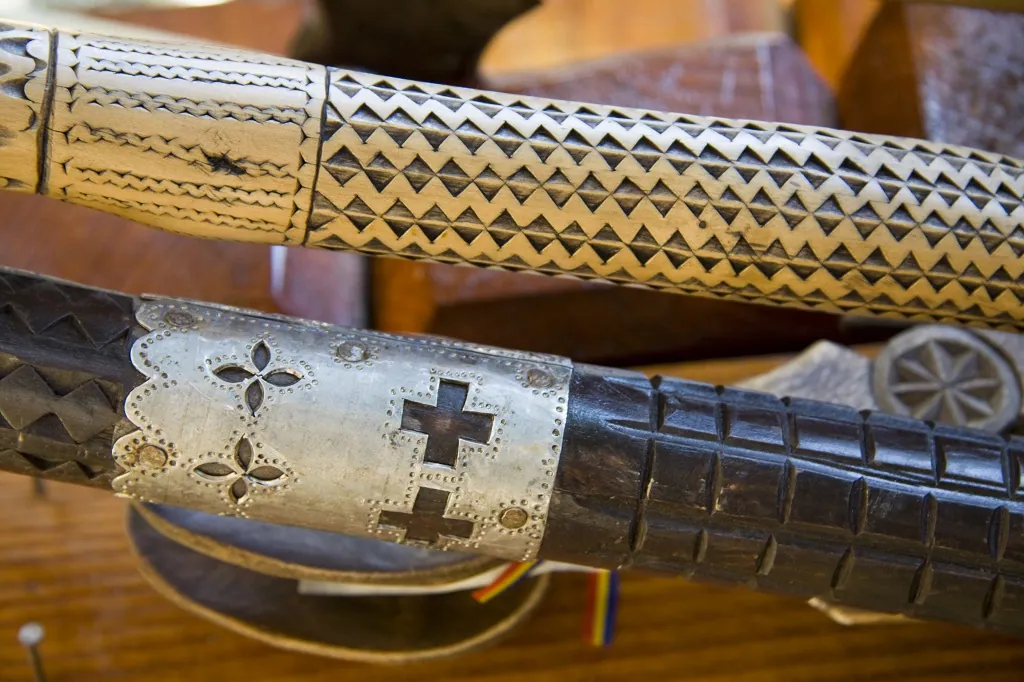
History/legend: Craftsman Constantin Lungu, president of the Association of Folk Craftspeople of the Neamț Region, has his workshop in Humulești, near Târgu Neamț. A woodcarver, he makes shepherds’ clubs and staffs and wooden hatchets from elder and hazel, some inlaid and others covered with tin, with carved faces of shepherds watching over their flocks at their ends. He also uses lime and dogwood branches and roots to make staffs decorated with folk motifs and other carved objects for the home. His workshop also holds beautiful dowry chests, skilfully covered with thin sheets of tin and inlaid with the traditional symbols of the sun and the cross. The craftsman says these objects take a long time to make: the metal inlay is painstaking work, as the metal must first be rolled into very thin sheets using a calender and then hammered onto the object with special tools.
New Year masks are another craft that Constantin Lungu keeps alive. They are made from chrome-tanned fur and stitched by hand. The masks can be worn or hung on the wall as decorations.
Constantin Lungu graduated from the “Gheorghe Asachi” Technical University in Iași. He and his wife, Ionela, are a distinctive family of folk artists. They live just three houses from the famous house of Ion Creangă, next to the village church, and Constantin Lungu’s appearance recalls something of the Romanian archetype embodied by the great storyteller from Humulești.
The Lungu family can “boast” extensive media coverage, with numerous appearances in national daily newspapers and television programmes; both are highly regarded for their craftsmanship and the charm they always bring to conversation.
Together with other members of the Association of Folk Craftspeople of the Neamț Region, Constantin Lungu is directly involved in bringing talented schoolchildren who want to learn the traditional folk crafts of Neamț into specialist workshops, helping to pass the tradition on.
Access: Trandafirilor Street no.1A (private workshop) / Arcașului Street (folk art and handicrafts shop), Târgu Neamț (DN15B or DN15C)
Contact details: telephone: +40.233.790.093; +40.742.999.506; 0726.985.695, email: palmaart@yahoo.com
Ionela Lungu – clay modeller
Location: Private workshop: Trandafirilor Street no. 1A, Târgu Neamț, Neamț County, Romania (on the access road to Neamț Citadel)
GPS coordinates: N 47.198333, E 26.352389
Folk art and handicrafts shop: Arcașului Street, Târgu Neamț, Neamț County, Romania (on the road between the Church of Saint Nicolae the Hierarch and the “Ion Creangă” Secondary School in Târgu Neamț, the first house on the left)
GPS coordinates: N 47.215167, E 26.343861
History/legend: Folk craftswoman Ionela Lungu, an engineer by profession, is a founding member of the Association of Folk Craftspeople of the Neamț Region, a member of the Association of Folk Craftspeople of Moldavia and a member of the National Association of Folk Artists of Romania.
Born in Tulcea with a natural talent inherited from her parents and grandparents, Ionela married Costin Lungu, himself a renowned folk craftsman, and came to live two or three houses away from the home of the great storyteller Ion Creangă, whom she has admired since childhood. It was not long before Ionela created her first character at Humulești, with a face moulded from clay and dressed in traditional costume. It was the first step. Since then, she has taken her pieces inspired by the work of Ion Creangă, from which she has built a brand known around the world, to ethnographic and folklore fairs in Romania and abroad, proudly representing Neamț County and Romania.
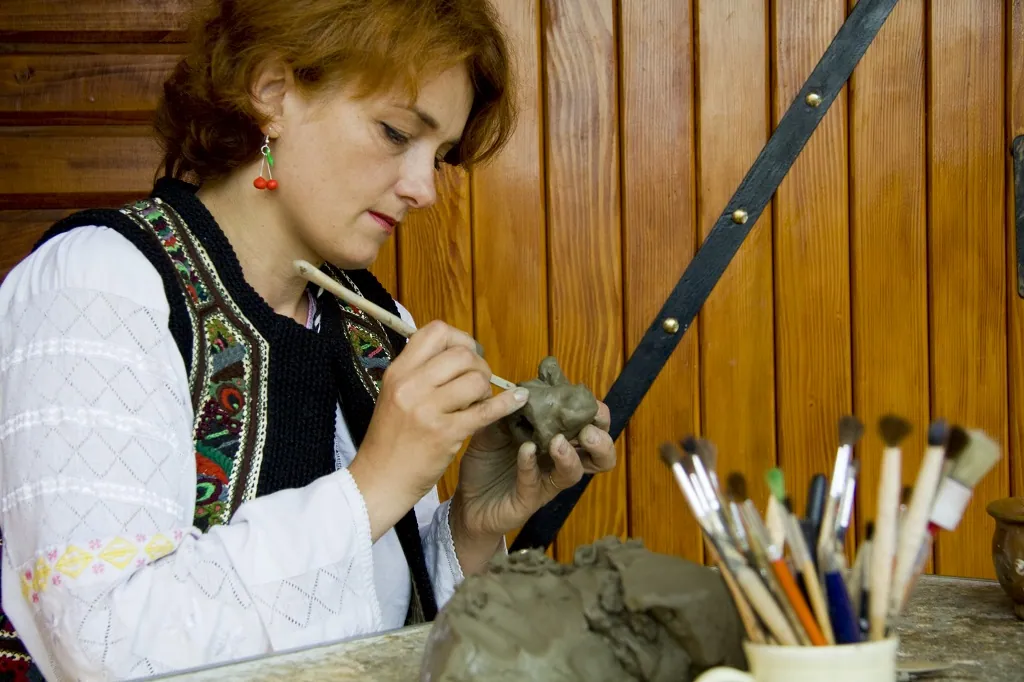
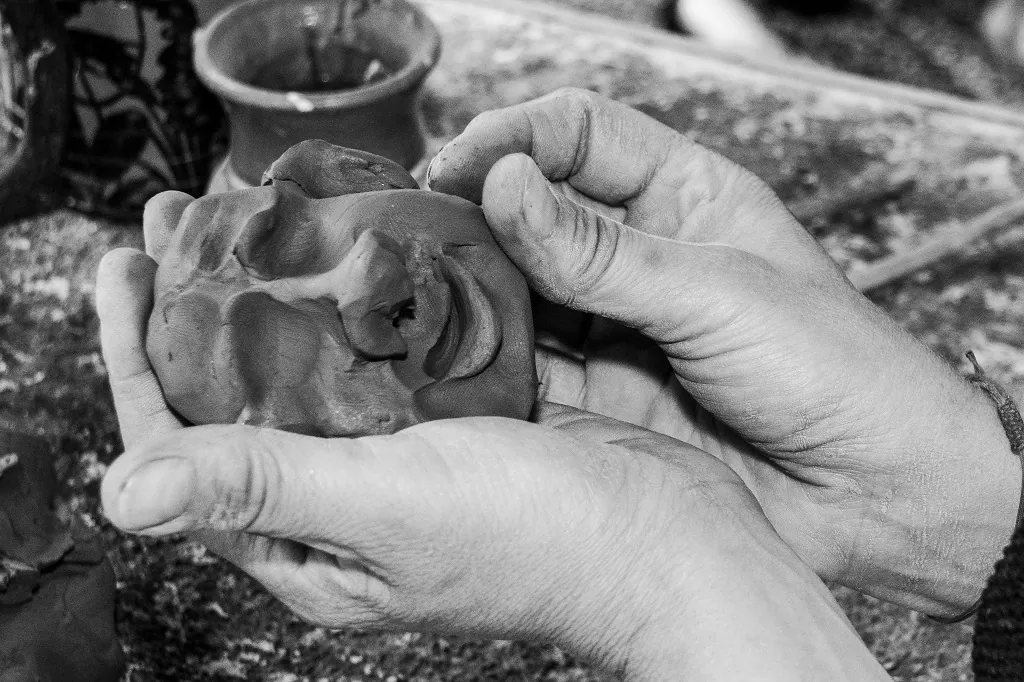
Ionela Lungu’s figurines are moulded from clay, then dried, painted and decorated with hair and moustaches made from natural fibres or little hats made from tanned lambskin. Each character from Creangă’s stories is amusing and highly expressive, making children and adults alike laugh while faithfully matching the storyteller’s descriptions. Ionela Lungu draws on skills she learnt as she went along – clay modelling, tanning hides, cutting lambskin, plaiting hemp fibres, mixing paints and painting – to create these characters, which lead visitors and those who buy the figurines as souvenirs to read and reread the stories of the storyteller from Humulești.
Alongside these one-of-a-kind figurines, Ionela Lungu also makes tapestries from natural wool yarn glued to sacking (woven fabric) using collage techniques, depicting scenes from “Amintiri din Copilarie”: Nică in the cherry tree, The Hoopoe in the Lime Tree, and others. These tapestries resemble the Moldavian wall hangings used to decorate peasants’ homes.
Formerly a teacher at the School of Arts and Crafts in Vânători-Neamț, and then at the Children’s Club in Târgu Neamț, Ionela Lungu continues to pass on her knowledge as a folk artisan known around the world: “Because the craft must be passed on to future generations. I was a supervising teacher at several creative camps at the Village Museum as part of the “Vara pe uliță” project, and was also brought into the “Micii meșteri din Copou” project. I taught the children to make the figurines. As they modelled the characters, the children also learned about the story by Ion Creangă. Valuing traditions, the heritage of the Romanian people, and passing them on to children is a duty that every folk artisan takes on,” says Ionela Lungu.
An amusing and expressive array of figurines and collage tapestries inspired by the world of Ion Creangă, together with masks, staffs and hatchets made from hardwood (hazel, hornbeam or dogwood) and other folk art objects made by her husband, is on display in her shop at the foot of the hill where Neamț Citadel is located, or in the workshop at her home.
Access: Trandafirilor Street no.1A (own workshop) / Arcașului Street (folk art and crafts shop), Târgu Neamț (DN15B or DN15C)
Contact details: telephone: +40.233.790.093; +40.742.999.506; 0726.985.695, email: palmaart@yahoo.com
Maria and Iulian Mihalache, Bălțătești – weavers
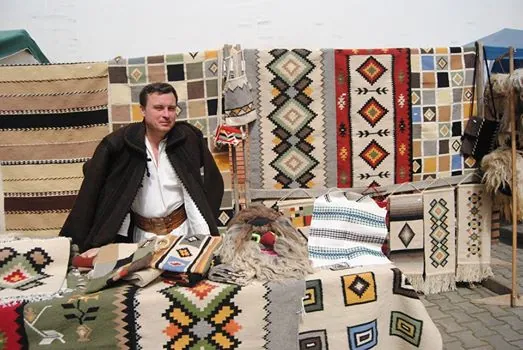
Location: Albinei Street, Valea Arini village, Bălțătești commune, Neamț County, Romania
GPS coordinates: N 47.132250, E 26.291722
History/legend: Maria and Iulian Mihalache are artisans who create beautiful work inspired by folk motifs from Moldavia. Their work is now displayed in art galleries and luxury apartments in major cities, faithfully conveying through symbolism the spirit of these places and the legends of their people.
In the commune of Bălțătești in Neamț County, the folk artisans Maria and Iulian Mihalachi carry on the craft of weaving. Neamț County takes pride in its rich folk art traditions and in its people’s desire to preserve and pass them on. Weaving is one of the best-known crafts in the Neamț region, an art with a long tradition in Neamț that also spread because brides were expected to include carpets they had woven themselves in their dowries, as a symbol of their diligence and skill.
In their workshop, the folk artisans Maria and Iulian Mihalachi make household and decorative textiles used in traditional Moldavian homes. The interiors of these homes show the variety, beauty and practical value of the textiles. Their ornamental designs, stylised depictions and the evocative names of their motifs highlight the woven objects’ distinctive aesthetic qualities.
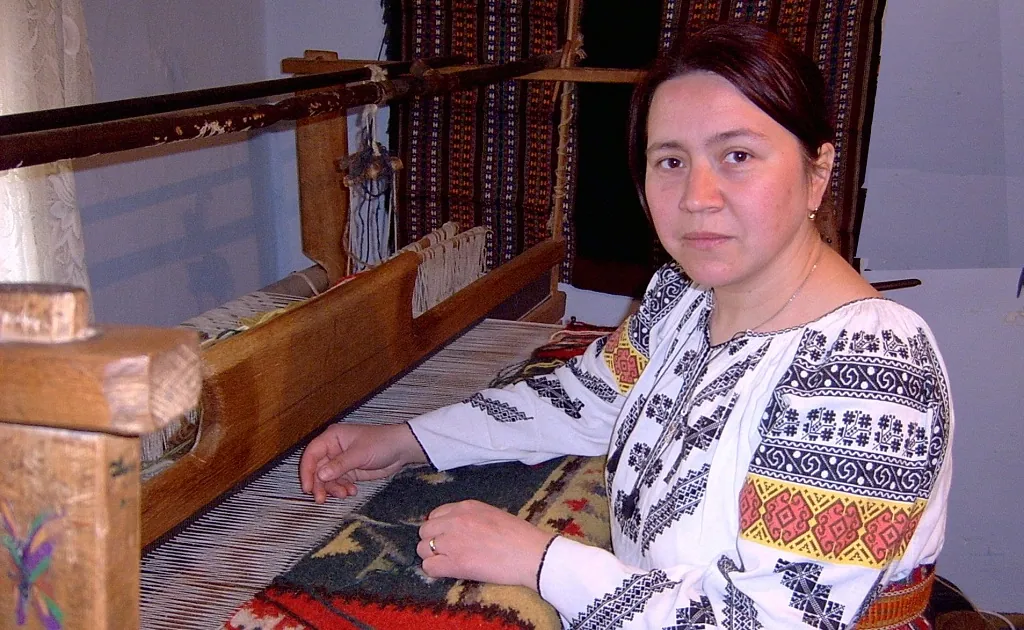
The technique is traditional to the area: weaving on a horizontal frame loom with natural wool or wool dyed in various colours using plants. The textiles feature both traditional motifs from the Neamț region and stylised abstract motifs. The wool is dyed according to traditional recipes, using natural dyes made by boiling the leaves, flowers, bark and roots of certain plants in water, as well as dyes derived from some minerals.
The craftspeople Maria and Iulian Mihalachi make the following items:
- The Moldavian bench rug – woven with a wool weft and cotton warp, using geometric motifs. It was placed above the bench and served to protect wooden houses. The motifs most often used to decorate it are stepped geometric patterns and sequences of the line of life, accompanied by solar symbols;
- The woven carpet with the tree of life – woven with a wool weft and cotton warp in the Hellenistic-influenced kantaros style, with the tree of life placed symmetrically in a vessel representing the balance between good and evil. The tree’s branches bear solar symbols (the sun appears as a symbol of divinity) or the symbol of the cross;
- The small bags – items of traditional dress woven with a wool weft and cotton warp, decorated with motifs from local tradition. In the past, they were also carried to the fields, to school and to the market, and when going out to offer New Year’s greetings, etc.;
- Tapestries – decorative wall hangings in traditional Moldavian homes, woven with a wool weft and cotton warp, then given a more intricate finish through crocheting and plaiting;
- Rugs – decorative pieces placed on the floor or on either side of the bed in Moldavian homes, woven with a wool weft and cotton warp in various colours and decorated with distinctive motifs;
- Large carpets, which reflect the range of Moldavian aesthetic ideas and ideals of beauty and harmony. The carpet has a smooth surface and multicoloured patterns, and is made from pure wool or a wool and cotton blend. Traditional dyeing techniques using local dyes helped create harmonious combinations of pastel colours, a distinctive feature of Moldavian carpets. Although made with traditional motifs, these carpets are striking for their simplicity and colour.
Traditional items made by craftspeople Maria and Iulian Mihalachi can be bought directly from their shop at the entrance to Văratic Monastery, opposite the monastery bakery.
Access routes: DN 15C – DJ 1677 or DN 15G – DJ 1677
Contact details: telephone: +40.728.028.423; +40.233.244.458, email: mariamihalachi@yahoo.com
Buy from craftspeople
Maria şi Iulian Mihalache
Valea Arini
Visit the shop – Maria şi Iulian MihalacheAsociația Meșterilor Populari din Ținutul Neamțului
Târgu Neamț
Visit the shop – Asociația Meșterilor Populari din Ținutul NeamțuluiCiprian Istrate
Piatra-Neamț
Visit the shop – Ciprian IstrateDudanu Vasile
Grumăzești
Visit the shop – Dudanu VasileBoancă Vasile
Grumăzești
Visit the shop – Boancă VasileCatinca Buhnă
Vânători-Neamț
Visit the shop – Catinca Buhnă